
I was shocked and saddened to learn this morning of the death of Jennell Jaquays, an early and groundbreaking writer for Dungeons & Dragons and other roleplaying games. Jennell had been hospitalized late last year with Guillain-Barré syndrome, and her wife Rebecca has had a GoFundMe going for the exorbitant medical costs. Donations will certainly still be needed to cover the outstanding medical costs and funeral costs.
I became acquainted with Jennell by meeting her on Twitter, and though I can’t say I knew her well, my interactions with her were always fun and/or insightful. I like to think we were friends, and I am sad that I never had a chance to get to know her in person.
Jennell had a really significant impact on early Dungeons & Dragons, writing many game adventures and supplements that are now considered classics as well as many more that should be viewed as classics. I’ve posted about quite a few of them over recent years, and let’s take a look back at some of those, from the famous to the obscure.
The most well-known of Jennell’s work is Dark Tower (1980), which came out the year after the original D&D Dungeon Master’s Guide!
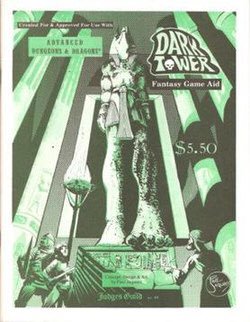
This adventure was well ahead of its time. A high-level dungeon crawl, it was one of the first adventures to feature “non-static” events, in which the monsters are not simply waiting around for PCs to arrive but are actively performing their own actions on their own time table. The dungeon itself features fun monsters and devious traps, including my favorite: a huge Indiana Jones-style metal ball that is constantly rolling in a circular corridor but is magically silenced!
Dark Tower is classic, and has been revised for multiple editions of D&D, including 3.5 and 5th edition, as well as being reprinted in its original form. In 2004, Dungeon Magazine ranked it the 21st greatest adventure of all time, the only “non-official” D&D adventure on their list.
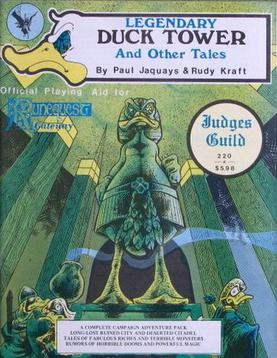
That same year, Jaquays and Rudy Kraft published Legendary Duck Tower for Runequest, which can be seen as a parody of Jennell’s own Dark Tower but also a massive and intense dungeon in its own right, the ruins of a complex once occupied by humanoid ducks.
Another recognized classic is Treasure Maps (1979), a book of five small and ingenious adventures, each of which is sparked by the finding of a treasure map! The maps themselves are imaginative, like a map written on a shield that can only be read in the moonlight, and the adventures include many diabolical traps that actually made me laugh at their twistedness!

After I wrote about it, Jaquays provided some background for the unprecedented live photograph on the cover:
I put together all the costumes out of bits and pieces of clothing, costuming, and gear that my room mate and I owned, like the cape, the swords, the wizard’s bathrobe, the monk’s karate gi and staff. A friend took the pic on an instant camera in back of my apartment building.
The overall idea of writing books of mini-adventures that can be quickly thrown into a game session has be followed implicitly and explicitly by publishers ever since, including TSR’s Book of Lairs and their very own Treasure Maps.
Jaquays would move on to writing adventures for TSR as well, such as The Shattered Statue (1988), which was designed to be compatible with both Dungeons & Dragons as well as Dragonquest.

The players are tasked with recovering the pieces of a giant stone golem that, if reconstructed, can be used for huge construction tasks. Little do they know that the statue was originally destroyed because it was possessed by a demon, and after the PCs succeed in rebuilding the statue, they must stop it from destroying the city!
Jaquays did all the interior artwork for The Shattered Statue, and she was a talented artist. She did the art for many of the works she co-authored, such as one of my personal favorites, The Unknown Gods (1980).
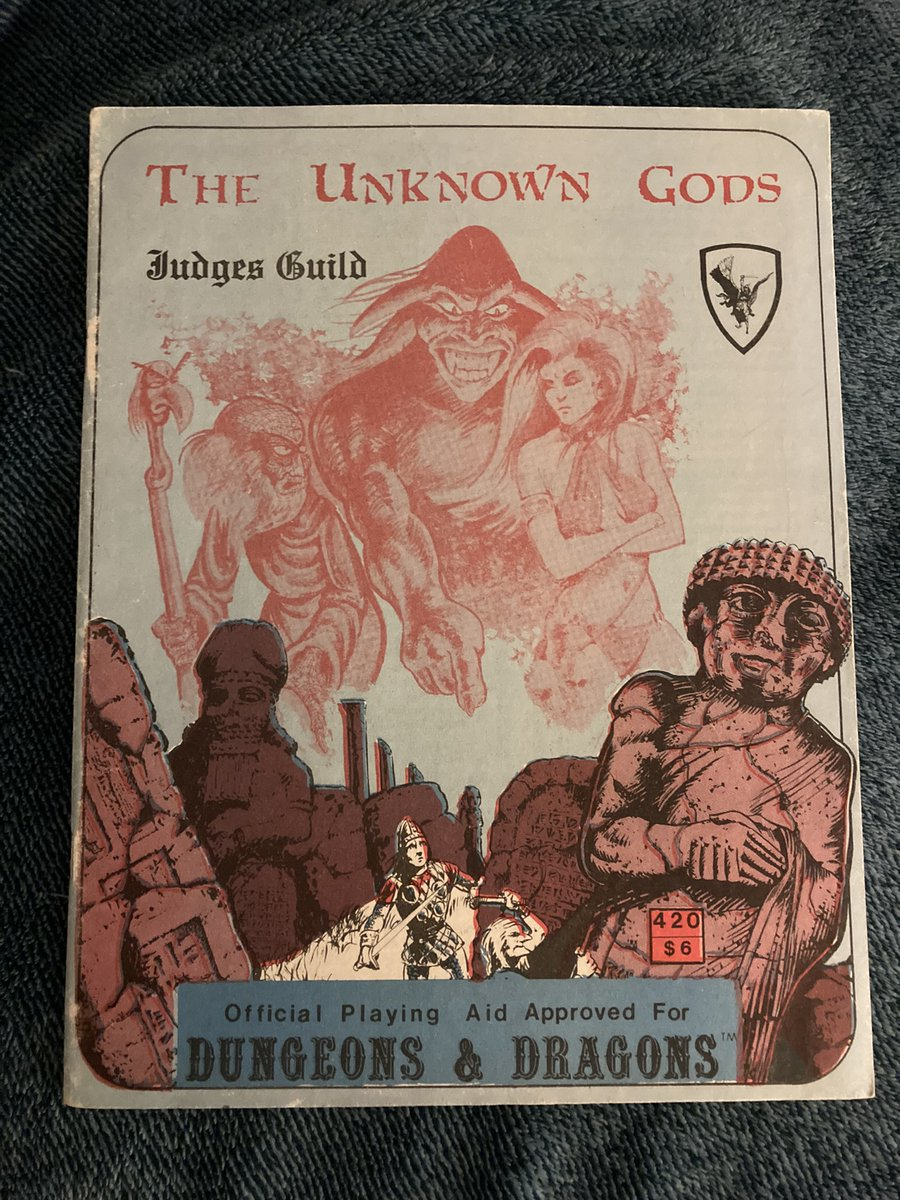
This supplement provided a pantheon of gods for a fantasy campaign, but unlike TSR’s own Dieties and Demigods, all the gods are completely original — and often very weird!
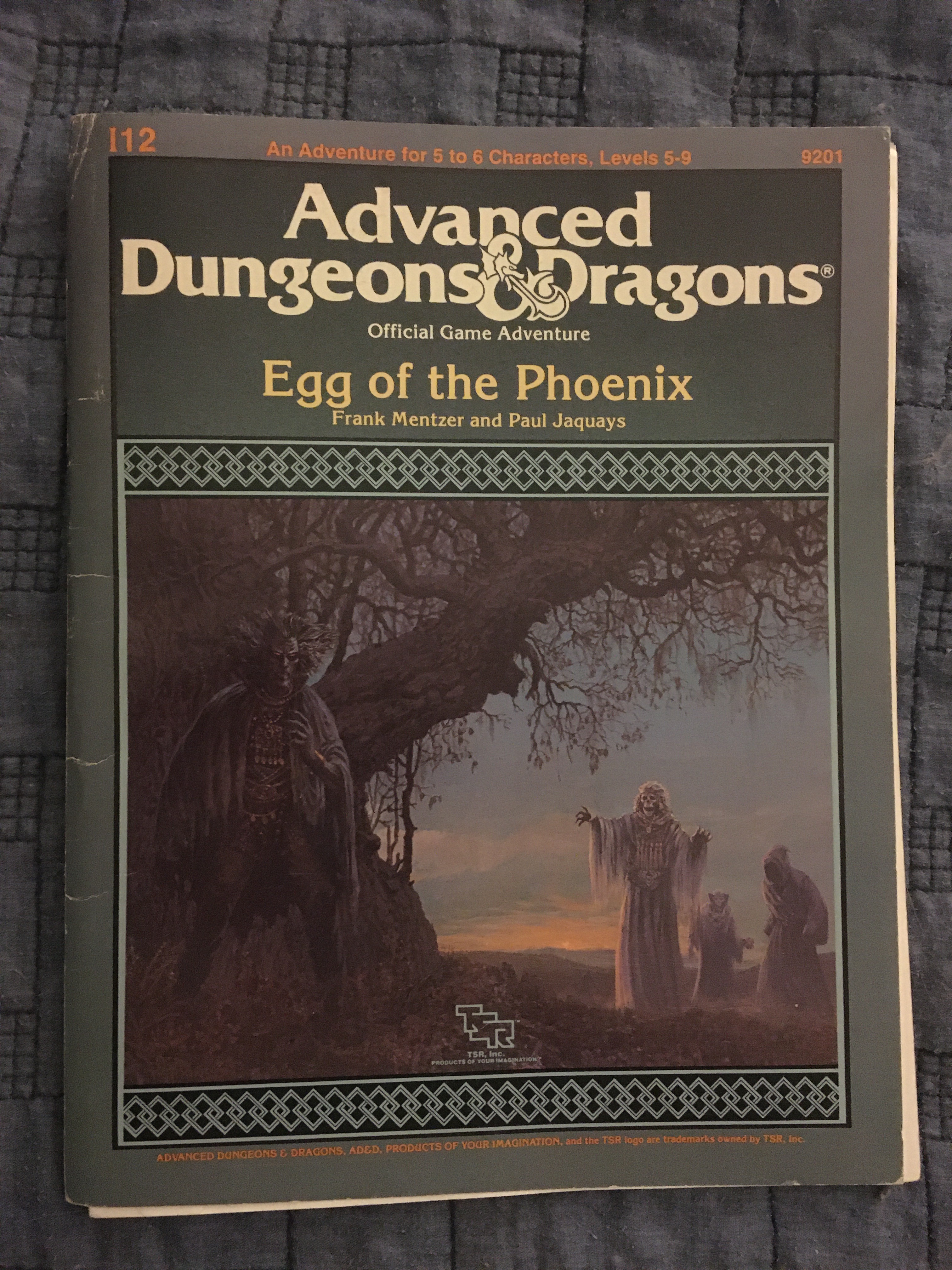
Jaquays was very much a professional, and could come in to revise other writer’s adventures. One of my favorite in this vein is Egg of the Phoenix (1987), originally a tournament series of adventures by Frank Mentzer that were stitched together into one epic by Jaquays. The result is one of the wildest rides you will ever encounter in D&D, including traveling through time and visiting a planet on the demiplane of death orbited by a deadly sentient moon!
Speaking of time travel, Jaquays also painted the cover for the 1993 product Chronomancer!

There are so many more products I can discuss, but let me just briefly mention two! Lords of Darkness (1988) was another anthology of adventures that includes a weird encounter with a necromancer who has fallen in love with a long-deceased hero and is determined to bring him back to life!

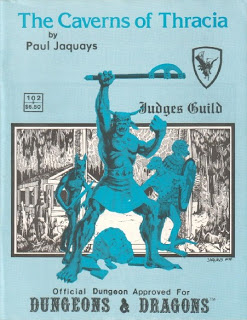
Another recognized classic by Jaquays is the 1979 Caverns of Thracia, which I have not yet had a chance to read but which is a classic mega-dungeon and original copies are expensive and hard to track down! There are even more Jaquays adventures out there that I have yet to track down; every year I seem to find another one that I was unaware of.
Jaquays expanded her work to include videogame development, working for Coleco in the 1980s, and eventually became a level designer for the Quake series of videogames. She was also an activist for transgender rights, and the Creative Director for the Transgender Human Rights Institute in Seattle.
Overall, Jennell was an incredibly creative, intelligent and caring human being, and the world feels significantly emptier with her passing.



 Skulls in the Stars