
Book 9 for my 2026 goal of 36 books for the year! Still running a little behind but not catastrophically. As usual, my link to the book is through my bookshop.org affiliate account, which means I may earn a small commission if you buy from there.
I’ve long been a fan of Jeff VanderMeer’s writings. His 2009 horror science fiction novel Finch is one of my favorite books of all time, and his Southern Reach trilogy is one of my favorite trilogies of all time. I haven’t read anything by him recently, however, so I decided it was time to check out his 2019 novel Dead Astronauts.
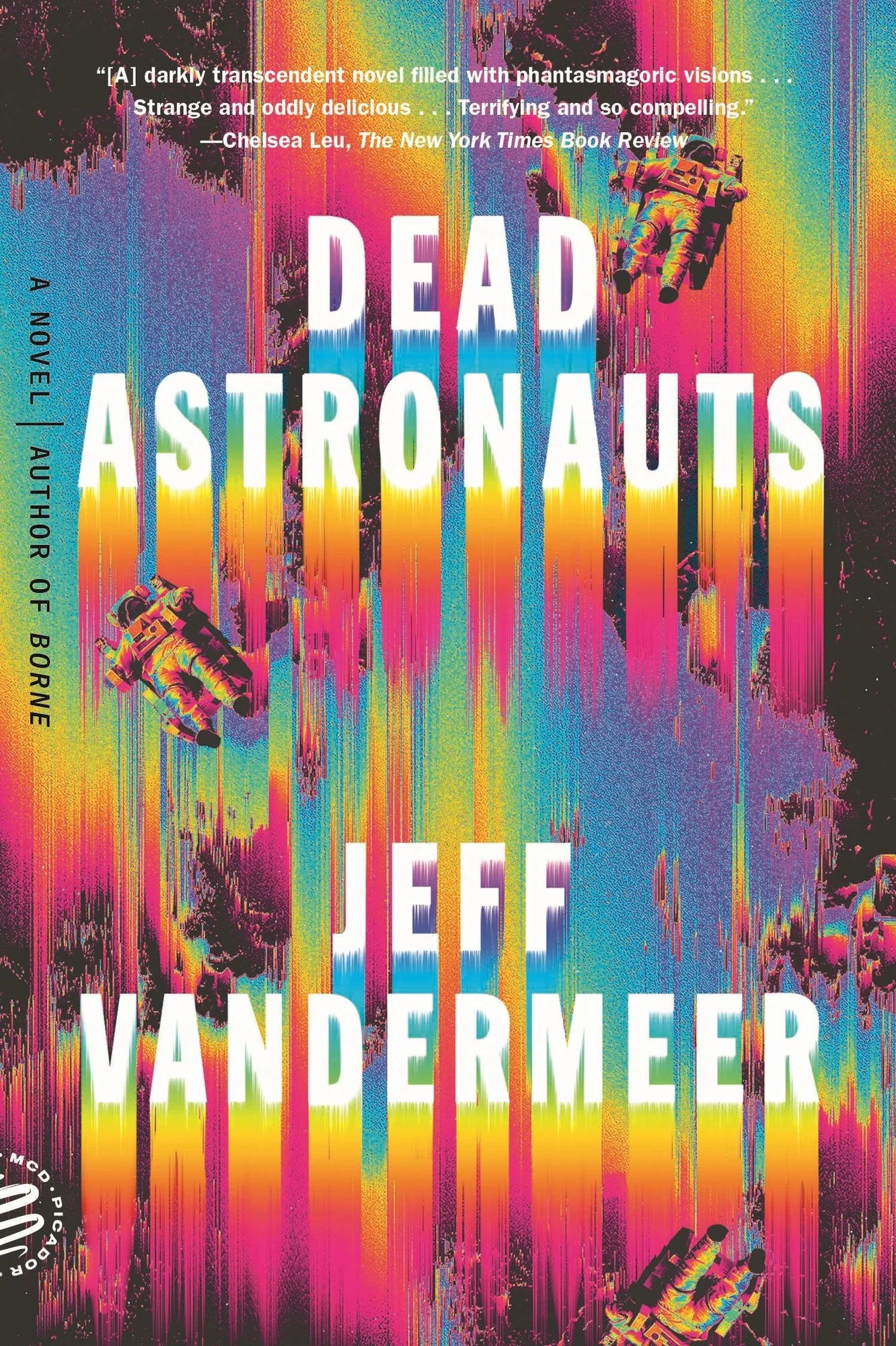
Dead Astronauts is a sequel to VanderMeer’s 2017 novel Borne, with the same setting (kind of — more below) but different characters. I had read Borne when it first came out and only dimly remembered it but feel I can safely say one doesn’t need to read Borne to follow the newer book (kind of — more below).
The novel begins with three people who arrive at a nameless, ruined city. None of the three — Grayson, Moss, and Chen — are fully human, and each possesses abilities that they can use to achieve their objective: the destruction of The Company. The Company is an organization that has effectively ruined the world and is constantly creating new biological entities and chimeras for some unstated purpose. Their numerous failures are cast out of The Company building into holding ponds where they either die, are consumed by others, or persist in some kind of aimless existence.
Grayson, Moss and Chen are familiar with all of this, because they have done this before — they have traveled through multiple timelines attempting to destroy The Company, and all these timelines have common elements, though the details can be different. They see a black bird with a broken wing, and sometimes the bird helps them, sometimes it harms them. They see a blue fox that seems to know more than any fox should. The Company itself has spread like a virus across all worlds, bringing its ruin and madness with it. The mission of the trio has an extra urgency because of the sense that they may in fact be running out of worlds where they have a chance to make a difference.
Dead Astronauts is a bewildering novel, following a trend in VanderMeer’s work towards more cryptic and experimental writing. In The Southern Reach trilogy, the reader comes away from the story with a vague idea of what has transpired throughout, even though many questions remain unanswered. In Dead Astronauts, the reader leaves with only vague hints of what has actually transpired and what it all means.
This is not a criticism — VanderMeer does an excellent job in expressing the alien and unfathomable in writing, leaving the reader to figure out the significance of everything. I enjoyed the book for this exercise it gave my brain — as I read, I was constantly sparking new hypotheses and having new epiphanies as new information and events came to light. Those looking for a straightforward science fiction story will be extremely frustrated; those, however, looking for something to ponder will find a lot to like.
The narrative switches perspectives several times through the novel. We begin with the astronauts, but get the perspectives of other people and creatures in the world, including the enigmatic bird with a broken wing.
The setting, however, is perhaps the strongest character in the book. We see a haunting vision of ecological destruction wrought by a mindless corporate entity, where unnatural Nature now fights to survive in a world that has been broken. It is this setting that will stick with me the most as I think of the book in the future.
Dead Astronauts is definitely not a book for everyone, but if you like reading strange visions of realities and narratives that challenge you, it is definitely worth exploring.


 Skulls in the Stars