
Book 18 for my 2026 goal of 36 books for the year! On track with my reading! My link to the book is through my bookshop.org affiliate account, which means I may earn a small commission if you buy from there.
It says a lot about how much I enjoy Uketsu’s writing that I went out and bought his most recently released book, Strange Buildings (2026), the day after I finished his previous book Strange Pictures.
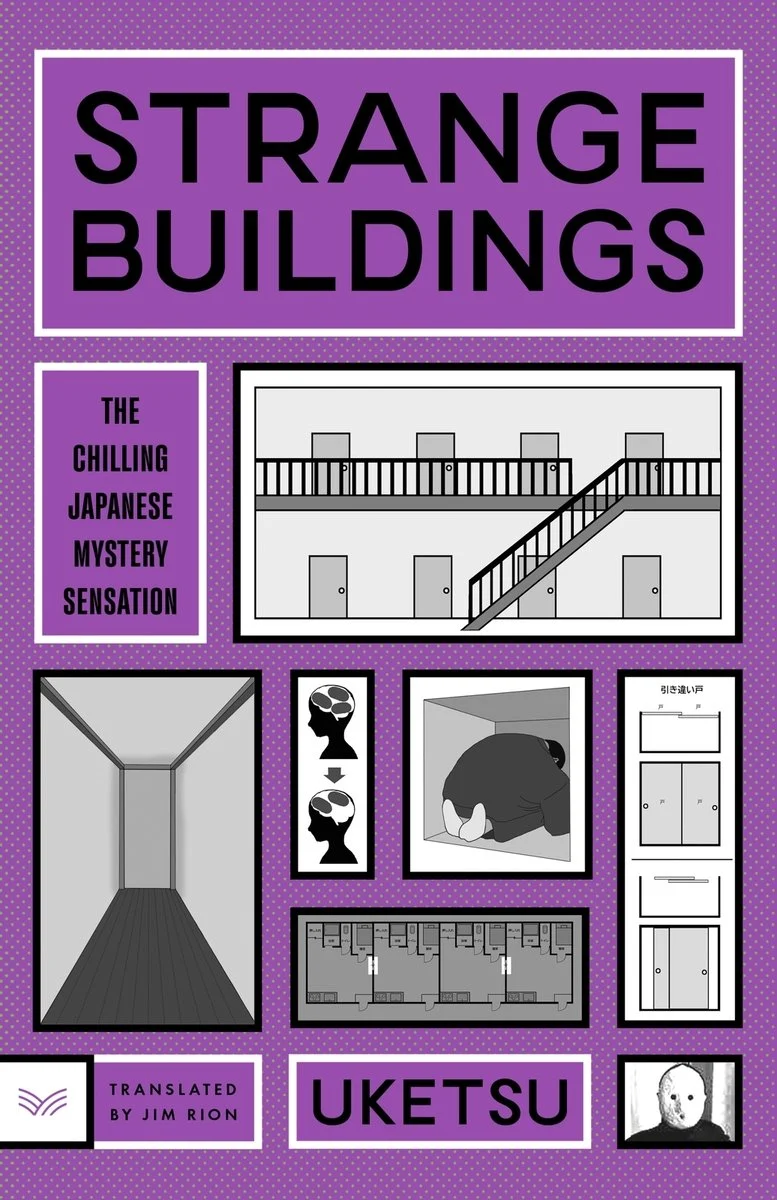
This is the longest and most ambitious of Uketsu’s “Strange Books” to date, looking about twice as long as Strange Houses, yet I still finished it within 24 hours!
Like his previous two books, Strange Buildings is a story of a sinister mystery told in a significant way through images. In Strange Houses, it was largely through architectural floorplans; in Strange Pictures, it was through cryptic drawings. Strange Buildings returns to an analysis of architecture but ups the complexity of the puzzles and the secrets behind them.
The book serves as a meta-sequel of sorts to Uketsu’s first book. Strange Houses was presented as a mystery that an author came across and solved and then wrote about as the book you read, and Strange Buildings is the result of the popularity of that earlier work. The nameless author is contacted by countless people who felt some sense of familiarity of living in a house that has something not quite right in its layout, and the author collects 11 of those stories that at first seem completely unrelated but turn out to be connected to a truly bizarre and incredible conspiracy. The book begins with “The Hallway to Nowhere,” in which a person contacts the author about a hallway in their childhood home that seemed to serve no purpose, and whose father very pointedly refused to explain. From there we visit a house that was the site of a grisly murder and then to locations strange and unpredictable. Some of the 11 “files” are not actually the author’s writing but documents pulled from elsewhere.
It is a lot of fun reading these short tales and gradually seeing connections form between them. A trivial detail in an earlier file is suddenly echoed in an unexpected way in a later file, and it really tickles one’s brain to catch those connections as they form.
The 11 files are not the whole story, however; after them, we get to “Kurihara’s Deductions,” in which the author brings all his data to his architecture friend from the first novel and Kurihara puts all the pieces together. The end result is a very intricate, very dark, and very satisfying revelation.
I’ve been wondering why these book appeal to me personally so much, and I think a big part of it is my physics background. I’m used to looking at equations and figures and data looking for patterns, and having all these visual clues in the book connects with that part of my brain. That isn’t to say that you have to be a physicist to enjoy these books — after all, they’re HUGELY popular — but I think it adds to the charm for me.
All three books really can be categorized as “mystery,” but they definitely have a horror flavor to them. A lot of the pieces of the puzzle leave the reader unsettled, as one’s brain fills in sinister intent into situations that just don’t seem quite right. As one small example from Strange Buildings — one woman recounts how she used to talk to her father after bedtime using a string phone (two cups with a string connecting them) until much later in life she realized that there was no way they could have been communicating the way she originally thought they were.
I’ve now read all three of Uketsu’s mysteries that are currently available in the US, and I can highly recommend all of them. I don’t know what Uketsu has planned for the future, but I will be keeping an eye out for more of his writing!
Now that I’m in a mystery mood, it’s time to go grab a couple of other mystery books written by friends of mine…


 Skulls in the Stars