
Book 26 for my 2025 goal of 30 books for the year! As is now default for me, my link to the book is through my bookshop dot org affiliate account.
I have long had a huge fascination with the ancient Near East, fostered by my dad’s lifetime love of ancient Egypt. In fact, when I was in college, I was required to take a history and a language course, and I took a course on ancient Near East history along with a course on ancient Egyptian hieroglyphics. So when I saw that one of my internet friends Moudhy Al-Rashid had written a book on the history of Mesopotamia, I knew I would have to read it as soon as possible. Between Two Rivers came out in mid-August, and it finally made it into my hands over this past week.
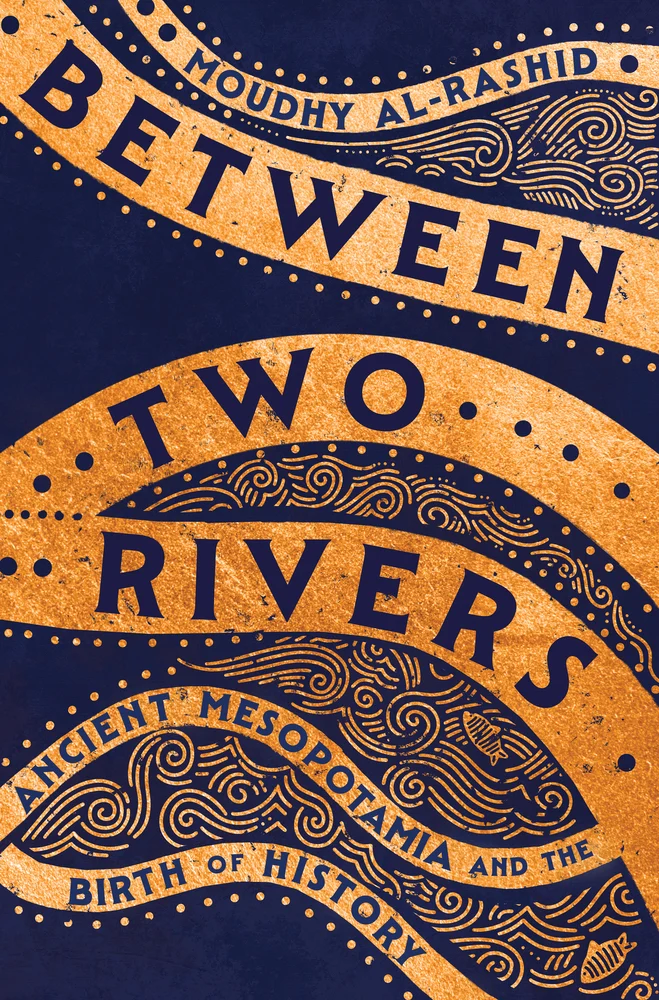
This book is one of the most wonderful things I’ve ever read. Of course I may be biased thanks to my love of the history of the region, but I was captivated throughout the book and Al-Rashid made the civilizations that thrived there come alive in a way I’ve not experienced before.
The “two rivers” of the title are the Tigris and Euphrates Rivers that flow from Turkey into Syria and Iraq and eventually into the Persian Gulf. The first civilizations of the world began at the confluence of the two rivers, and the first cities and first systems of writing followed. The origins go back to a stunning 4000 BCE, and the region remained an independent power through changing rulers and political strife until Babylon was conquered by Cyrus the Great in 539 BCE.
This is an exceedingly long period of time, and one of the challenges to bring the era to life for a modern reader is trying to convey a sense of how people lived in a region that was occupied for thousands of years and had many radical reinventions. The books that I read in college, more scholarly than popular, focused primarily on lineages of kings and the rise and fall of cities in the region; Al-Rashid manages to bring us in to meet the people of Mesopotamia personally and see how they lived. Thousands upon thousands of cuneiform tablets (tablets with native writing) tell the stories of people from the least powerful slaves to the greatest kings and people of every status in between, and Al-Rashid selects from these writings to paint a vivid picture of life in the most ancient times.
Al-Rashid brings different aspects of Mesopotamian civilization to life by focusing on one ancient artifact per chapter. School tablets, for example, lead to a discussion of education in the region, while a mace head serves as a centerpiece for a discussion of war and conflict. An inscribed brick introduces us to buildings and architecture, while a clay drum segues into the birth of writing. There is a central conceit that ties together all of the book chapters, but I will not spoil it here because it is one of the delightful surprises of the book and is best encountered in reading it!
The book is filled with surprises, honestly. Al-Rashid uses her extensive knowledge of the history of Mesopotamia to bring us the best stories. I will only mention one here that I loved, to give a feel for the sort of things one can expect: one artifact discovered from antiquity is actually an ancient forgery, created by people thousands of years ago to have the appearance of being even older!
Al-Rashid does a magnificent job connecting the successes, trials and tribulations of ancient people to our own modern struggles, and gives it a personal touch by talking about how different stories affected her and mirror her own life.
Perhaps the greatest compliment I can give to Between Two Rivers is that it has reignited my love and curiosity for these ancient civilizations, and I’m tempted to dig out my old texts and start relearning some ancient languages. If you’ve ever seen how difficult these languages are to deal with, you’ll know that this is no small accomplishment on Al-Rashid’s part!
In summary, Moudhy Al-Rashid’s Between Two Rivers is an absolutely stunning and wonderful book that captivated me throughout. I highly recommend it if you have even the slighted curiosity about the people who first created civilization.


 Skulls in the Stars