
I’m now in my mid-50s and my parents are in their 80s and are starting to experience the age-related cognitive problems that most of us will eventually encounter if we live that long. My dad in particular has very poor short-term memory now and is living in a senior home, a situation he finds rather dull considering he spent his life being a wanderer both at home and abroad.
To help keep him entertained, I’ve been finding boardgames that we can play together when I visit. This turns out to be a non-trivial challenge for several reasons. Memory issues make learning any new game rather challenging, so rules have to be relatively simple and intuitive — no Magic Realm for us! This means that most of the games available are ones that are tailored more towards children, but this is also not ideal because neither my dad nor I are in the mood to play Candyland. There are classic games that he still has a recollection of how to play, like Monopoly, but that game is absolutely terrible and genuinely not fun. As I told my dad, Monopoly is only fun because of the people you’re playing it with. Another constraint is time — I don’t want to play a game that takes several hours for a single session, so games with a 20-30 minute turnaround are ideal. That way we can play a couple of different games and multiple rounds when I visit.
So I’ve been experimenting with various games to find a set that we can play regularly, are easy enough to learn, fast to play, and entertaining enough to play repeatedly. I thought I would share my results and give a ranking of their suitability for this purpose.
NOTE: all the games I mention here are good games in general, so my ranking is not about whether they’re good in general, but all about their suitability for playing with seniors with memory issues.
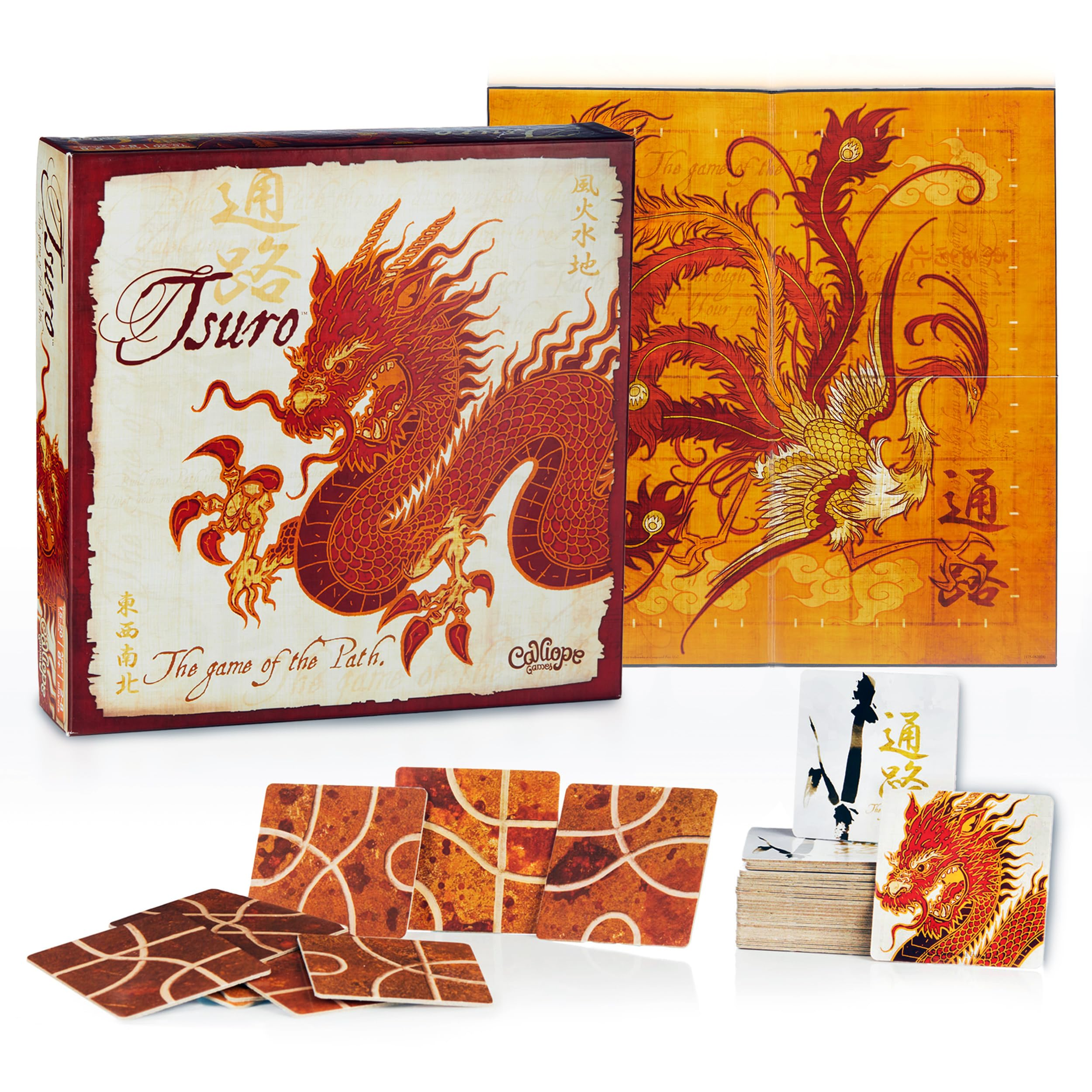
Tsuro: 9/10. I’ve had this game for ages and it is good for all ages and pretty much any occasion. Players take turns laying out a path tile in front of their token and following the path as far as they can go. The goal is to be the last one run off the edge of the board. Very simple rules that are quick to learn and follow, and the game has a nice mix of randomness (tile drawing) and strategy (choose one of three tiles in your hand to place). The only limitation for aging seniors is the abstract nature of the game — I noticed that it is perhaps a little harder to follow simply because it doesn’t represent situation in the real world to give context and help the player remember the objective and the strategy. Still, one I’ve played the most with my dad.
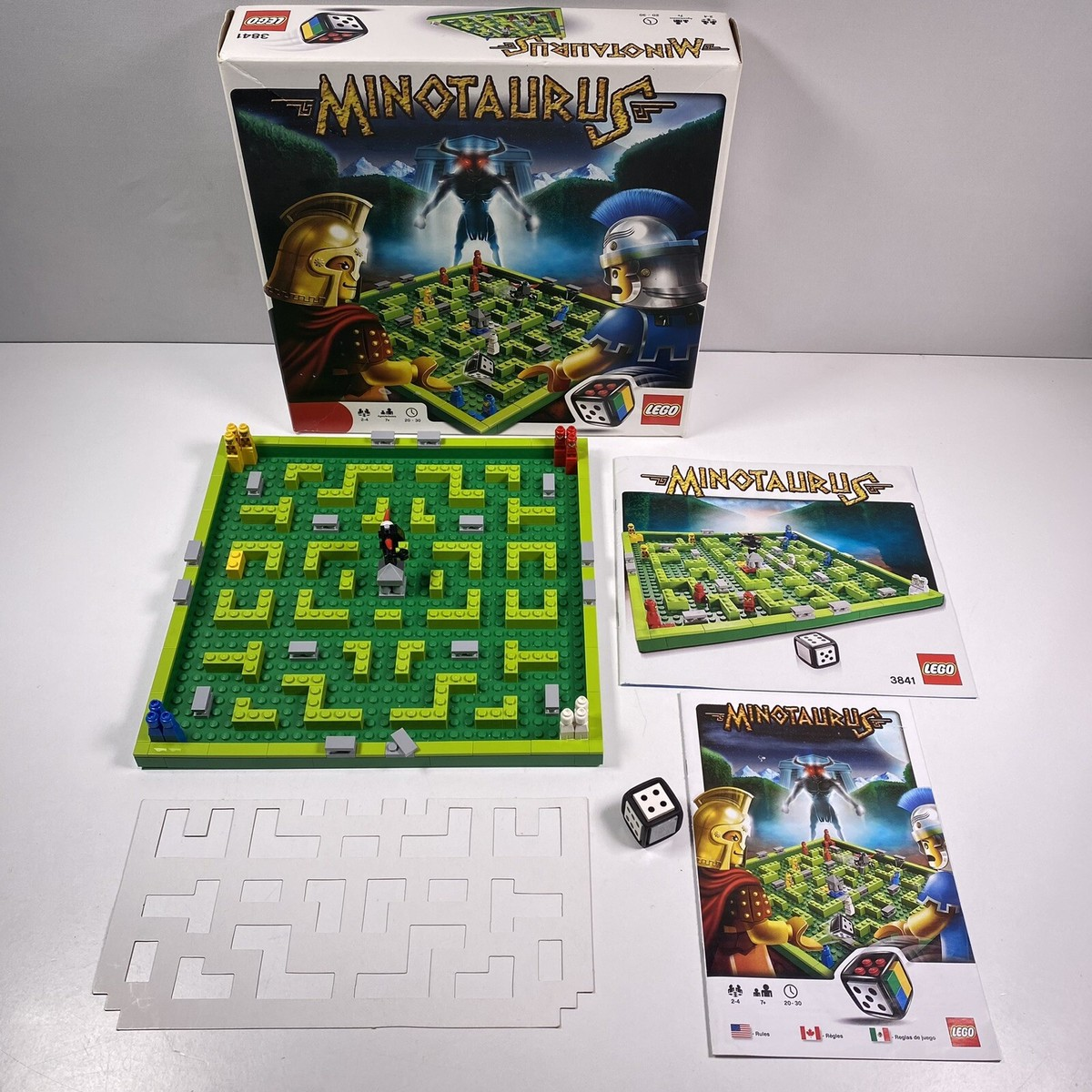
Minotaurus: 6/10. This one hails from the original era of LEGO boardgames that first came out in 2009. The goal is to roll the LEGO die and move one of your warriors towards the middle of the maze. If you roll black on the die, you can move the minotaur towards your opponents, and if you roll grey, you can move one of the grey blocks to obstruct your opponents. A very simple game to learn and play, though it is extremely random and for me counts as more “time killer” than serious game.
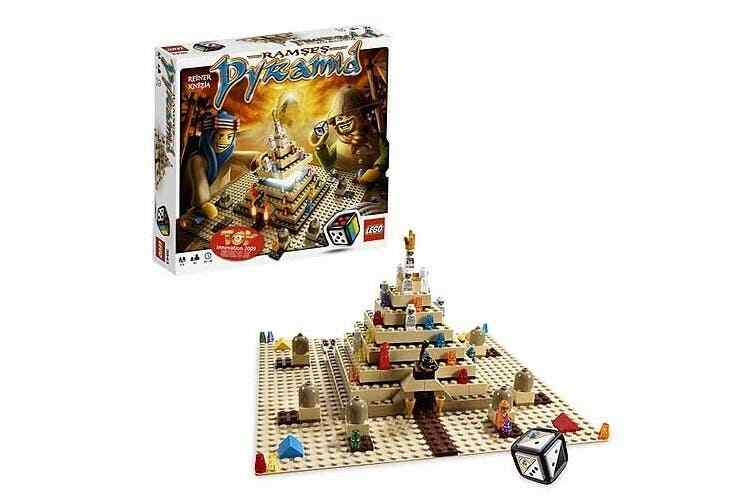
Ramses Pyramid: 5/10. Here’s where my rating specifically for seniors leads to non-intuitive results. I got Minotaurus back in 2009, and once I started playing it with my dad I decided to try a more sophisticated LEGO game, one by famed designer Reiner Knizia no less. It is overall objectively a better game than Minotaurus, but it has more complicated and abstract rules that run in two stages of gameplay, making it harder for someone with memory issues to follow. One first moves one’s adventurer through the base camps around the pyramid, collecting colored crystals, and then attempts to scale the pyramid to the top. The catch is that you can only scale a side and level where you have a crystal that matches the one on the pyramid location. Certain dice rolls can cause mummies to descend the pyramid and others can rotate the levels of the pyramid. Like I said: great game, but hard to follow for memory issues, which is why it is rated low on this specific list.
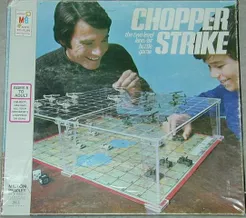
Chopper Strike: 8/10. While pondering what games would be fun, it occurred to me that it might be worth looking at games that are much, much older. My reasoning: it feels like back in the 70s/80s there were a lot more games that were designed to be played by the whole family together, whereas in the modern era it feels like things have more bifurcated into “casual/kids games” and “serious hobbyist games.” (Definitely an oversimplification, but it was a working hypothesis.) I opted to grab Chopper Strike from the 80s, and it is honestly a lot of fun! You can think of it as a dice-randomized two-level chess type game, with choppers above and jeeps below. Your goal is to take out all jeeps or choppers of your opponent. The rules are really simple and the objective is easy for a senior to keep in mind — obviously, you have military pieces and are aiming to eliminate the enemy’s pieces! I’m also a sucker for games with cute little helicopters and the like and gimmicks like the transparent upper board. I rate it down a little bit in score just because it may be a little too random and oversimplified, but still a lot of fun.
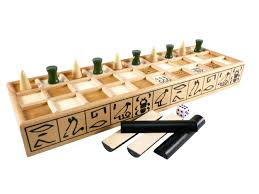
Senet: 6/10. This game and the next game are actually dad-specific, as my dad has been a lifelong fan of ancient Egypt, and Senet is a faithful reproduction of an original Egyptian boardgame. It amounts to a race back and forth across the board to the other end between light and dark pieces, where landing on an opponent sends them back to the beginning. You can use the modern d6 for movement or roll the sticks, where different configurations of black sides facing up represent different numbers. Definitely nostalgia for my dad and I, though as you might expect it isn’t a game with a whole heck of a lot of strategy. It is also hindered (and this is a historical hindrance) by special illustrated squares of cryptic meaning and no clear markings on the board as to which direction you travel.
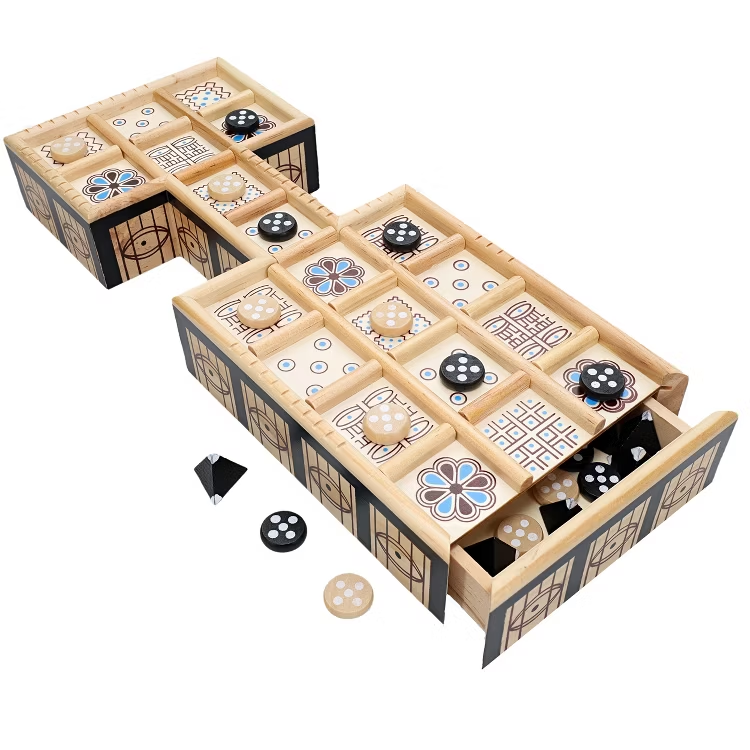
Royal Game of Ur: 5/10. After playing Senet with my dad, I opted to pick up an even more ancient game, the Mesopotamian Royal Game of Ur, to try out. The premise and gameplay is strikingly similar to Senet (and one may be a descendent of the other): you race to get your pieces to the other side of the board. This one was hampered for me by even more cryptic rules and strange special squares, making it hard for me to follow, and even harder for my dad. Neat to play, but not one I’ll return to often.
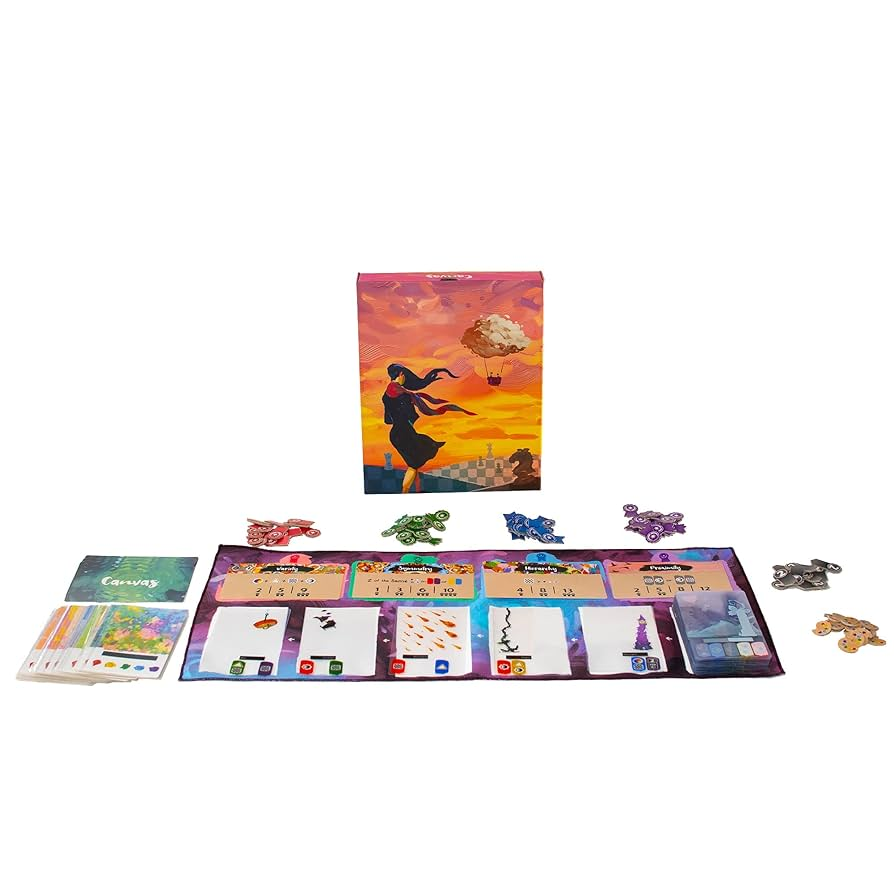
Canvas: 8/10. This one was recommended to me by the friendly folks at Your Local Game Store, and it is a great game! The idea here is simply to create good artwork that meet certain criteria. The design is novel: there is a deck of transparent cards that serve as the elements of a painting, and your goal is to combine three of them to put into a transparent sleeve to make a work of art! You essentially bid on the different cards on your turn, and each card has certain style markers (the things on the bottom of the card). You attempt to make painting that satisfy a certain pre-determined set of style markers so that you accumulate the most points. The rules are a bit complicated and abstract again, which makes this game not perfect for seniors, but the great thing is that you don’t really have to worry too much about points and making it competitive — it is also fun just to choose cards and work to make neat “paintings” as a creative exercise itself. And the victory conditions can be custom chosen to be as simple as possible, to make the rules even easier to follow.
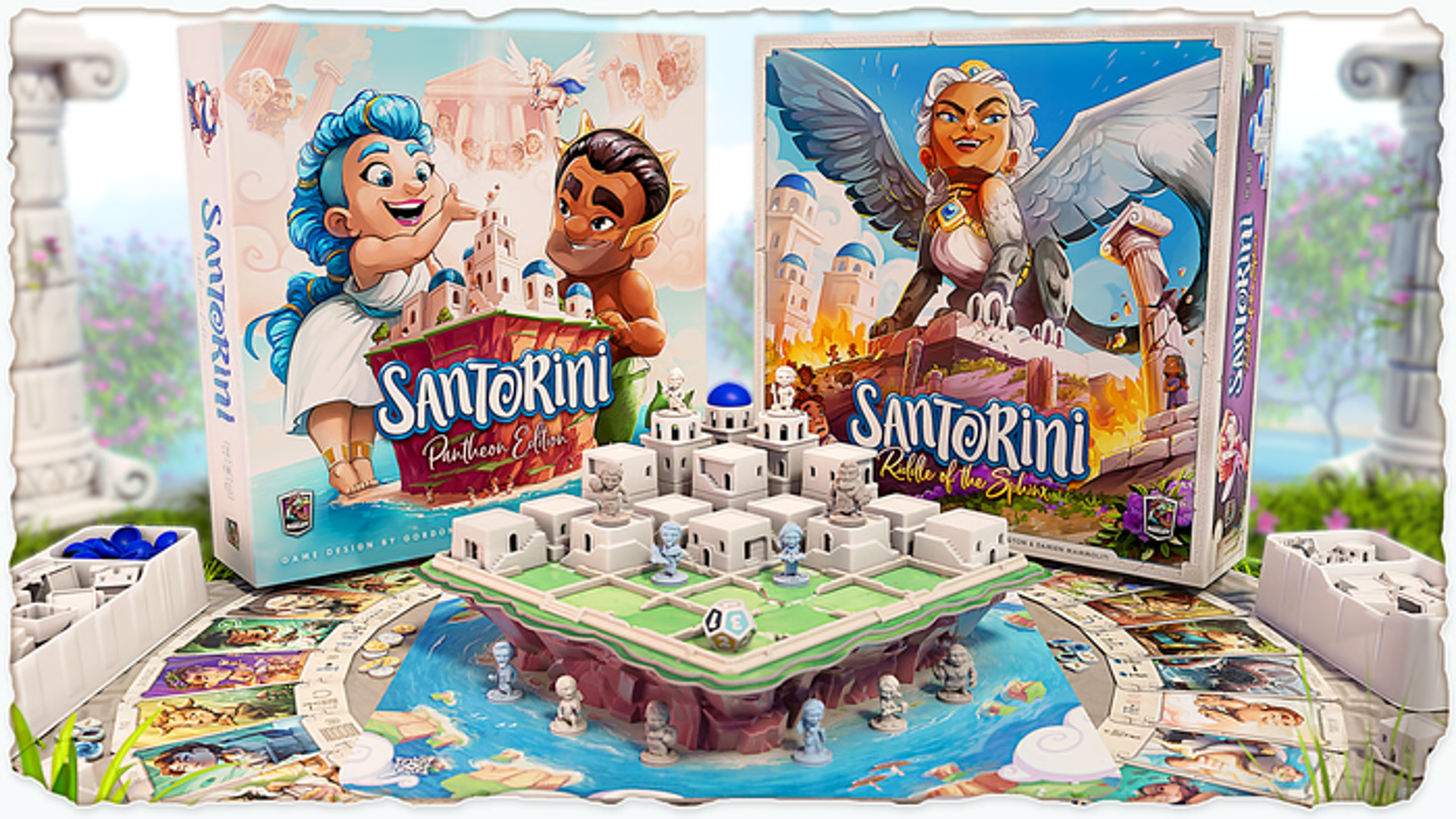
Santorini: 7/10. This is a great game and I thought would work well but caused a bit of an issue for unexpected reasons. The goal is to get one of your figures to one of the highest buildings on Santorini, building and climbing levels each turn. You have to keep track of your opponent’s builds as well as your own. The game is very simple, clever, and a lot of fun. The unexpected thing playing with my dad: each level is a different piece, and he had a difficult time identifying and keeping track of which ones were which, we involved a lot of explanation. Also, each player takes on a god with slightly different rules and characteristics, which means the play is asymmetric and that itself can be a little confusing — I do one thing on my turn and then explain to him that he does something slightly different. I expect that it will go smoother with practice and with the rules getting more embedded in my dad’s mind.
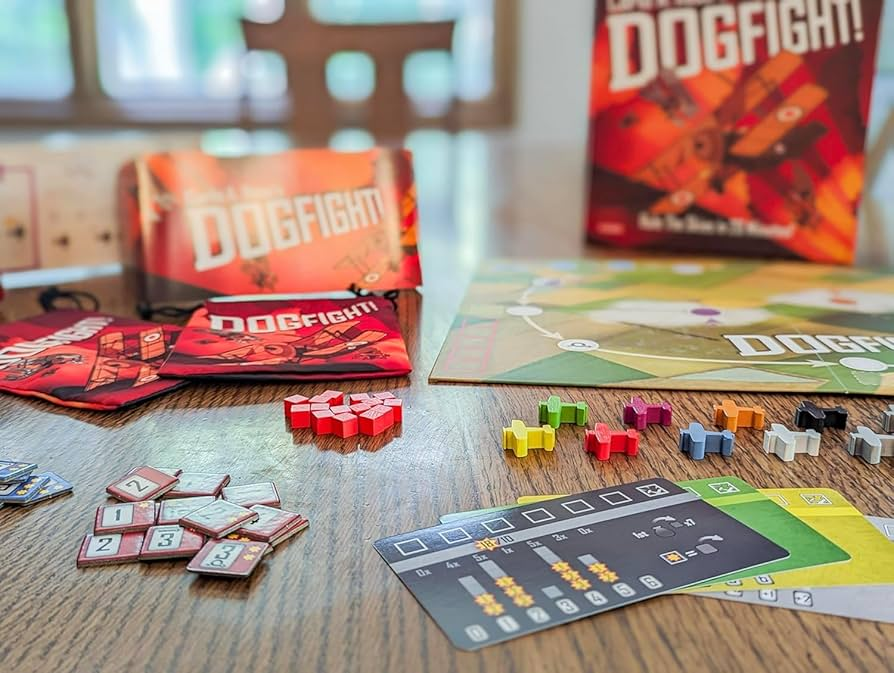
Dogfight!: 10/10. This game was an unexpected surprise and an impulse buy at the time, but it works incredibly well for me and my dad. The game simulates a WWI style dogfight between two planes, and it captures the feel of it remarkably! The board has a single circular path, and players simultaneously choose and play from a set of tokens a single move/shoot token for each turn. Then, the fighters are moved around the board at the same time and if one ends up behind the other and has a “shooting” symbol on the token, they shoot! The game has a bit of a poker feel to it, as it is partly about the luck of the draw but partly about guessing the psychology of the opponent. Your opponent is behind you; do you speed up to try and outrun them, or do you stall and hope that they pass you by? The right choice will depend on what they do, as well. The game comes with rules and cards for different planes, and slightly different scenarios, so that the replay value is excellent. Because of its simple rules, the complex strategies that evolve from those rules, and its ability to capture an interesting historical scenario, Dogfight has been the game I play most with my dad these days.
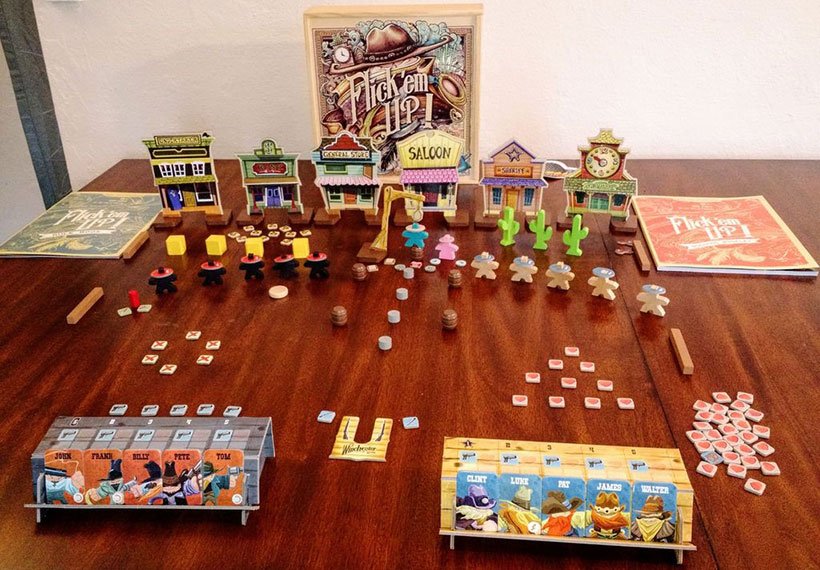
Flick Em Up!: next to try! I haven’t played this one yet with my dad, but I wanted to mention it because I feel like it will be a hit! It is a Wild West shoot ’em up game, where you shoot by literally flicking pieces at your opponent’s gunmen. The game includes multiple scenarios with different rules, and looks to be pretty straightforward to play. For me and my dad, this one is likely to be a success because we tend to flick rolled up straw wrappers at each other when we go out to dinner and have done this for decades — it’s hard to imagine we won’t enjoy doing it with some rules behind it.
***********************************
So that’s my current list. I stress again that my rankings are not how good the games are — all of these games are enjoyable! My rankings are specifically about how well I thought they worked while playing them with a person with short-term memory issues.
If you have any other suggestions, feel free to leave them in the comments!
Postscript: I inexplicably forgot to mention this one!
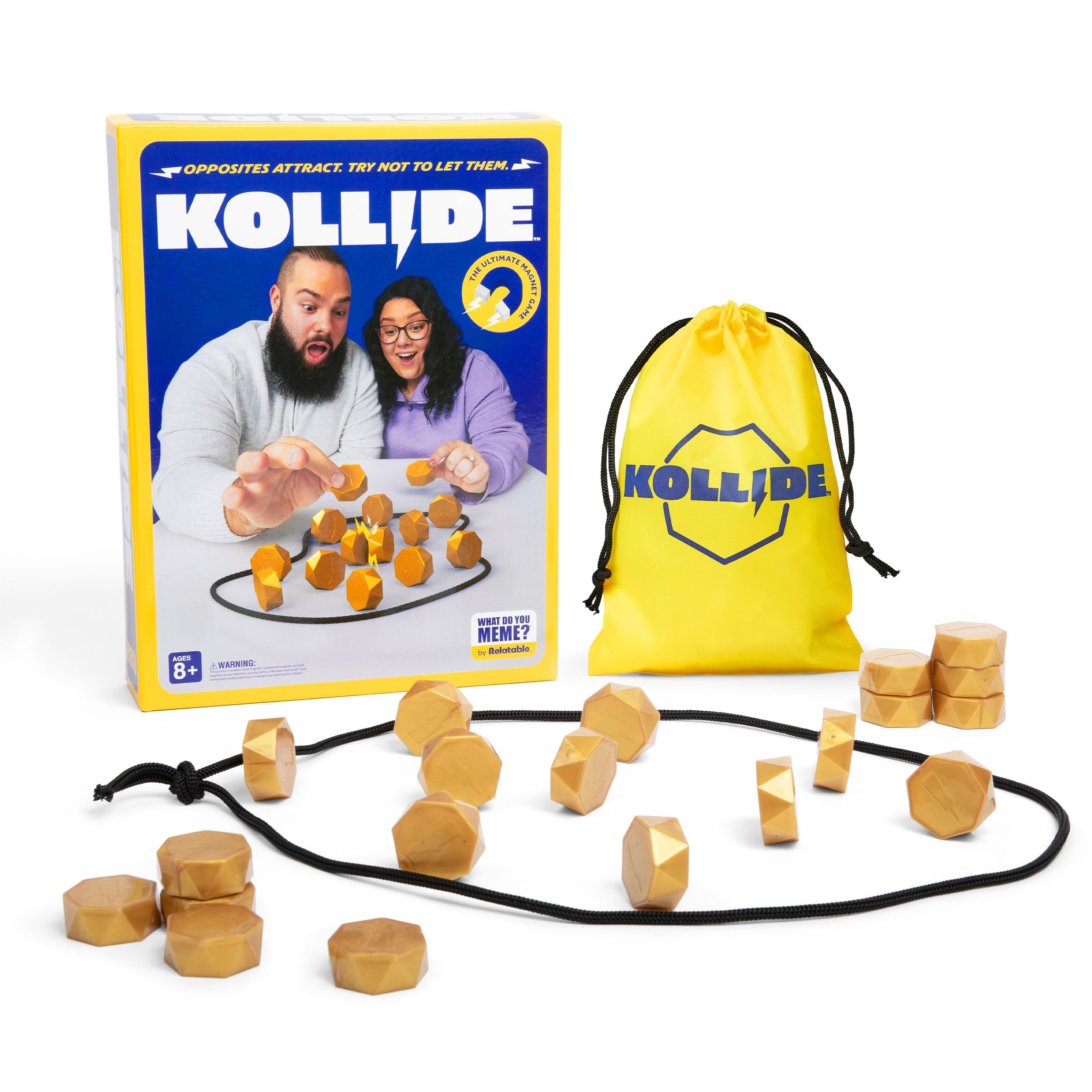
Kollide: 9/10. This is another game with a gimmick, in this case magnets! Each player takes a stack of magnets and the challenge is to place them in the string circle without any snapping together — if your placed magnet causes a collision, you have to take the whole set that collided. The goal is to be the first to get rid of all the magnets in your “hand.” It’s super simple to learn, can be set up in seconds, and is lots of fun. I only rank it down from a “perfect” score just because it is such a simple game that it isn’t one that I can enjoy playing all the time.
Update! Tried a few more games, and forgot one that I had already tried.
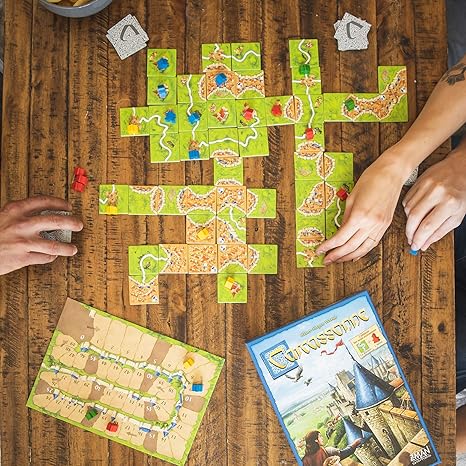
Carcassonne: 10/10. Thanks to folks who suggested this one, which I had never tried before! In this game, players randomly draw tiles to fill in the region of Carcassonne, matching boundaries of the tiles to expand the map. As they do, they can claim cities, roads, and monasteries for points. The rules are intuitive enough that my dad got into it right away and simple enough that I didn’t have to spend lots of time reminding him of details. And it’s just fun! My dad beat me decisively on our first match.
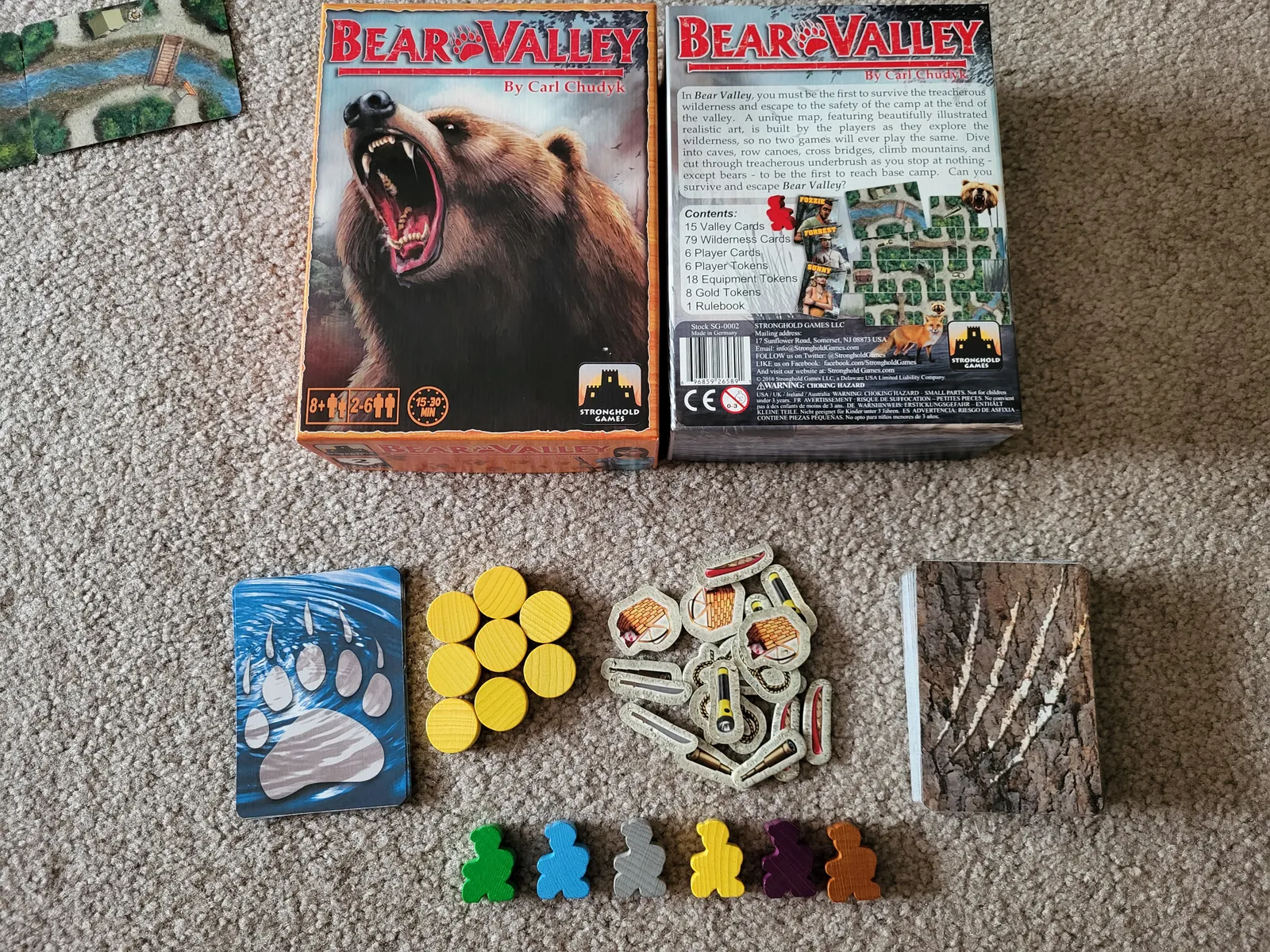
Bear Valley: 6/10. This is a game I had purchased ages ago to bring to a conference to play with friends and promptly forgot about! The approach is another tile-laying game, where the objective is to get from one side of the valley to the other first. The trick is that you can, in principle, keep playing cards to explore further into the valley, but the more cards you play on your turn the more likely it is that a major setback will hit you. The base game was simple enough for us to follow, though I’m not sure it is compelling enough to bring out very often.
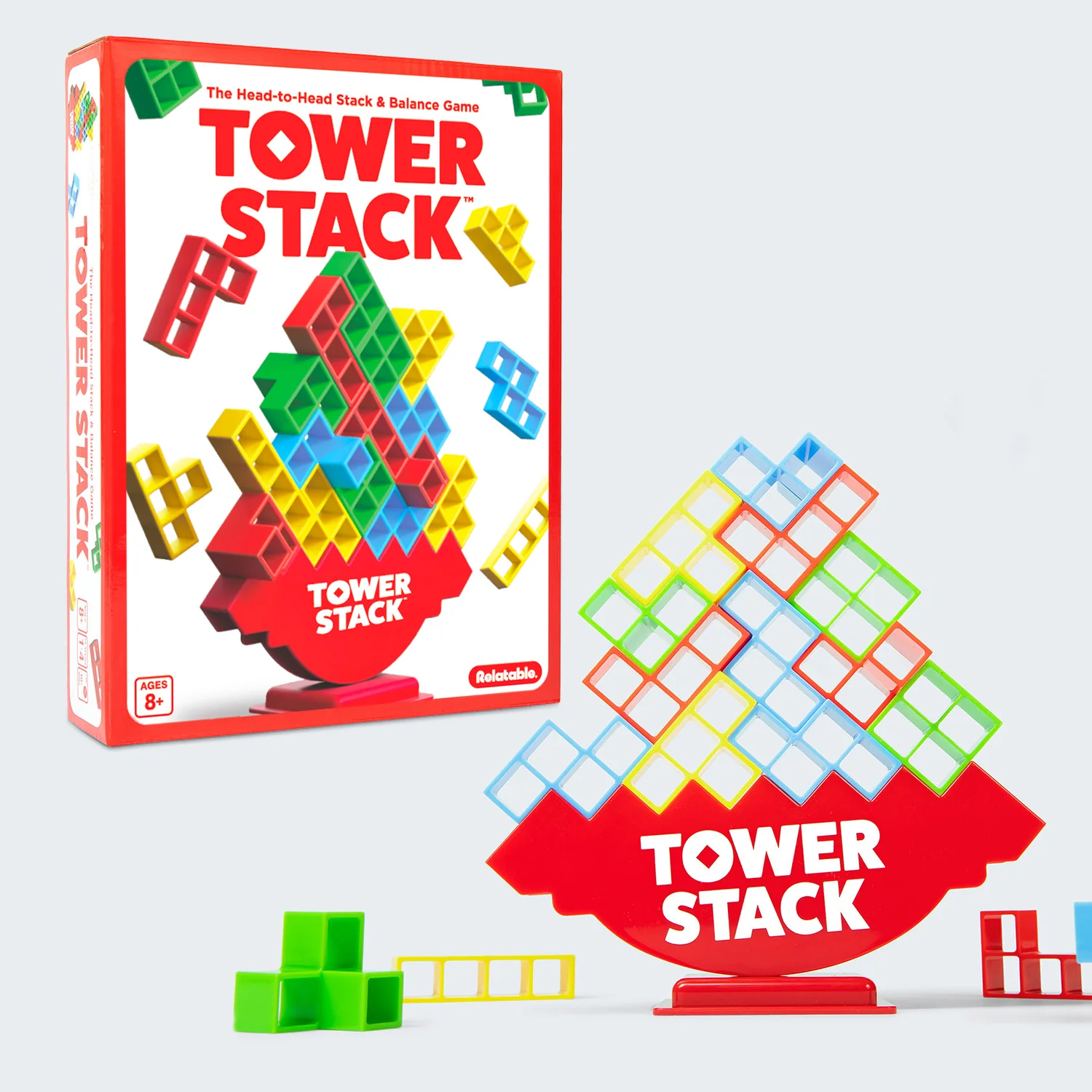
Tower Stack: 9/10. By the same company as Kollide!, this game involves placing Tetris-like shapes on an increasingly unstable tower, with the piece dictated by the draw of a card. The first person to knock the tower over loses! It is quick and easy to set up and each game takes less than ten minutes, meaning you can play multiple rounds. The only reason I don’t rank it perfect is that it can be a bit frustrating for people with failing motor skills to get the pieces in place, though that also means it’s good practice for seniors. My dad did okay with it, though!


 Skulls in the Stars
Hello! Ended up here through an unrelated search, but are you familiar with the Meeple Like Us blog? (A search’ll get you there.) I don’t know he’s been active lately, but it’s a blog about board game accessibility, including for cognitive and memory issues. The teardowns go into detail that you can use to assess your own situation.
There’s a lot to look through, but I’d suggest Splendor as a possibility, especially if you’re willing to help your dad and not be overly competitive. Everything is open information on the table, and you can enjoy it without the deeper strategy layer if that’s hard for him. It’s great with two players, and games are pretty quick. For a hobby game, it’s simple to learn and just a pleasure to play.
Thanks for the comment! I’ll take a look!