
Book 22 for my 2026 goal of 36 books for the year! Now a little ahead with my reading schedule.
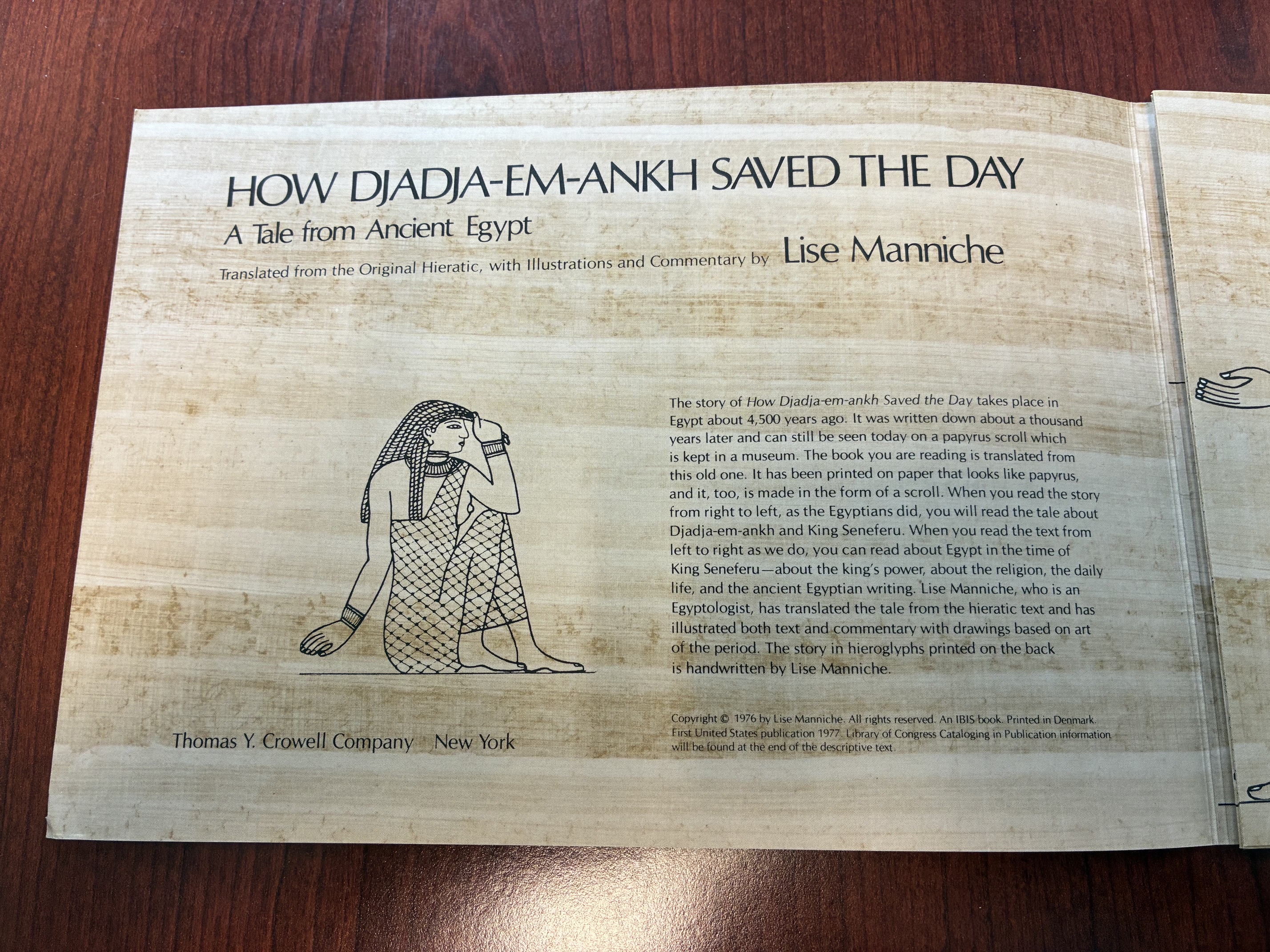
With all the hubbub about The Odyssey in theaters the past few weeks, I decided to crack a joke on social media about rereading an even better historical epic from ancient Egypt — the story of Djadja-Em-Ankh! I took classes on ancient Near East history in college and learned of this classic tale from the Westcar Papyrus. The story is very, very silly, which would’ve been the joke on social media. However, while looking up Djadja-Em-Ankh (impossible to forget that name), I learned that an absolutely delightful edition of the story was published in 1977, translated and commented on by Lise Manniche!
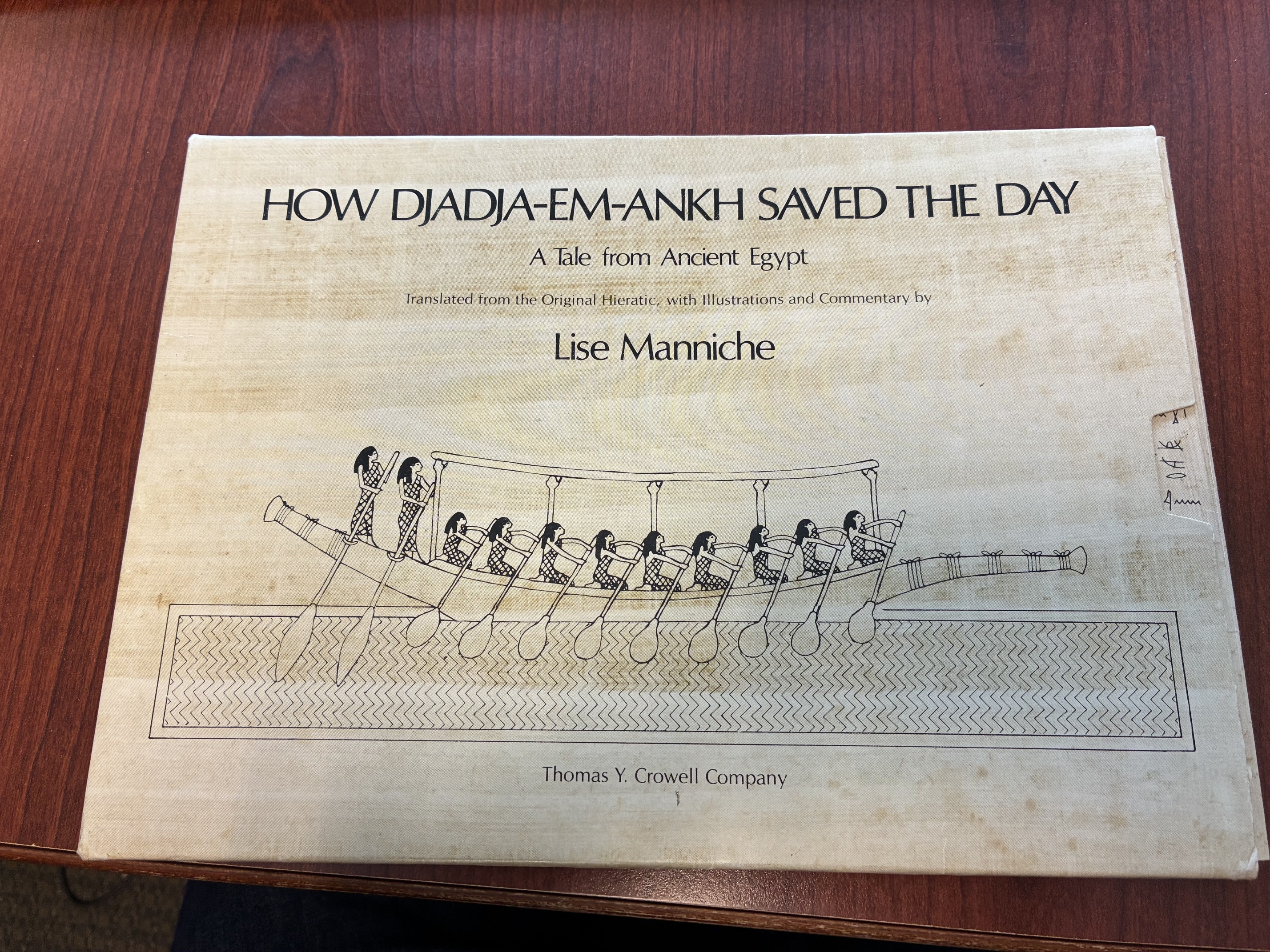
I immediately needed this book for my collection, and was able to secure a copy for only about $20 — lots of used books can be had cheaply simply due to lack of demand!
The book is very thin — the story of Djadja-Em-Ankh is just the third chapter in a story in the aforementioned papyrus. He is said to have been the vizier of the 4th dynasty Pharaoh Sneferu, though there is no evidence outside the story that he actually existed.
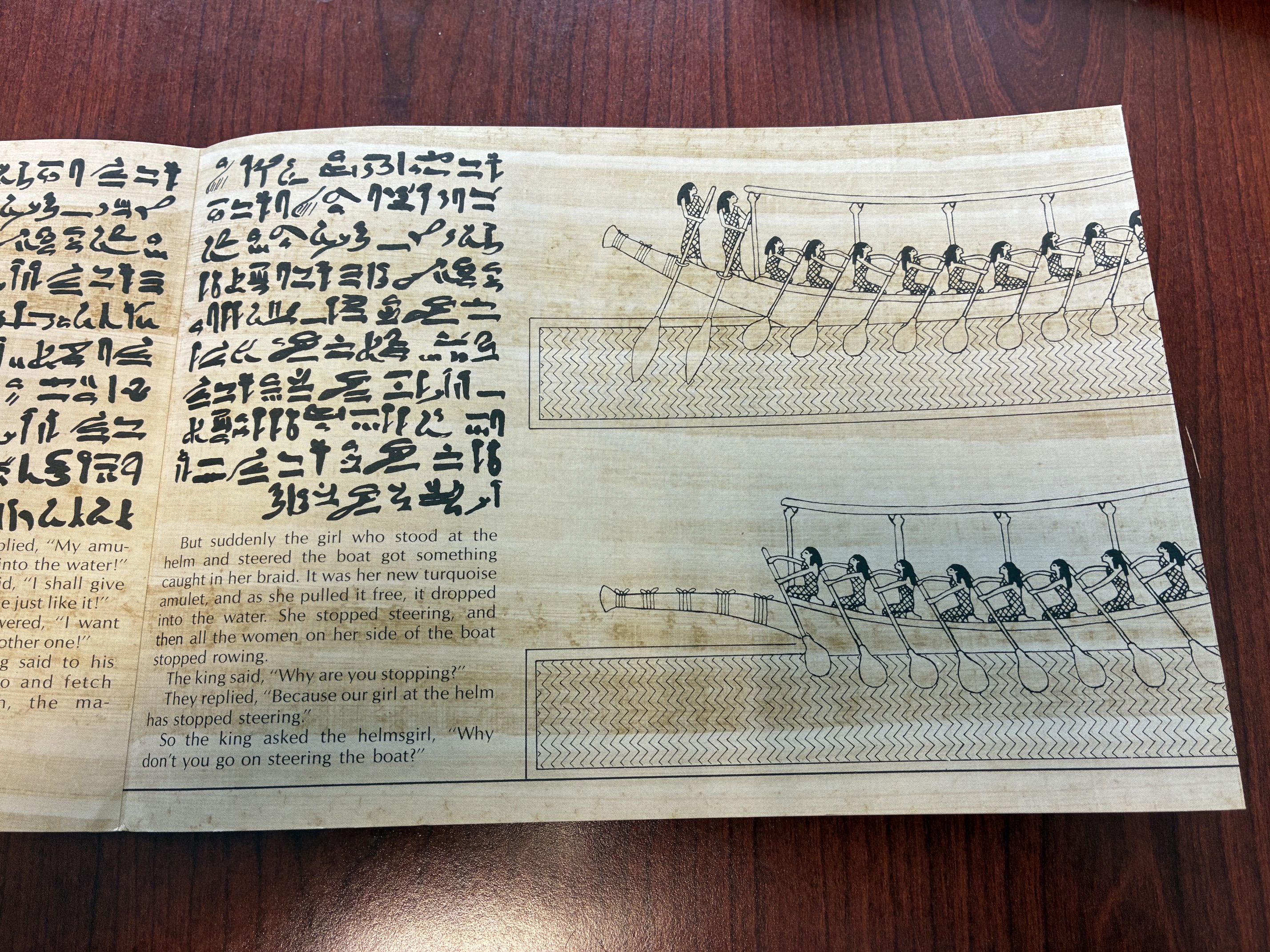
The story is quite silly! The Pharaoh is feeling sad so he summons his vizier for advice, and Djadja-Em-Ankh suggests that he have all the gorgeous women of the palace go row a boat around the lake almost naked for the Pharaoh to watch. Disaster strikes when one woman loses an earring in the lake, causing all the woman to stop rowing. Again it is Djadja-Em-Ankh to the rescue — he comes, learns the problem, and folds the lake over on itself so he can find the earring on the bottom of the body of water. He then unfolds the lake and peace is restored!
And that’s it! The story isn’t exactly a classic of literature, but it is apparently one that inspired many future tales.
Manniche’s adaptation of the story is absolutely charming. Though the original story wasn’t illustrated, Manniche took original drawings from other ancient Egyptian sources as substitutes.
The book, which really is only about 20 pages total, also includes original hieroglyphics.
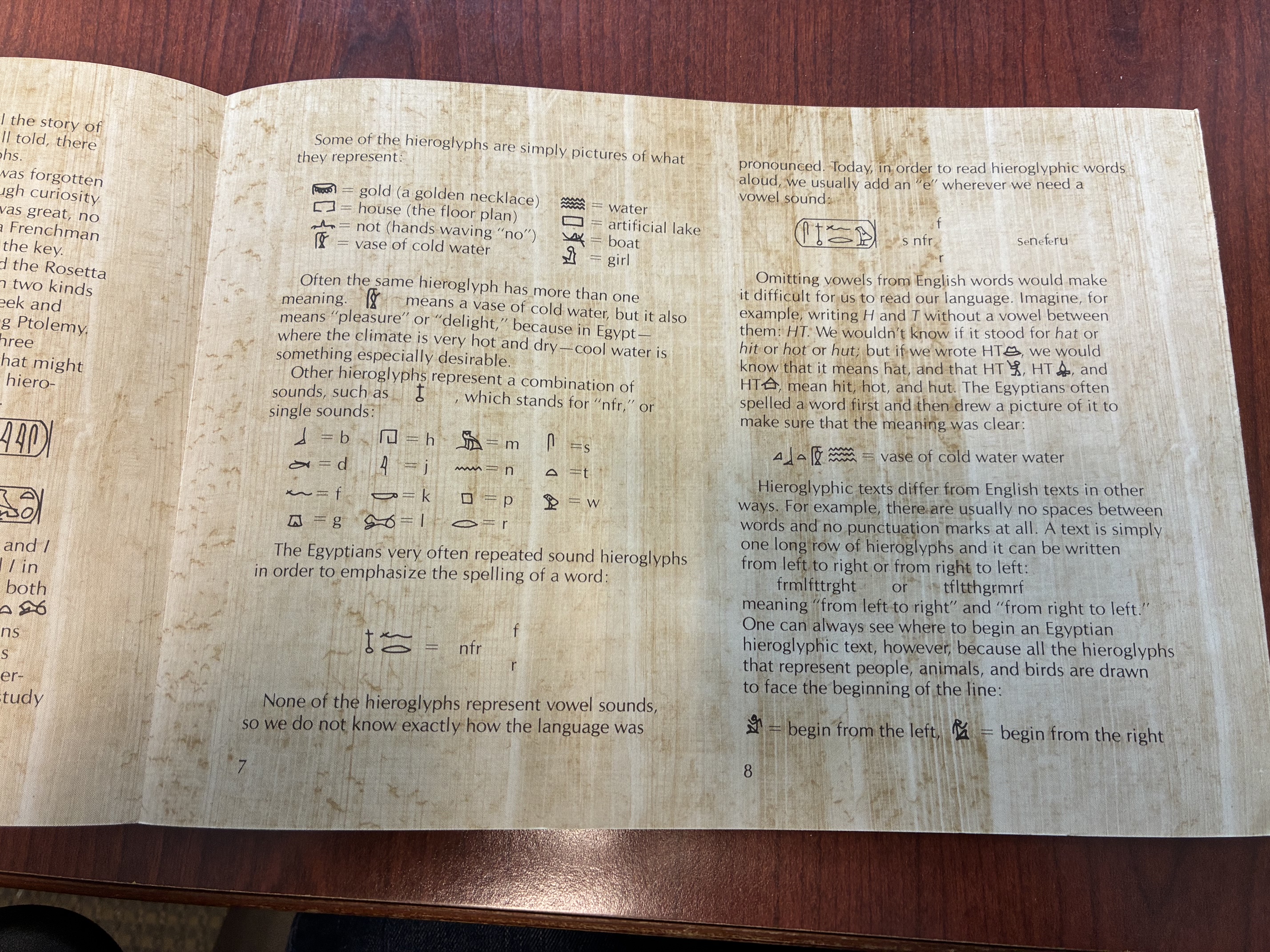
A story like this is meaningless in a vacuum, so it also includes background information and notes as well as some basic lessons on how to read hieroglyphics!
To top it off, you may have noticed that the book is printed on heavy, papyrus-like paper that gives it a charming authentic feel!
Information about How Djadja-Em-Ankh Saved the Day is hard to find online, but apparently the 1977 edition is a (presumably much more elaborate) reprint of the original edition from 1942. I will probably stick with this one, as it is absolutely lovely and enough to satisfy me!
One last note: I am quite delighted that I can still read a little bit of hieroglyphics, at least the names! From Wikipedia, Djadja-Em-Ankh is written as
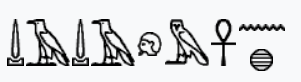
It’s not hard to follow the glyphs here — the little obelisk is a “dj,” the falcon-like bird is an “ah”, the owl-like bird is an “m”, and the ankh starts the word “ankh,” with the rippling line the “n” and the circle with lines the “ch.”
I need to dig back into reading hieroglyphics — it’s been too long since I tried!


