
Well, it’s been a hot minute since I did one of these compilations, hasn’t it? Turns out I’ve done a few threads on social media about #OldSchoolDungeonsAndDragons and didn’t realize I had enough for a new blog post. So, here’s part 33 of this long-running series!
Pages from the Mages (1995), by Greenwood and Beach. This is a curious and very specialized D&D supplement! It originated from a series of articles that Ed Greenwood, creator of the Forgotten Realms, wrote about the origins and contents of various spellbooks in Dragon Magazine from the early 80s to the early 90s.

The supplement compiles the material from those articles, as well as presumably some new stuff. The book details a large number of spellbooks, each of which is really unusual and carries a lot of history and mystery, like “The Book of Bats.”
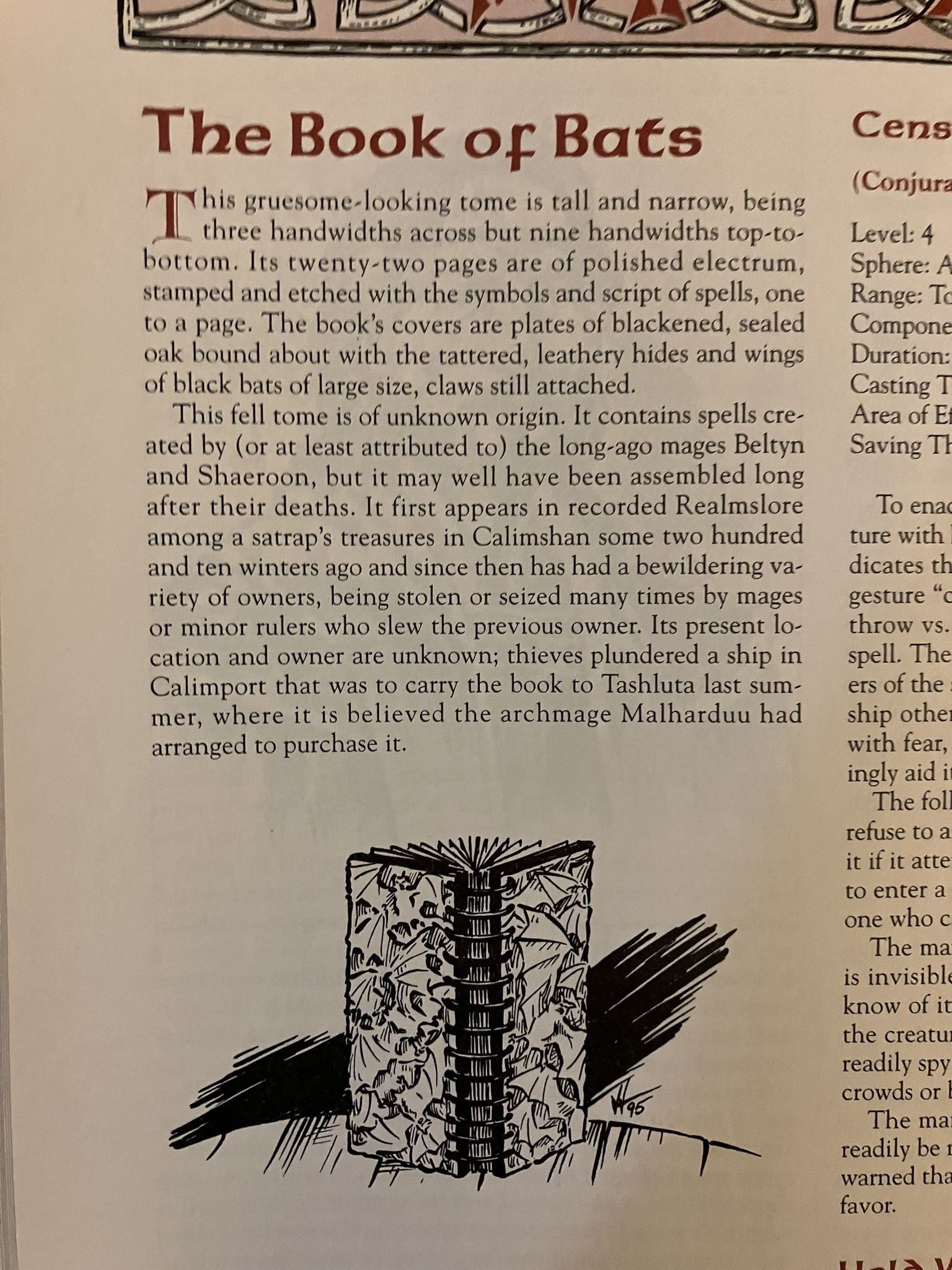
Of course, spellbooks alone wouldn’t be particularly interesting, but each book comes with stats for unique spells that can only be found within them, often named spells like Beltyn’s Burning Blood.

There is lots of additional fun information, like details in one spellbook on how to create one’s very own homunculus!

Being a Forgotten Realms supplement, the book even contains information on the one copy of famed wizard Elminster’s traveling spellbook that made it into the wild!

Here’s one of my favorite new spells that didn’t appear anywhere else: Thunderlance creates a magical lance that can be used for devastating damage in melee combat but also can be used to absorb or cancel certain spells!
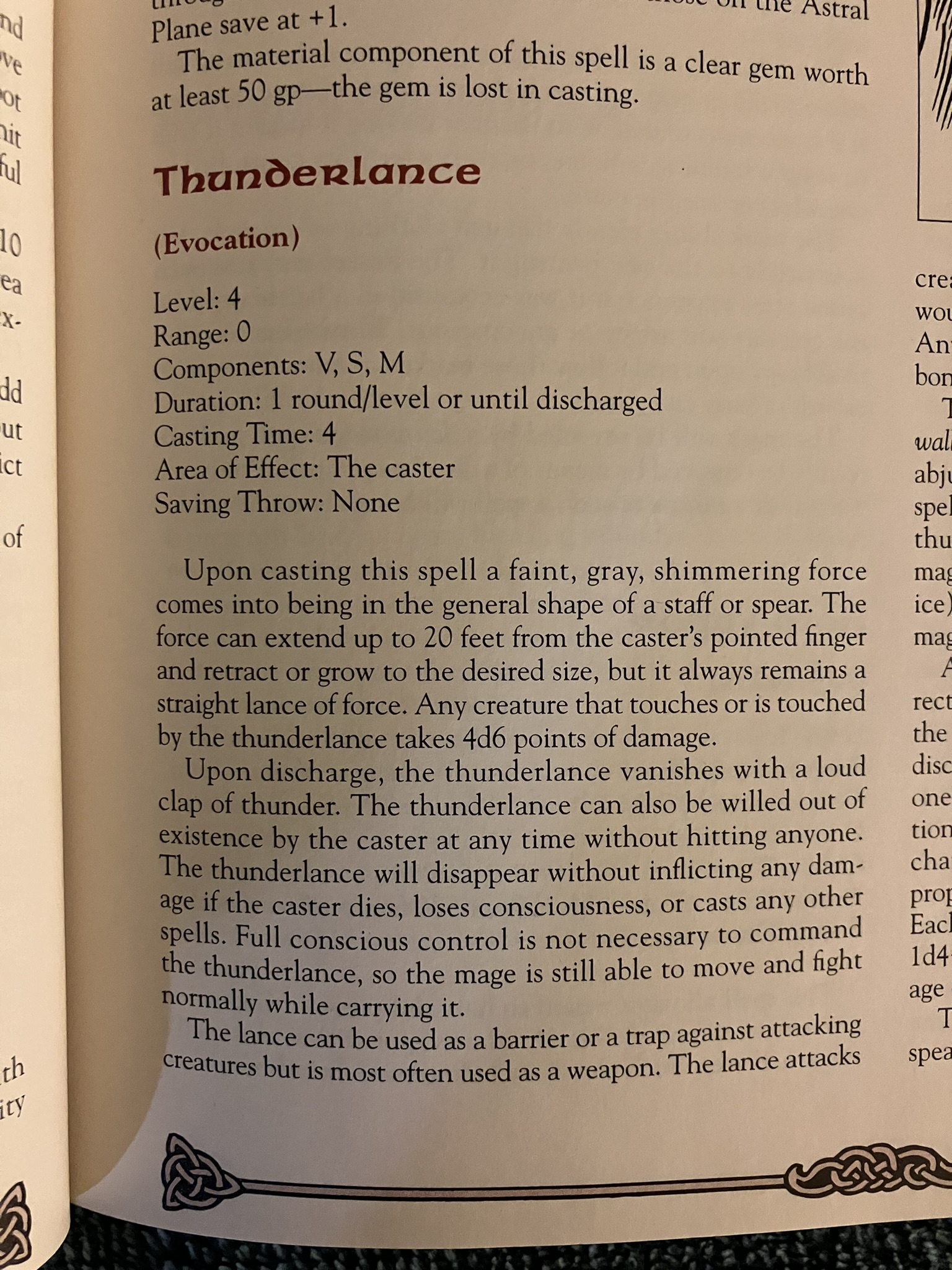
Other fun details include detailed ingredients for preparing spell scrolls. It is noted that some wizards have put their own “twist” on classic spells, allowing for unique variants.

It’s a fun book, but I can’t imagine that there was a huge market for it! Makes me wonder if this partly contributed to TSR’s downfall: the production of supplements that are well made but so specialized that they were likely to have small sales?
Freedom (1991), by David “Zeb” Cook. Freedom was the very first published adventure for the Dark Sun campaign setting, and having read it, I feel like I can say that TSR pulled a little bit of a (nice) trick on players!

So Dark Sun is a very bleak campaign setting — desolate deserts created by dark magic, with the only sanctuaries being tyrannical city-states run by sorcerer kings who rule over peasants and slaves alike. I never really got into the setting, honestly, because it was *so* bleak.

But Freedom is an adventure about the first good thing to happen in ages in Dark Sun: the overthrow of the sorcerer king Kalak and the transformation of the city of Tyr into a free city! The downside is that the players don’t actually play a pivotal role in these events. They are essentially witnesses to the events of the first Dark Sun novel, The Verdant Passage, as they happen. This was very much a TSR trend in the era of tying together the novels and adventures.

In the adventure, the characters basically get waylaid into being slaves working on the ziggurat of the sorcerer king. This is the other part of the adventure that is a bit disappointing — it is very railroaded, as the players will become slaves one way or another.

Here, for example, is one option for getting enslaved: getting provoked into a street fight that ends in arrest. There are basically 5-6 ways the characters can fall afoul of the law.
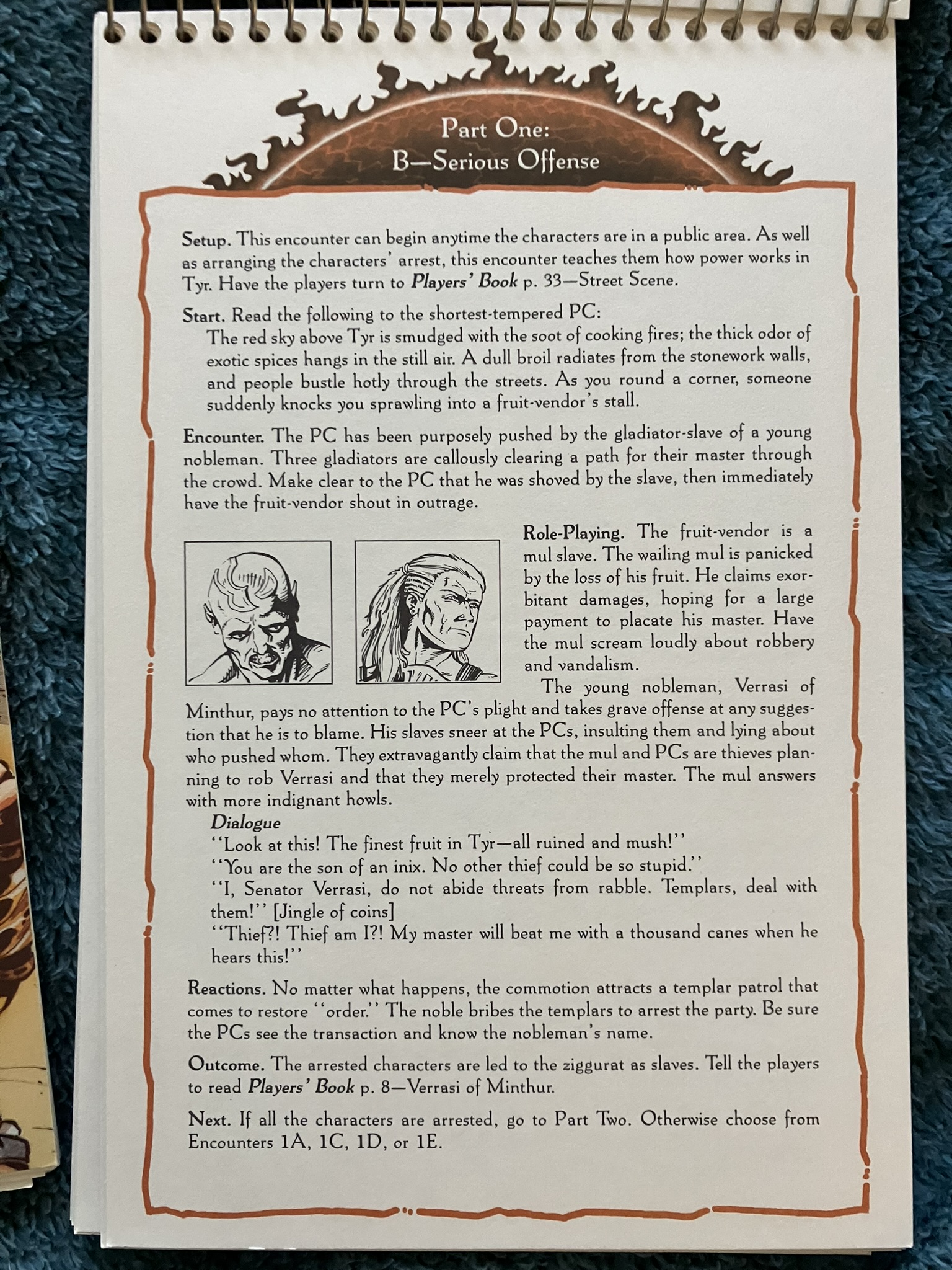
The adventure is presented in the innovative flip-book format that was invented for Dark Sun. The players and the dungeon master each get their own flip book with information. The format was clever, but never really caught on.

In any case, this adventure was released at the height of TSR’s graphic design era, with gorgeous colorful maps of the city.

Anyway, the details of the adventure were a bit bland and disappointing, but the idea of the adventure was a pleasant surprise — seeing the bleak world of Dark Sun become a little less bleak!
Return to White Plume Mountain (1999), by Bruce R. Cordell. I wasn’t sure about this one at first, but I shouldn’t have doubted the cleverness of Bruce Cordell!

This adventure is a nostalgia-driven callback to the original classic adventure White Plume Mountain, published in 1979 and written by Lawrence Schick. It is the original “funhouse dungeon,” which Schick got published by merging all the most entertaining dungeon ideas he ever had!

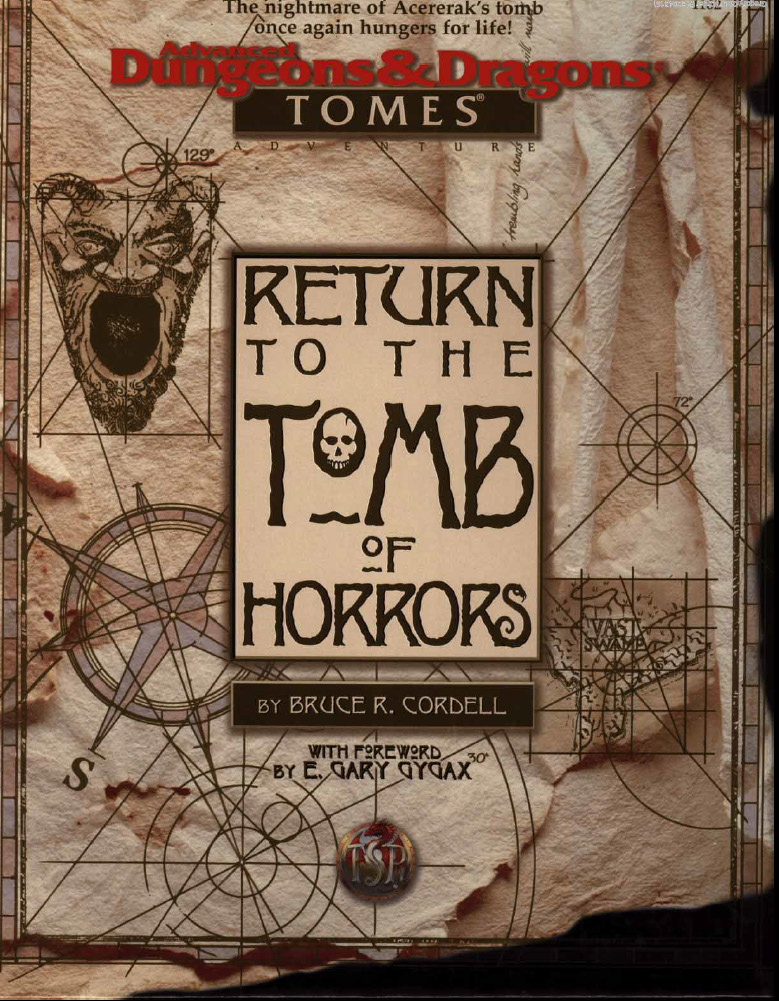
Return to White Plume Mountain was one of a series of adventures commissioned for the 25th anniversary of D&D in 1999. (They also probably represented an attempt to revive the company’s flagging fortunes.) Another example is Return to the Tomb of Horrors (1998), also by Cordell.
Warning: I’m going to give some significant spoilers for Return to White Plume Mountain, so look away if you don’t want this 25 year-old adventure spoiled!
In both Tomb of Horrors and White Plume Mountain, the adventurers directly or indirectly face off against an ancient wizard: Acererak in ToH and Keraptis in WPM. In RttToH, the players fight Acererak directly in the end, so Cordell needed a different angle and conflict for RtWPM…
He got significant assistance from two big Greyhawk fans, Erik Mona and Steve Wilson, who worked to make the original WPM make sense and fit into the history of the fantasy world. The result is a conflict that is possibly unique in the history of D&D!
Keraptis remained unseen in the original WPM, and only taunted the characters remotely. He had stolen three powerful magical items, Wave, Whelm and Blackrazor, and the adventurers had to get them back. The new backstory reveals that Keraptis was obsessed with achieving immortality and was using the powerful items as a focus for his magic. But Keraptis himself was trapped exploring other dimensions when the weapons were stolen! However, one of his experiments involved trying to encode his very intellect into magical scrolls. These scrolls acts as a KERAPTIS VIRUS, that can infect anyone who unsuspectingly learns from them. And it is tempting to do so, because they act as unique and powerful spell scrolls. As the adventure starts, 20 years after WPM, four beings have been infected and believe themselves Keraptis!
In returning to investigate strange activity at the volcano, adventurers find themselves caught in a war between the four false Keraptis factions and a group that represents the true wizard and seeks to bring him back. Along the way, a few characters will probably be infected by a K-imprint.

The players thus likely end up with a personal stake: the need to disinfect themselves before their minds are wiped clean by a Keraptis copy! Also, the false Kerapti have plans to distribute K-imprint scrolls throughout the realm, leading to a deadly Keraptis pandemic!
In the end, the best way to do this is to gather Keraptis’ famous weapons Wave, Whelm, Blackrazor and the (new to canon) Frostrazor, which can be used to bring the true Keraptis back from exile. But what will be his reaction when he returns?

Like other adventures in the “Return to…” series, the author got to imagine what the dungeon looked like some 20 years after the original adventure. Some traps and tricks remain the same, others are dramatically changed. The bubble in the boiling volcanic lake is gone (probably popped by players).

In the original adventure, the area around the volcano was mapped but not detailed. In the new adventure, the players have the opportunity to visit some of the famed sights like “Dead Gnoll’s Eye Socket.”

It is overall a really neat adventure, and the idea of what amounts to a “magical memetic virus” infecting people is really unique in D&D lore! Return to White Plume Mountain holds up as an excellent continuation of the original.
Vecna Reborn (1998), by Monte Cook. This is another adventure that features D&D’s villain, Vecna! This one is pretty rare and hard to get an original copy; fortunately I was recently able to get a reasonably priced one from my friend at Wayne’s Books.

Vecna, of course, is one of the most famous villains in D&D, a powerful lich who was betrayed by his second, Kas, who managed to remove Vecna’s hand and eye, which became evil artifacts. These artifacts go all the way back to zeroth edition D&D, in the Eldritch Wizardly supplement!
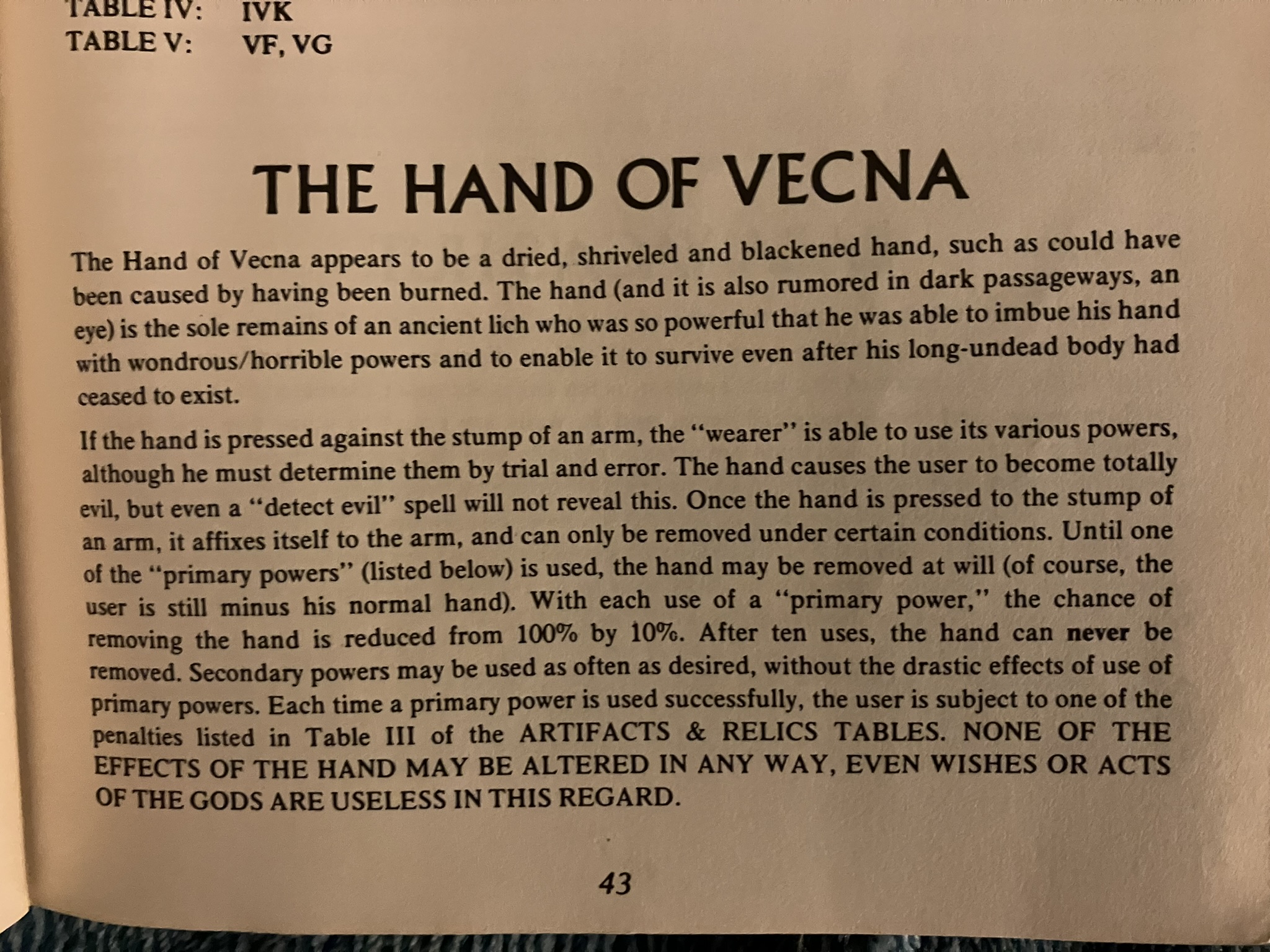
Vecna’s artifacts were the only manifestation of Vecna until 1991, when the adventure Vecna Lives! was published. This adventure introduced Vecna as an active malevolent presence and further expanded the lore of his cult. In the end, he likely gets banished from the mortal world…

It was then revealed that in the 1997 Ravenloft campaign setting book Domains of Dread that Vecna, and his nemesis Kas, were trapped in the horror demiplane that is often known in shorthand as Ravenloft, after the classic gothic adventure from 1983.
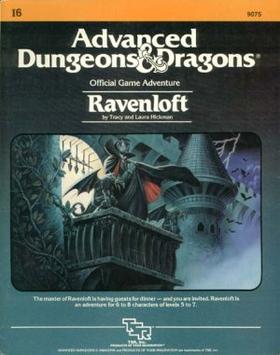
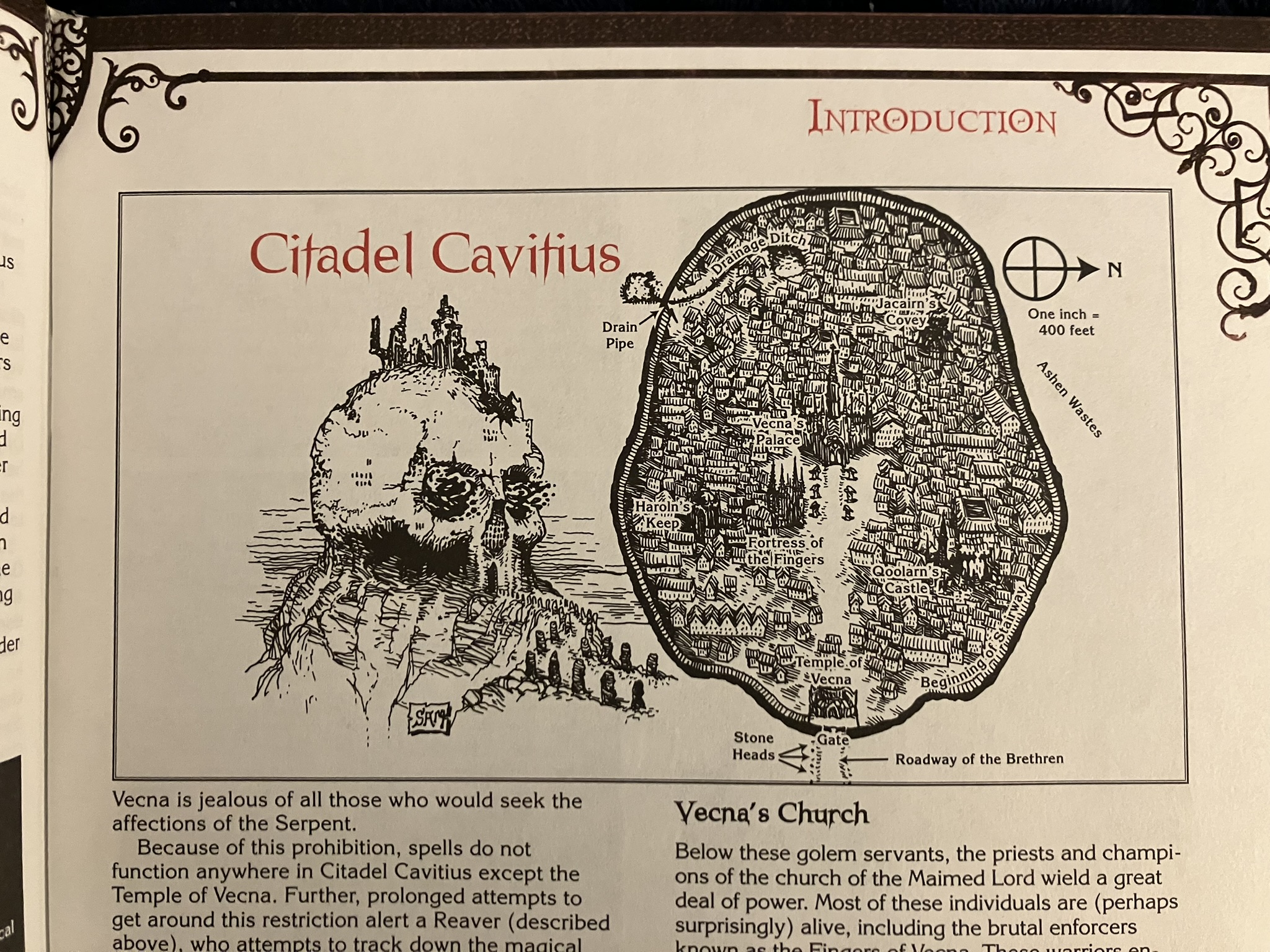
In Vecna Reborn, the player characters are transported to the realms of Kas and Vecna (as often happens to get Ravenloft adventures started), which consist of Kas’ city of Tovag and Vecna’s city of Cavitus, separated by mountains called the Burning Peaks.

The hidden masters of the Domains of Dread like to torture the rulers as much as the subjects of the domains, and it so happens that Vecna and Kas cannot themselves physically cross the peaks to finally sort out their differences. They send armies to attack each other, but Vecna has a plan…
(Some spoilers to follow for this nearly 30 year old adventure.)
Vecna has cultists in the land of Kas who find a pregnant woman and prepare her to give birth to a new incarnation of Vecna, which is the only way that Vecna can jump the barrier of the peaks and possibly escape the Domains altogether! The PCs meet this pregnant woman early on…
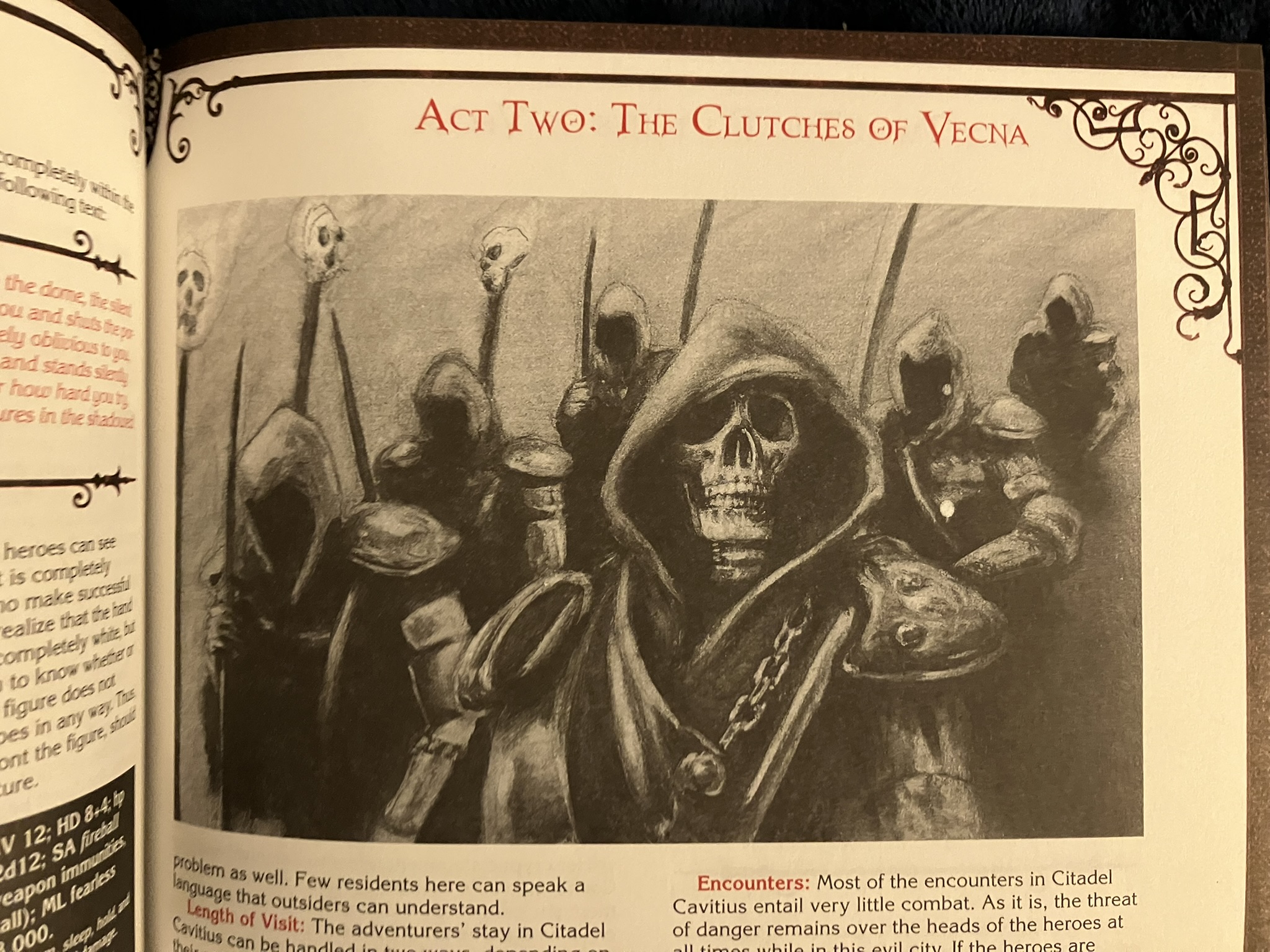
In the adventure, the characters will travel both to the realms of Kas and Vecna, and Vecna’s is definitely the highlight, with his skull-shaped city full of undead alongside the living.
Personally, I find this to be the least compelling of the original trilogy of Vecna adventures. The plot is really a linear slog through the realms, punctuated by a number of fights and puzzles. The artwork, however, is great.
The Vecna trilogy would end properly with the epic Die Vecna Die!, a truly universe-spanning adventure that is also used as a transition from 2nd edition to 3rd edition rules! (Which I have talked about at length previously.)

House on Hangman’s Hill (1981), by Jon Mattson. Here we have an early horror adventure for D&D!

This adventure was written by Mattson to address what he called a “curious lack” of haunted house adventures for D&D! As he admits in his intro, however, Judges’ Guild also published Tegel Manor in 1977, which has the distinction of being the very first D&D haunted house!

As far as official TSR products, The Sinister Secret of Saltmarsh would also appear in 1981, though those familiar with the adventure know that there’s a big catch to calling it a “Haunted House.”

In House on Hangman’s Hill, adventurers are sent in to end the mysterious hauntings that started after the owner of the house was hanged by superstitious locals. True to form, the house is haunted by all sorts of things, including custom-designed “spirits” that can scare but not harm.
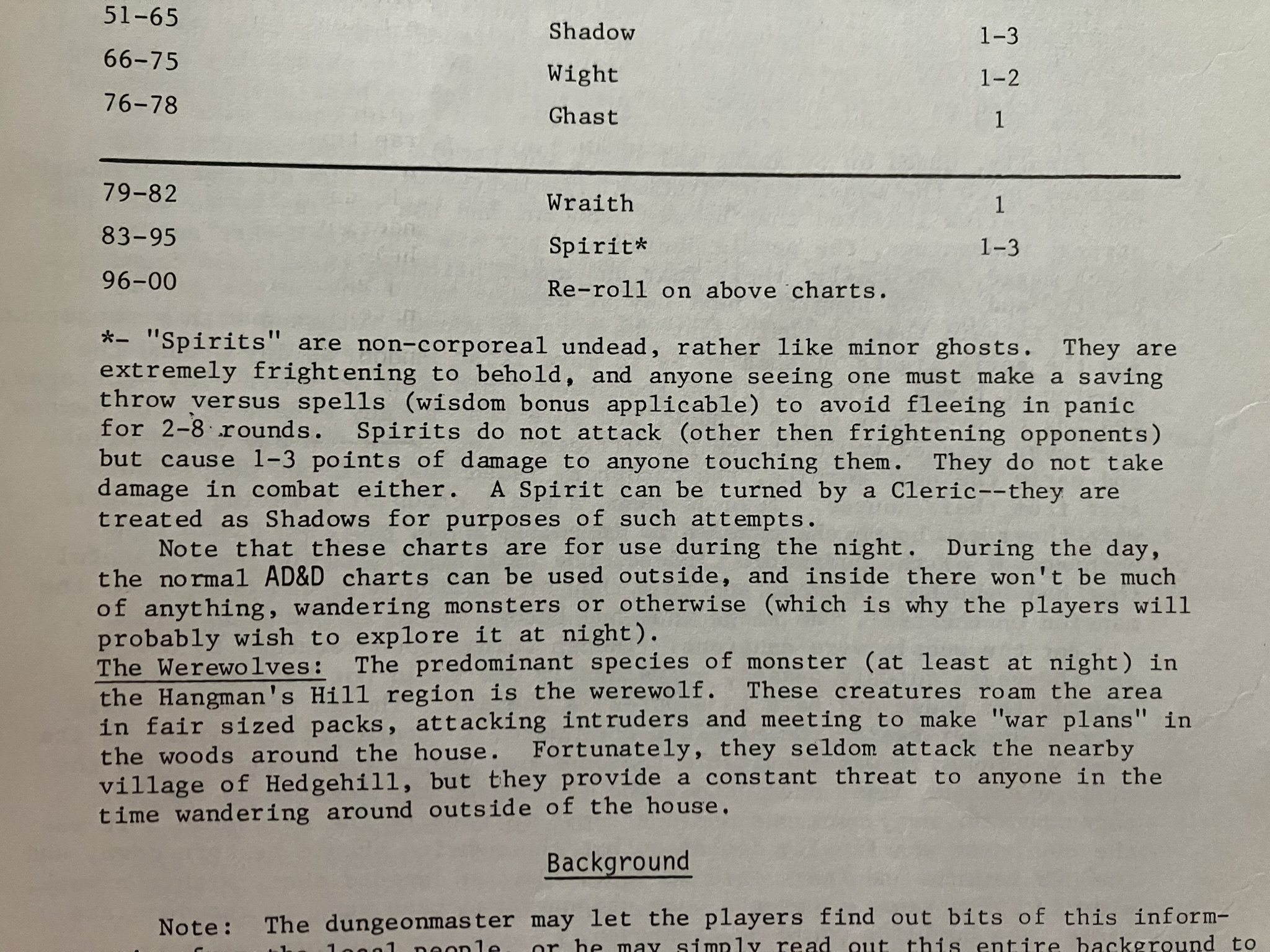
The adventure background indicates that there was a party of adventurers sent in to investigate the house before the players that did not return. Along the way, the players can rescue the sole survivor, a now imprisoned dwarf.
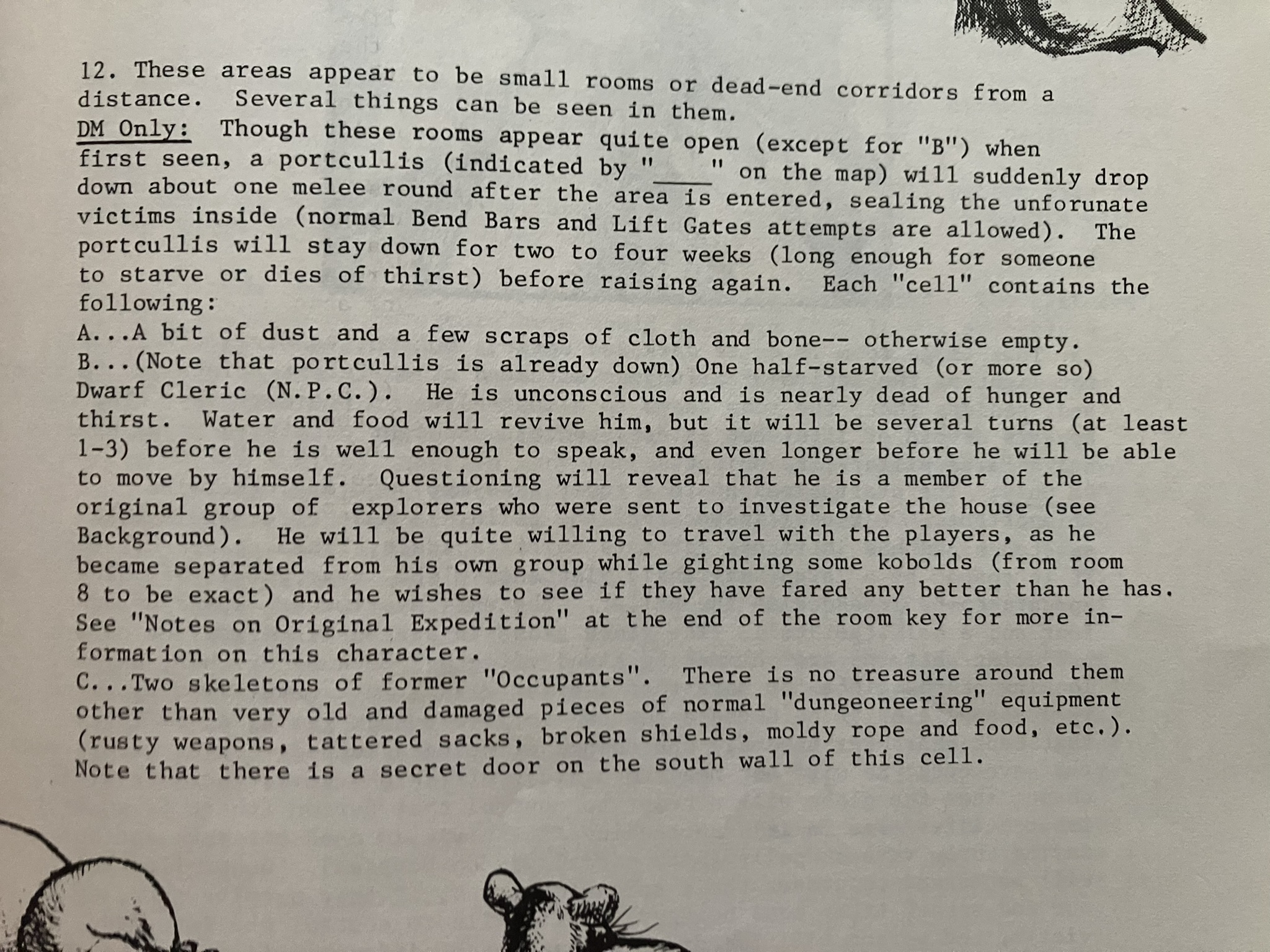
The adventure has some fun unique encounters. In a tower, there is a globe that can hypnotize the characters and steal their life force if they’re unlucky!

Unlike the earlier Tegel Manor (as I recall), in Hangman’s Hill the players can meet the original spirit of the hanged house owner that drive the haunting and finally put him to rest.

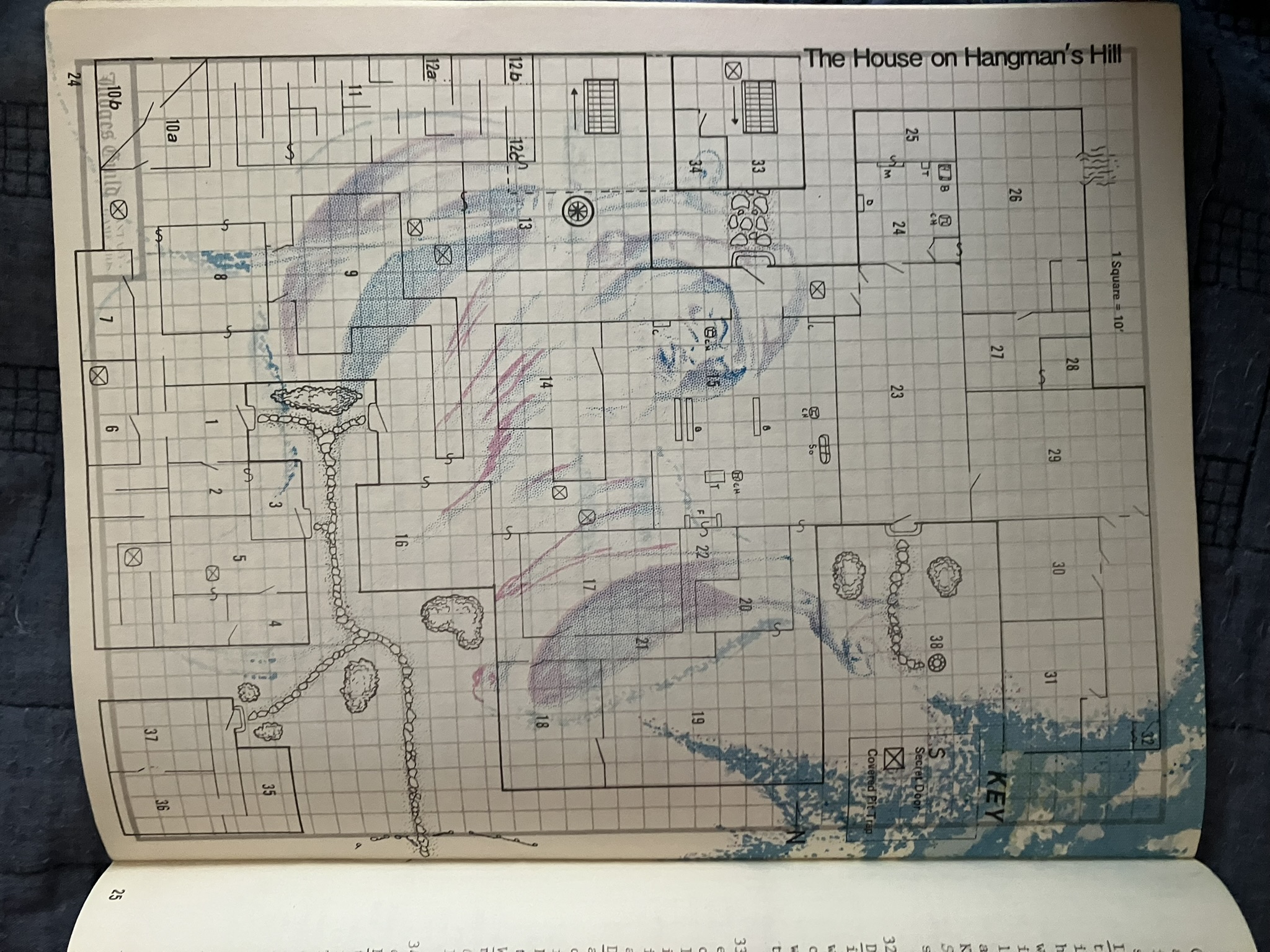
The map of the house is of course provided. One thing that hasn’t aged well for this printing: the overlaid images of ghosts and monsters on the page that makes things hard to read!
Overall, House on Hangman’s Hill is a fun early adventure and a rarity at the time as a true haunted house adventure!
**************************************
Okay, that’s it for this edition of Old School Dungeons & Dragons! Hopefully I’ll have time to do these more often again in the near future.


 Skulls in the Stars
With respect to TSR’s decisions on printing (and how they factored in to what ultimately happened to them), <https://www.filfre.net/2025/02/the-crpg-renaissance-part-3-tsr-is-dead/> (and its sources) provide at least one answer. The summary is that the distribution contract with Random House specified that they be paid for inventory when Random House received it, as opposed to when they sold it (but that money was then effectively treated as an advance). So when TSR started having cash problems, they responded by printing more products, because they got the money from them right away, and (at least initially) Random House wasn’t very diligent about calling in repayments for unsold inventory.