Book 25 for my 2026 goal of 36 books for the year! Comfortably ahead with my reading. My link to the book is through my bookshop.org affiliate account, which means I may earn a small commission if you buy from there.
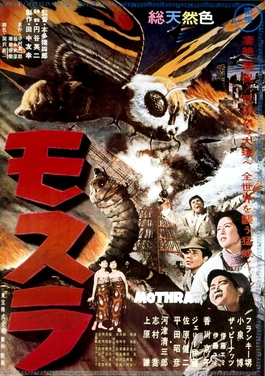
One of my recent wanderings of my local bookstore uncovered a book that I just had to have: the translated original novelization of the famous kaiju movie Mothra! The book is titled The Luminous Fairies and Mothra: the original appeared in a magazine in January of 1961 and was written by Shin’ichiro Nakamura, Takehiko Fukunaga and Yoshie Hotta, though the English translation only came out in January 2026 and was translated by Jeffrey Angles.
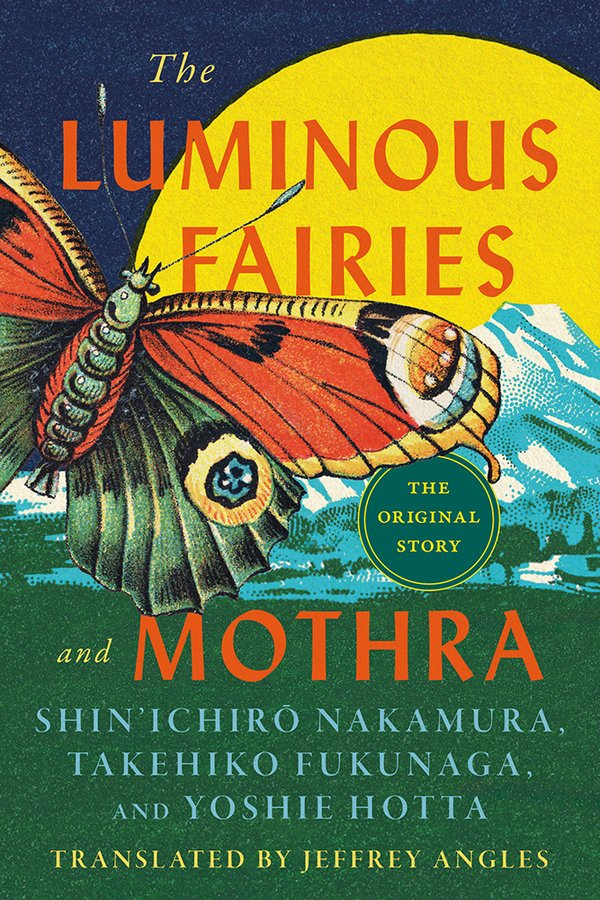
It should be noted that the original story is a novella that takes up on 44 pages of the 114 page book — the rest are extensive translator’s comments that fill in details of the history and politics underlying the story and its inception. I can happily say that both parts are really fascinating to read!
Without delving into too much detail that is covered in the translator’s notes, it is worth saying a little about the nature of this book. It was commissioned by Toho Studios at a somewhat precarious time in their existence where they really needed to figure out how to make their winning Godzilla kaiju formula sustainable. They commissioned Nakamura to write a new original story, and he brought on Fukunaga and Hotta. The three of them wrote it round-robin style, with one person writing one section and then the next author building on it. There are therefore three parts to the story, each written by one author. As Angles notes, this was a pretty common way to do collaborative projects in Japan at the time.
The novella’s three parts may be summarized as: the discovery of Infant Island and the Luminous Fairies, the kidnapping of the Fairies by the unscrupulous Rosilican government, and the rise of Mothra to come rescue them and destroy anything that gets in the way.
The novella is fun in and of itself as a little bit of history — it primarily served as the foundation for the movie and as an early advertisement for it — but it is the translator’s notes that really make it all come alive. Angles delves into the politics of the era and how post-war tensions and new cold war tensions are central themes in the book. The name of the country “Rosilica” that collaborates with Japan on exploration and later catastrophe is an amalgamation of “Russia” and “America,” reflecting Japanese fears of being caught up in the destructive nuclear games that the two superpowers were playing. Much of the more overt political subtext was stripped for the movie version, which makes Angles’ discussion important and very interesting.
There are other interesting connections that he makes! There is an extensive section on how the famed Doctor Doolittle books likely inspired sections of the Mothra story and even Mothra itself. The first Doolittle book was translated into Japanese right at the start of World War II and then more, including one with a giant friendly moth, was translated after the war.
A smaller part of the discussion but equally fascinating is the argument that Mothra can be considered a nonbinary or transgender kaiju. This is in part due to the ambiguity with which the authors treat the gender of Mothra but is also much more explicit in the creation myth of Mothra given in the story.
Godzilla is even mentioned briefly in the book — or more accurately “Godzillas” — indicating that even the authors of Mothra viewed their writing as part of an expanded universe of kaiju. Angles, incidentally, translated the original Godzilla stories back in 2023 and I of course snapped up that book and will read it soon.
This book will probably not appeal to everyone, as the original story is more a sketch than a fully-fleshed out novel, but it was a joy to read and the translator’s insights make it well worth exploring if you’re a fan of Mothra or kaiju stories in general!
Now I’m in the mood to go watch Mothra again…