
Some time ago, I fell out of the habit of doing old school Dungeons & Dragons posts on social media, but recently I’ve been trying to get back in the game! This is the latest compilation of threads; all of the compilations can be found in my Dungeons & Dragons blog tag.
Incidentally, up to this post, I’ve written about 157 old school topics!
X3: Curse of Xanathon (1982), by Douglas Niles. I’ve done this one before, but recent political occurrences made it feel worthwhile enough to revisit with some snark!

The adventure starts in the city of Rhoona, where the Duke of Rhoona has started making increasingly bizarre and nonsensical proclamations.
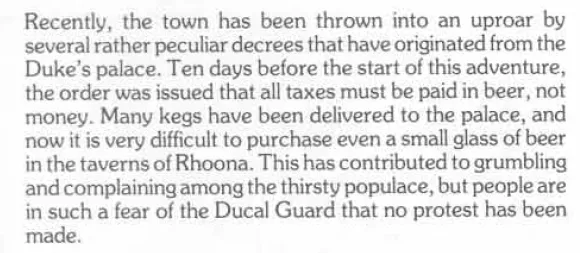
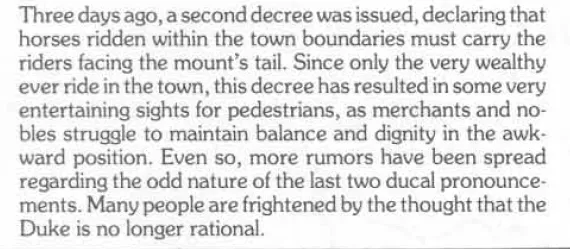
The proclamations start as largely odd, but quickly escalate to the point where the people think that the Duke has gone bonkers.
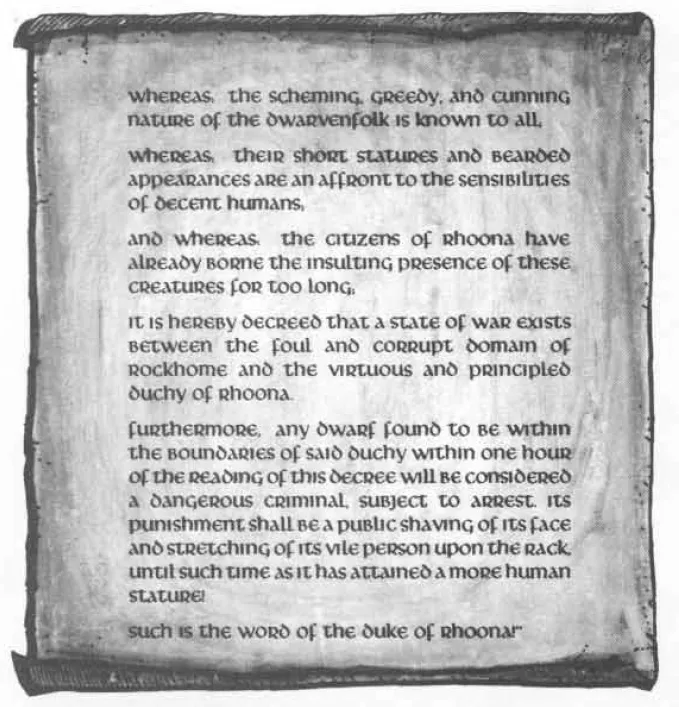
As the adventure formally begins, the Duke goes full-on racist, slandering the dwarves, some of his closest allies, and expelling them from the city, putting the two powers at the brink of war for no sensible reason whatsoever.
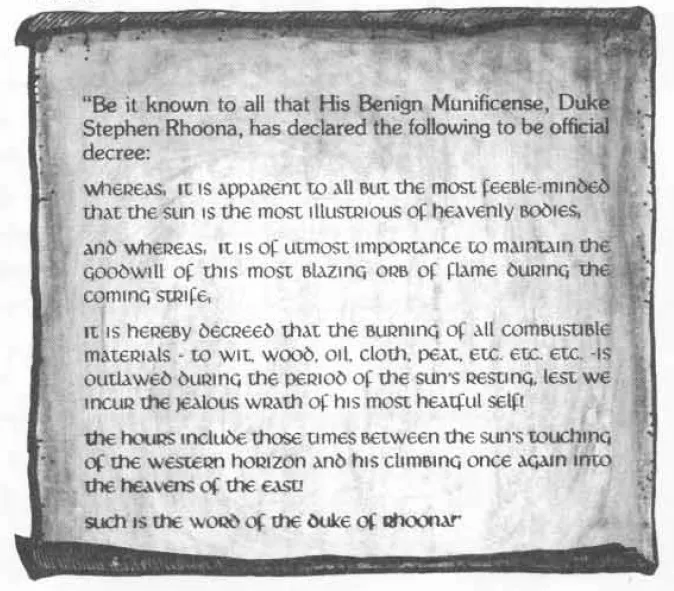
The adventurers start by acting on a tip that Draco Stormsailer, the second in command of the Duchy, may be somehow behind this and looking to take over once the Duke is gone. An investigation of the Ducal barracks leads them to another conspirator, but before the adventurers can follow up, the Duke issues another outlandish proclamation, basically outlawing most forms of energy production.
Undeterred, the adventurers travel to a temple where people literally worship chaos, to find that the culprit behind the Duke’s madness is an evil bald guy who literally does not have a heart.
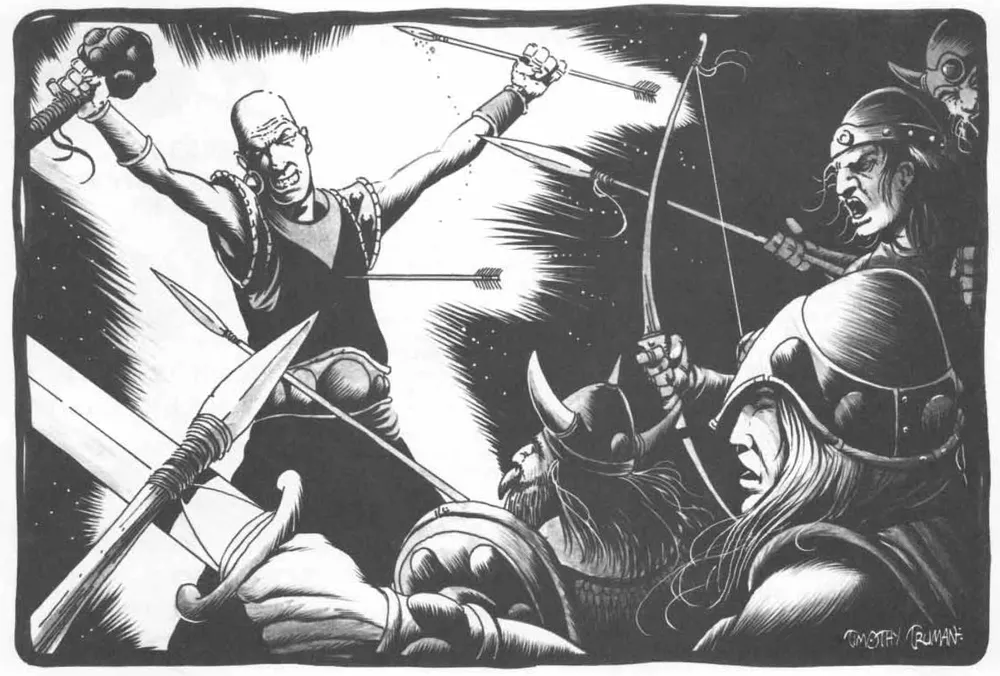
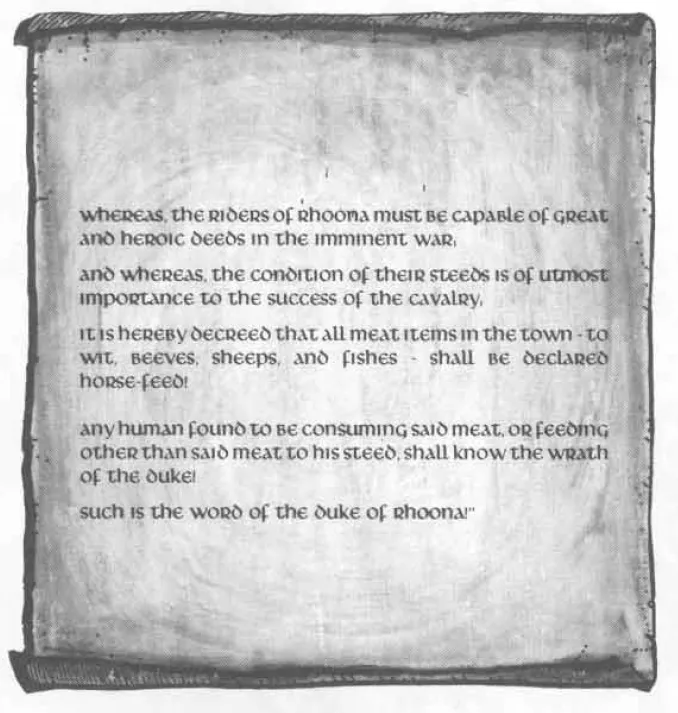
The adventurers travel into the wilderness to find the heart of the evil dude to use it to blackmail him into lifting the curse on the Duke. Meanwhile, the Duke decides to make it impossible for his subjects to eat a healthy meal. His arguments fly against science and common sense.
Finally, and this is the most unrealistic part of the story, the heroes get the antidote from the evil bald dude and race to cure the Duke. Before they reach him, though, they have to fight the evil second in command, who was hoping to claim the Duke’s role for himself. Finally, the Duke is cured!
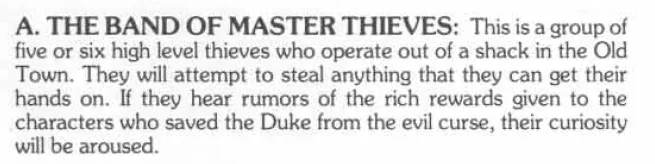
Heck, even with the main adventure done, there are opportunities to solve other problems in town. There is a group of master thieves who the adventurers can stop from robbing everyone blind…
… and they can look into a bunch of people who have been disappeared and kidnapped into slavery in the town.

Anyway, this is a fun classic D&D adventure, actually one of my favorites, that bears no similarity WHATSOEVER to current events!
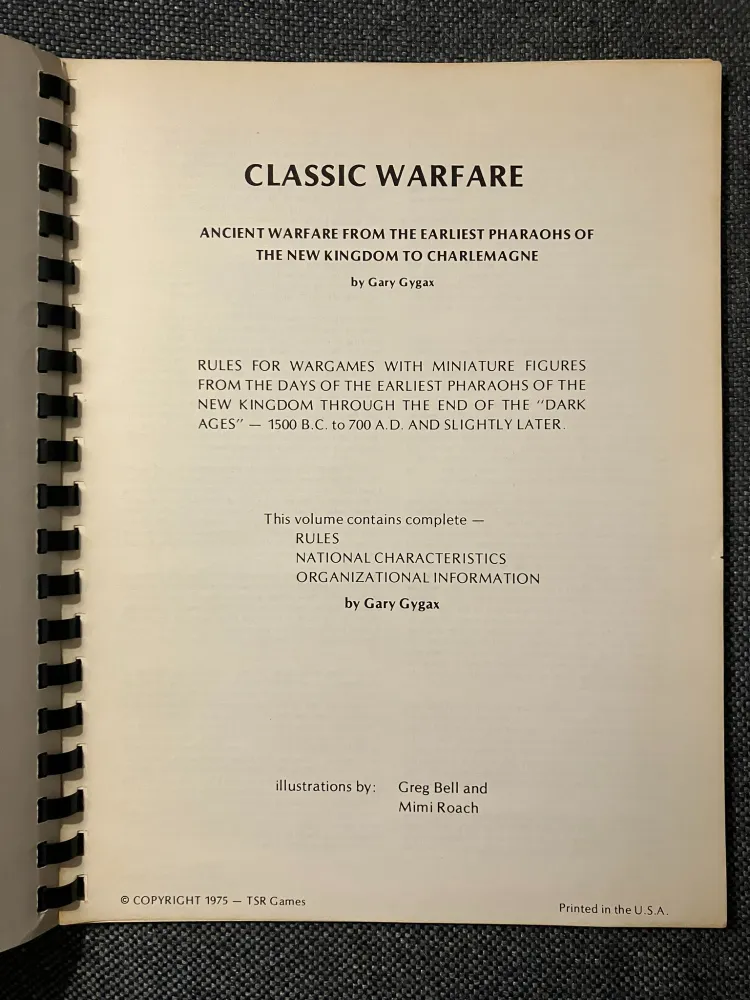
Classic Warfare (1975), by Gary Gygax. This is a true classic that nearly predates D&D and lies within the wargames era of TSR!
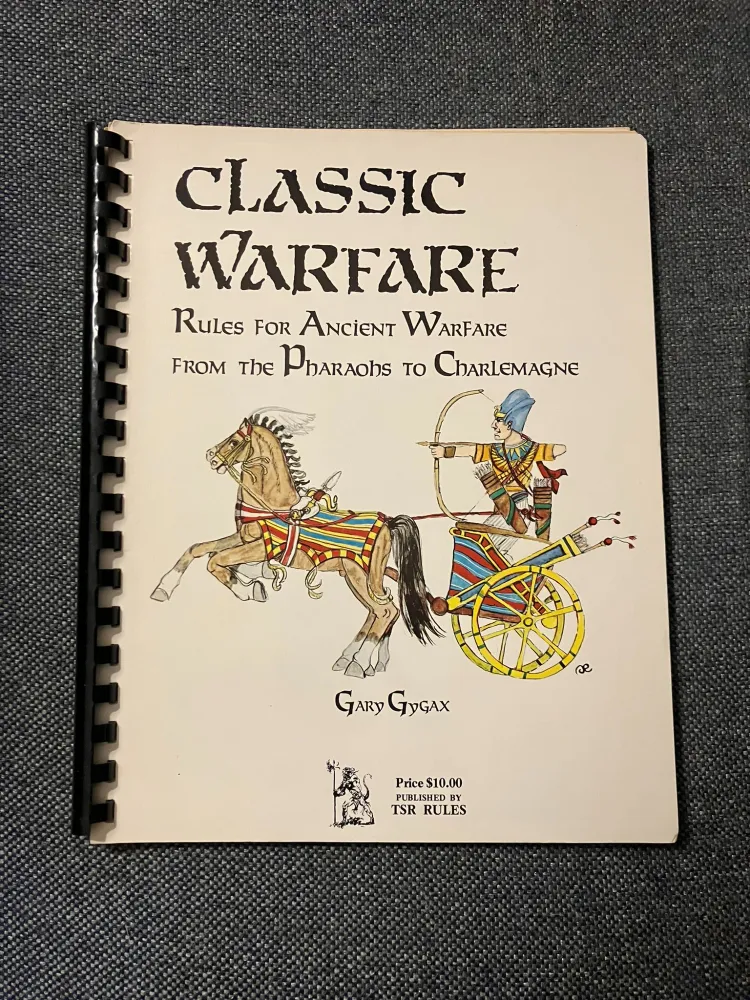
This volume can be said to be Gygax’s extension of the Chainmail wargame rules that he originally published with Jeff Perren in 1971 and was the precursor to Dungeons & Dragons.
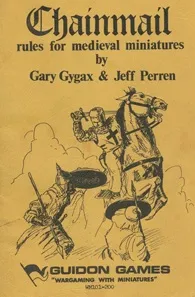
Chainmail focused primarily on Medieval warfare (as the name suggests), and Classic Warfare provides rules from the Egyptian Pharaohs of the New Kingdom up to the Chainmail era.
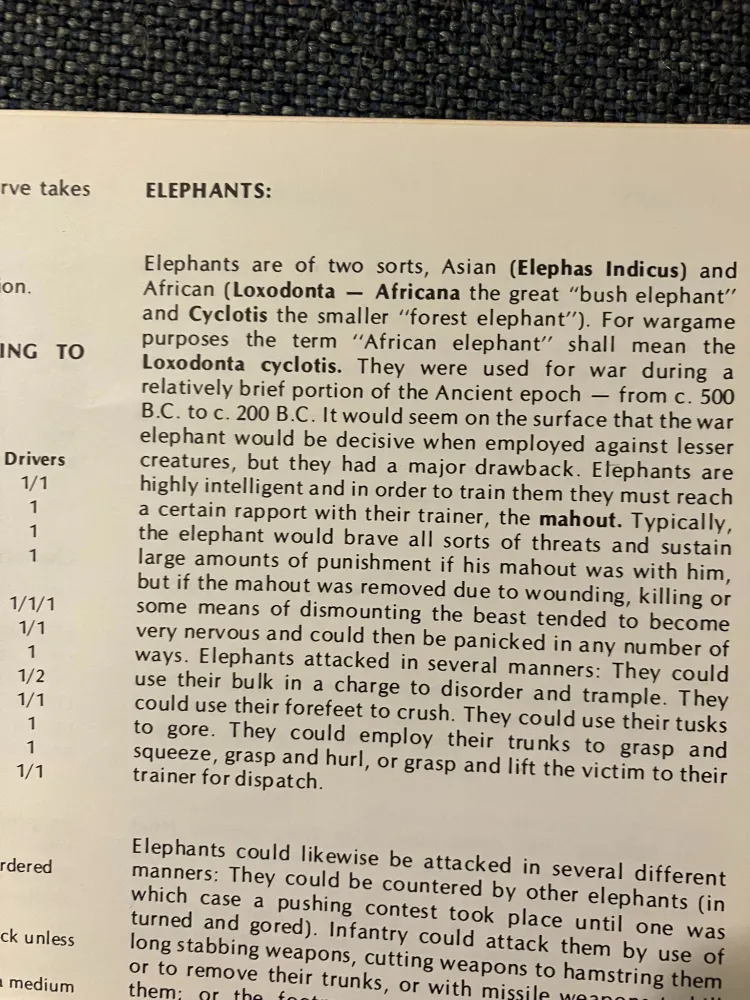
The rules include unconventional units that definitely didn’t appear in Medieval Europe, such as elephants!
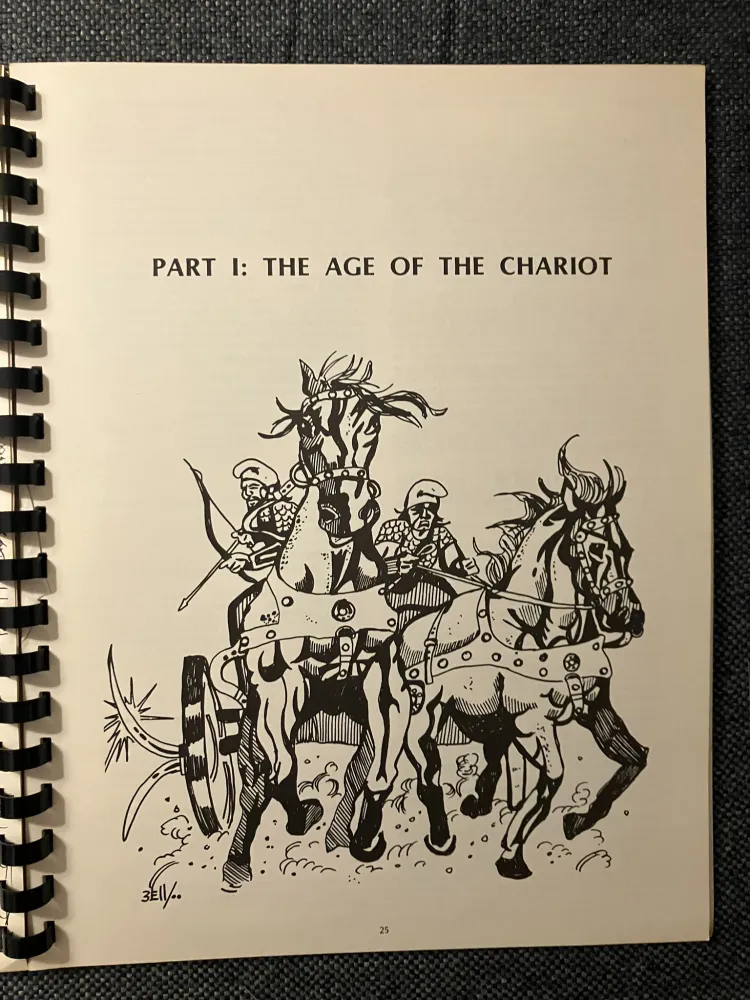
The book is overall divided into four “ages,” starting with “the age of the chariot.”
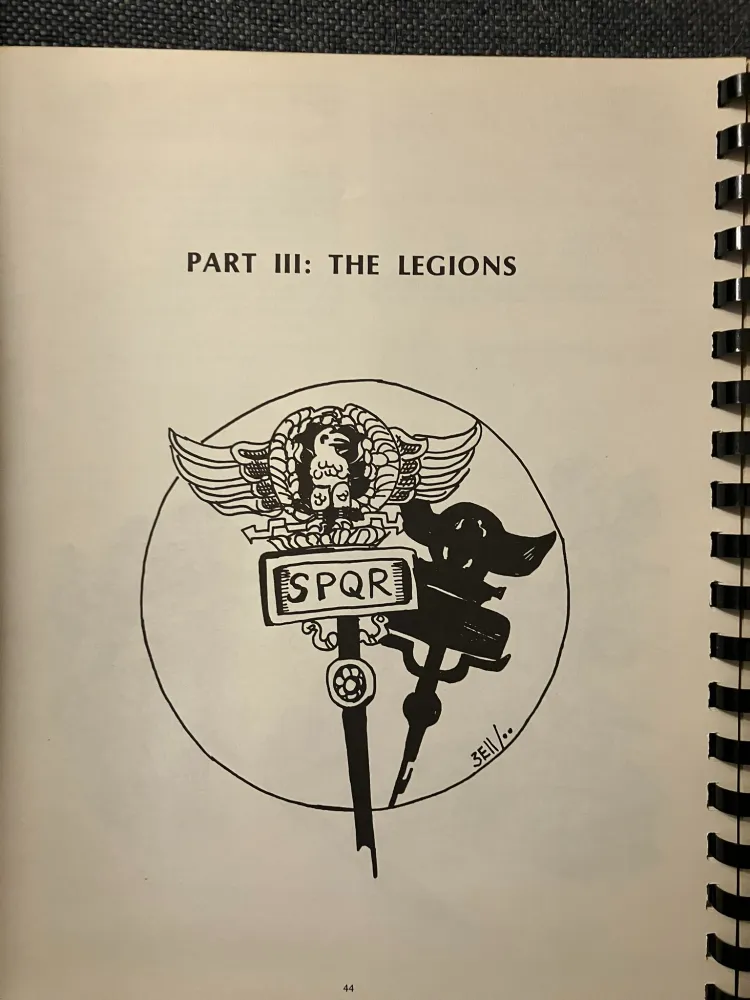
Each civilization has a bit of historical detail and notes and rules specific to their civilization, including how units are organized in groups.
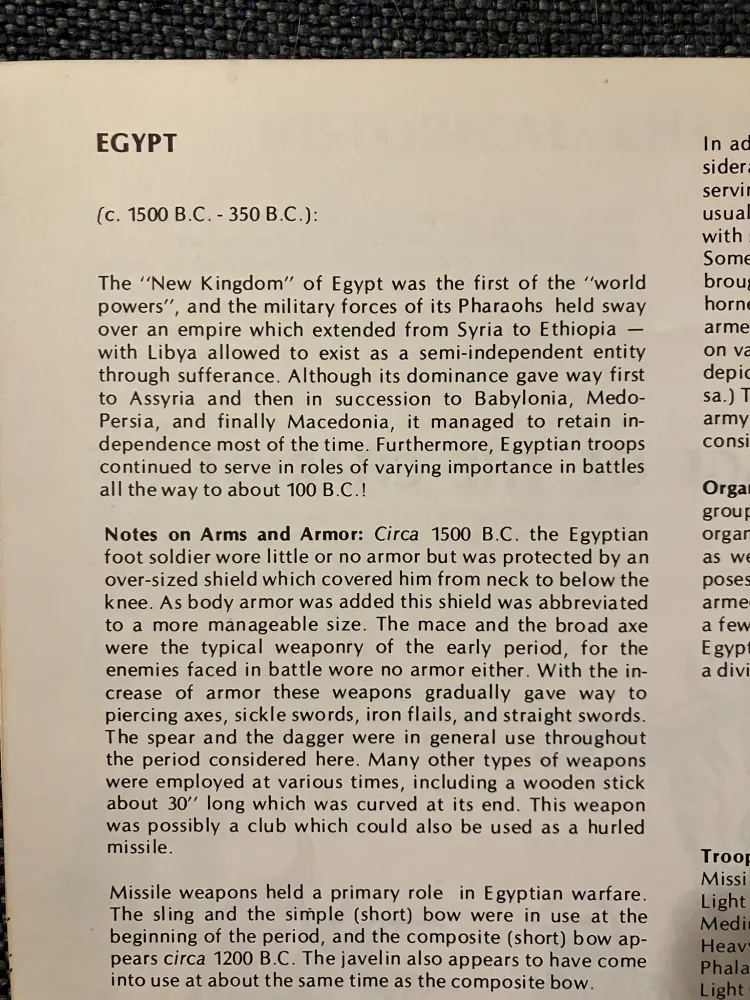
It includes civilizations that are quite obscure to anyone outside of ancient Near East history studies, such as the Hittites!
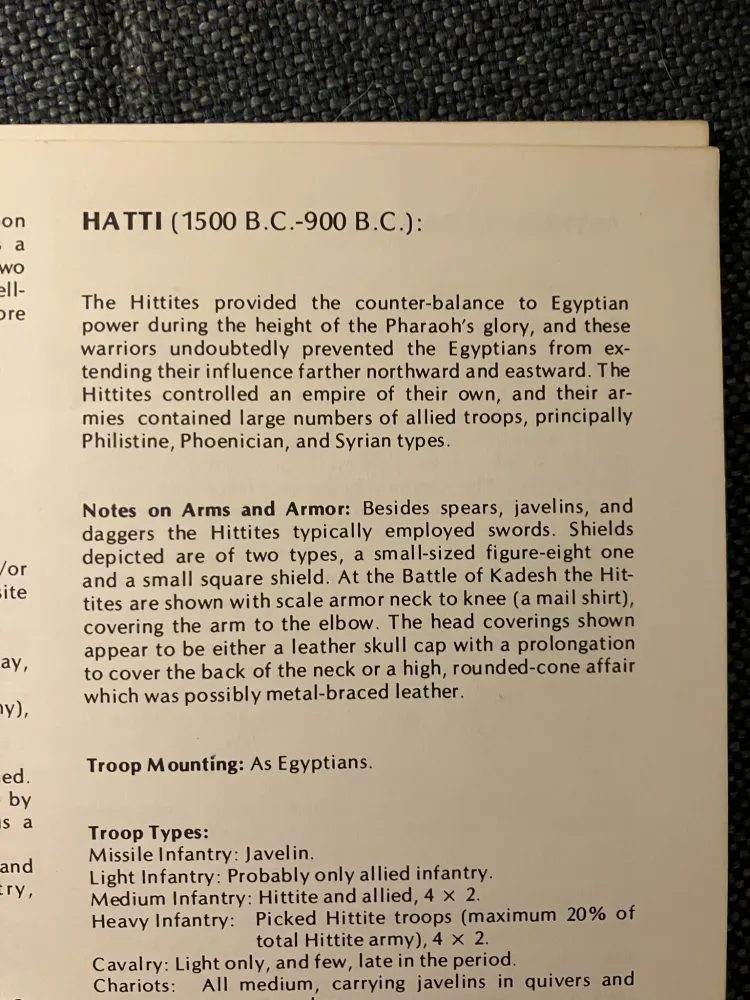
Part 2 of the book covers the age of the Phalanx…
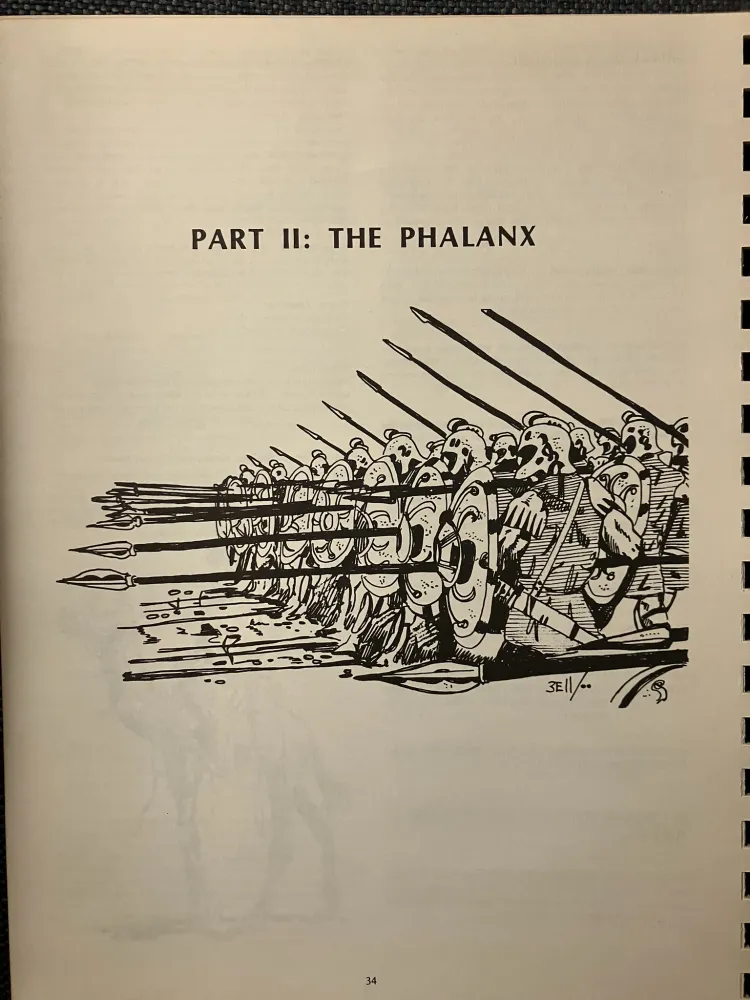
… Part 3 covers the Legions…
… and Part 4 is Iron Riders!
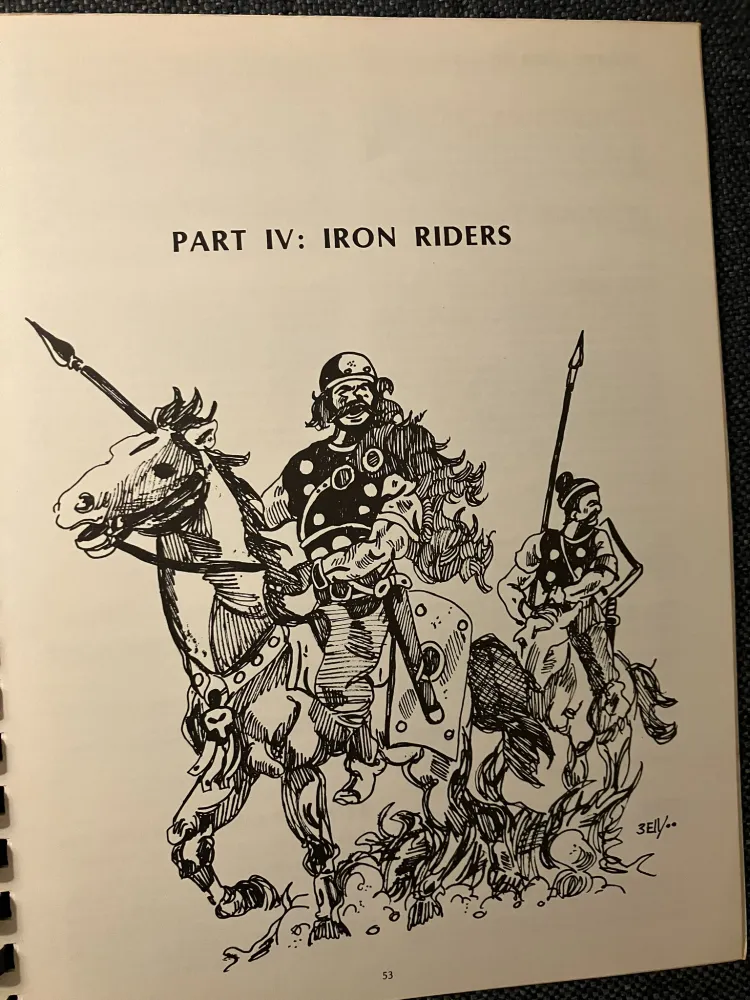
Honestly, I really wanted a copy of this book just for the fun illustrations of ancient soldiers. Even the back cover is charming!
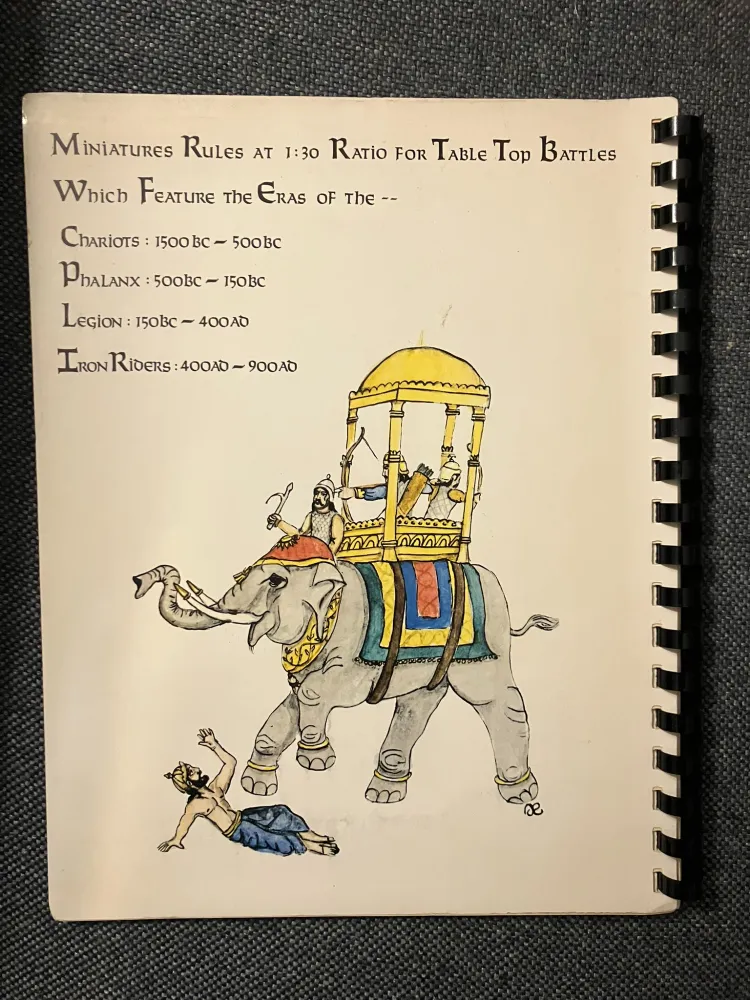
Classic Warfare was published by TSR in 1975, a year after the first D&D rules came out. It represents a fascinating transition period where TSR was still as much about wargaming as roleplaying gaming!
PS Classic Warfare is a pretty rare book and in the past the copies I saw were pretty expensive, in the $200 range. Shoutout to my friend Wayne’s Books again, where he had a much more affordable copy available. Highly recommend him for vintage gaming needs.
The Original Bottle City, by Robert J. Kuntz (2014/1974). This is an unusual one — first written in 1974, but only saw publication in the 2000s!
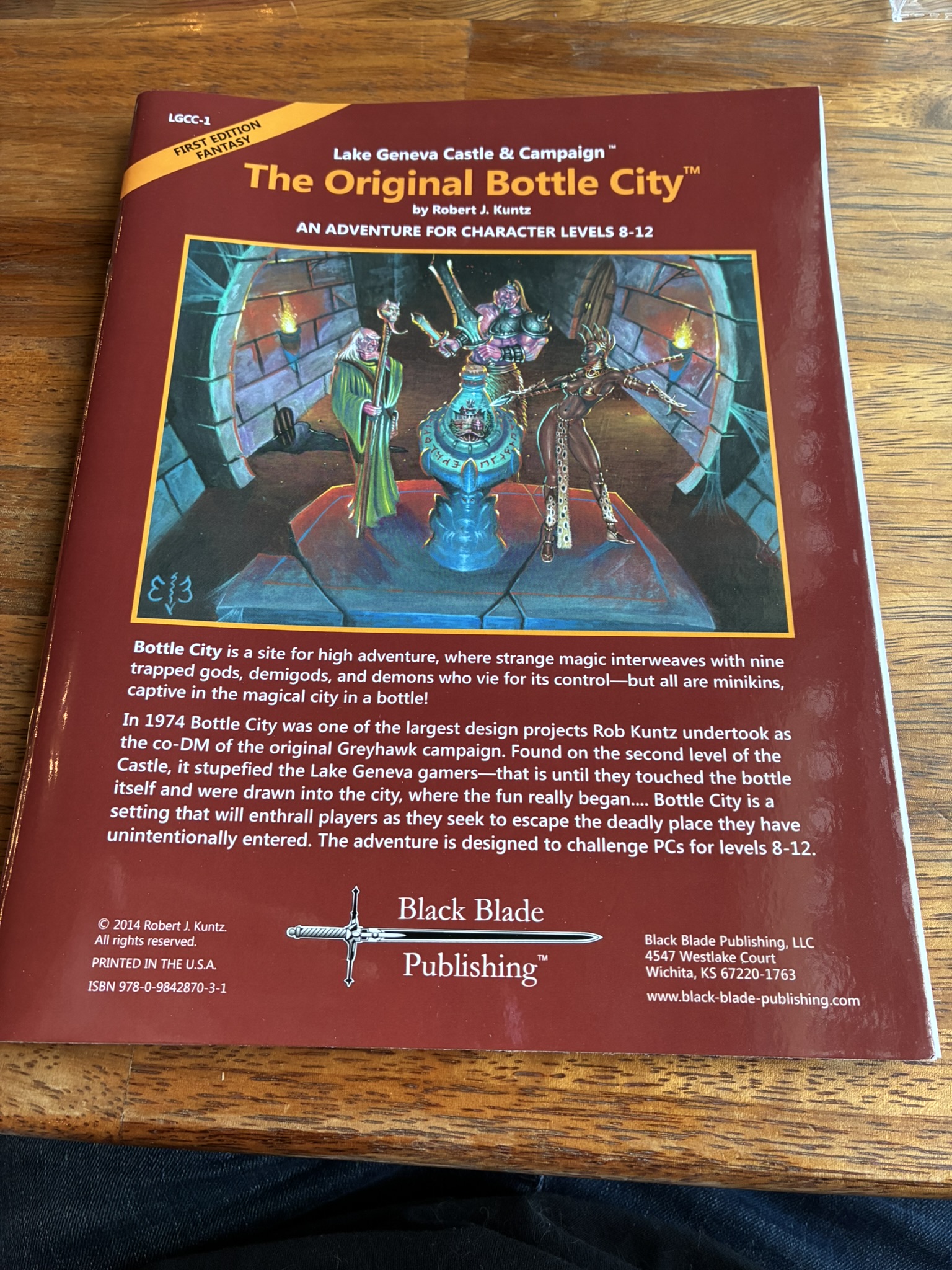
The background: Rob Kuntz was one of the original Dungeon Masters who designed the Bottle City as part of his “Lake Geneva Castle & Campaign” that ran in 1974. None of it was ever published until 2007, and it was then reprinted and revised in 2014.
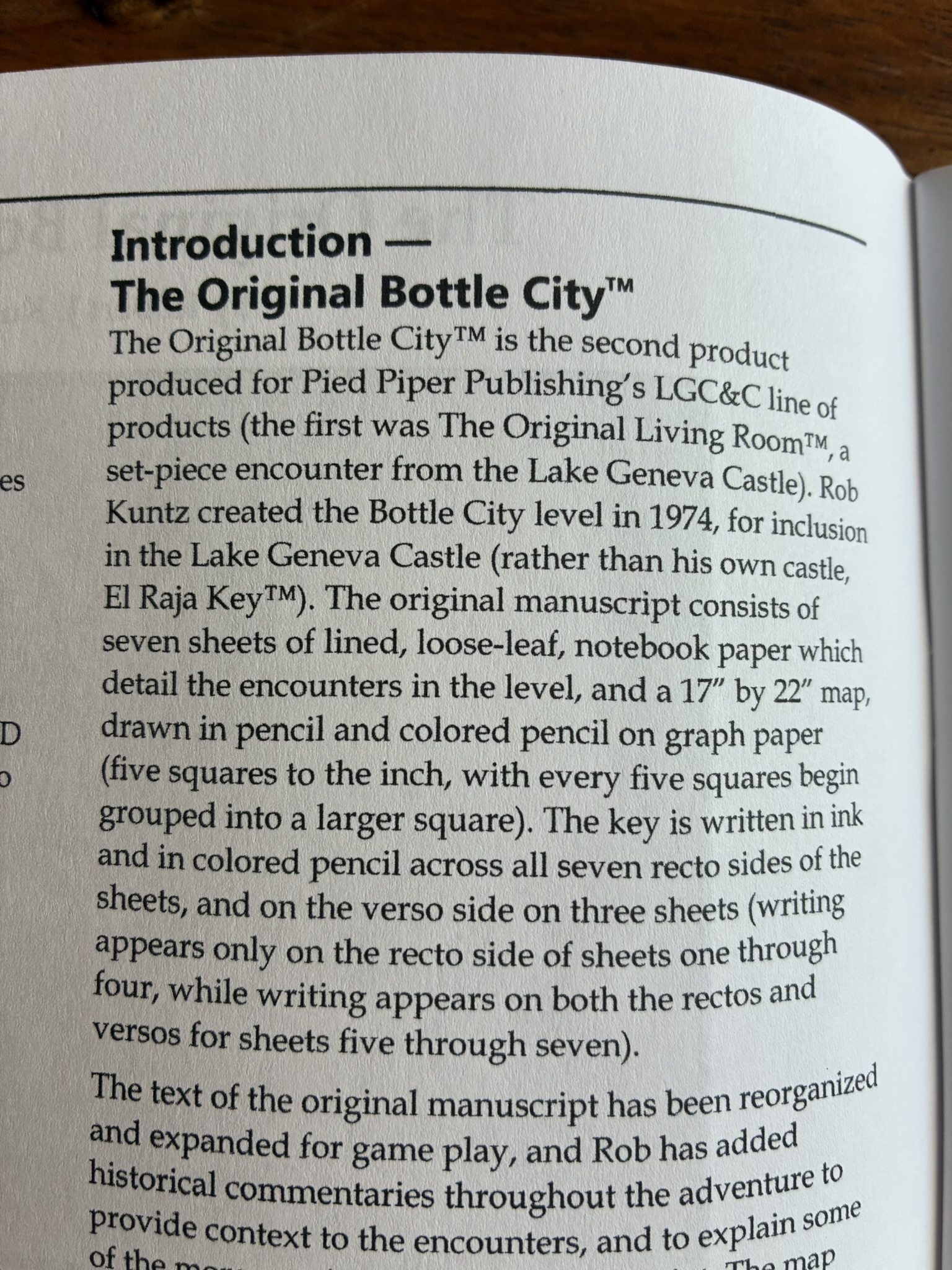
The Bottle City is, as the name implies, an entire magical city and dungeon encased in a bottle that adventurers can inadvertently get transported into. For modern games, it is convenient as a location that could in principle be plopped anywhere into a campaign.
This module is also basically a historical document, and the maps included are hand drawn and colored reproductions of the originals, adding to their charm.
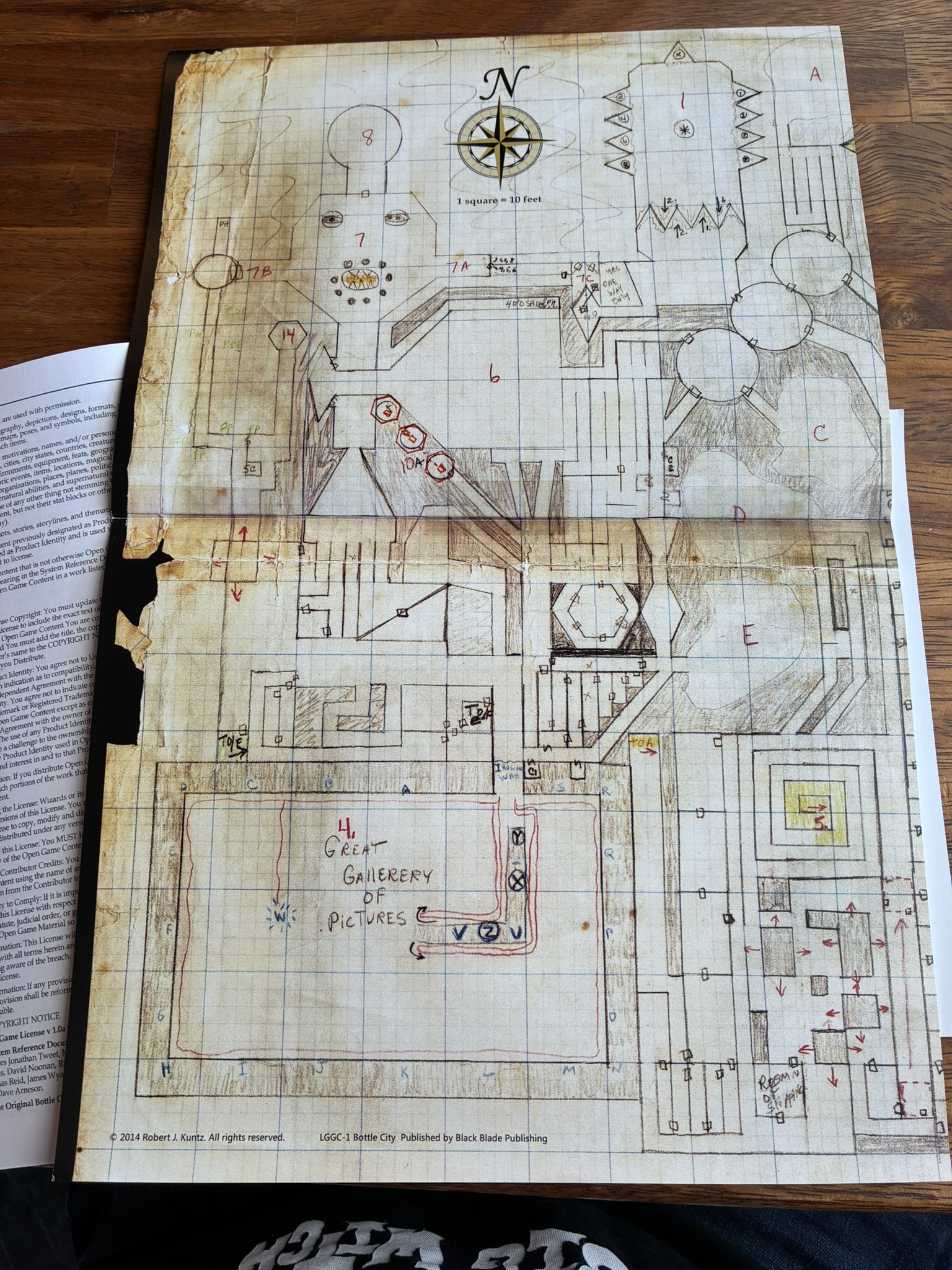
If you look at the map, you can see a “Great Gallery of Pictures,” where paintings will either come to life or transport characters to an encounter when touched. Kuntz has many “touch and see what happens” encounters, because he knew his veteran gaming group could not resist their curiosity!
This was back in the earliest days, when Empire of the Petal Throne was the other fantasy RPG available, and monsters from it popped into encounters here.
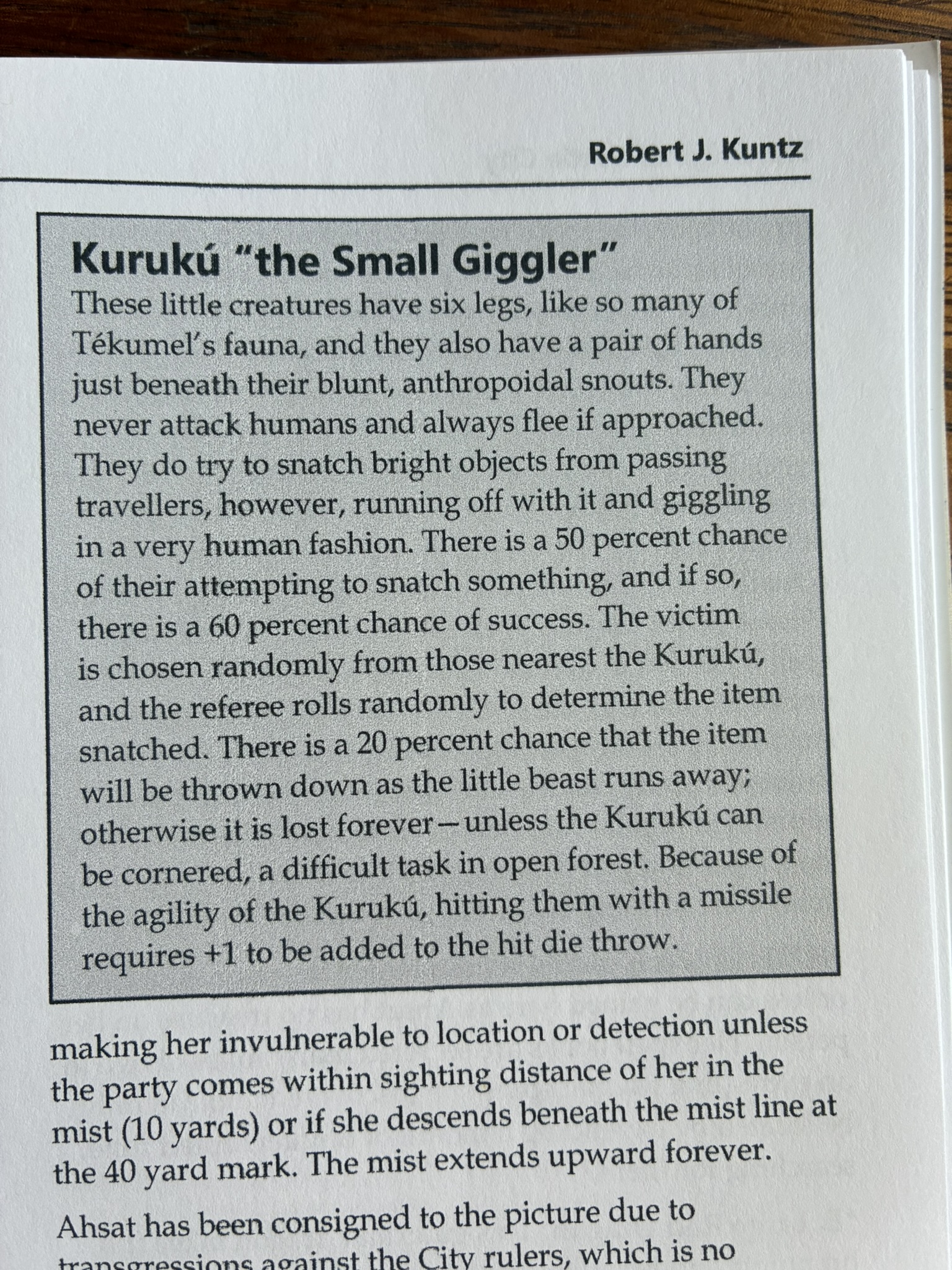
The era was the “Wild West” of D&D, and there were plenty of custom creations in terms of monsters and magic, as well! In revising his old manuscript, Kuntz had to make some guesses as to what he was referring to at some points!
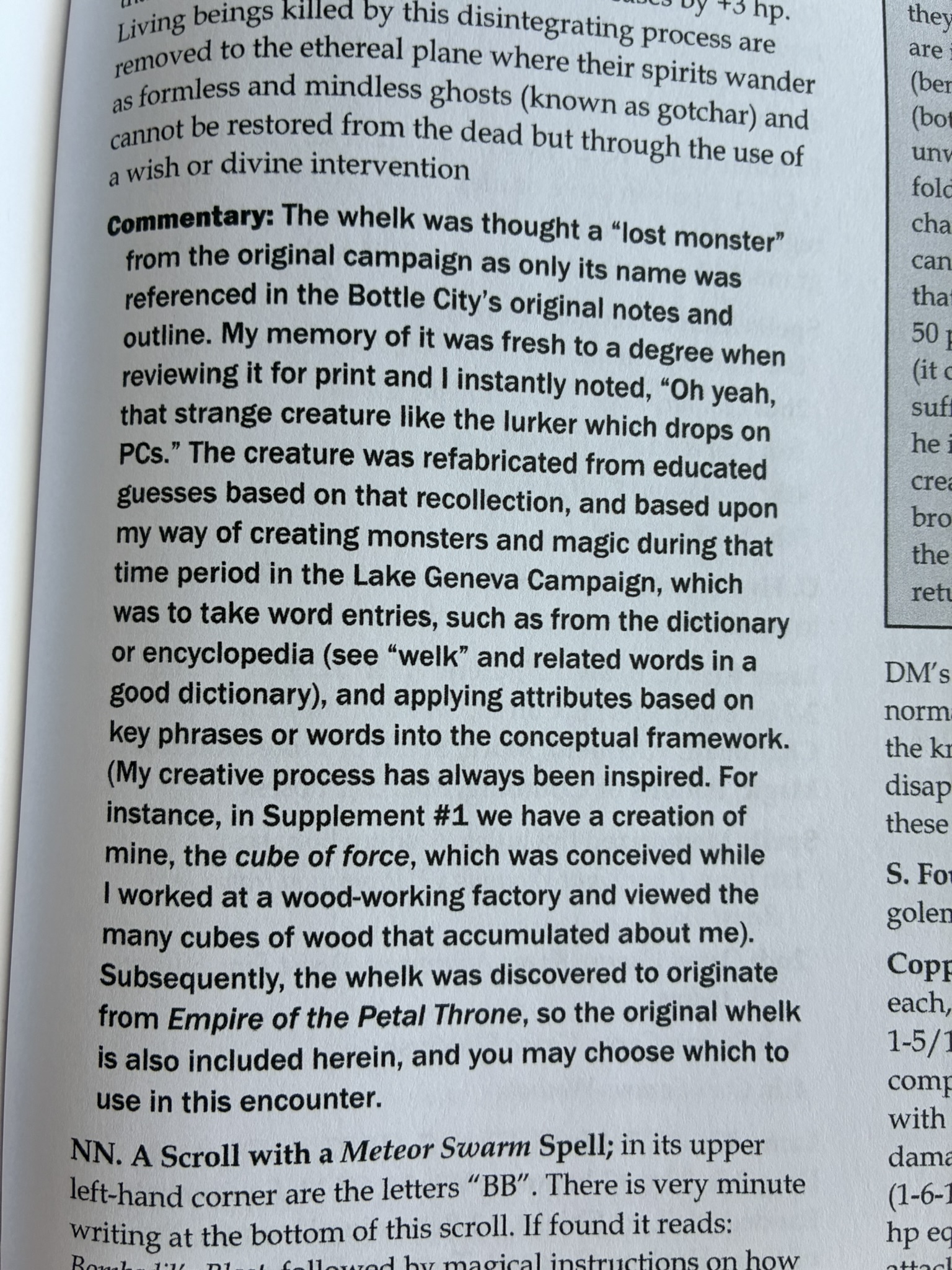
This was a campaign for hardened characters and experienced players and in those days you could expect to lose characters quite regularly! In one room of the bottle city, you can awaken and fight against Aspects of Gods!
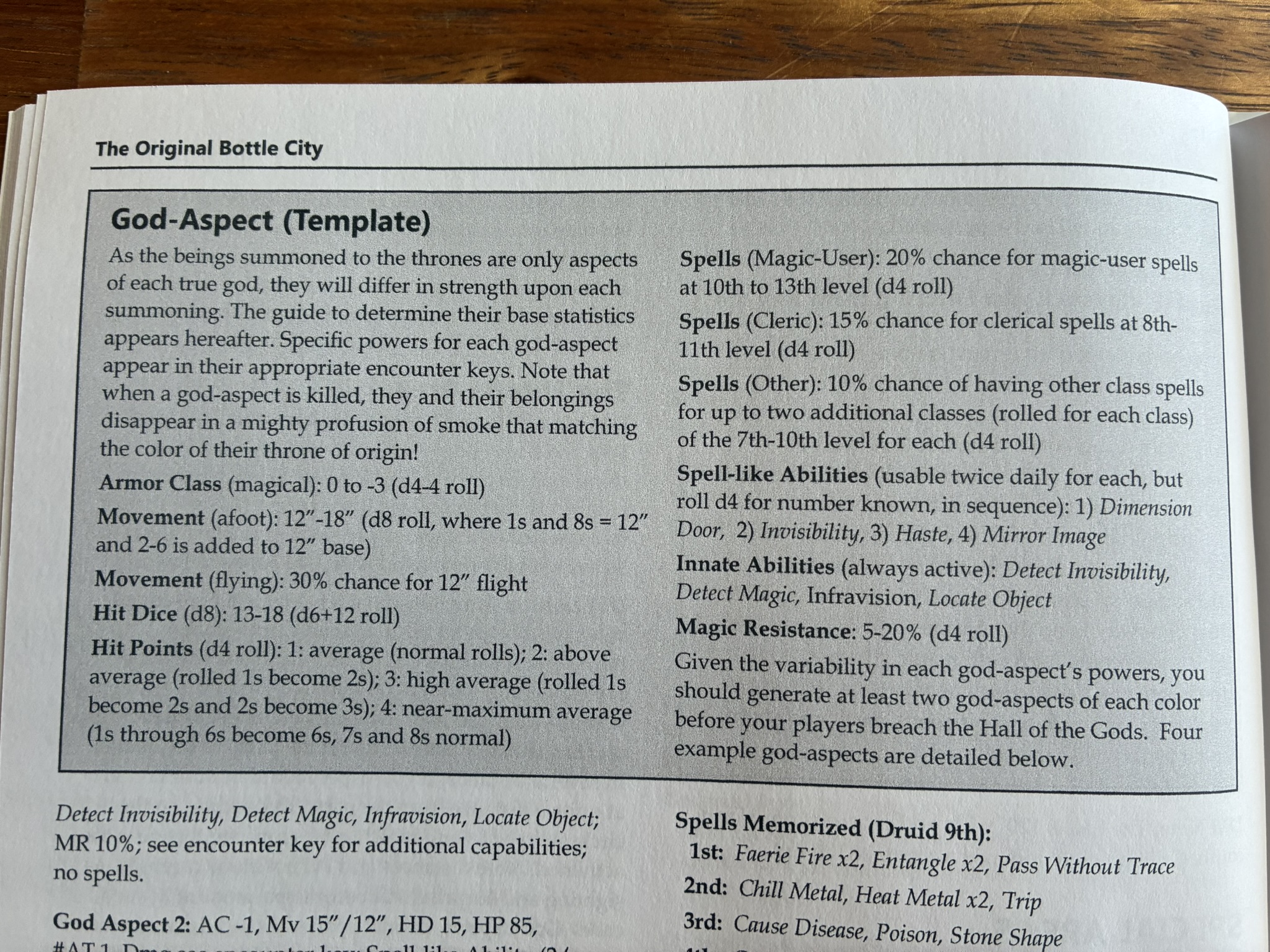
There are also plenty of unusual magical items, as the game was much more focused on building your character through items rather than class abilities. Particularly fond of the Fragments of Yhyg, which are tablets that will confer magical powers to structures if installed as shown.
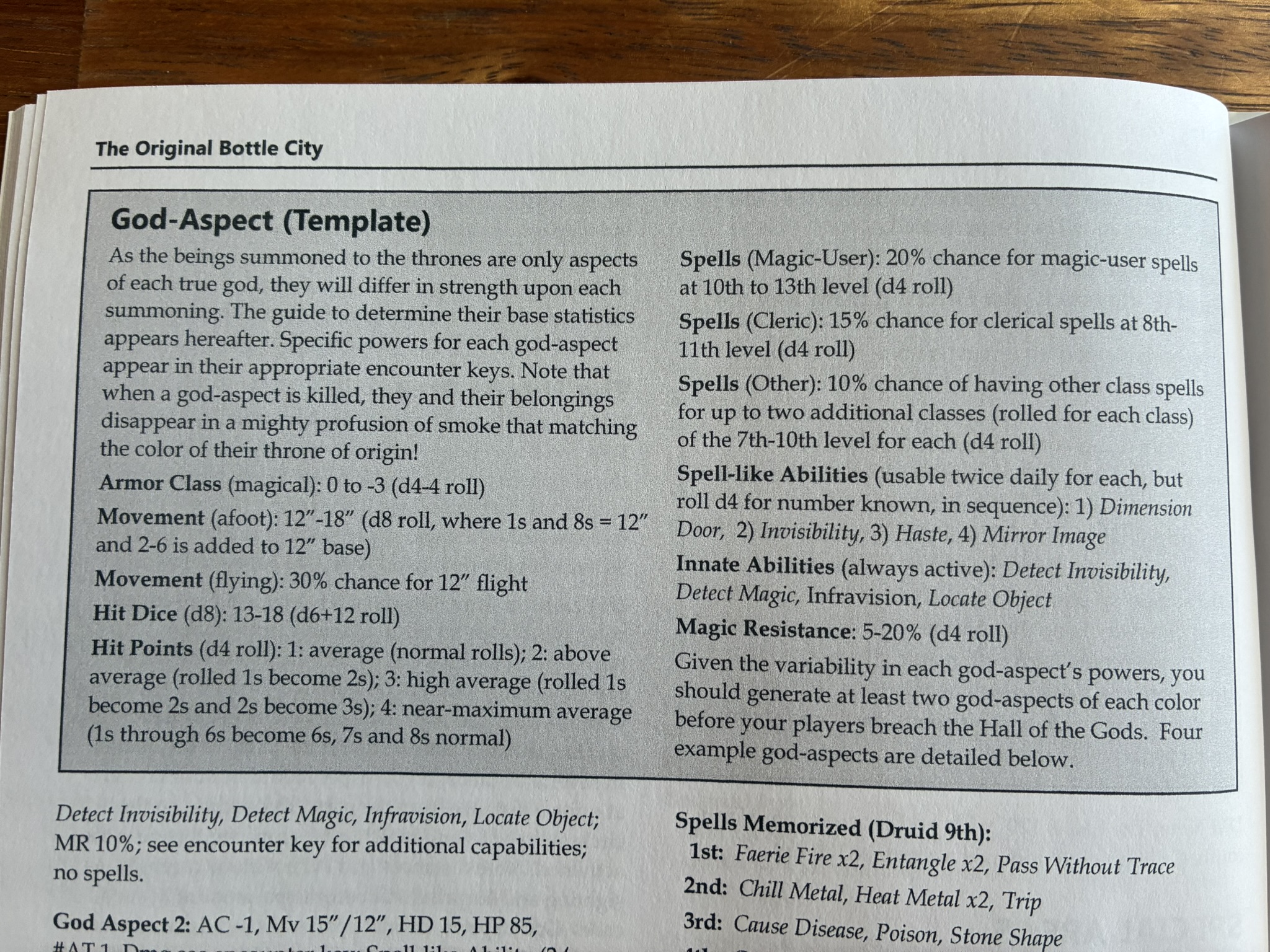
Overall, this is a really fun look back at how D&D was run and played in the earliest days!
The Dancing Hut of Baba Yaga (1995), by Lisa Smedman. This is a late era TSR adventure, but one that fills in a legendary location!
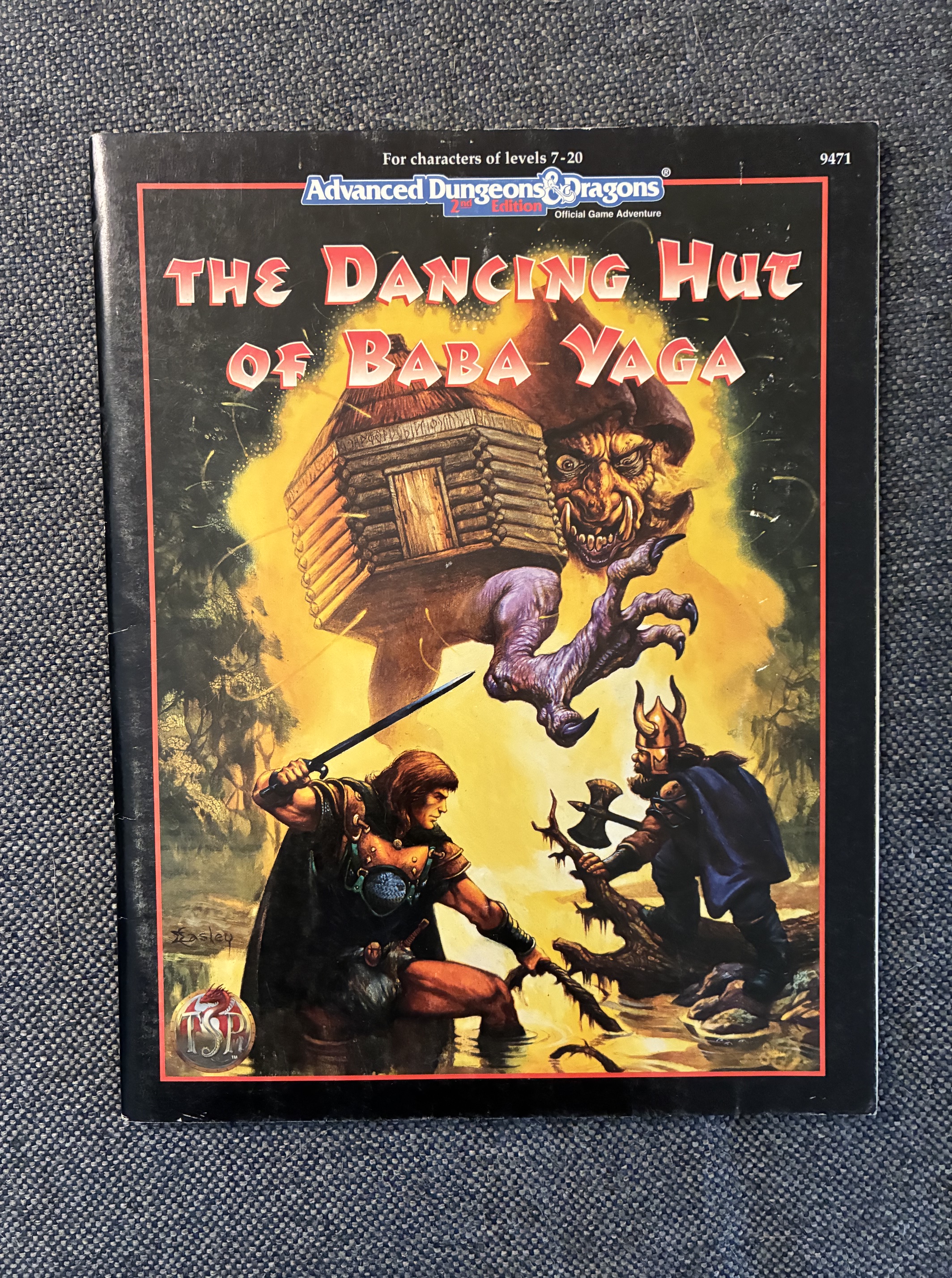
Of course, the adventure is using the famed legend of the Slavic witch Baba Yaga, and her house that walks on chicken legs, as a dungeon.
The hut itself has been featured as a magical artifact in D&D since pretty much the very beginning, when it appeared in the 1976 supplement Eldritch Wizardry, and it has been referred to many times since then.
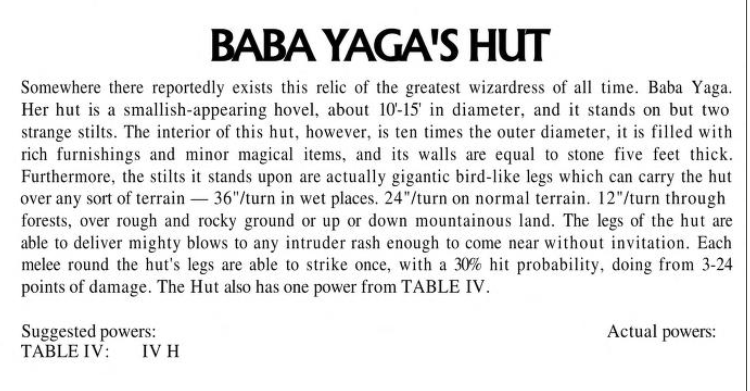
The adventure itself is an opportunity to use the hut as a dungeon with all sorts of weird extradimensional shenanigans, since it is much bigger on the inside than out! The adventure introduces several “hooks” that could motivate players to explore.
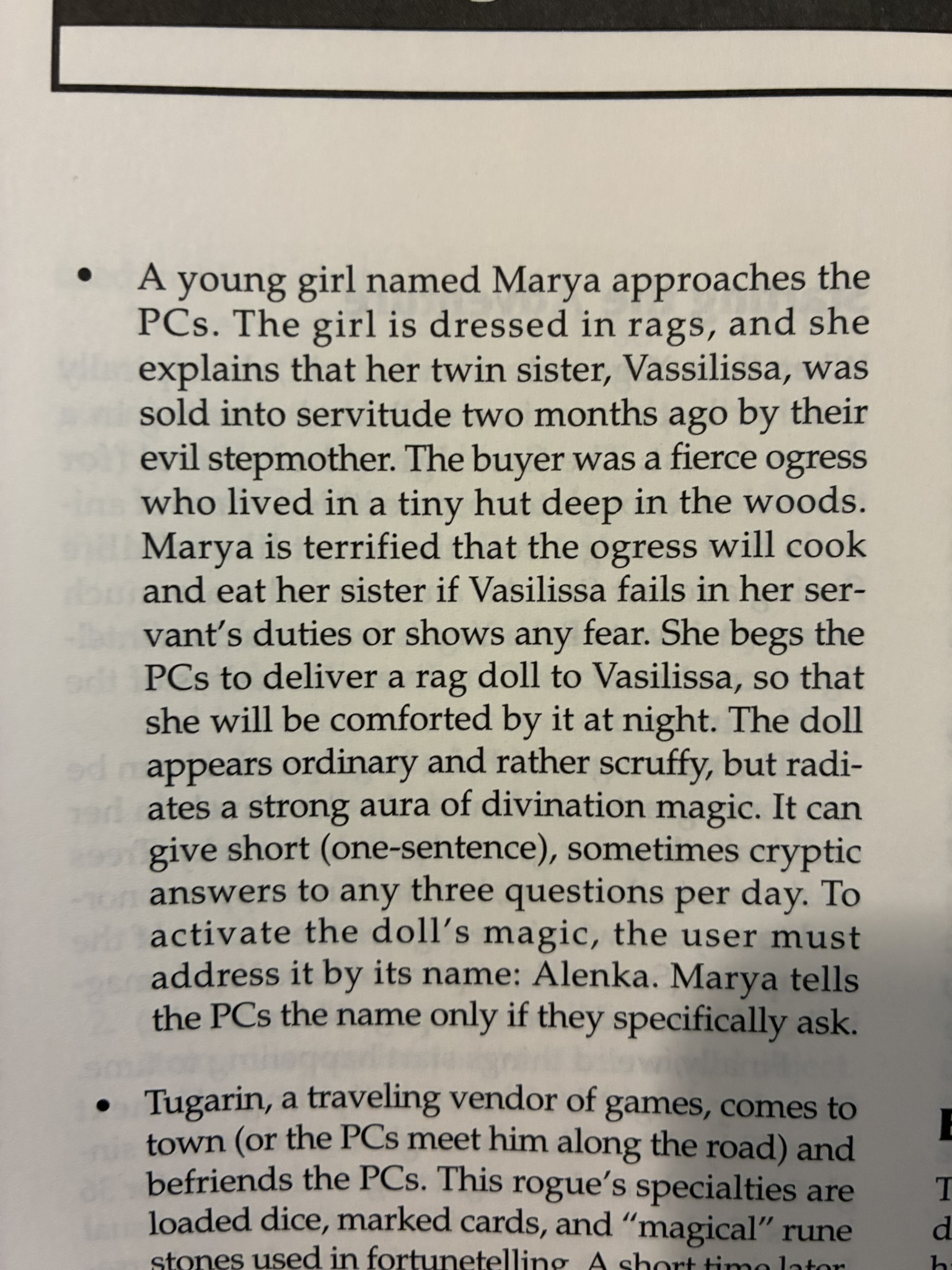
The adventure itself is for high level characters, with difficulty increasing deeper into the “dungeon.” Heck, even getting in is difficult, as the hut is surrounded by 64 (!) animated skull golems that have to be fought through!
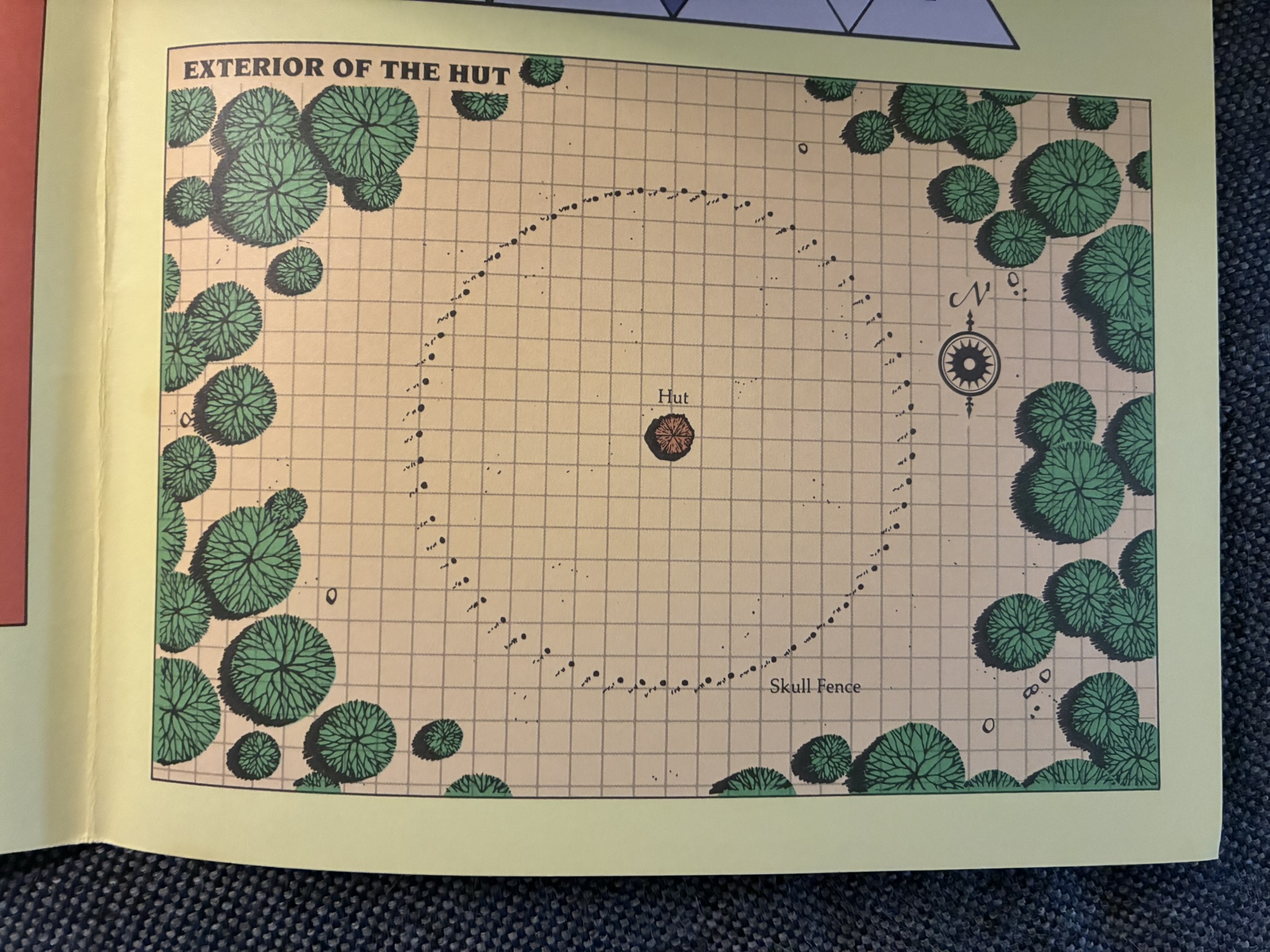
As for the interior, it is a twisted maze of dimensional portals with coded knocks needed to access, making getting about a puzzle in and of itself. Overall I found the encounters fun but there weren’t many that really jumped out at me as being unique challenges! There were a few, though…
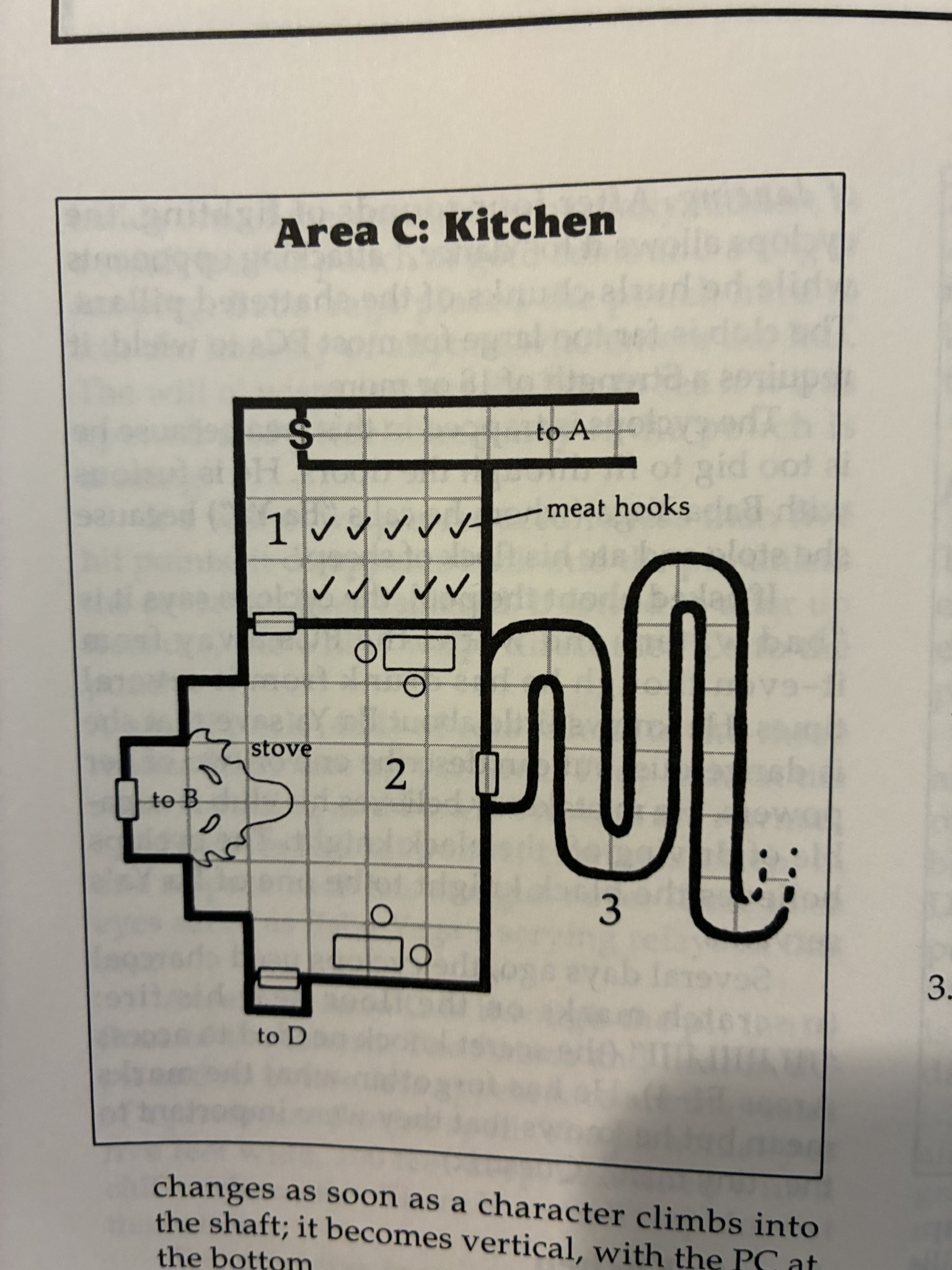
One door in the kitchen opens into a twisty tunnel of some sort of moist, fleshy substance. It turns out that it is a portal into the small intestine of the person who opened the door! Casting damaging spells in there will not work well for that person.
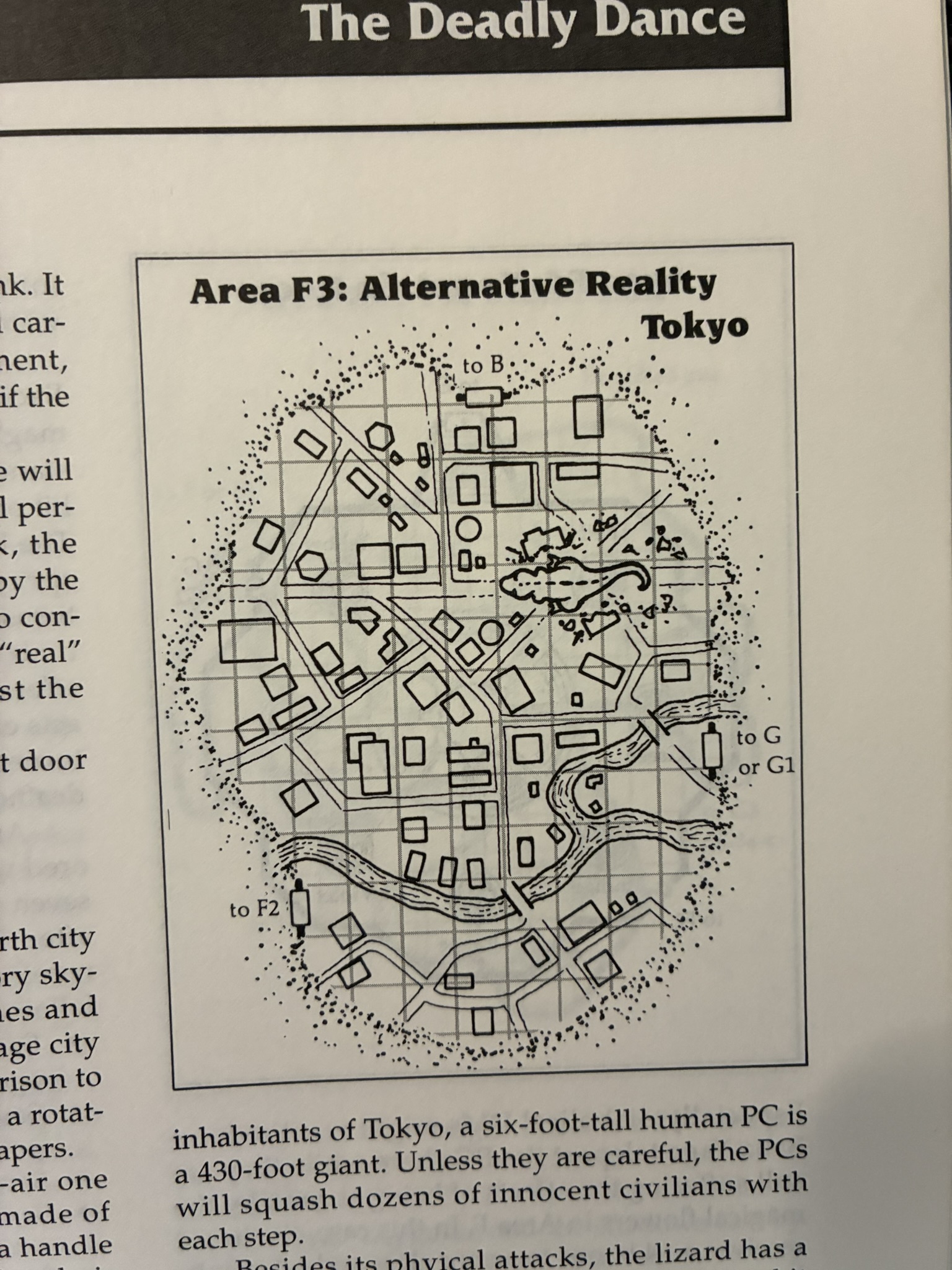
On another level, a door opens up into a miniature alternate reality Tokyo being ravaged by a Godzilla-like lizard. If the PCs enter, they become kaiju-sized giants brawling with a Godzilla their height!
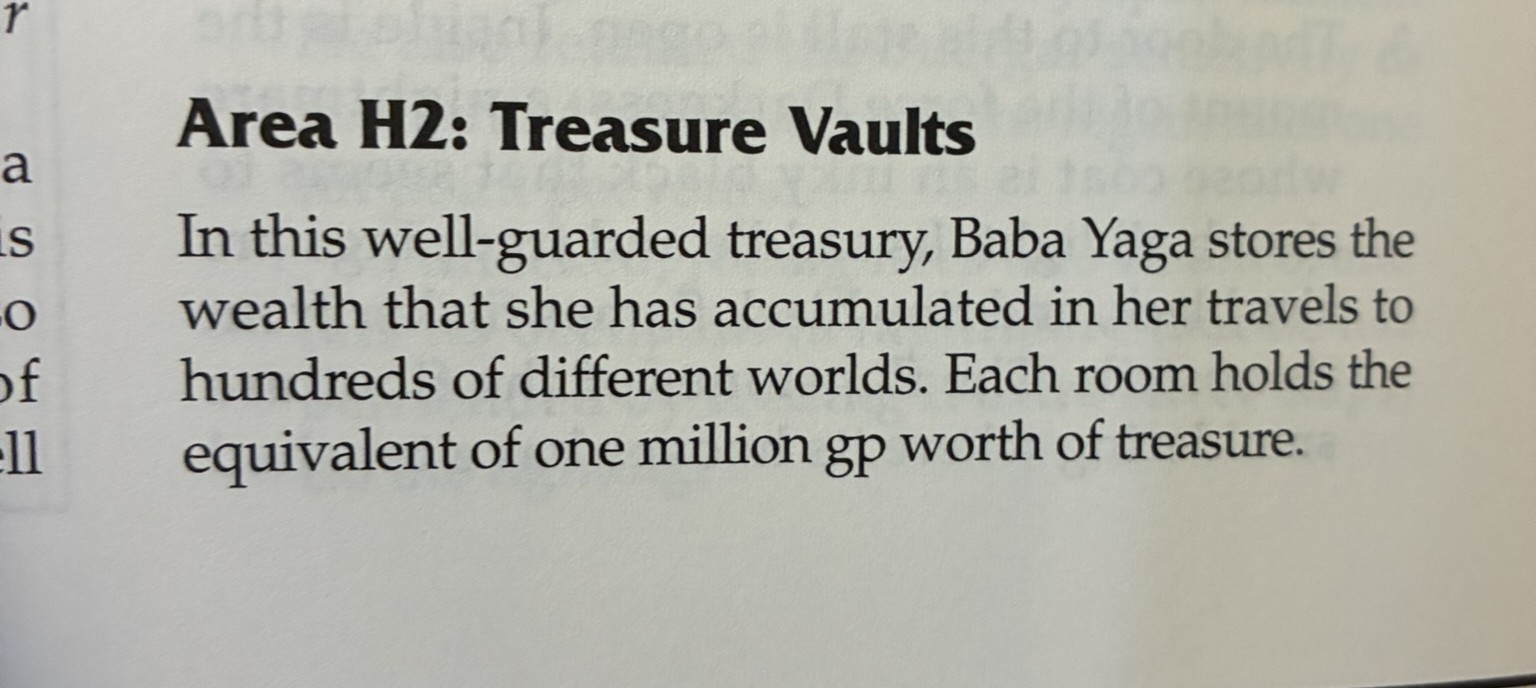
The headaches are potentially all worth it: PCs who make it to Baba Yaga’s treasure room will find literally millions of gold pieces in valuable treasure!
Oddly, this isn’t even the final area of the hut: Baba Yaga is obsessed with capturing Death and bargaining for true immortality, and the final area is her “trap” for death. It’s not clear why PCs would even want or need to visit this area, since all the adventure objectives can be completed before.
There are a number of places where things don’t feel completely thought out: the ring of skull golems I mentioned earlier, for example, involves a fight against 64 separate monsters! I can imagine ways to handle the bookkeeping, but the book itself offers no advice.
Overall, The Dancing Hut of Baba Yaga is a neat idea for an adventure with interesting ideas, but doesn’t really stand out to me as a “classic” of the genre!
S3: Expedition to the Barrier Peaks (1980), by Gary Gygax. I haven’t really done a famous classic in a while, so let’s fix that now!
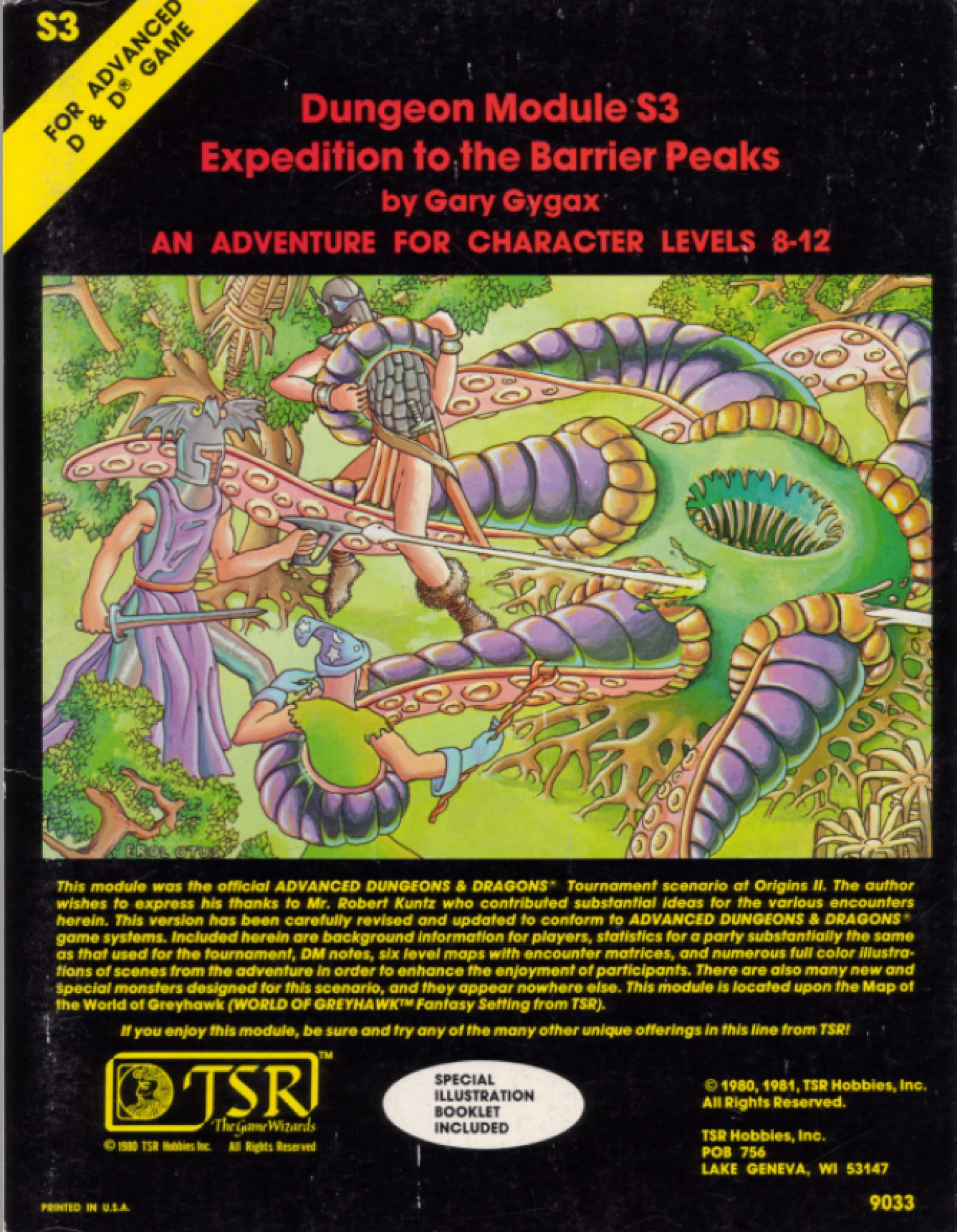
(For once I will use electronic scans of the book instead of photographing my own precious book! Spoilers for the adventure follow, of course.)
This adventure first appeared as a tournament adventure in 1976, and Gygax created it as a bridge of sorts to introduce fantasy RPG players to science fiction roleplaying! Metamorphosis Alpha had been introduced as the first sci-fi RPG ever.
Expedition very much has a similar theme to Metamorphosis Alpha: spaceship as a dungeon! The setup is that strange monsters have been plaguing the land of late and the player characters have been sent to investigate.
What they find is part of a derelict spaceship, its crew long killed off by plague! The ship’s robots have since malfunctioned and have been dumping its cargo — live aliens — into the land, causing the crisis.
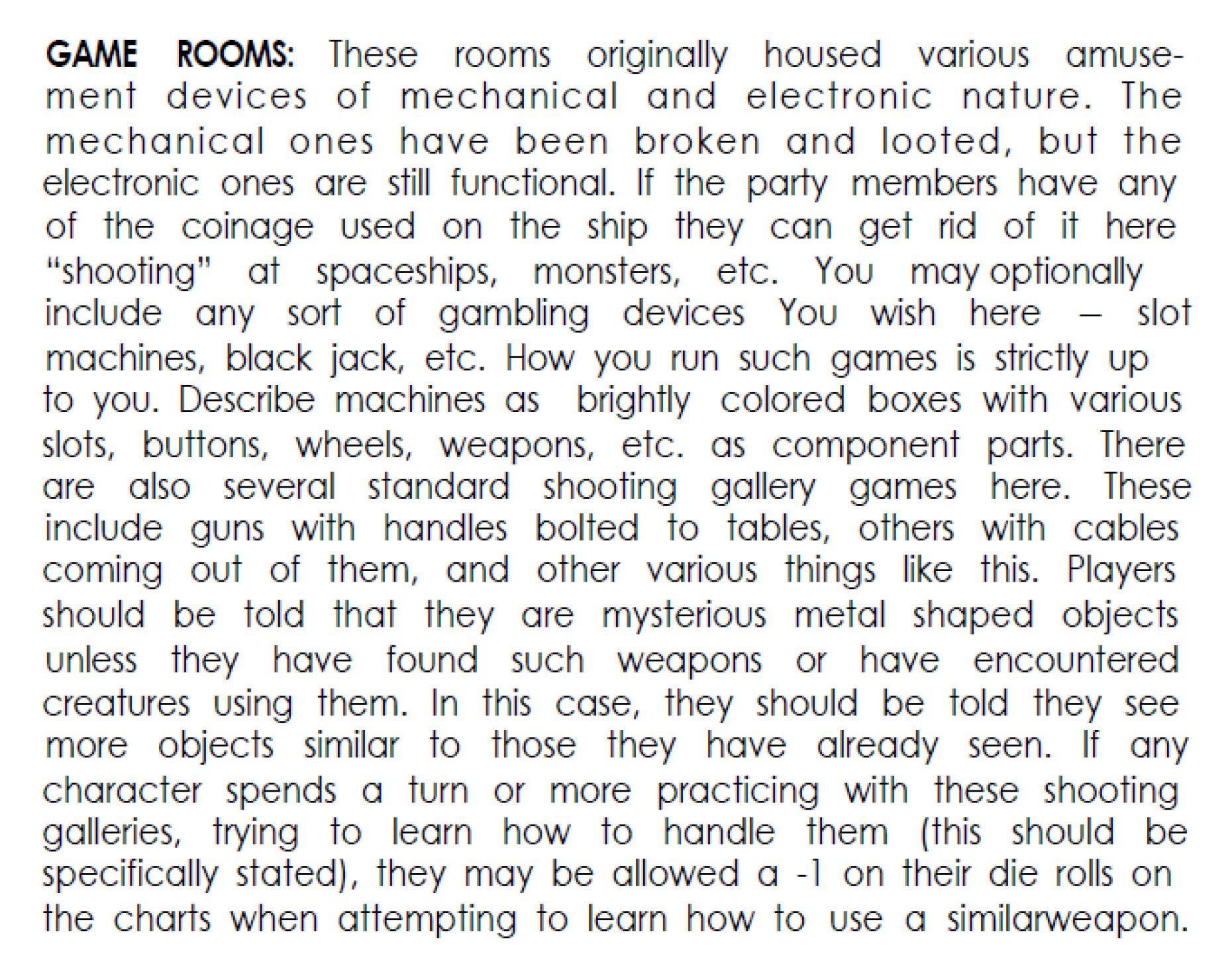
What follows is a true funhouse dungeon! The players encounter endless absurd and mysterious situations. The ship is marvelously detailed, including “game rooms” where the PCs can safely learn how guns work (more on this later).
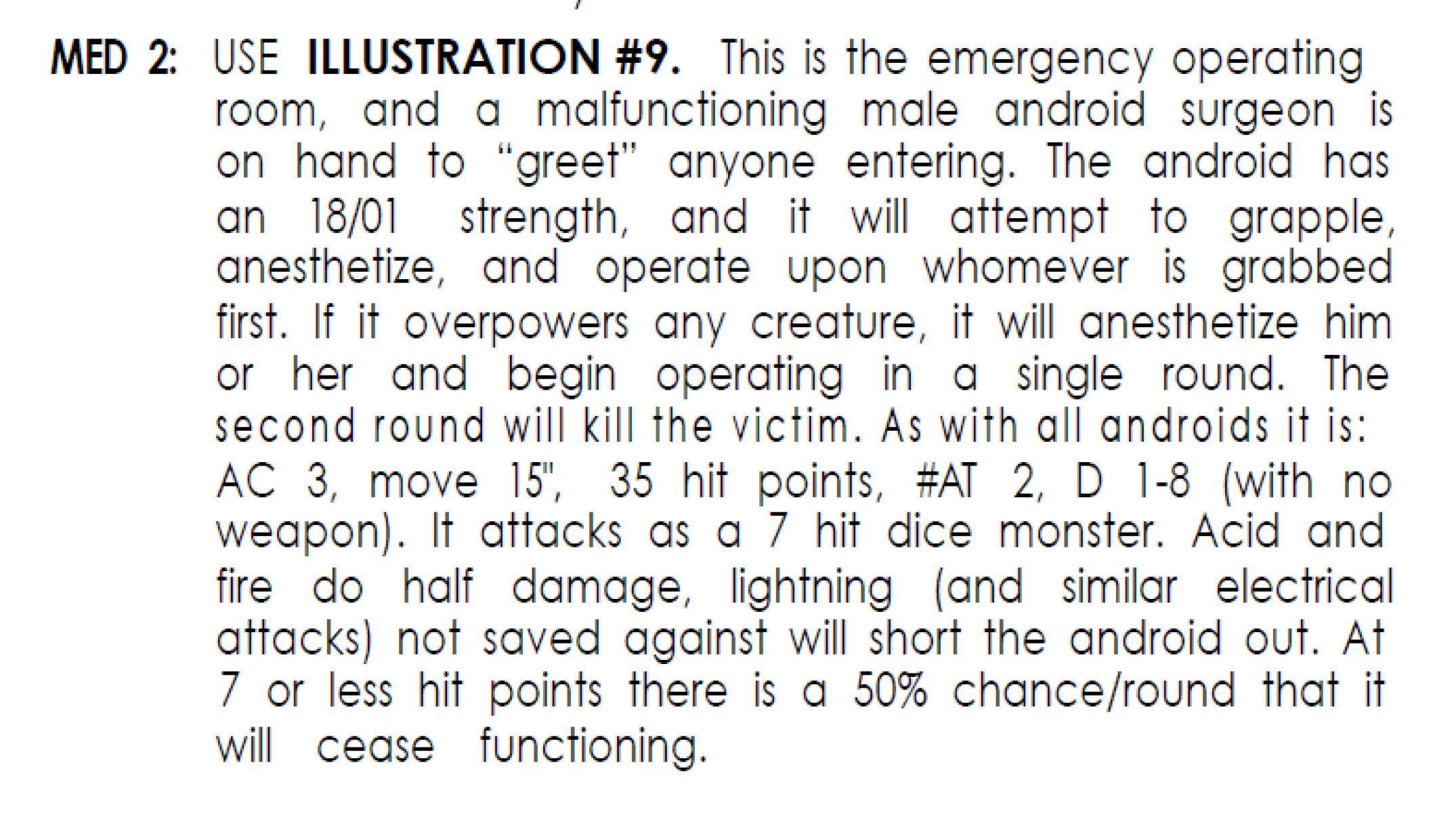
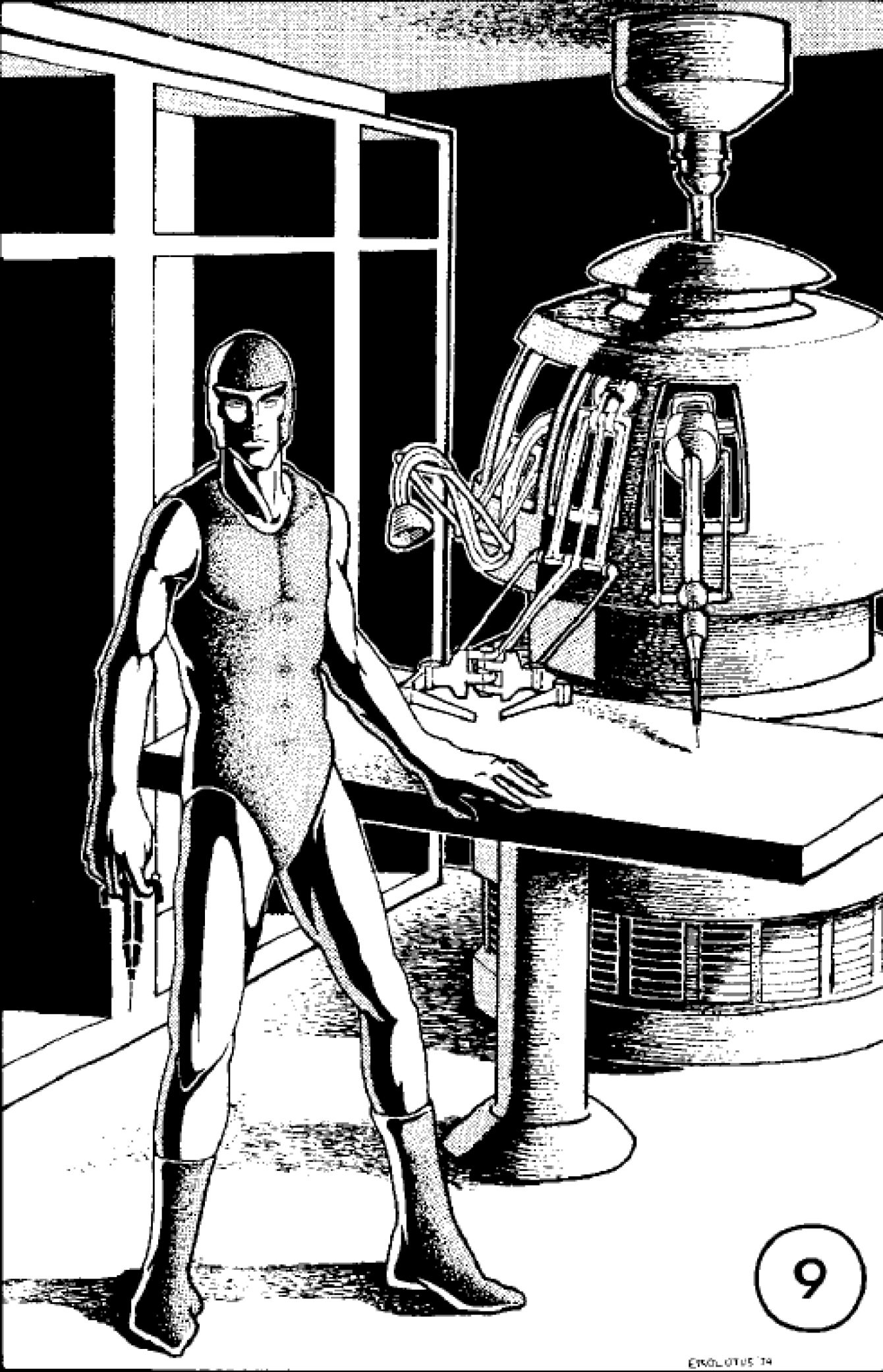
How absurd do things get? Some robots are functioning properly, others are malfunctioning and can kill you dead trying to accomplish their tasks, like the malfunctioning surgery bot.
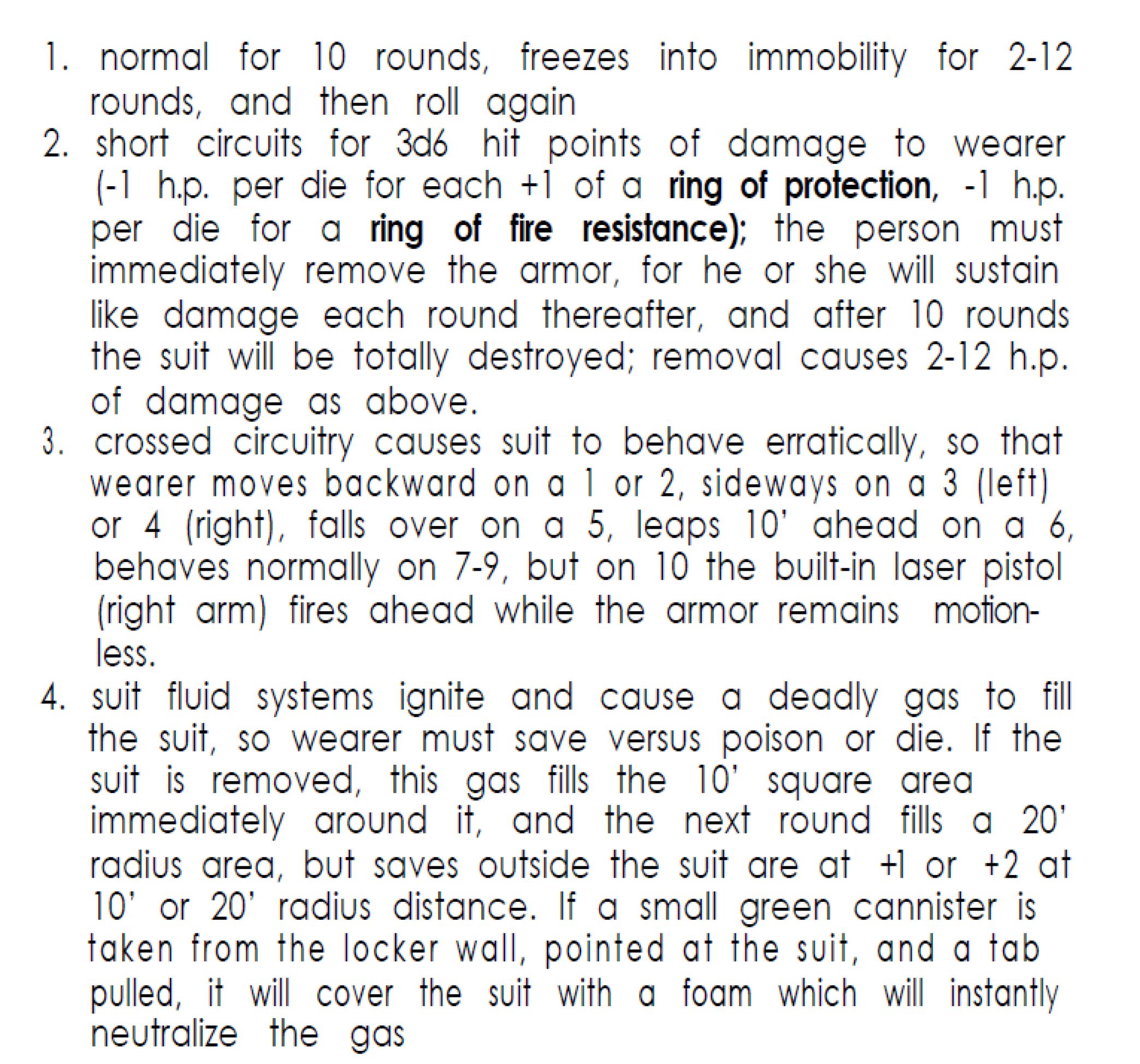
One thing I appreciate a lot about these old adventures is all the randomness! Often a single roll of the dice can lead to VERY different situations. This is nice, because even if you don’t want the randomness, you have many options to choose from, like in this malfunctioning power armor.
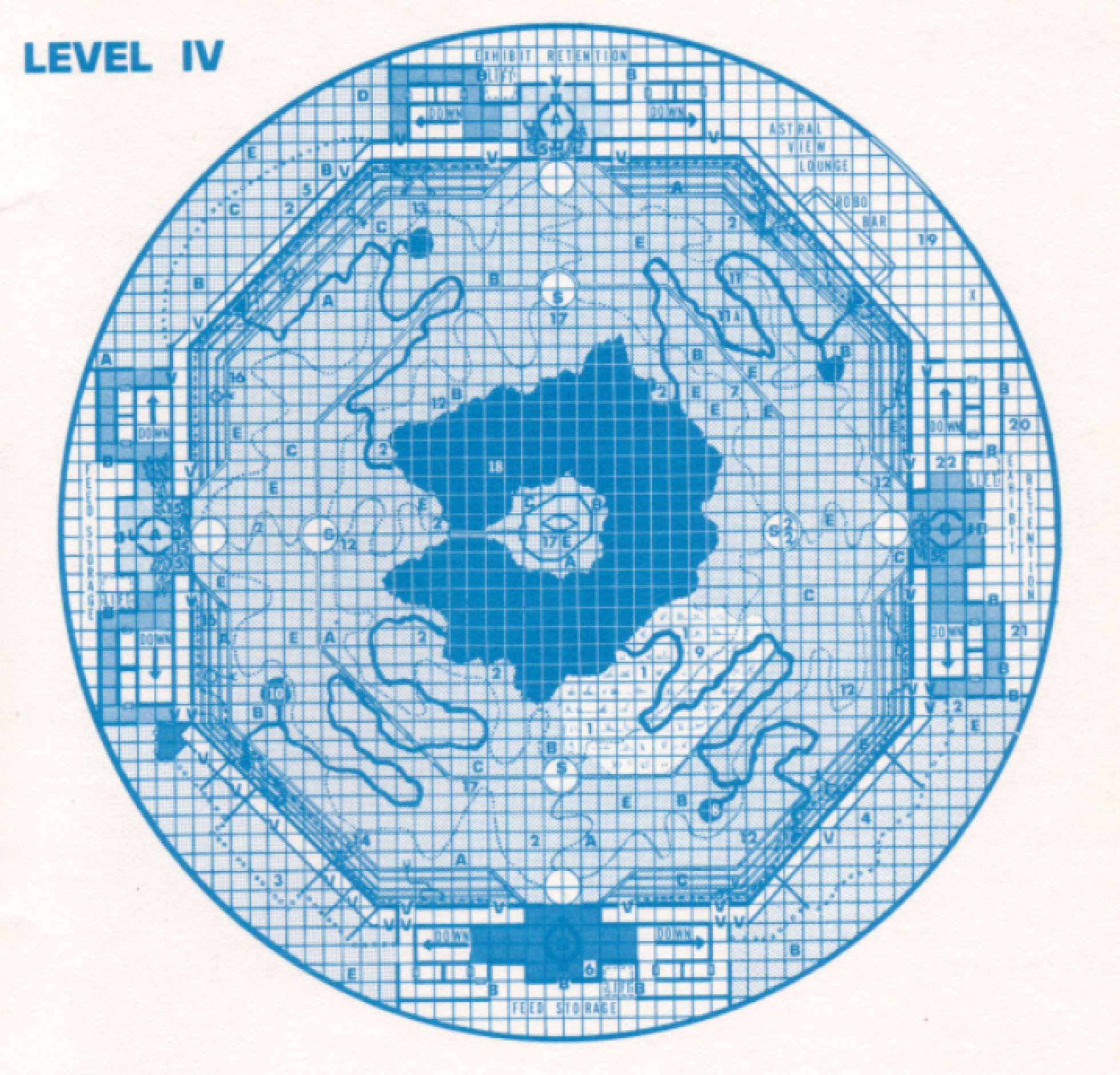
For me, the best part of the adventure is the overgrown botanical gardens and menagerie, filled with all sorts of dangerous creatures! The map here shows the layout of the level.
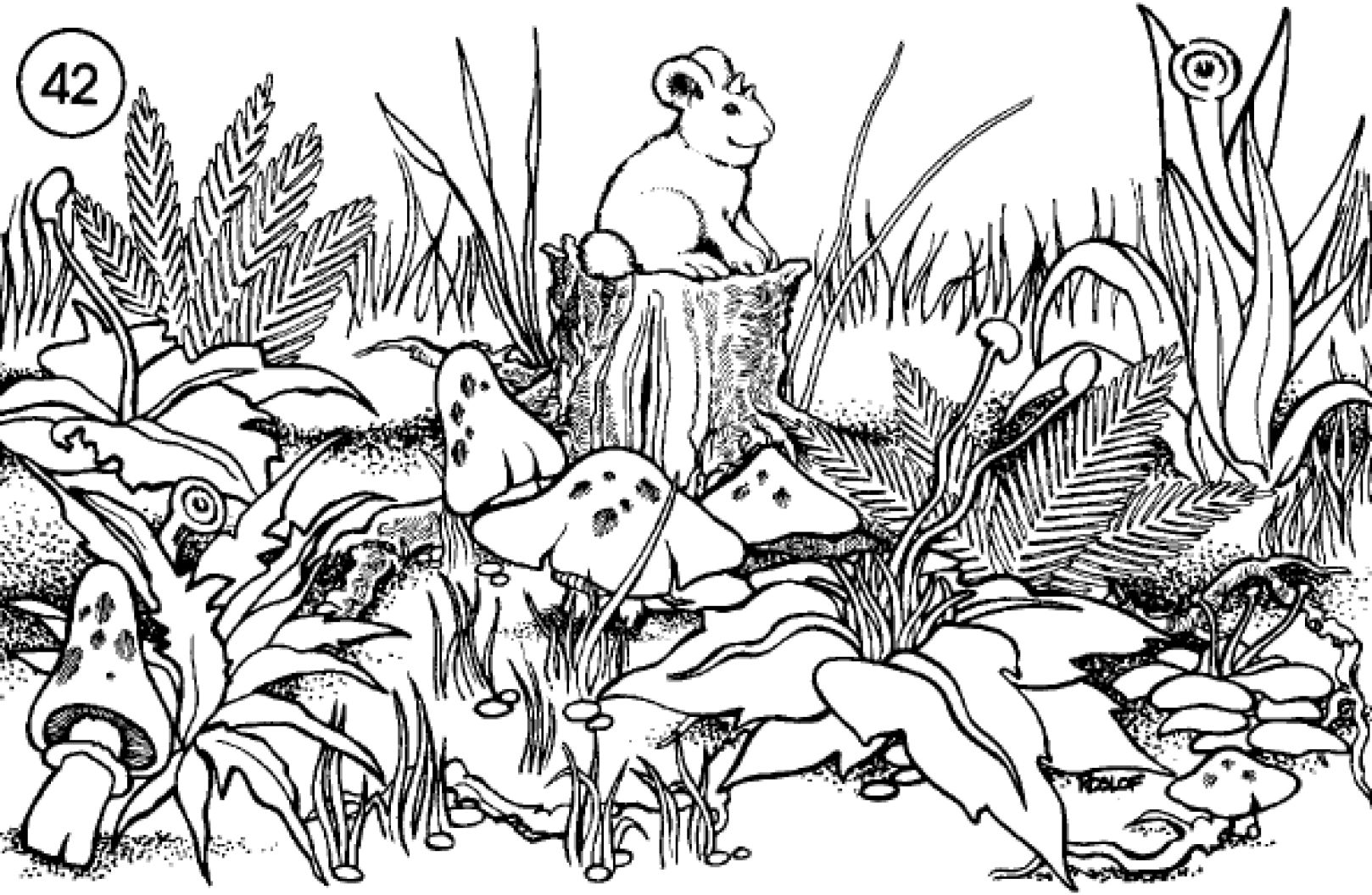
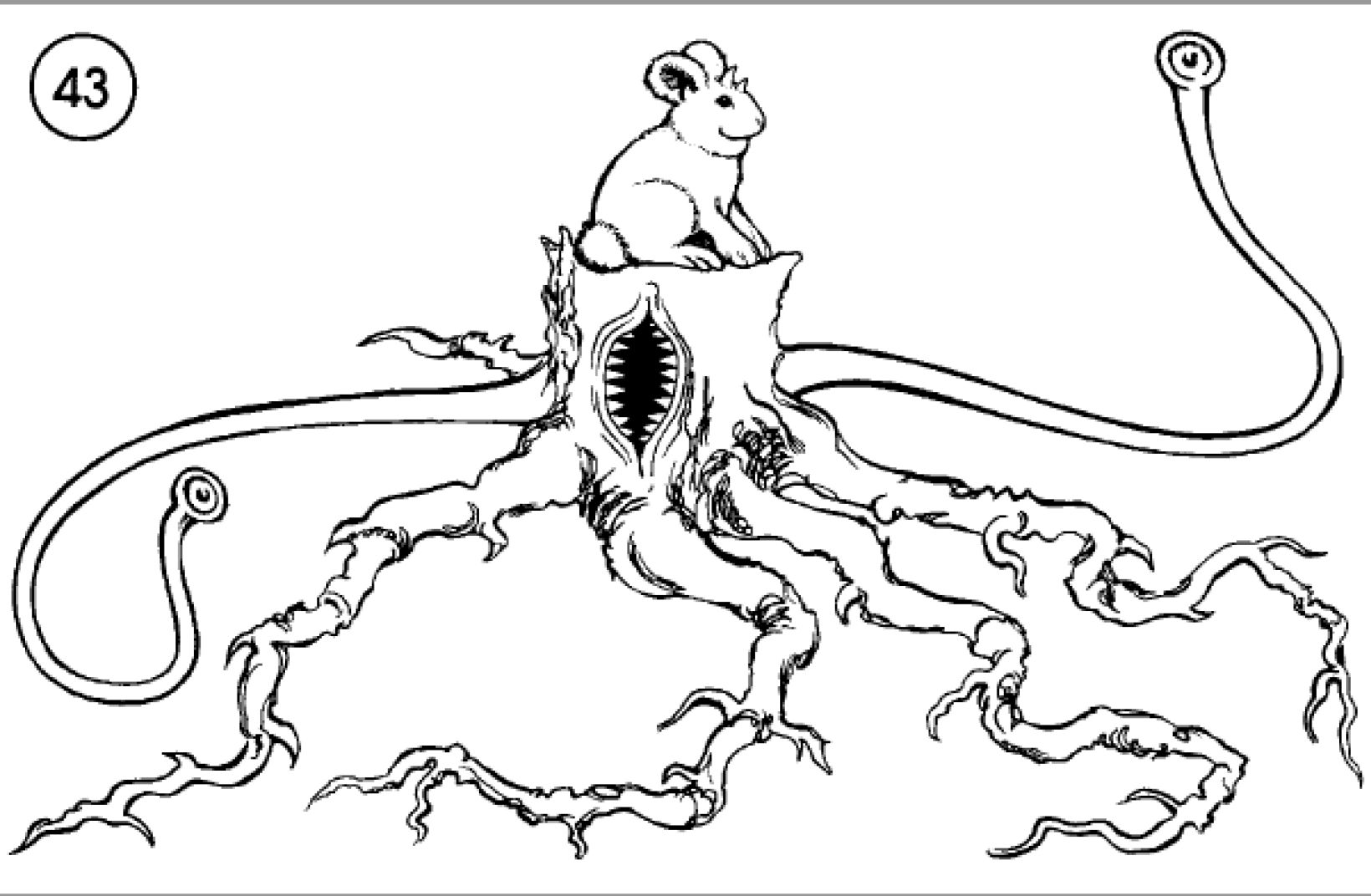
The new creatures, like the Wolf-in-Sheep’s-Clothing, are diabolical and fun! I love how the illustrations (the entire adventure has a large number of illustrations) match up — you can see the revealed creature in the same pose as the disguised one.
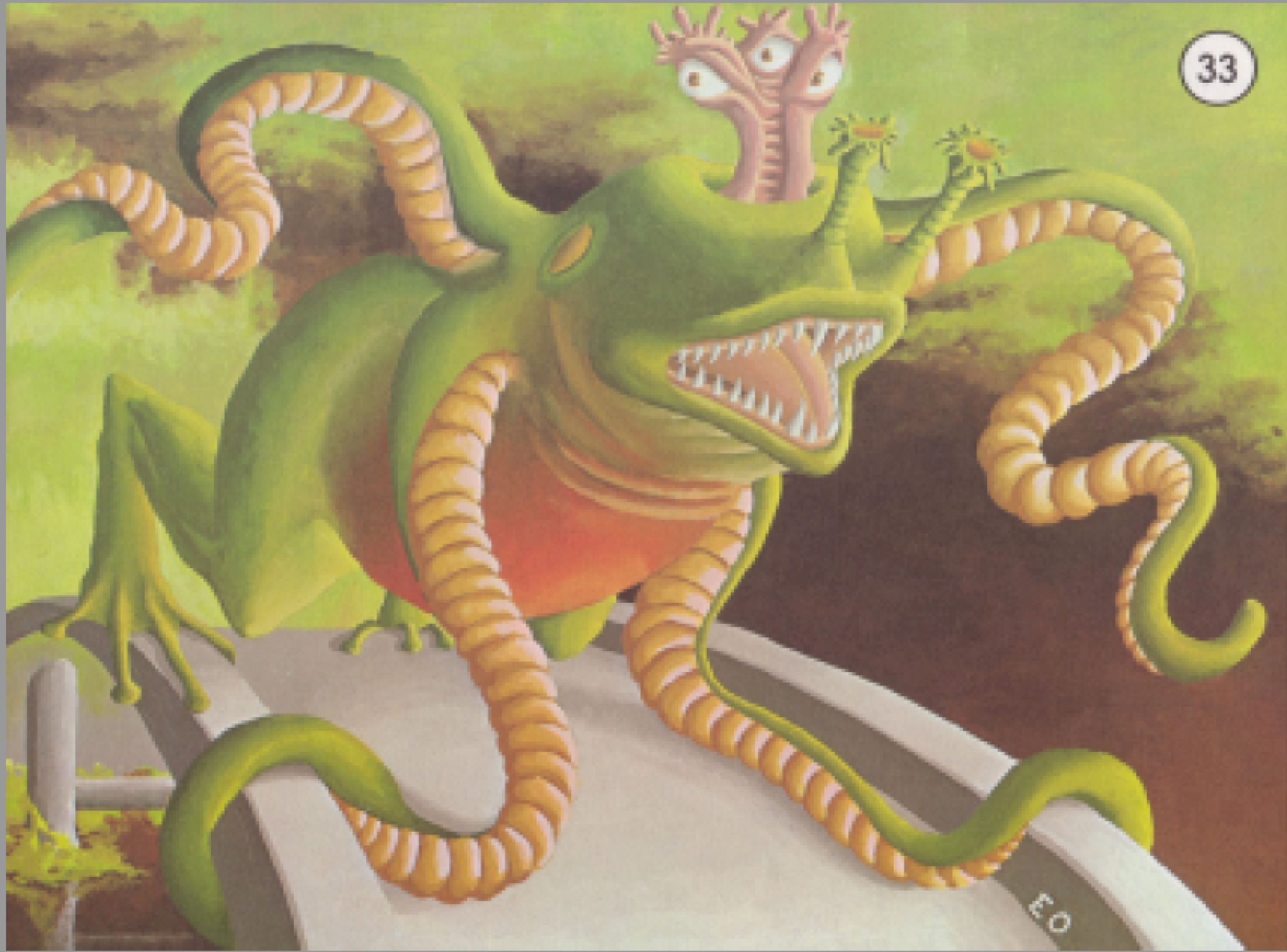
A few of the illustrations are in color, and are magnificent, like this illustration of the Froghemoth, the most dangerous creature in the menagerie!
Barrier Peaks was really the first module that showcased a lot of psionic monsters, like the mind-flayer pictured here, well at home with all the alien tech!
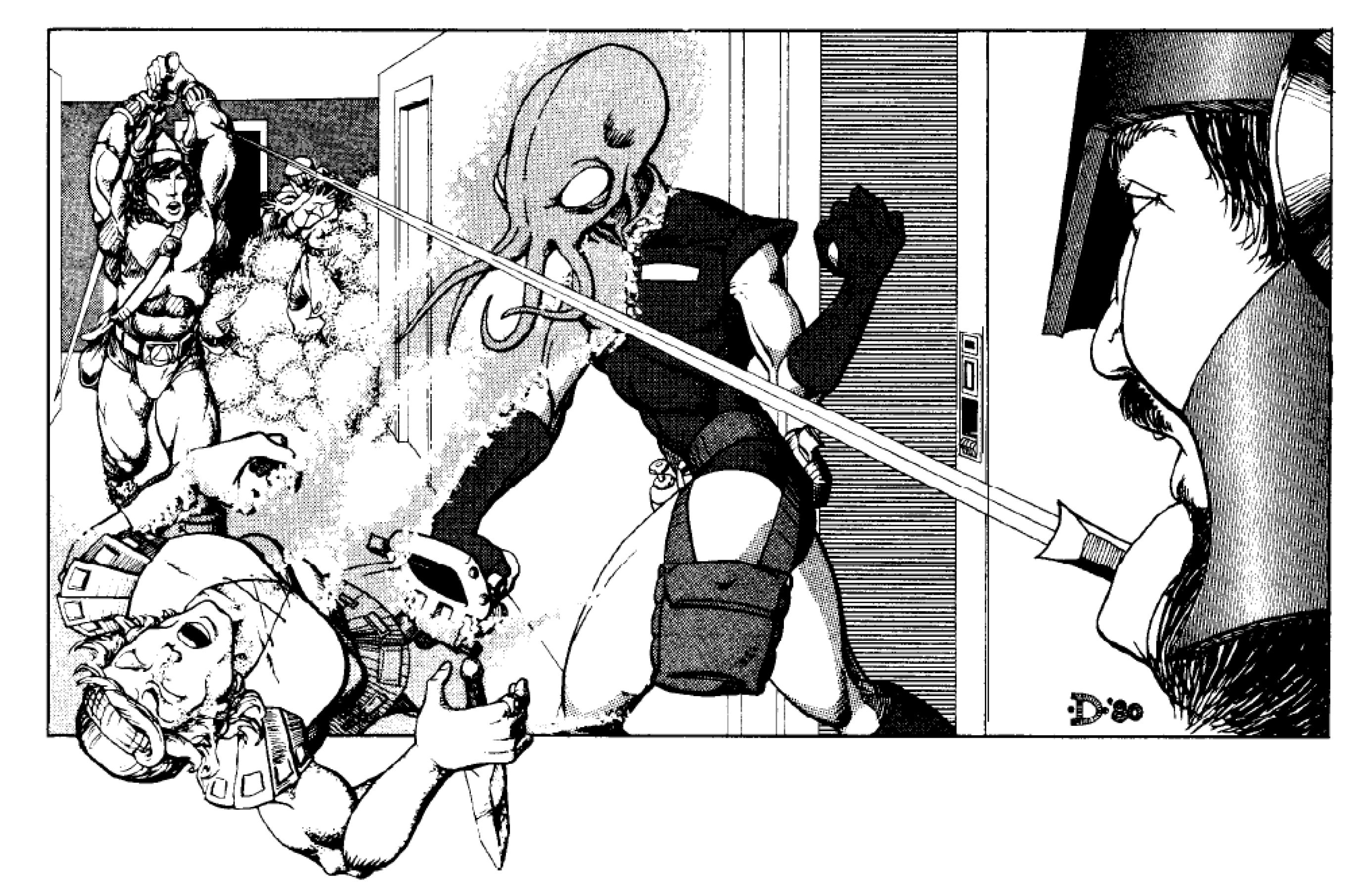
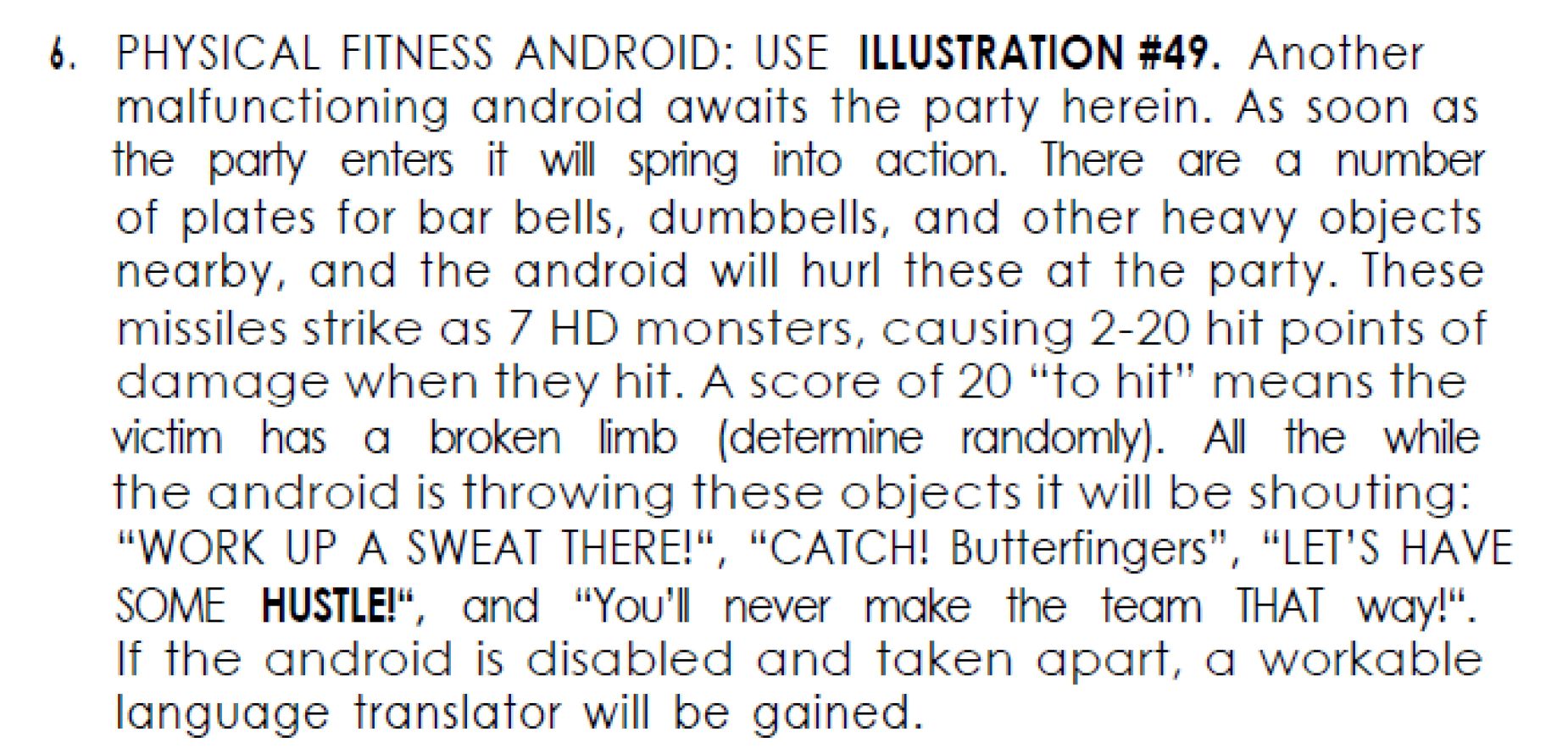
There’s a lot of humor in this absurd situation and Gygax makes it all work. I’m particularly fond of the malfunctioning fitness android that will literally try to kill characters by throwing weights at them.
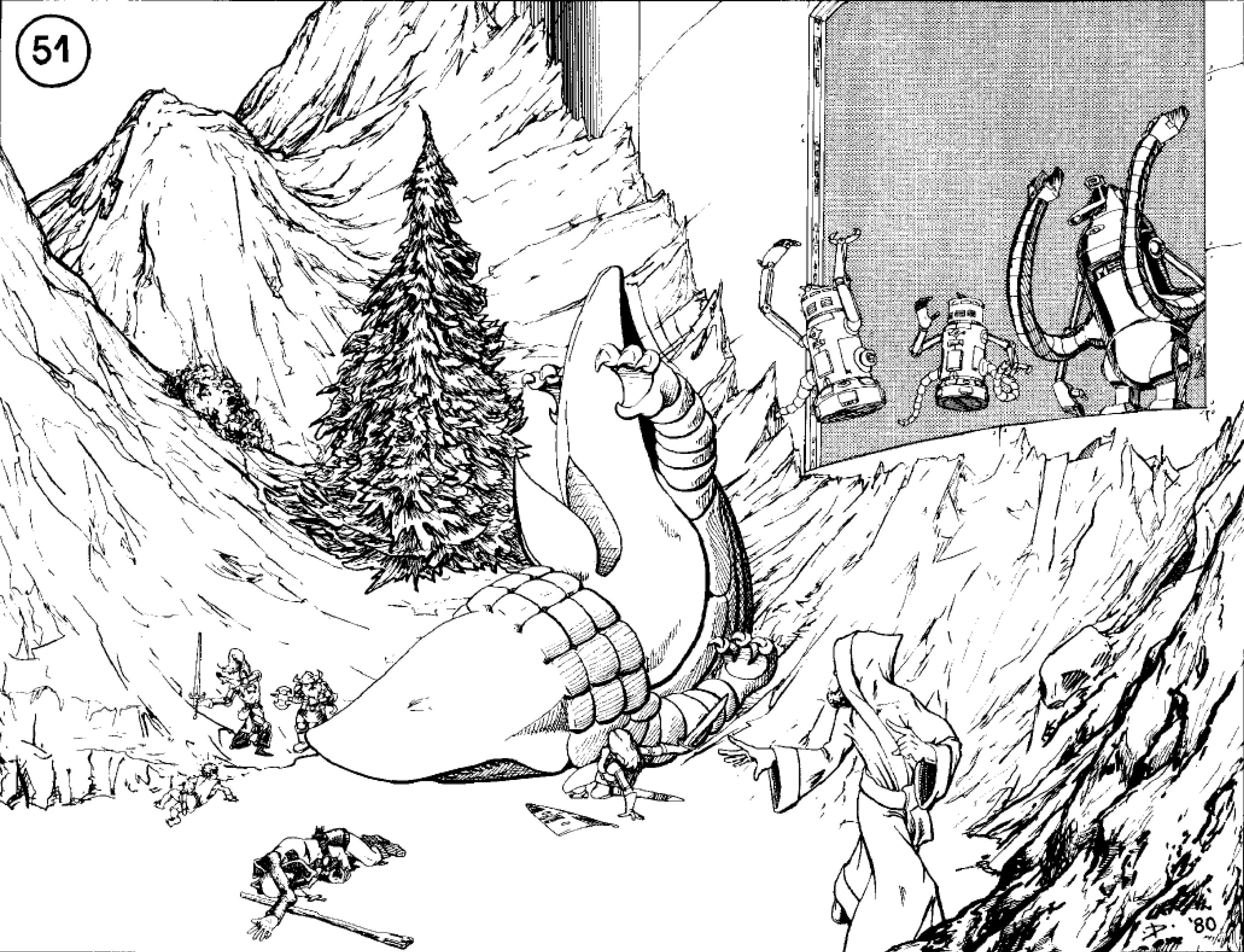
The end of the adventure is very sudden — the PCs end up down at the bottom of the ship, where they get thrown out by malfunctioning bots along with an extremely dangerous bulette. It isn’t said explicitly, but is sounds like all the cargo has already been dumped, so the adventure was futile!
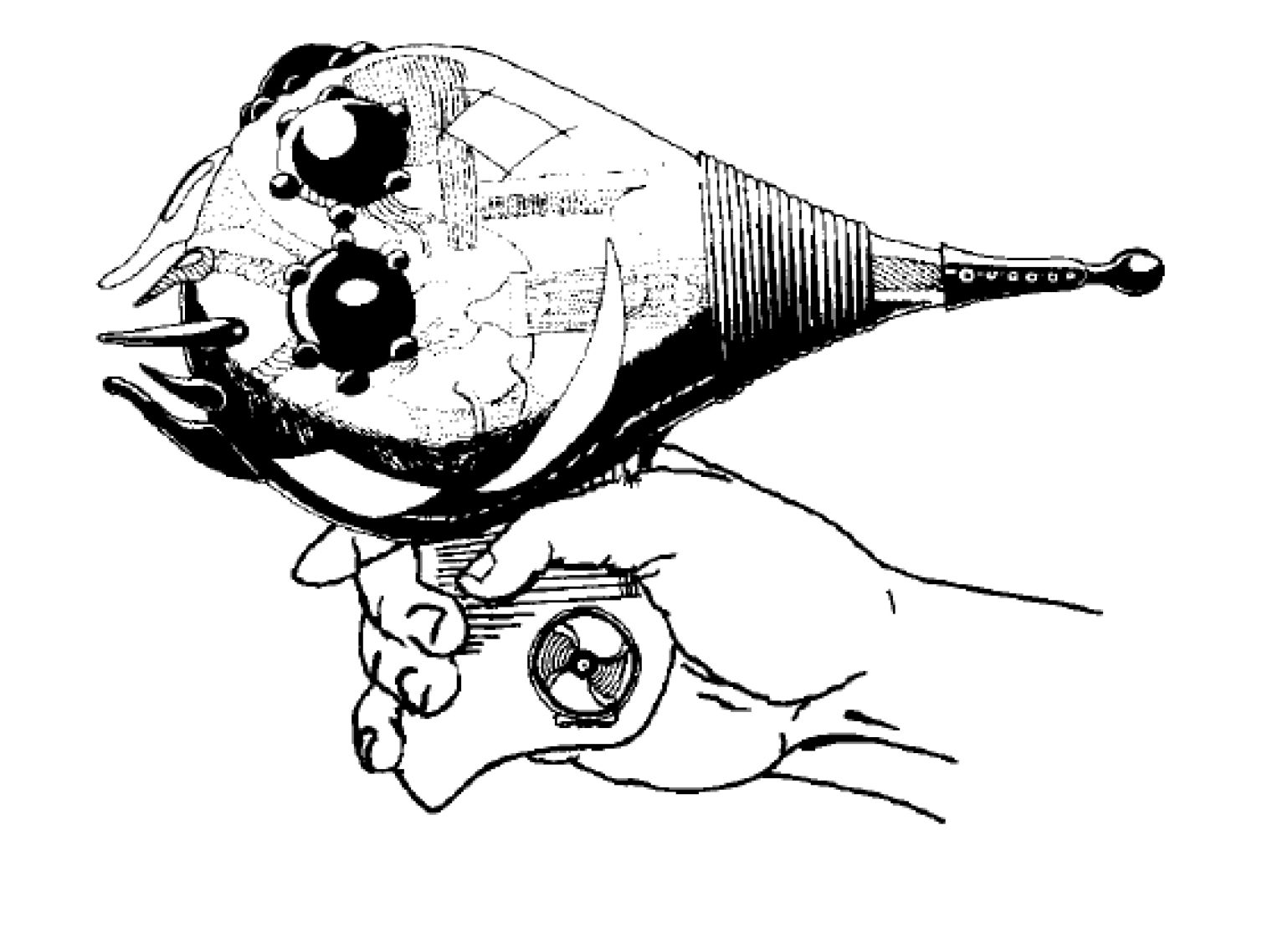
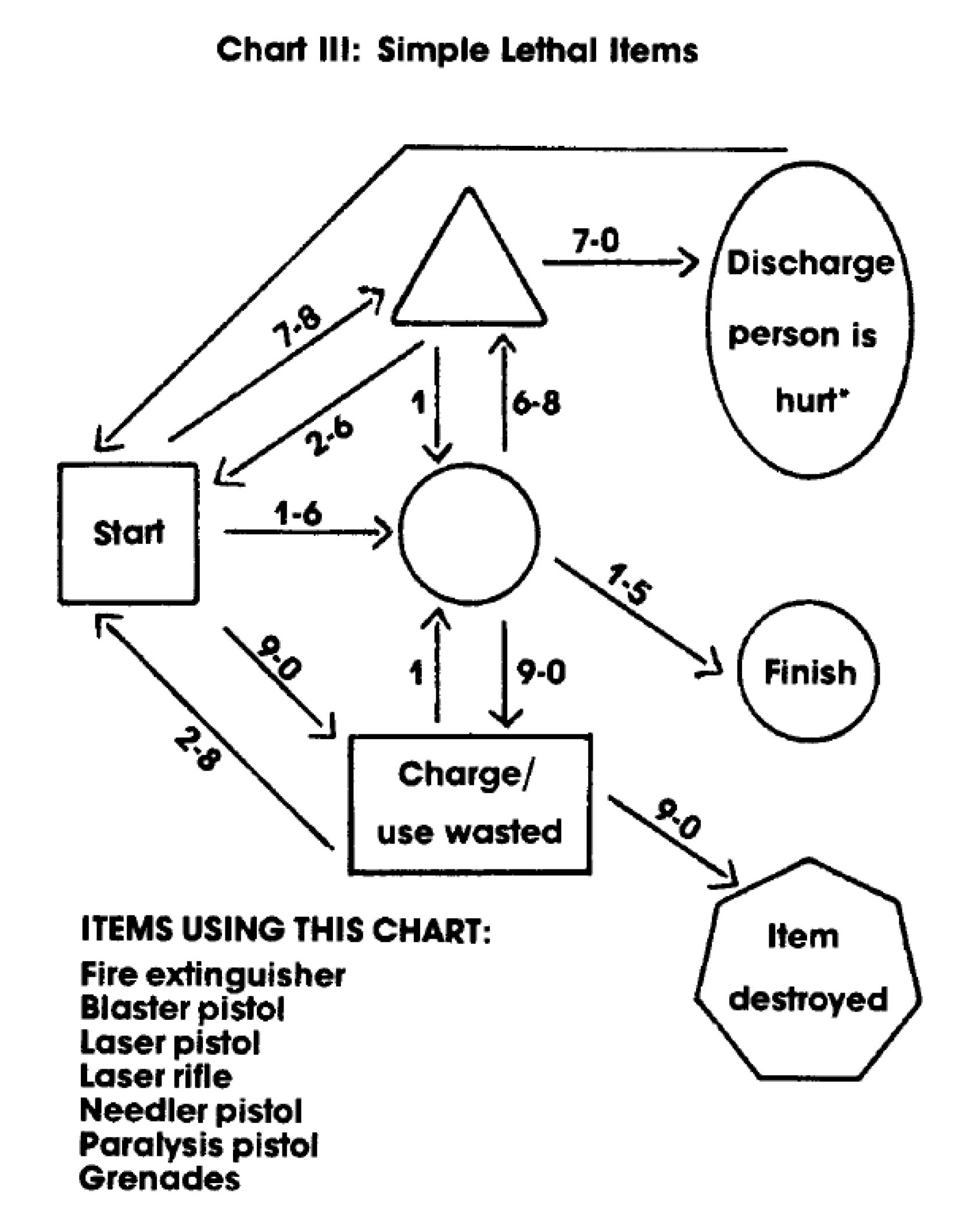
A lot of the fun of this adventure is characters trying to use science fiction tech! Gygax was very clever here, too, with all the weapons having a nonintuitive interface. Anyone insisting on describing how they fire this pistol would likely shoot themselves in the face! (This DM image shows the proper way to hold it, while the player handout just shows the gun.)
Properly, though, there are flowcharts for skill checks to figure out how to use a particular gadget, with some bonuses thanks to things like the game rooms mentioned earlier. Still a good chance to blow oneself up — especially with grenades!
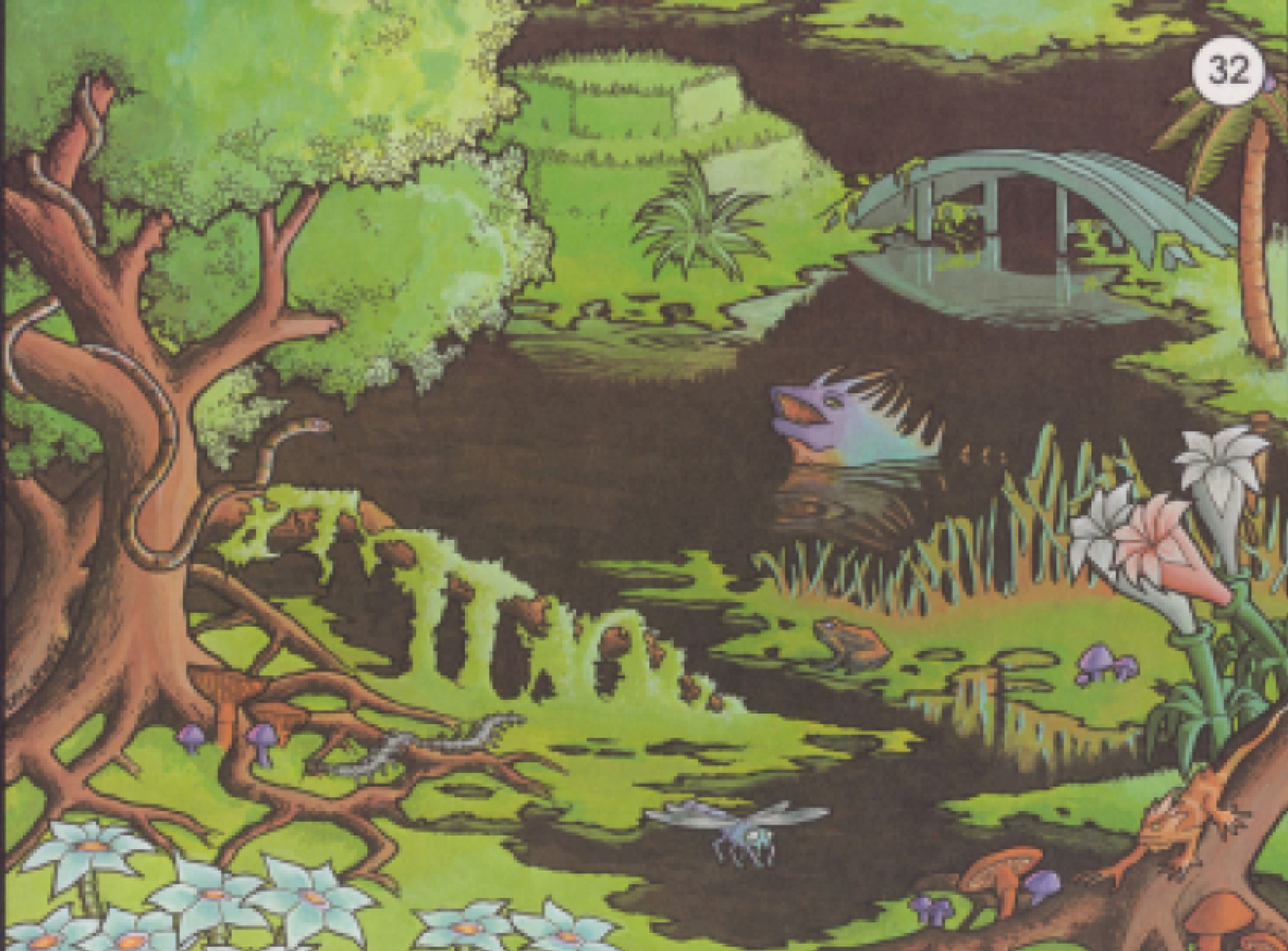
Expedition to the Barrier Peaks holds up incredibly well to this day! It is fun, filled with unexpected twists and turns and encounters, and has that characteristic Gary Gygax detail that makes things come alive. Let me end with one more lovely illustration.
The adventure has lived on! It was included in the 1987 Realms of Horror compilation that brought all the S-series adventures together, it reappeared in the 2013 reprinting of the S-series titled Dungeons of Dread, it was completely reworked in 2019 by Goodman Games for Original Adventures Reincarnated #3: Expedition to the Barrier Peaks that updates to 5th edition rules, and in 2024 it was included in the official D&D compilation Quests From the Infinite Staircase.
**************************************
That’s all for this edition! Hopefully more old school stuff to come in the near future.


