
Time for the latest compilation of old school Dungeons & Dragons threads; all of the compilations can be found in my Dungeons & Dragons blog tag. I’ve still been on a roll in terms of doing these threads on Bluesky quite regularly!
Legions of Thyatis (1990), by John Nephew. Here we have one of the very few ancient Roman Empire D&D adventures!
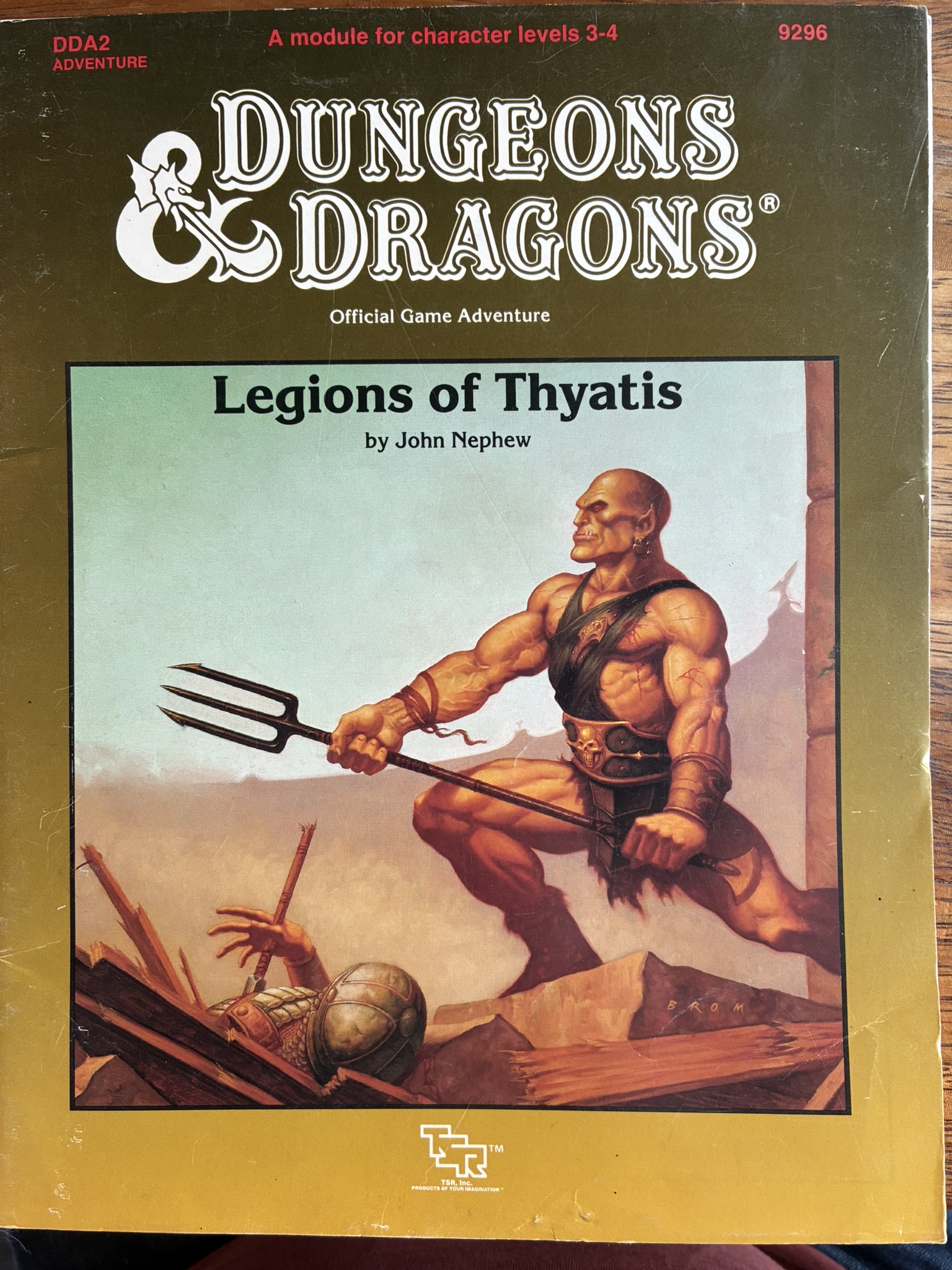
This adventure is set in the D&D campaign world of Mystara, and is set in the empire of Thyatis, which is modeled after the late Roman empire. We therefore have Emperors, gladiators, legions, Senators, and political machinations! The campaign set for Thyatis and Alphatia came out the year before.
Legions of Thyatis is the sequel to Arena of Thyatis, in which characters were drugged and forced temporarily into the gladiator ranks. This adventure assumes that either the PCs are thus friends with the gladiators or have another excuse to become friends with them.
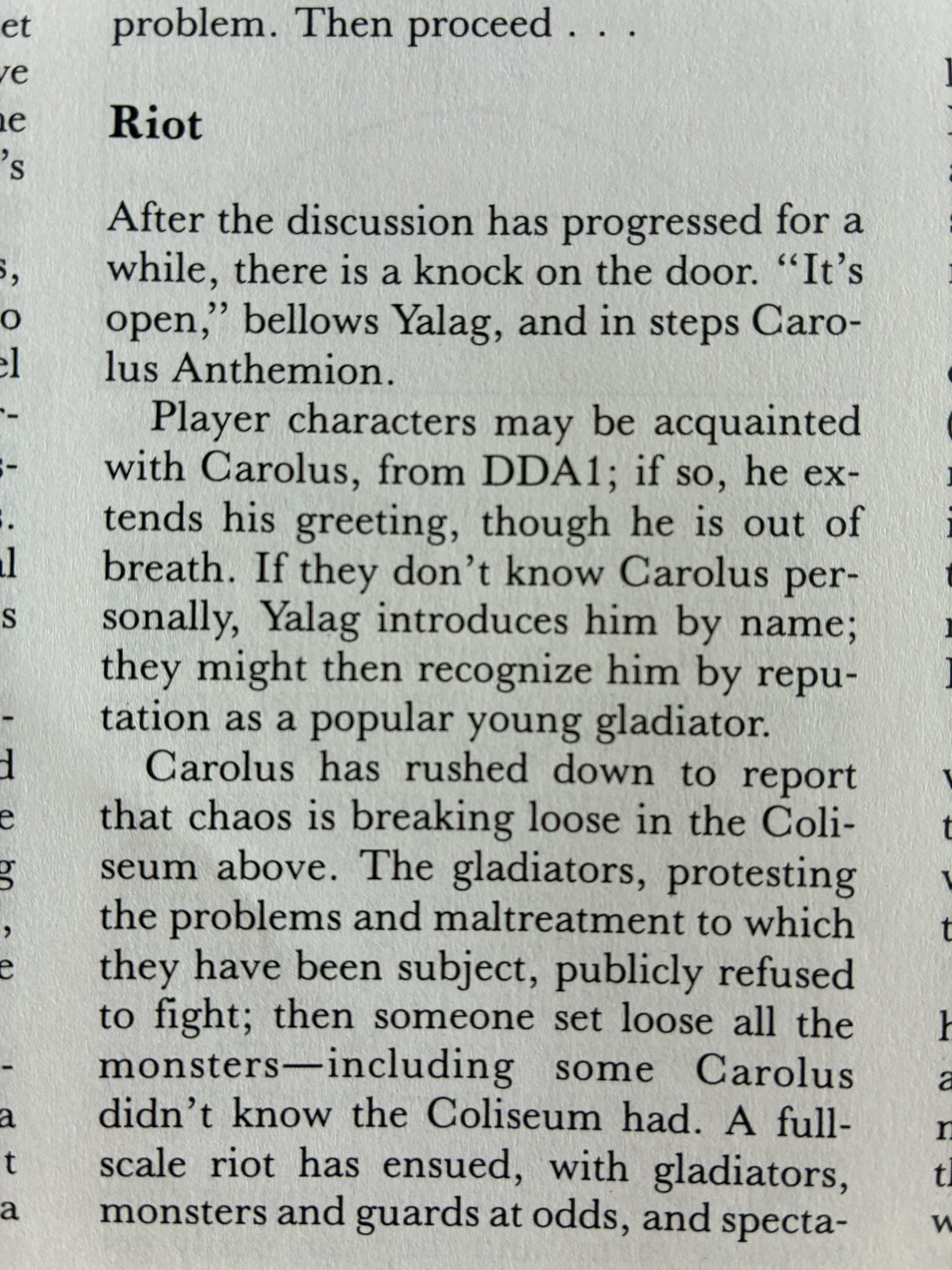
The adventure begins with a gladiator riot! The PCs have visited the gladiator manager to discuss recent problems when a full-blown riot breaks out over horrible conditions for the fighters. The Legion comes in to attack everyone, and the PCs only real choice is to escape into the catacombs.
The catacombs are the only real dungeon in the adventure, where PCs can wander and face multiple dangers in attempt to get back to street level. However, the catacombs are also used by scheming political figures…
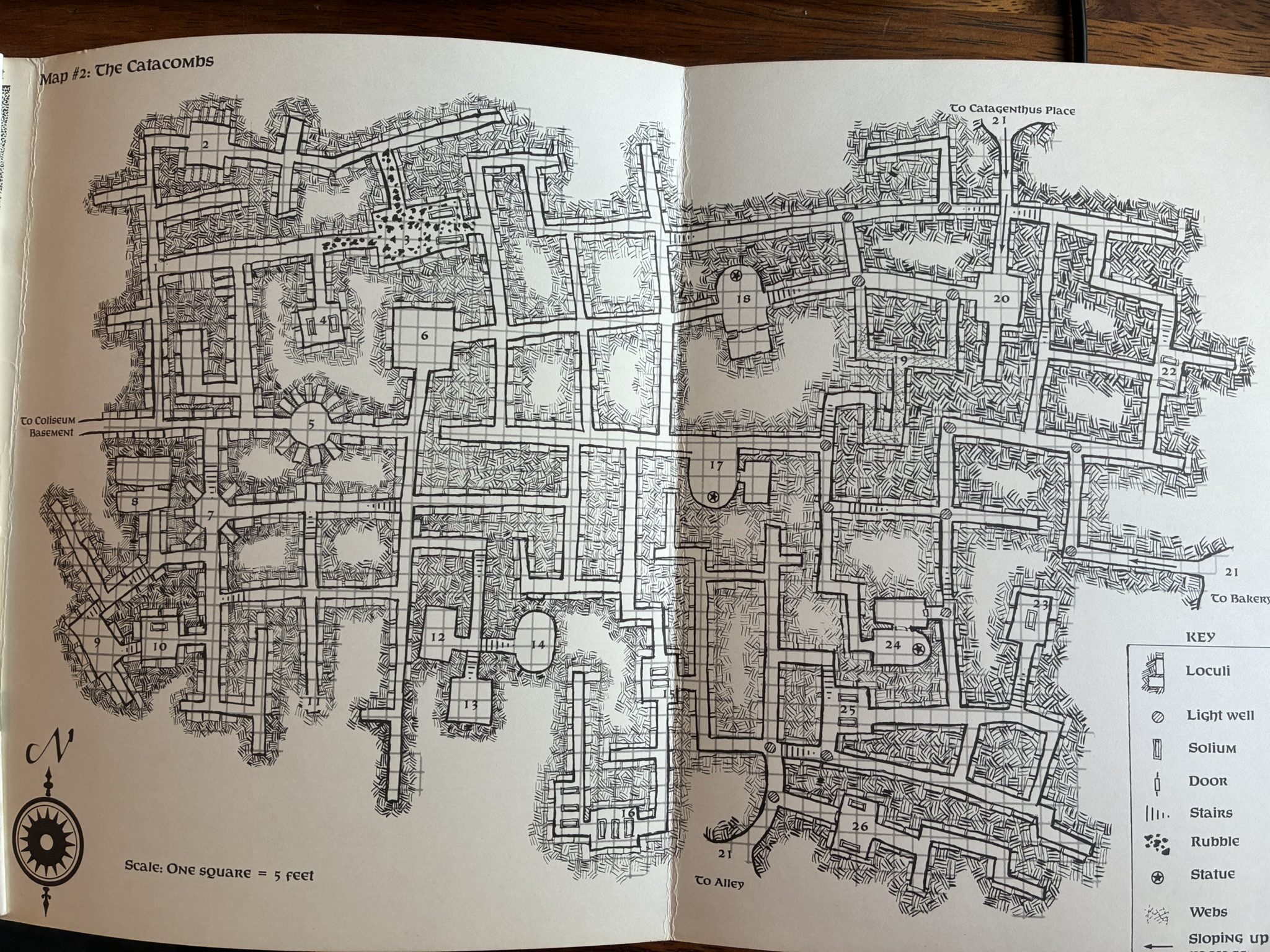
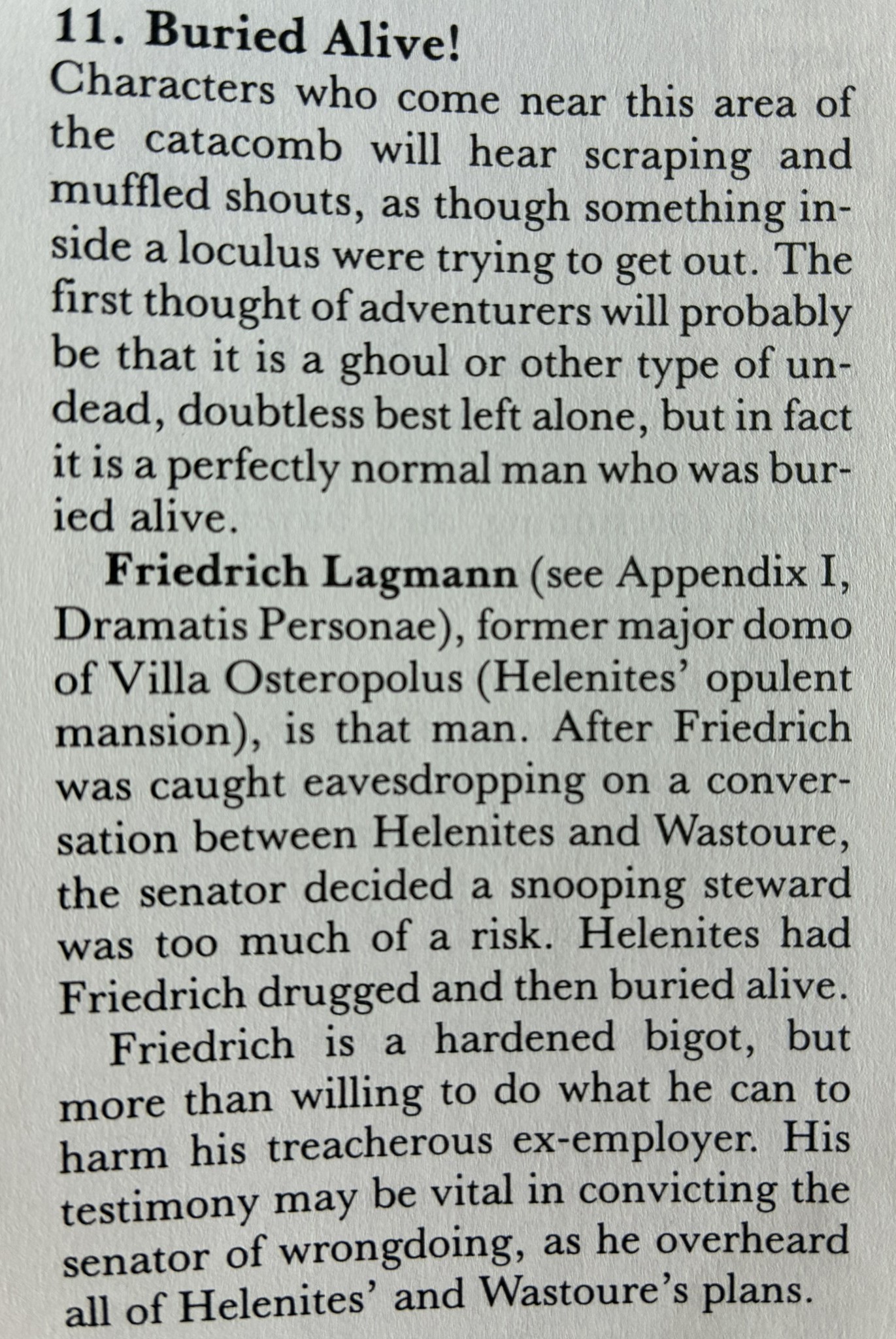
Because of this, the catacombs are also filled with clues and potential witnesses who can point the finger at the scheming senator who sparked the riot! One example is an employee of the senator who overheard a bit too much and was buried alive for his troubles.
This is where things get really unusual! After escaping the catacombs, the PCs can bring witnesses and accuse the senator of crimes directly! After a few assassination attempts on the witnesses, this leads to a trial.
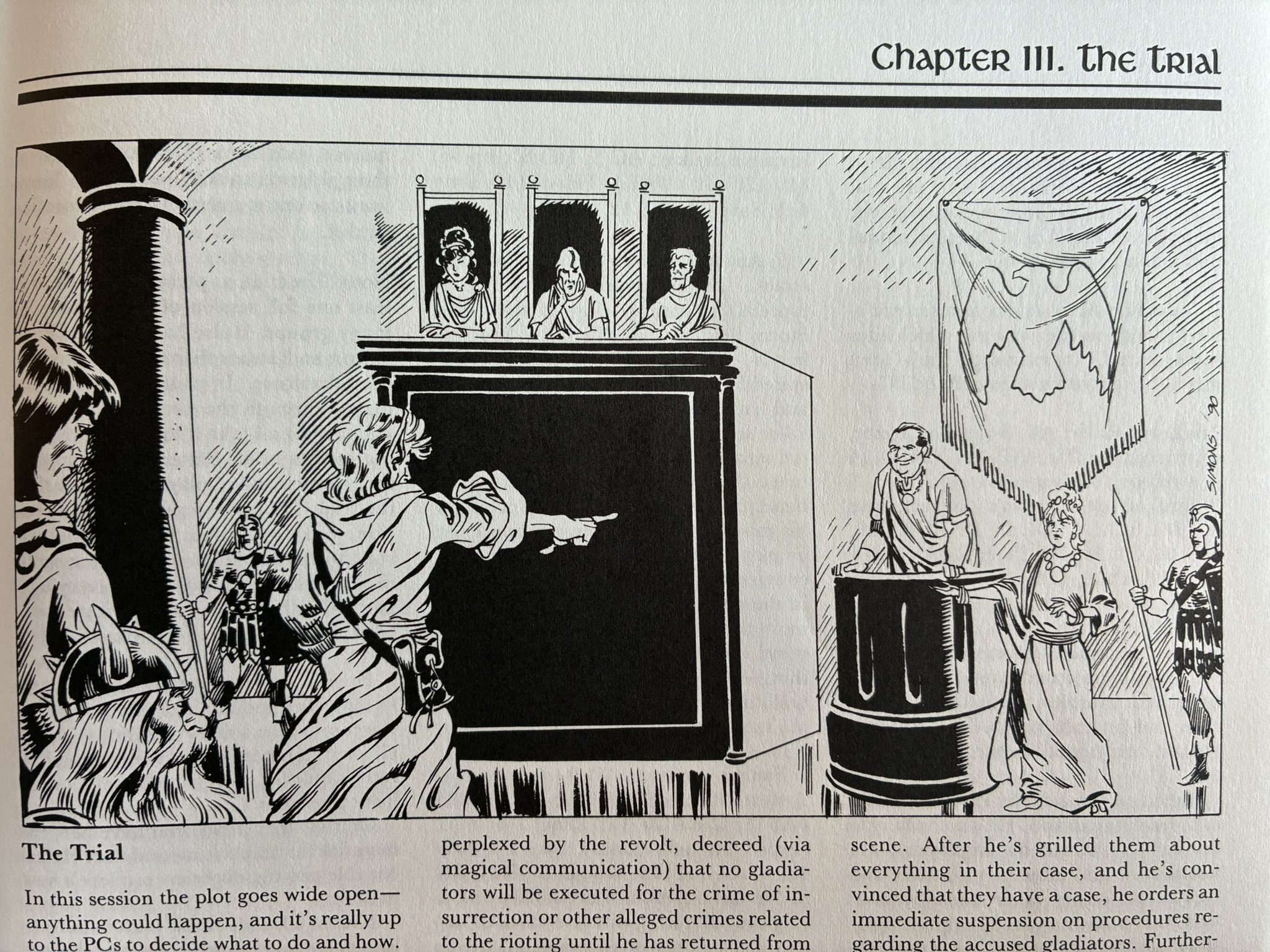
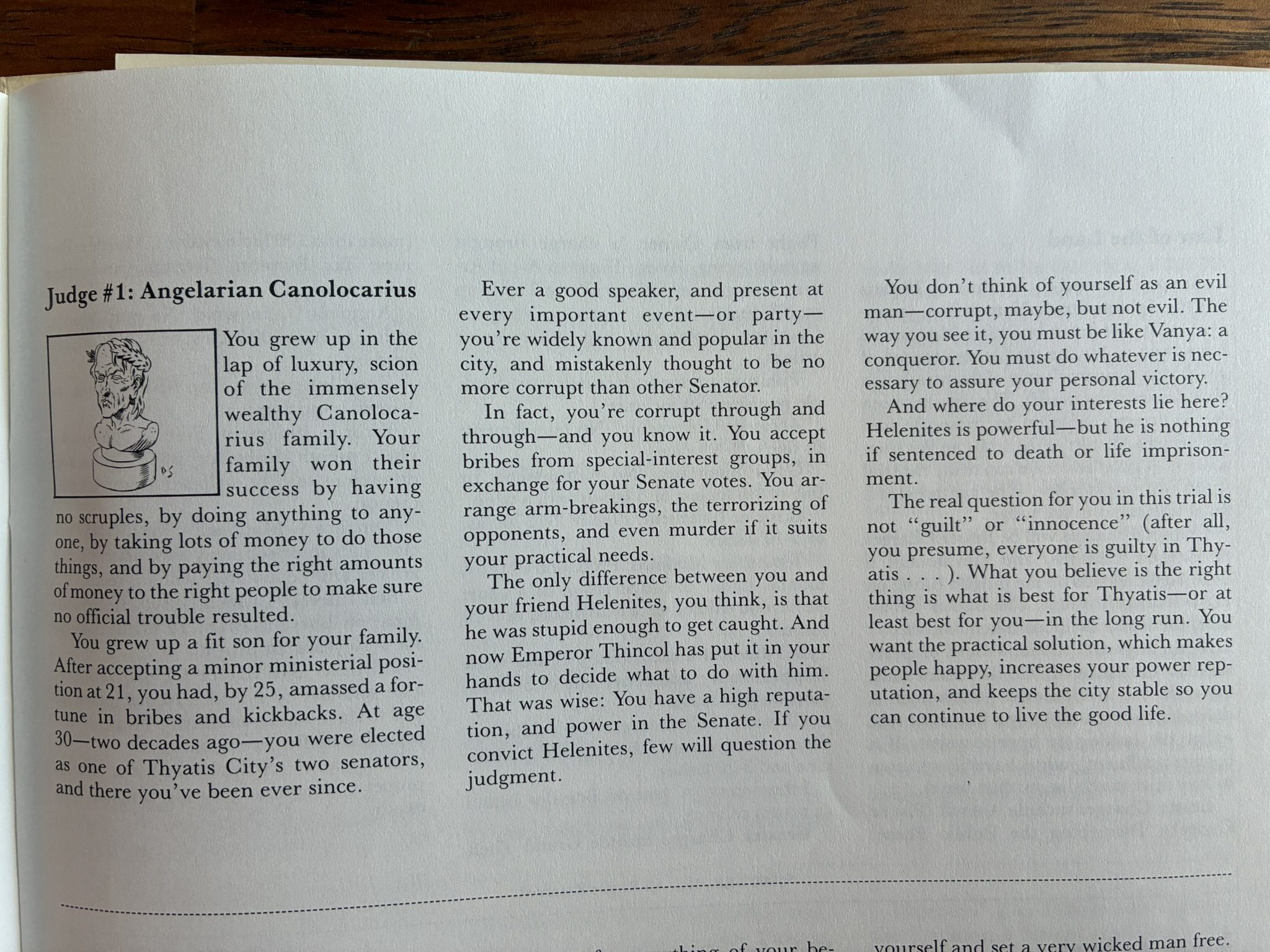
Here the players are given an opportunity to roleplay — not as their characters, but as the judge and prosecutor in the trial! Cheat sheets are given for the players to embody their judge character appropriately.
If the players play the trial well, the senator will be convicted and executed or exiled. They can earn citizen status if they don’t have it yet or potentially a title in the Empire! But what was the whole plot about anyway?
It turns out there is a powerful magic-user named Wastoure from the Hollow Earth who is attempting to free an ancient powerful being called a Burrower from captivity. He allied with the crooked senator for help, in exchange giving the senator aid with political power.
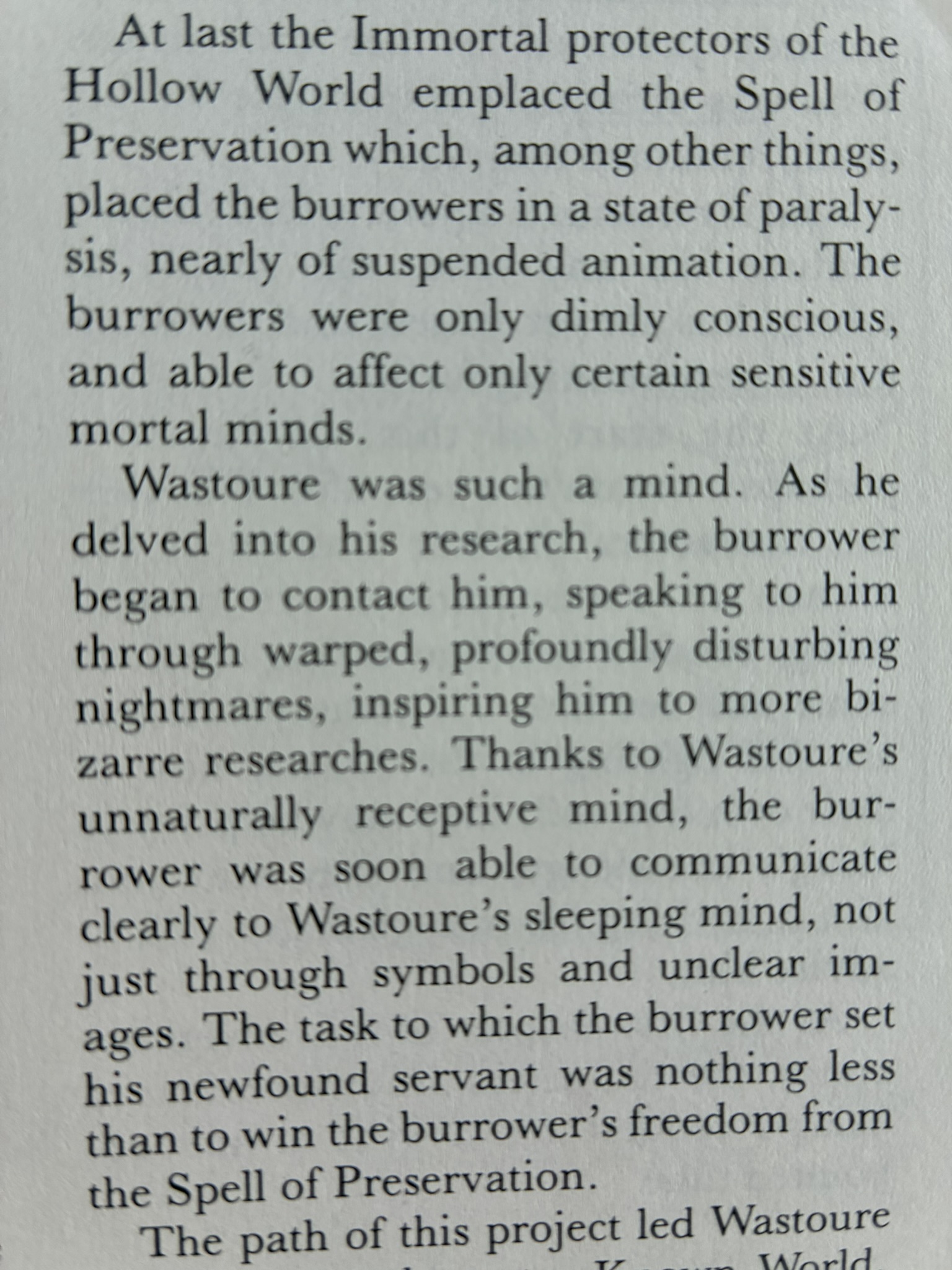
Curiously, Wastoure never makes a direct appearance in the adventure. It seems like this was all a set up for a third adventure in the series where the adventurers might have gotten into direct conflict with him to stop the release of the evil being! As far as I know, one was never released.
The trial aspect of the adventure is quite unique! I’m not convinced there’s enough information here for DMs to properly run such a challenging scenario, but I give much credit to the author for the attempt and the intriguing idea.
The Convert (1987), by Frank Mentzer. Here is a truly obscure rarity! But is it a classic? Let’s find out…
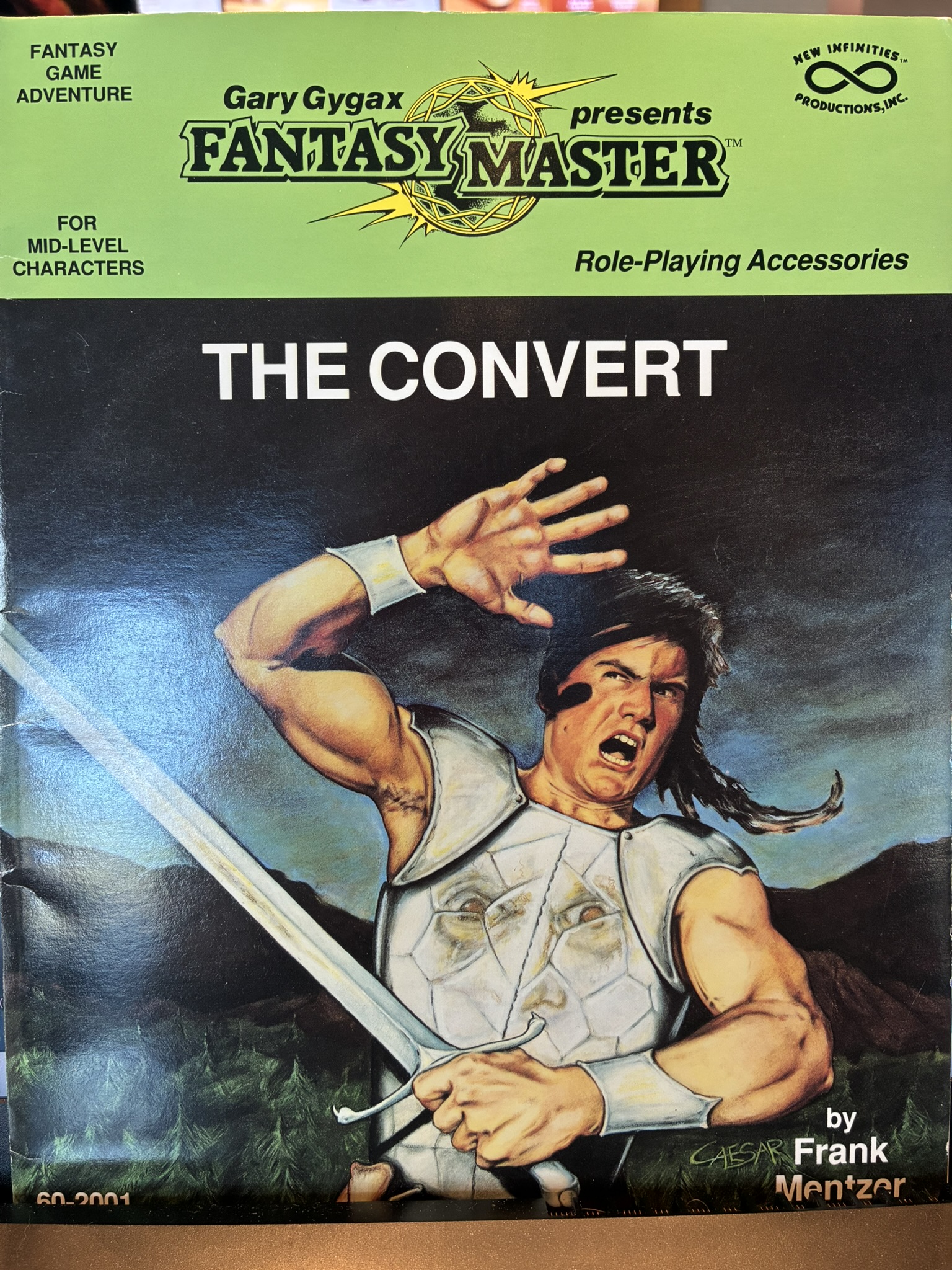
The Fantasy Master line was a short-lived line of RPG supplements that Gary Gygax promoted after his ouster from TSR. Frank Mentzer followed him and they worked together on a number of projects like the intriguing but unsuccessful Cyborg Commando.

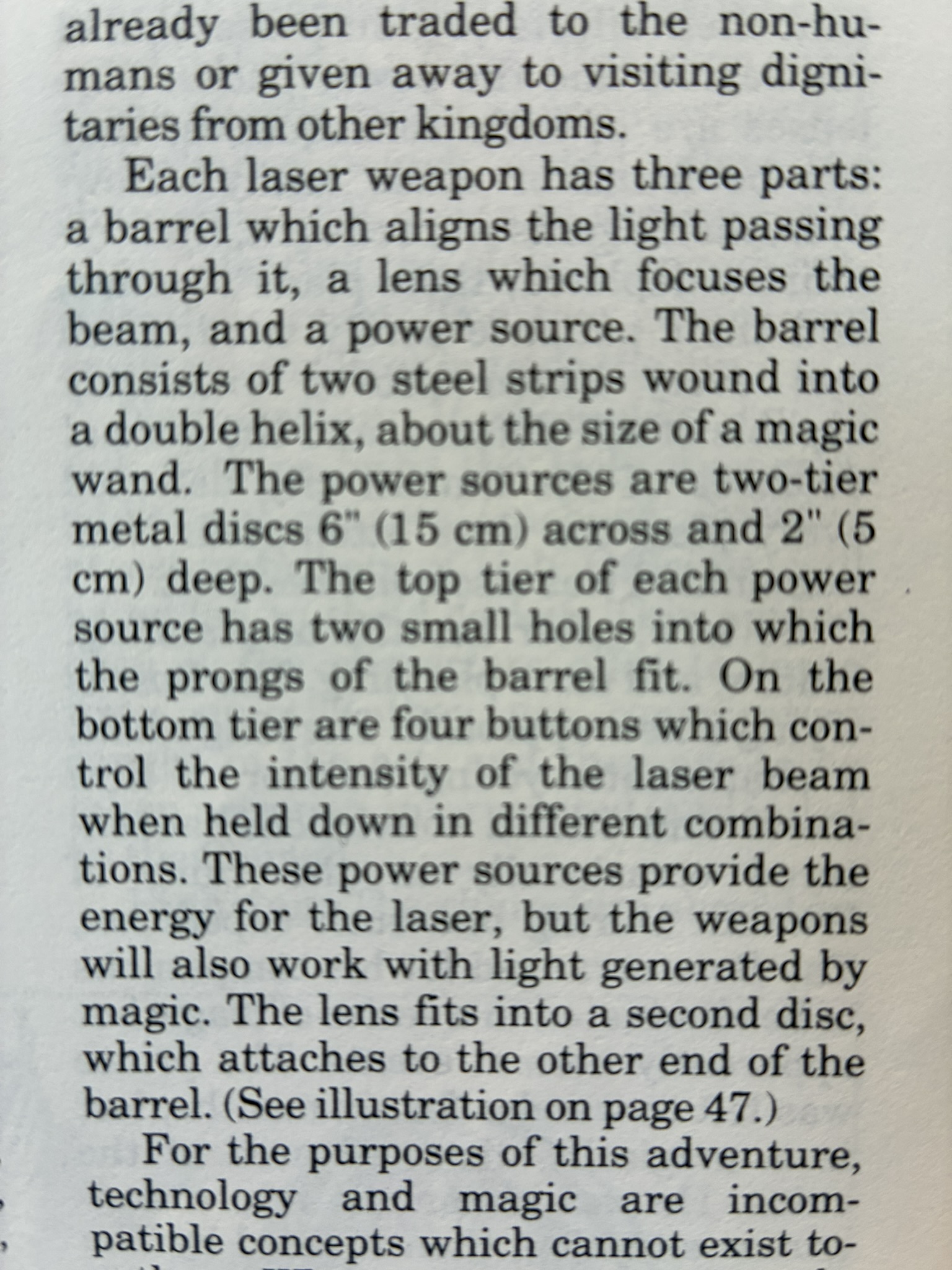
The Convert is a tournament adventure that Mentzer had run a few years earlier, converted to a full published module. It centers on the pieces of a laser rifle that are held in some of the towns of the region that a demonic villain called “The Boss” wants to collect.
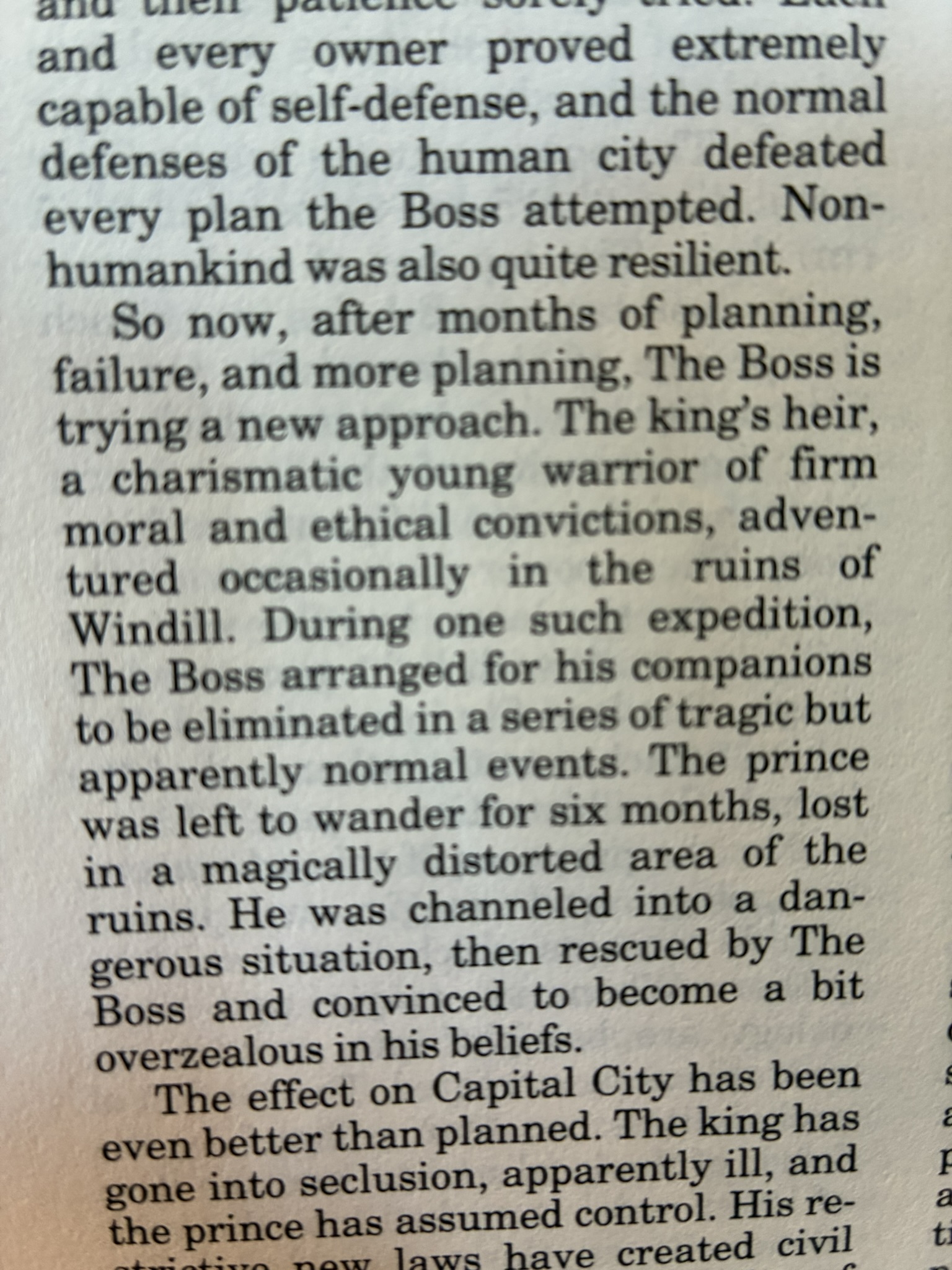
When direct action fails, The Boss manages to convince the son of the king that he is a savior angel, and “converts” the young man to his twisted theocratic religion. The king falls ill and the son starts implementing harsh new laws. The Boss hopes to steal the weapon in the inevitable chaos.
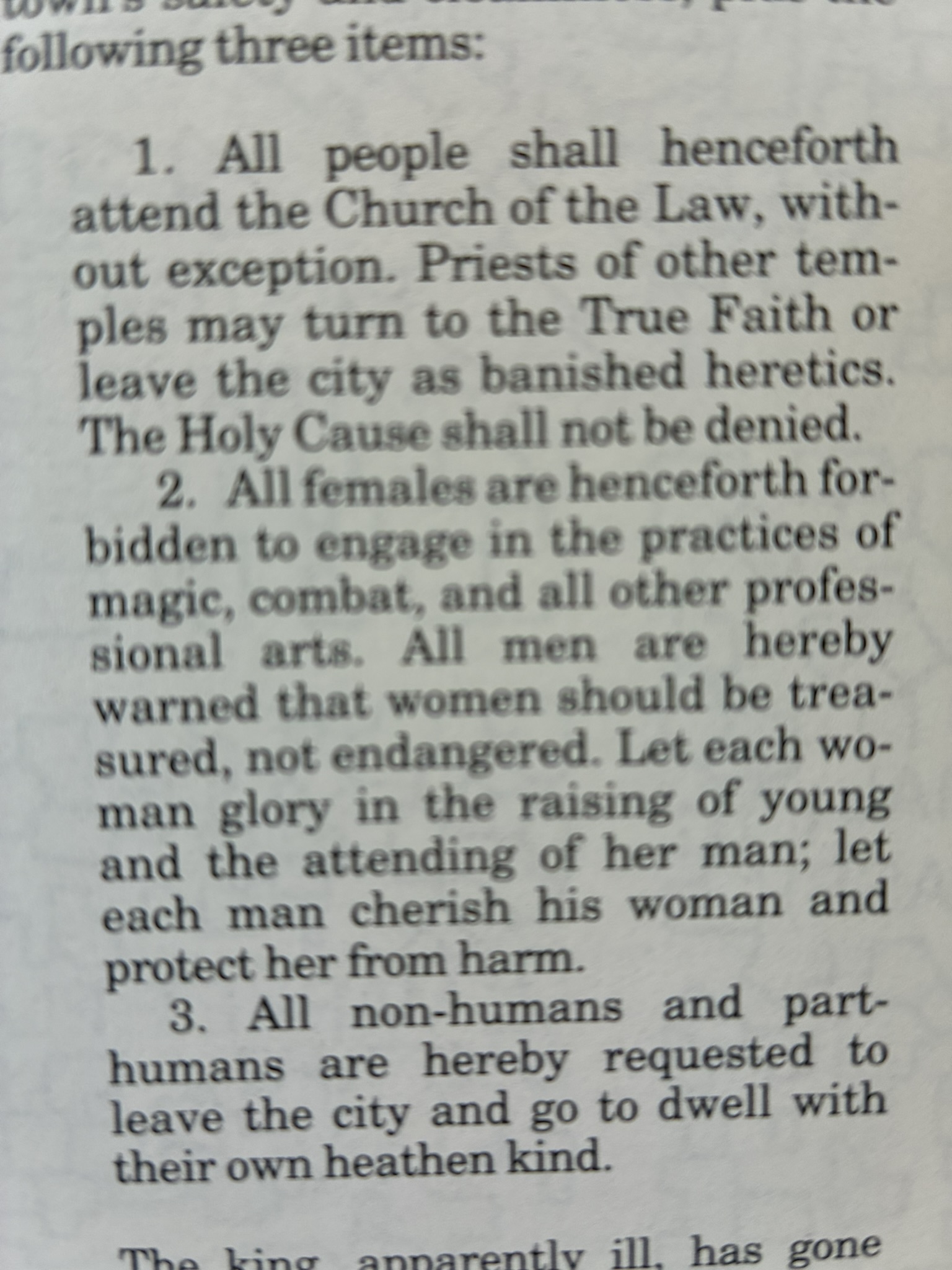
The laws are theocratic and repressive and Mentzer seems to eerily have anticipated where politics would be heading in 2026! (Note the use of “females” to describe women.)
The adventure actually feels structurally a bit similar to the classic X3: Curse of Xanathon, where forces magically curse the king with insanity and the adventurers must quest to find the culprits and a cure! The Convert is arguably much darker in tone.

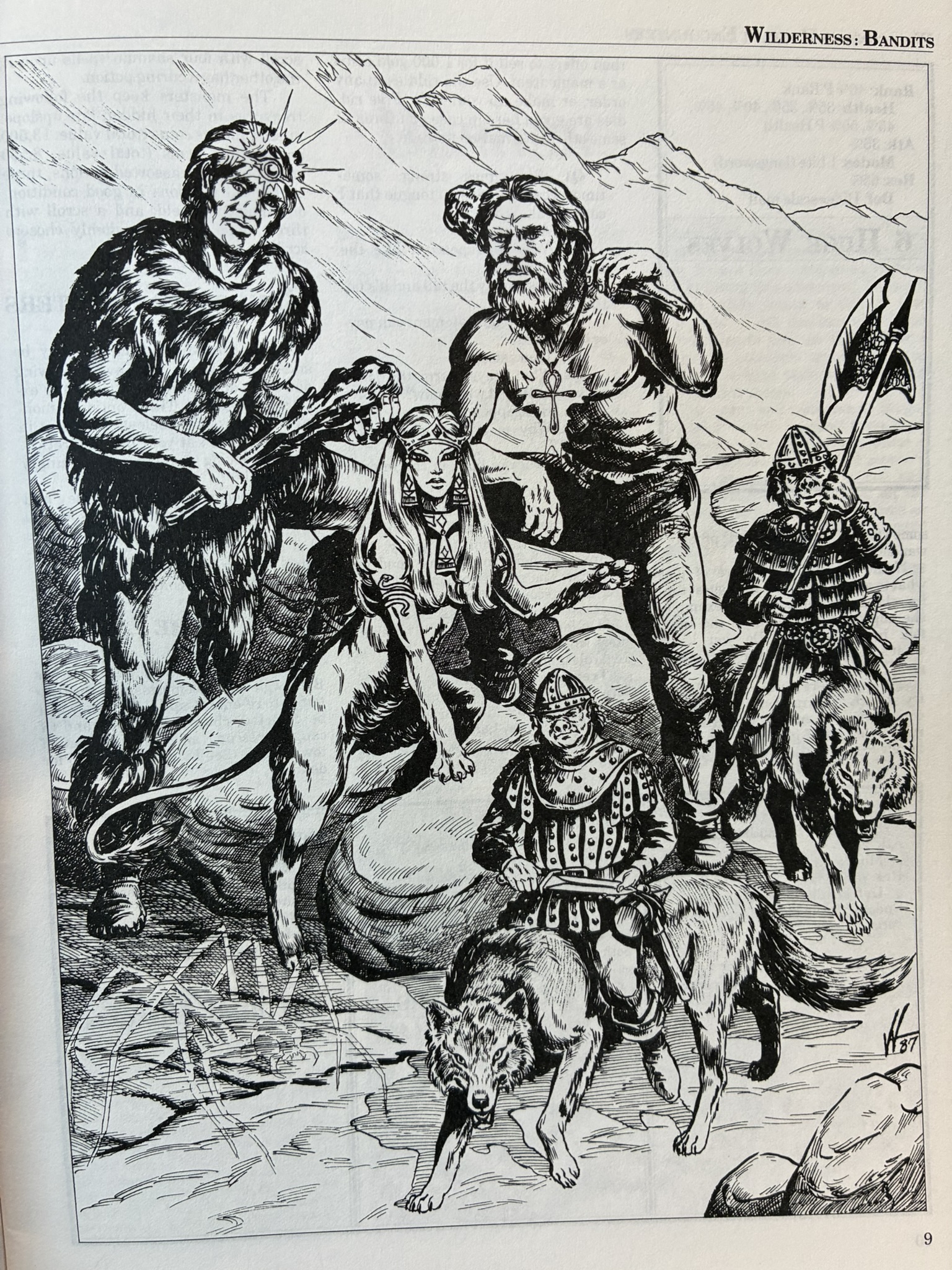
The Convert itself is a rather straightforward adventure. One of the highlights is coming across a nonhuman group of bandits that can be bargained with and the sphinx of the group can even be hired to help out.
The adventure takes the players to two nonhuman settlements in search of laser parts, with challenges to overcome along the way, and ends in the dungeon where The Boss first tricked the king’s son. They need to bring back evidence that he was tricked.
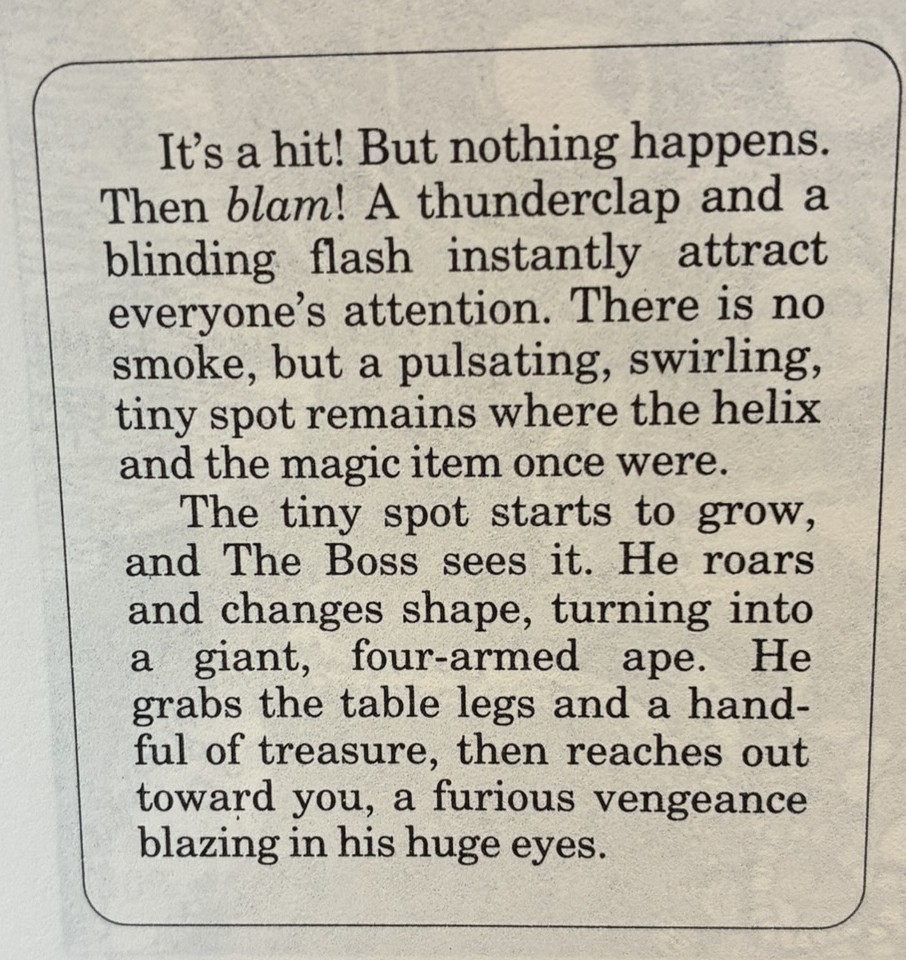
This is where things get odd! The most likely end of the battle with The Boss is to bring a magic weapon and the laser weapon together, causing a dimensional vortex to open, sucking The Boss in. But then they don’t have evidence that The Boss was responsible!
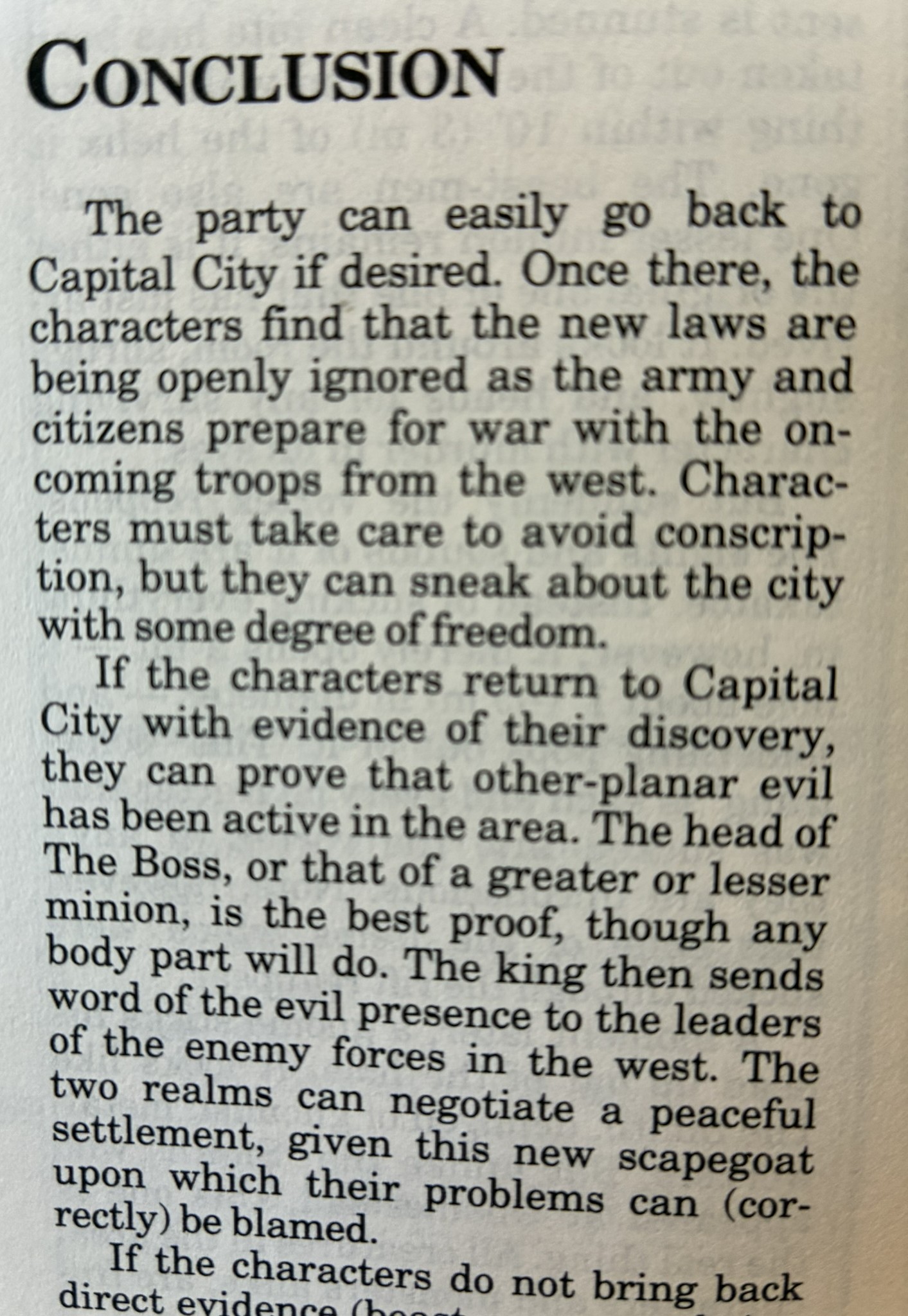
Even if they bring back evidence, the explained conclusion leaves plot holes. It says the king will basically fix everything, but the beginning of the adventure tells us that the king is ill! This is never explained from what I saw.
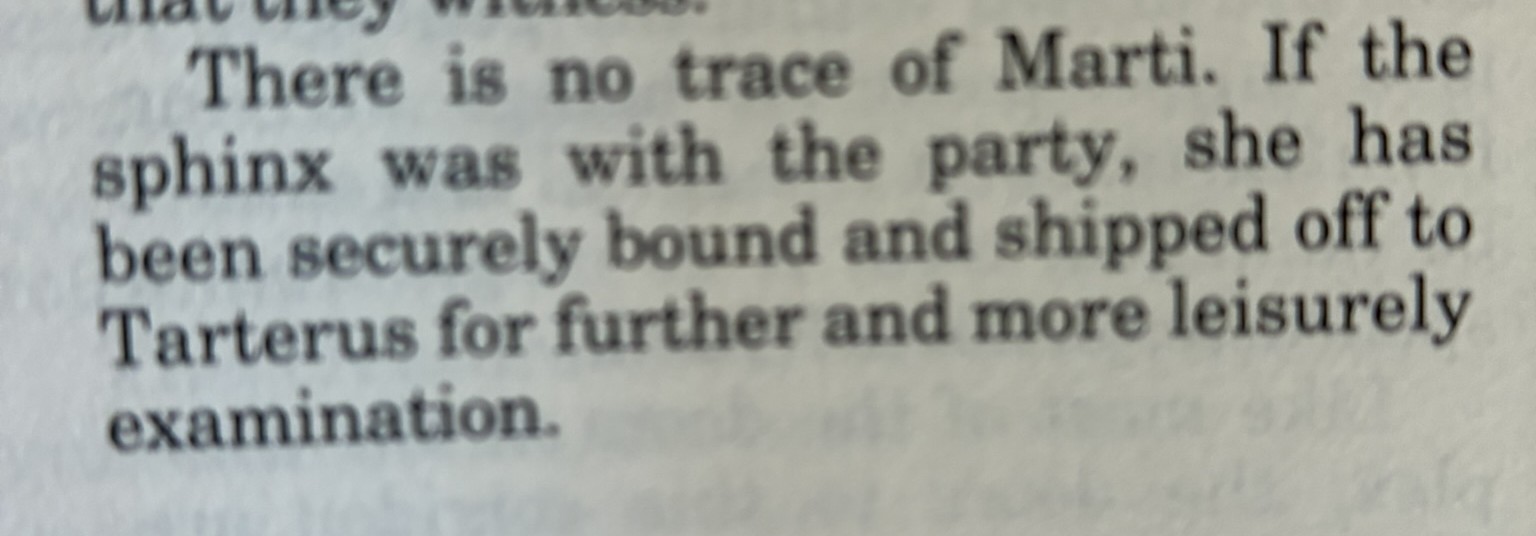
The thing that irks me the most though is the fate of Marti the sphinx. The adventure plot forces the characters to be captured at one point, and if Marti is along, she is sent to a literal hell! Presumably adventurers could go rescue her, but nothing in the module addresses this.
Suffice to say this isn’t Mentzer’s finest work, considering he is one of the greats of old school D&D! It is a fascinating snapshot of the history of the genre, however. And Mentzer is still active! He founded a new gaming studio in July of this year.
Fantastic Treasures (1984), by Allen Hammack. Let’s check out another non-TSR product!
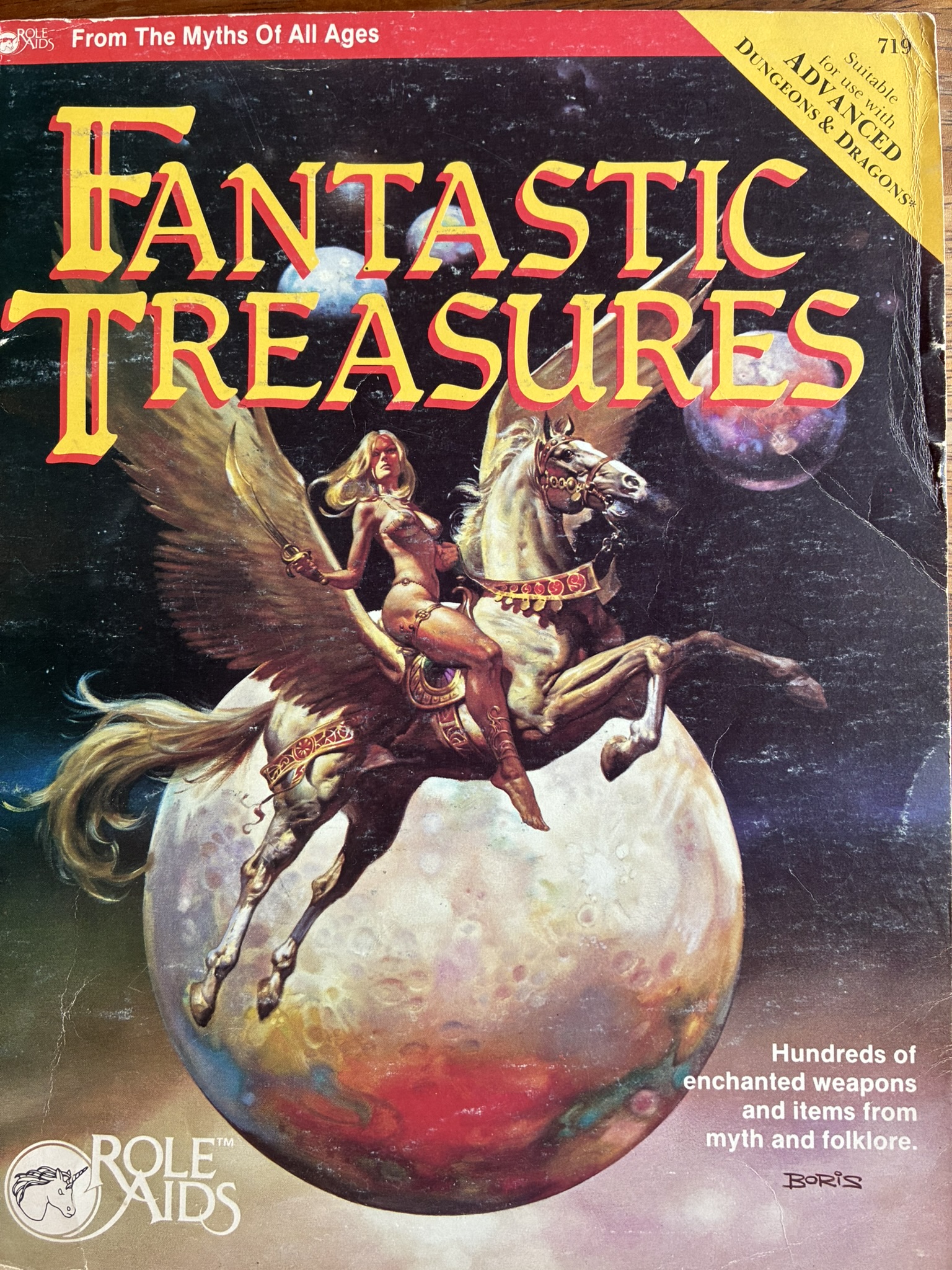
Role Aids was a product line of D&D supplements by Mayfair Games to take advantage of the explosive RPG popularity. Their products were often quite good and innovative! TSR fought them over the legality of making supplements but finally relented to them being “officially” approved for a while.
This product is exactly what the title implies: a huge list of magical items drawn from religion and mythology to add some variety to campaigns. The first book is extensive enough to cover only A-L of items; a part 2 would come out the next year.
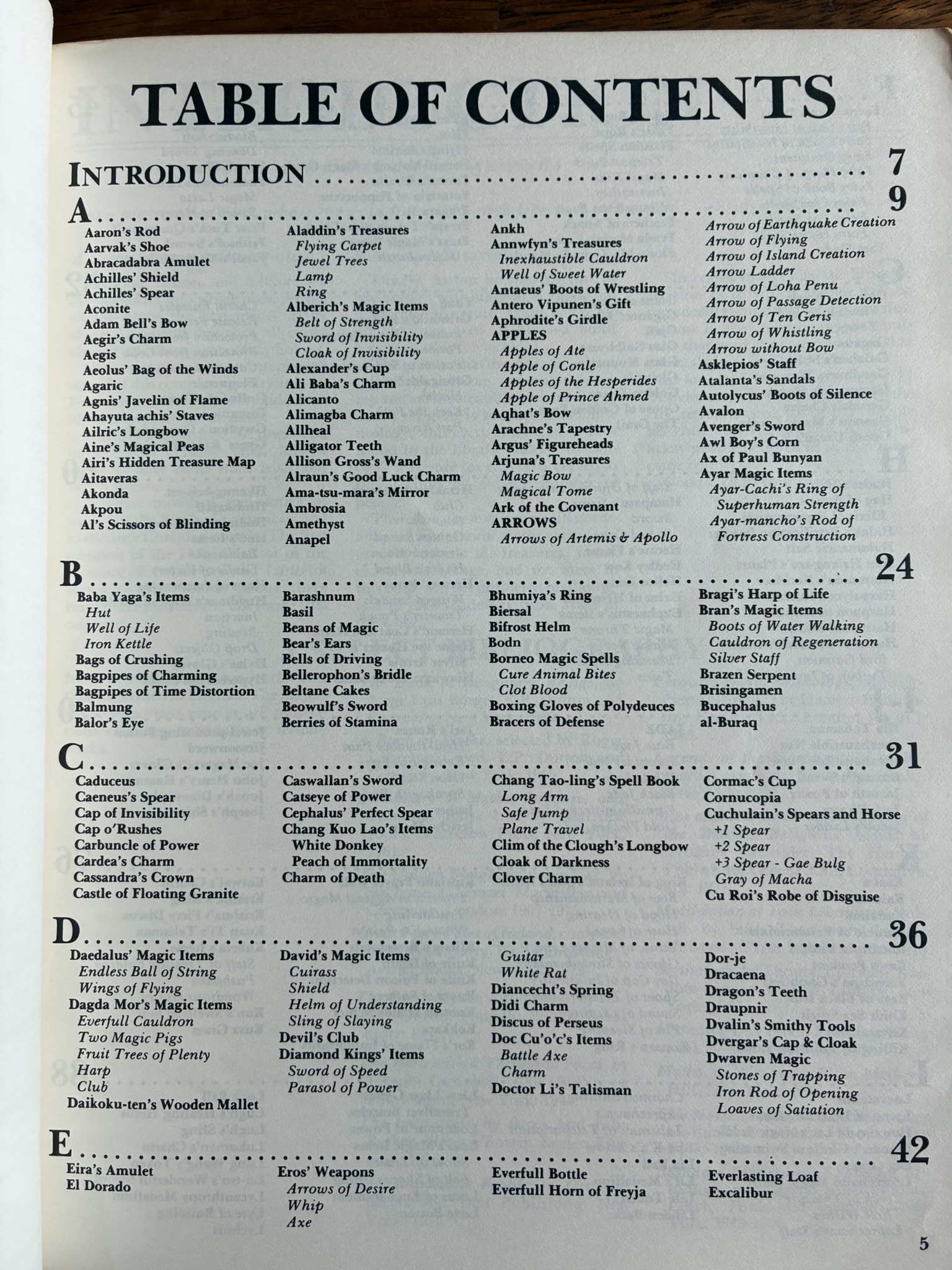
The book really even “goes there” and treats items from the bible like magical items, like Aaron’s Rod, the first item in the book! If the right-wing Satanic Panic Christians had been paying attention, they would’ve been outraged. (But they were focused on TSR for the most part.)
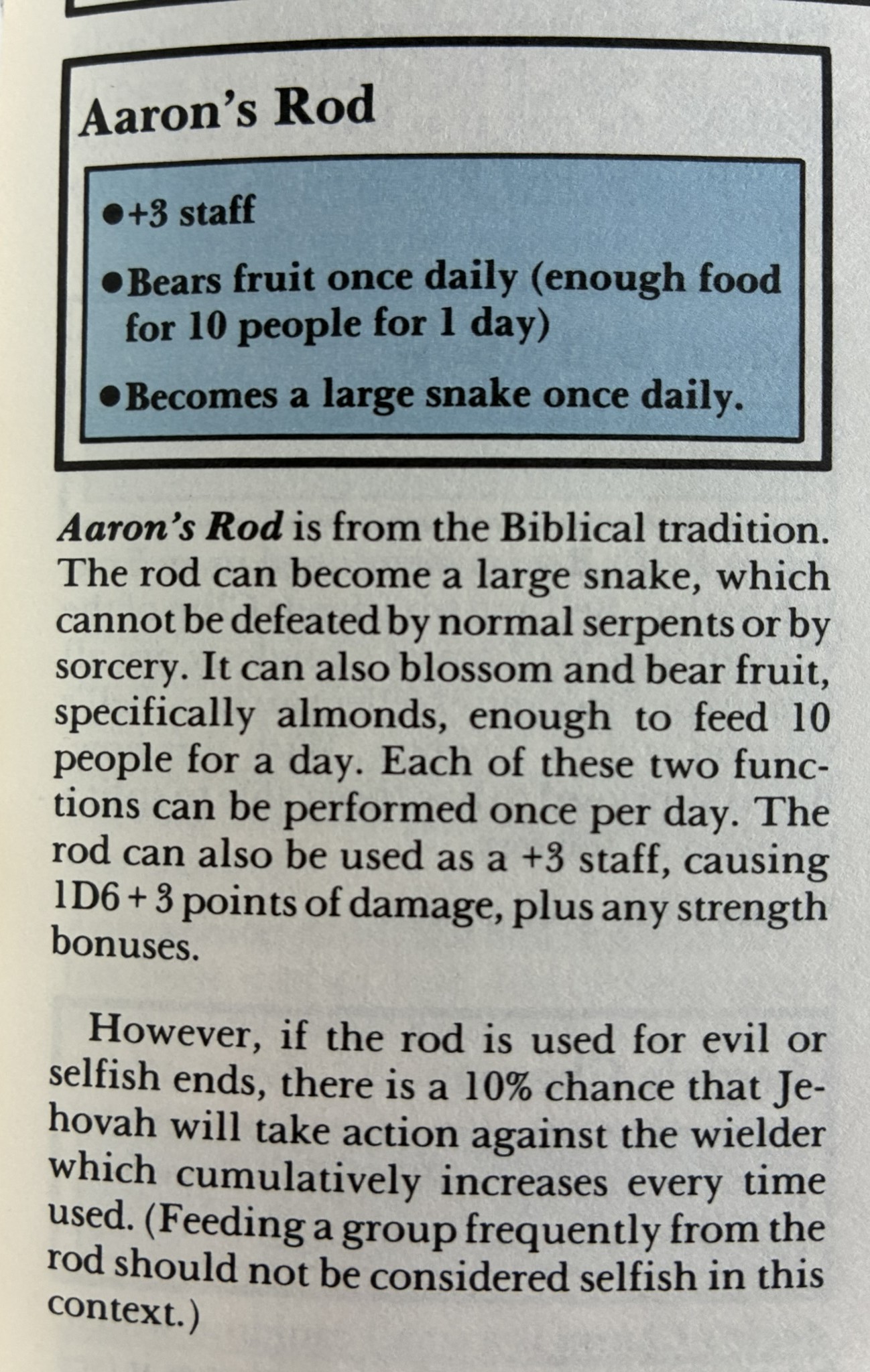
Items really cover pretty much every mythology from around the world, like Aeolus’ Bag of the Winds that readers of The Odyssey would be familiar with.
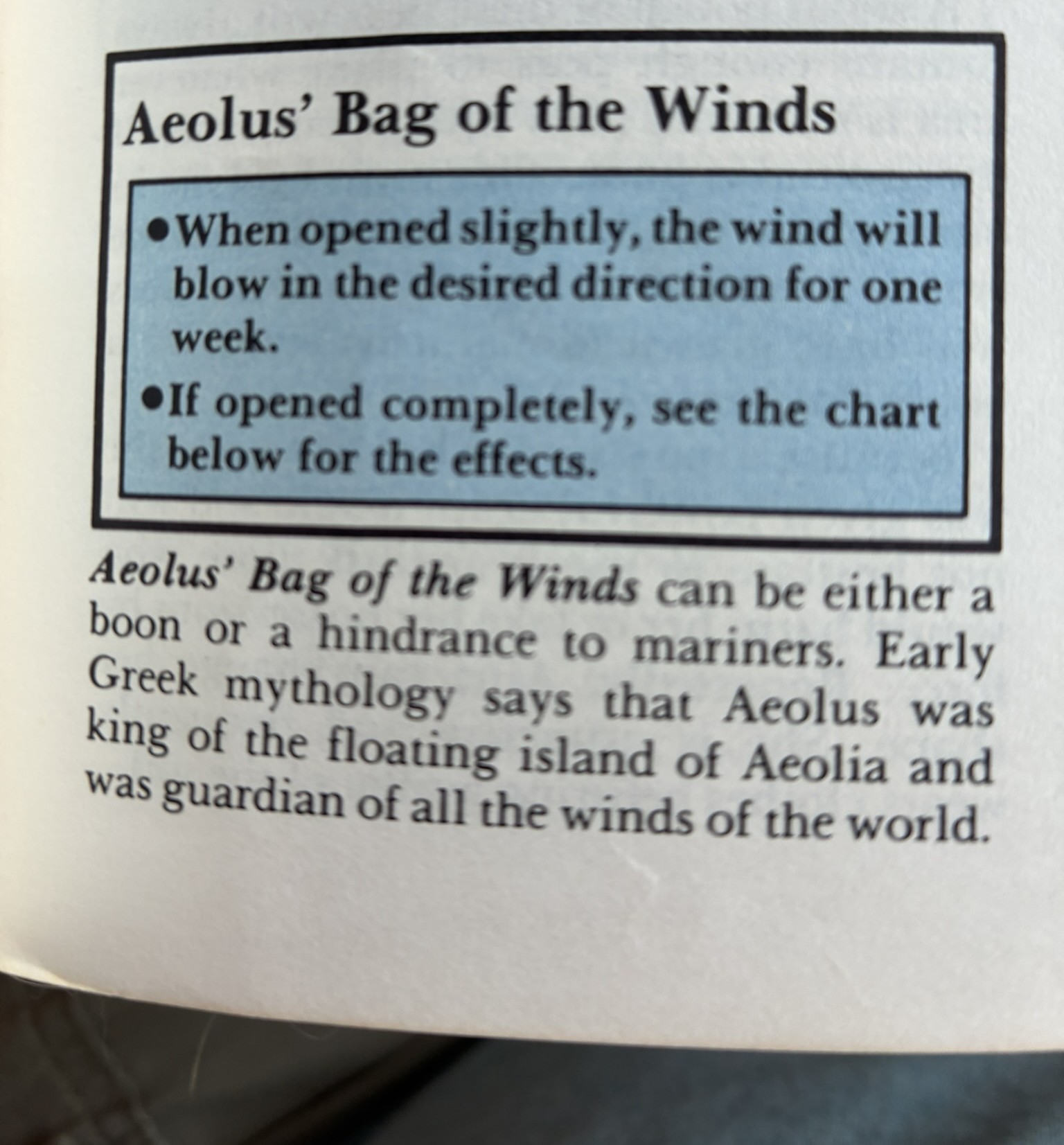
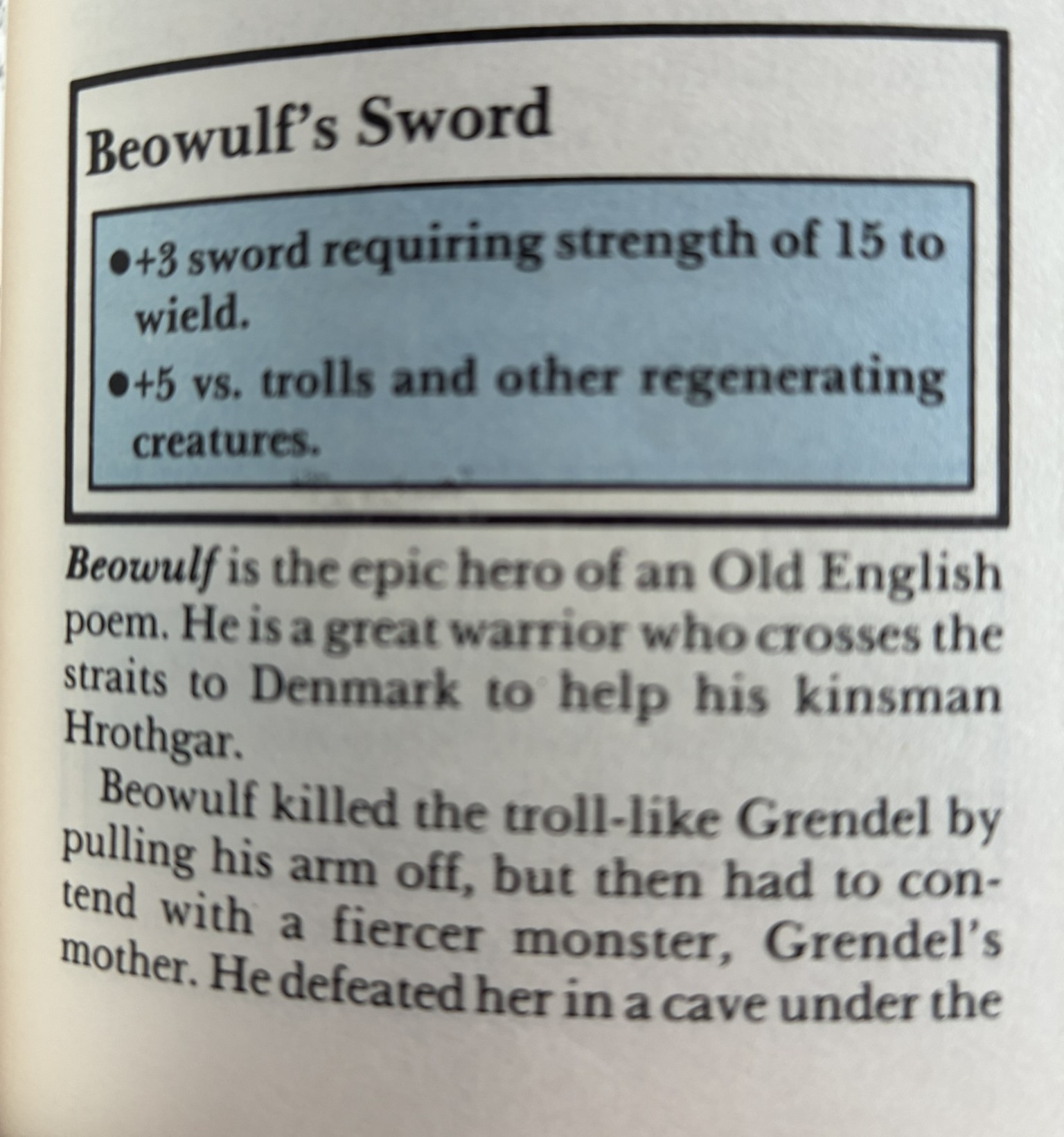
We also have items that as far as I remember were never magical in the literature but are made so here, like Beowulf’s sword.
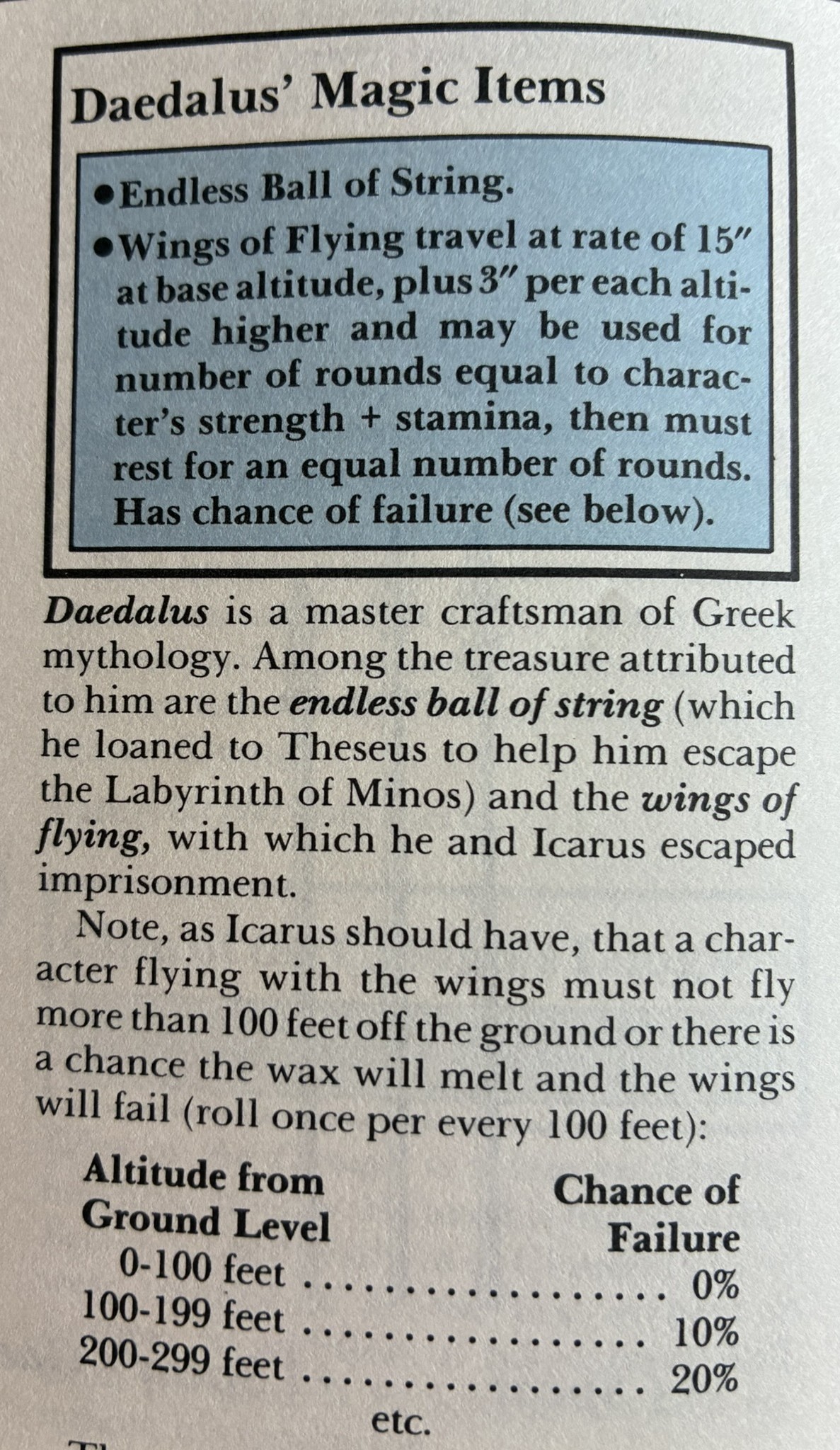
Some items have a really bare bones description and others have some fun twists, like Daedalus’ wings which have a chance to fall apart if you fly too high.
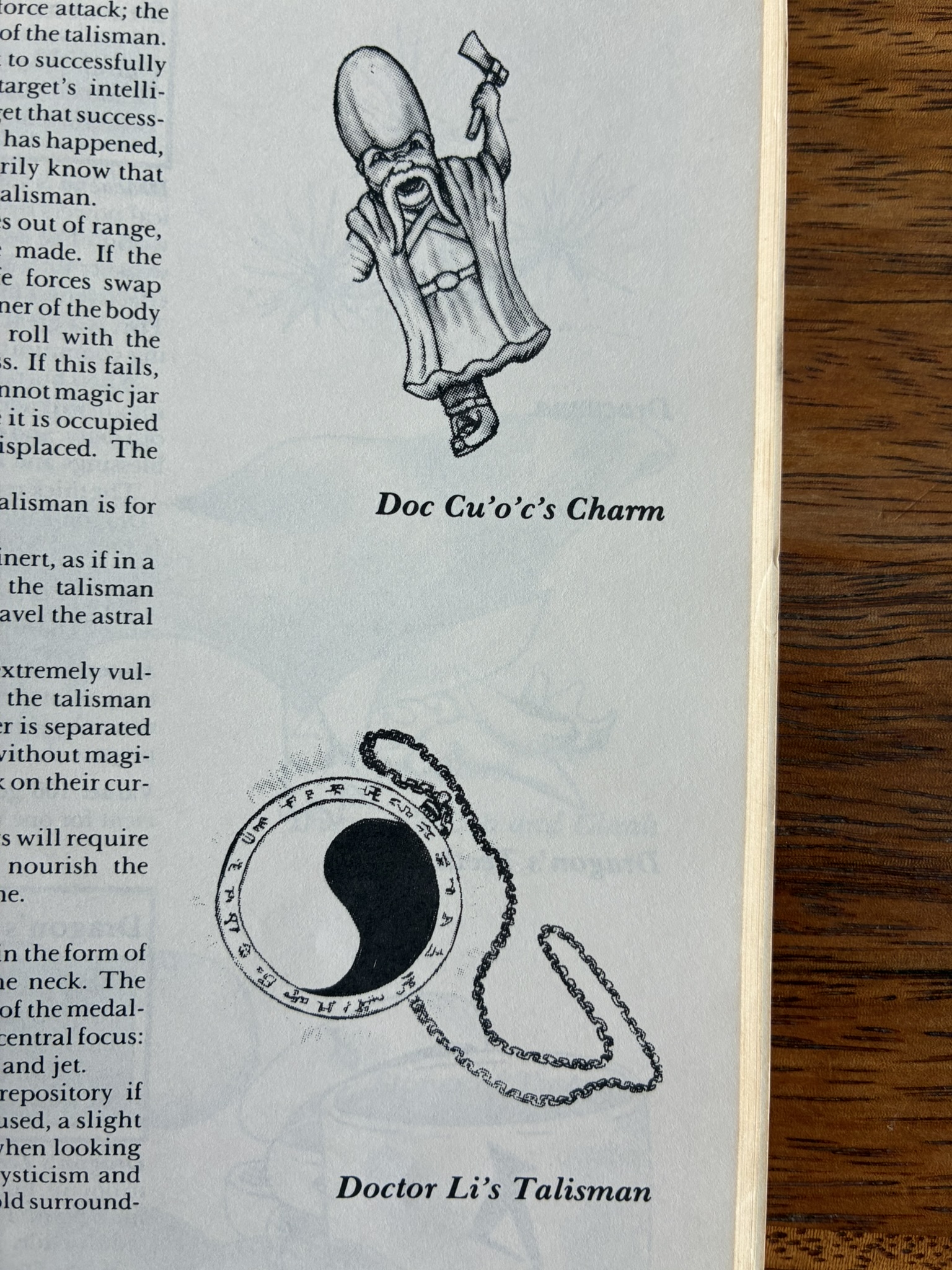
The margins of each page include illustrations of the various magic items, a nice touch that adds some immersion to using them.
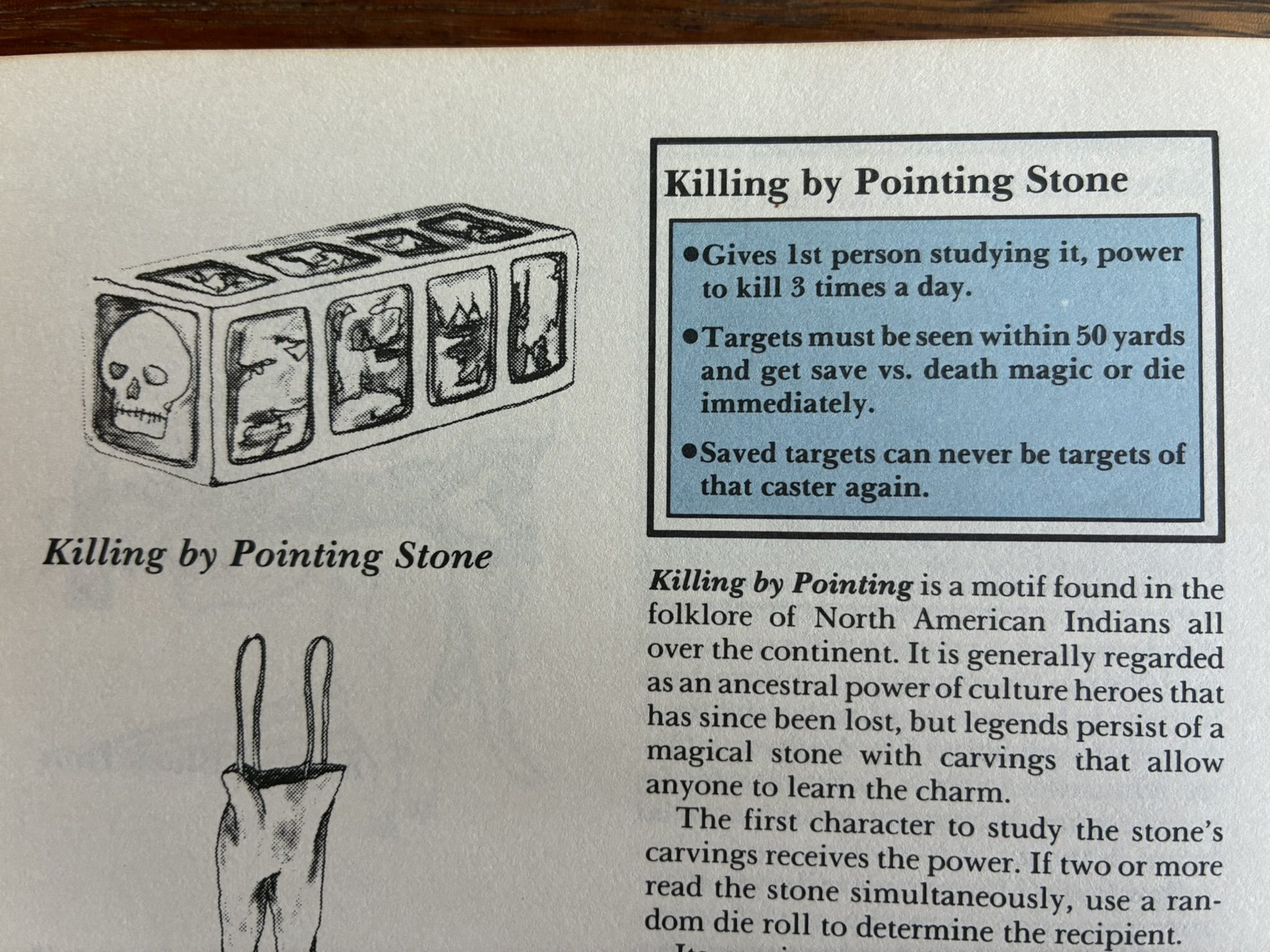
Let me wrap up with an item from Native American folklore, “Killing by Pointing Stones,” with its illustration!
Overall, I’m not sure how useful this book would be in general, as most players are probably more excited about playing in a completely new and unfamiliar fantasy realm, but the book is well made and a fascinating bit of D&D history!
A3: Assault on the Aerie of the Slave Lords (1981), by Allen Hammack. By pure coincidence, the next product I picked is also written by Allen Hammack, and it’s a classic!
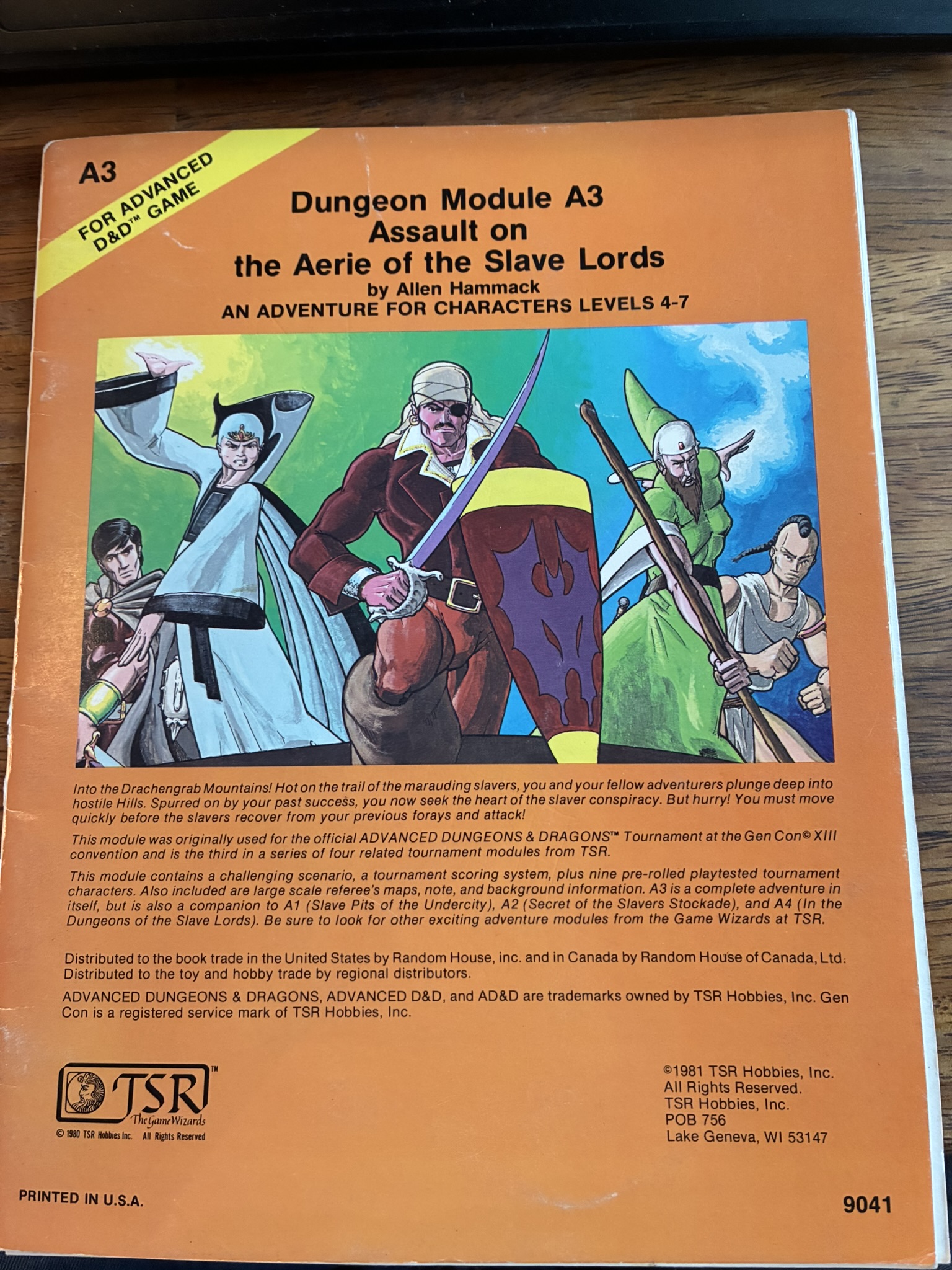
This is the third of the “Slave Lords” series of adventures, but the first I’m writing about. Why don’t I start with A1? Well… uh… I don’t actually own it! For some reason, getting the A series has never been a big priority for me.
The background of the series is a group of brutal slavers have been abducting people from small villages all throughout the land. Finally, the characters are tasked with tracking these raiders back to their secret base, i.e. the “Aerie.”
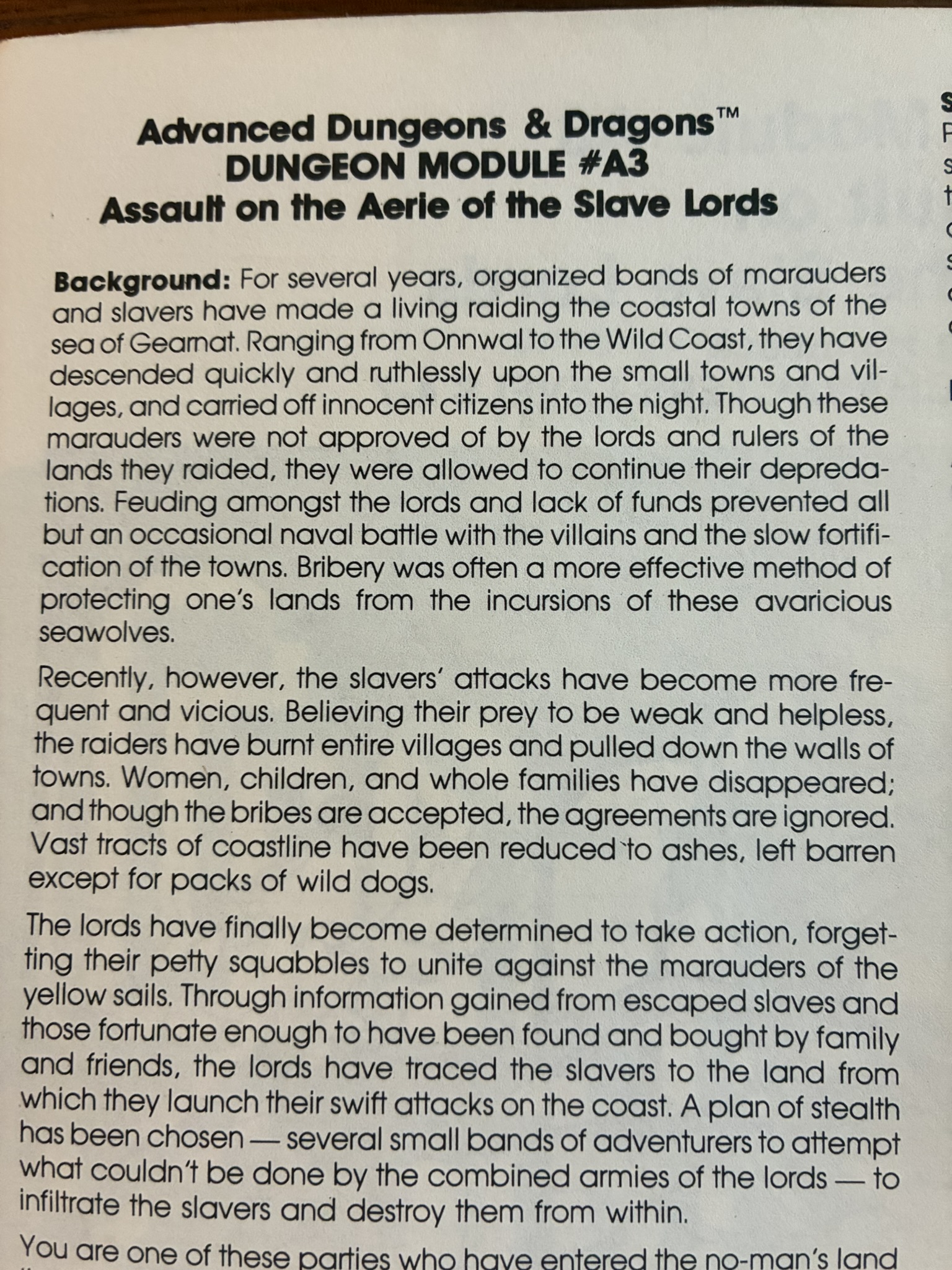
The A series was originally a series of tournament adventures at Gen Con in 1980. A3 consists of a section that was part of the initial round of tournament play and then part of the semi-final round. The adventure is therefore pretty railroaded, though there are extra options given for regular play.
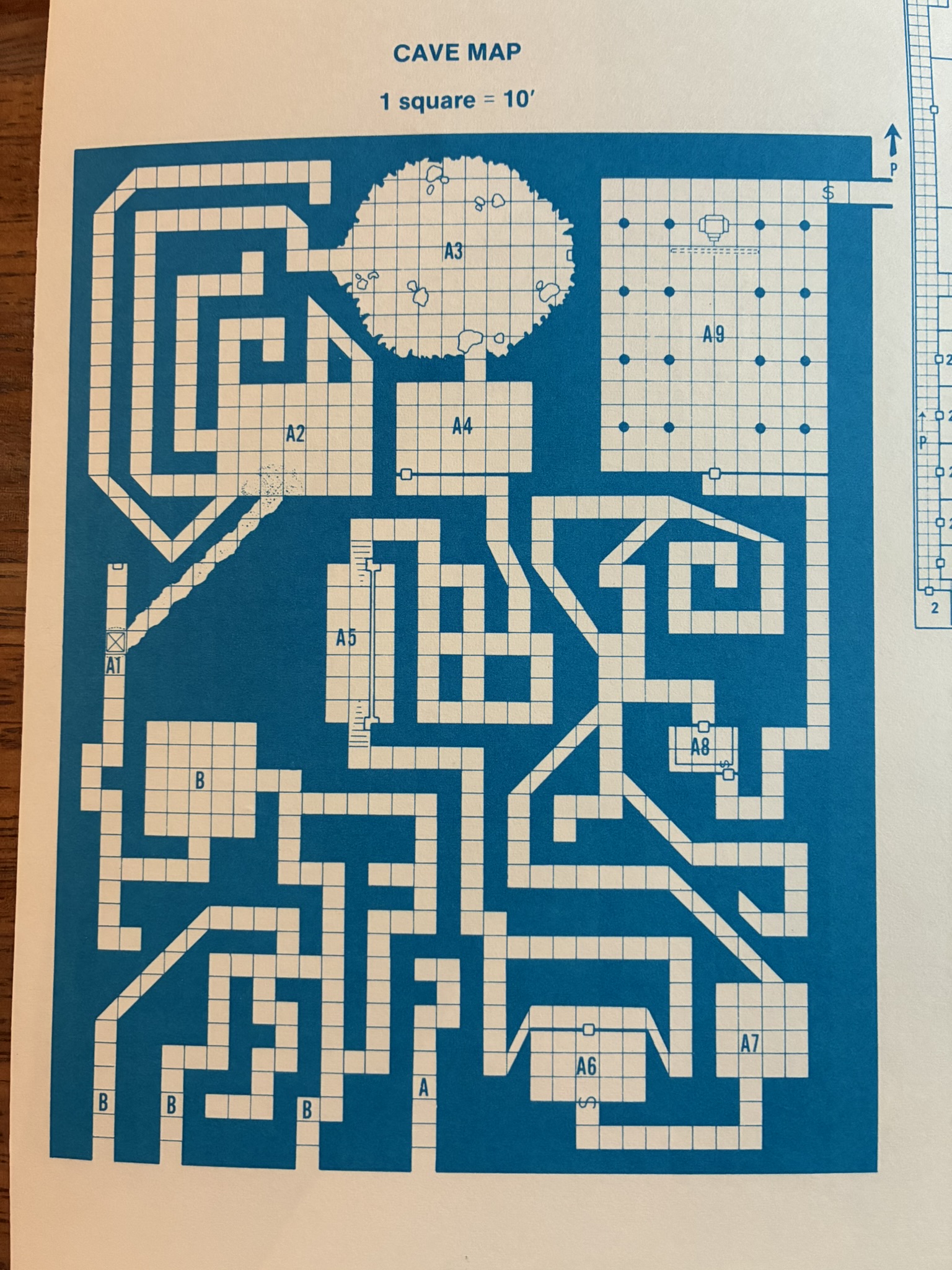
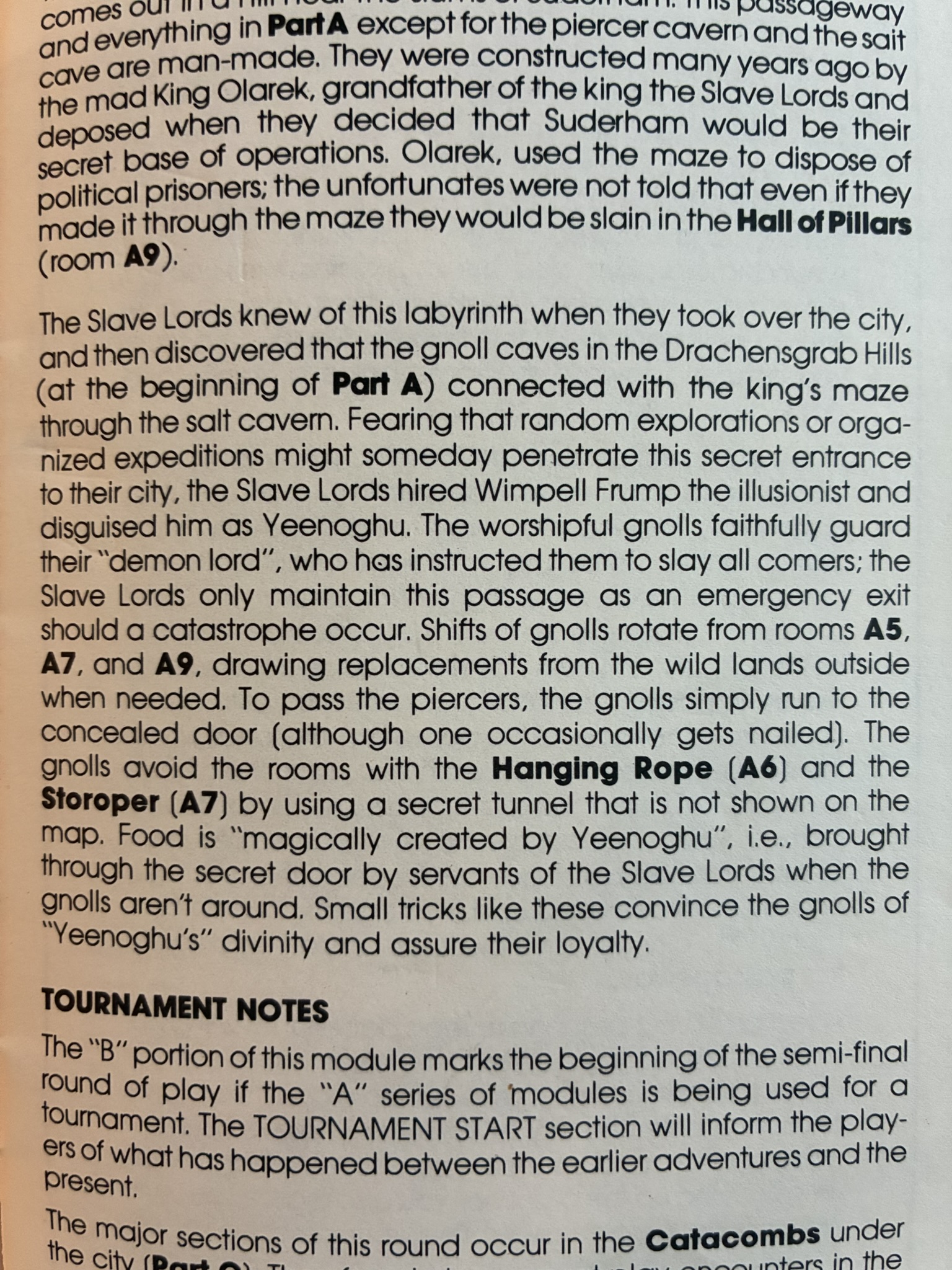
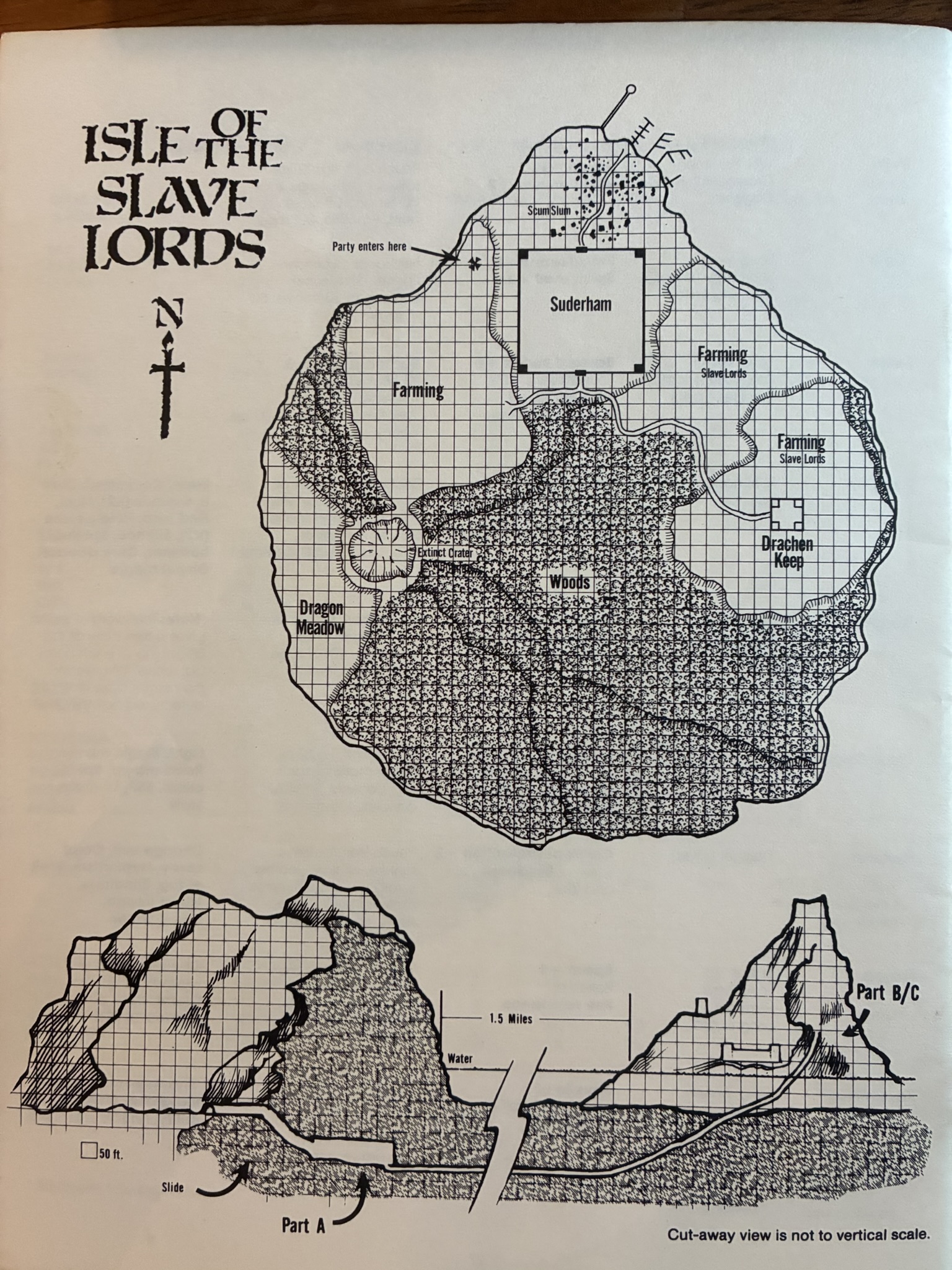
The characters find a hidden set of tunnels in the mountains that leads into an “extinct” volcano caldera containing a lake and an island with the city of the Slave Lords. The tunnels are a linear trap-laden dungeon that leads eventually to the city.
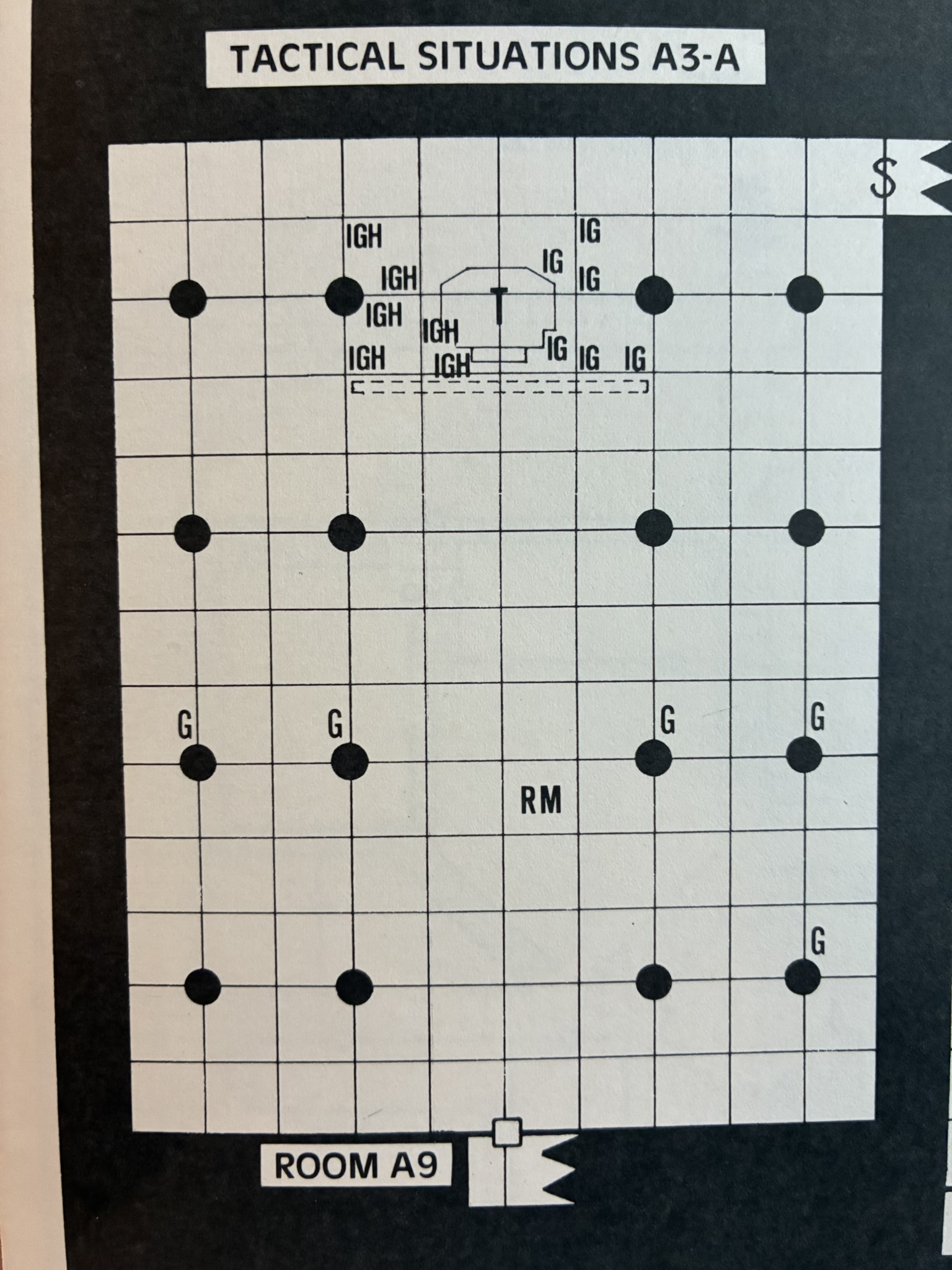
One nice aspect of some of these encounters is the inclusion of “tactical maps” that show where all the monsters begin in combat. This is one of the earliest examples of this in action, I believe.
One odd thing about these early caves is that it seems very strange to have a series of nigh-unavoidable deathtraps at the secret entrance to the city! This is actually explained later in the second part of the adventure. Basically, the Lords discovered this cave and keep it as an emergency exit.
The hidden city of Suderham is a significant addition from the tournament, giving lots of detail that can be expanded upon in non-tournament play. Basically, the characters must sneak into the city and find a path to the rumored catacombs where the Slave Lords reside.
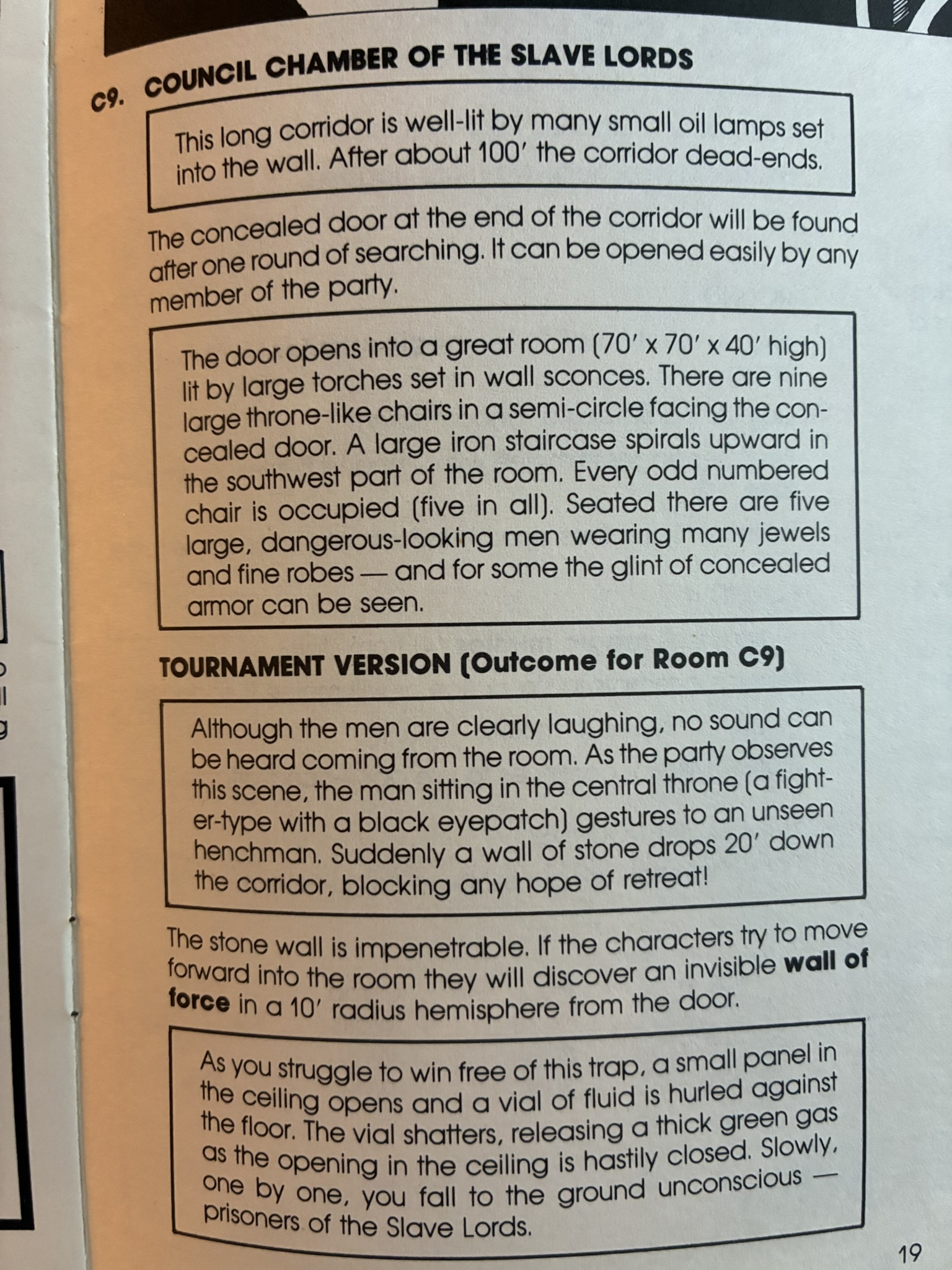
The kicker: the characters fight through the catacombs only to be captured by the Slave Lords at the end, setting up module A4! In tournament play, this is automatic; in regular play, the characters must fight a very losing battle against more powerful enemies.
In A4, the characters are abandoned into a dungeon to die and must escape, get gear, and finally defeat the slavers! … but that is a story for another time.
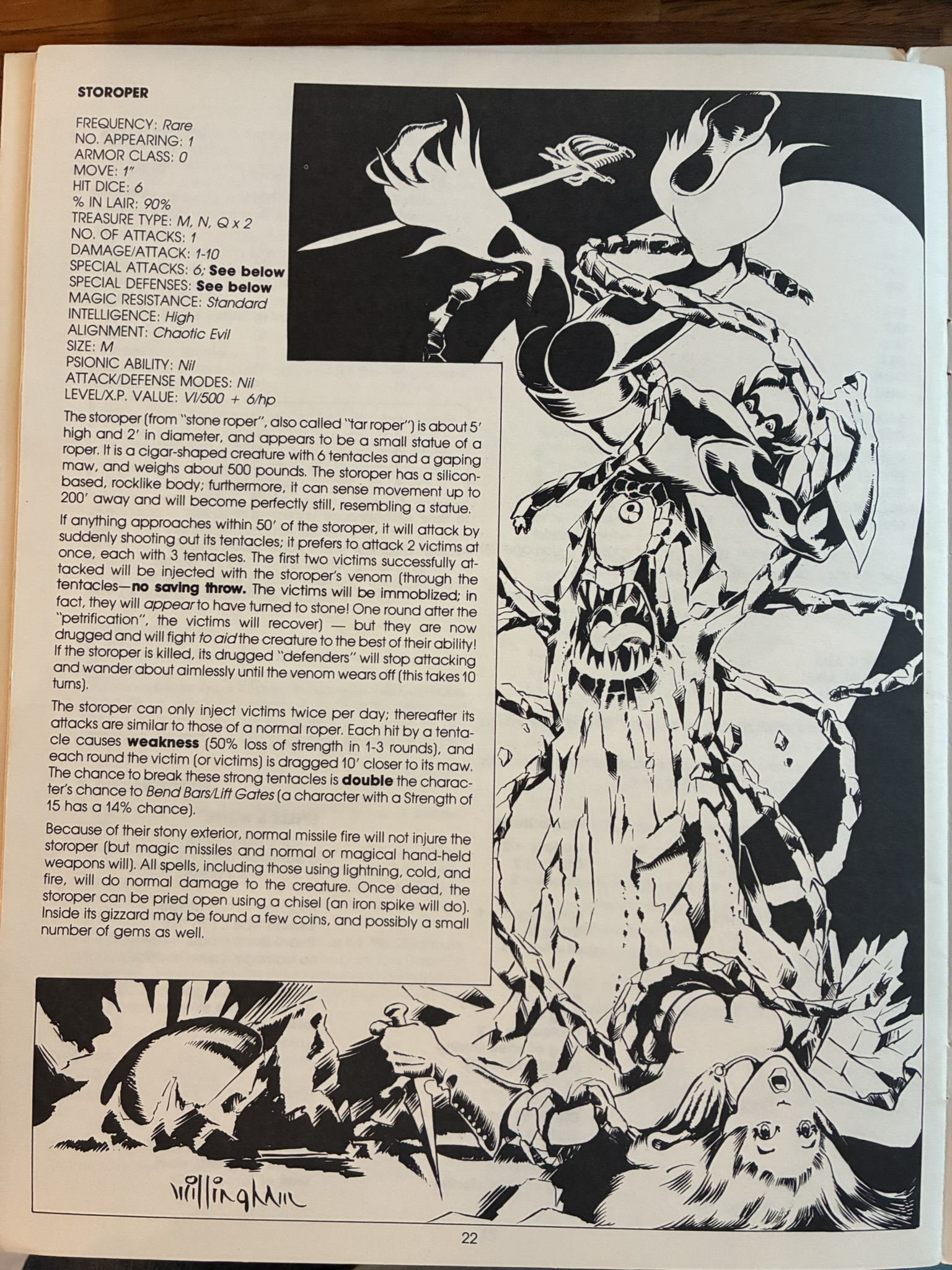
Each adventure of the A series introduced a new monster. In A3, the monster is a storoper (stone roper), a tentacled stone-like monster that can paralyze characters and appear to turn them to stone!
The A series has had a lasting legacy! In 1986, the four adventures were combined into a super-module “Scourge of the Slave Lords” that added lots of new material, including more times for the characters to be captured.
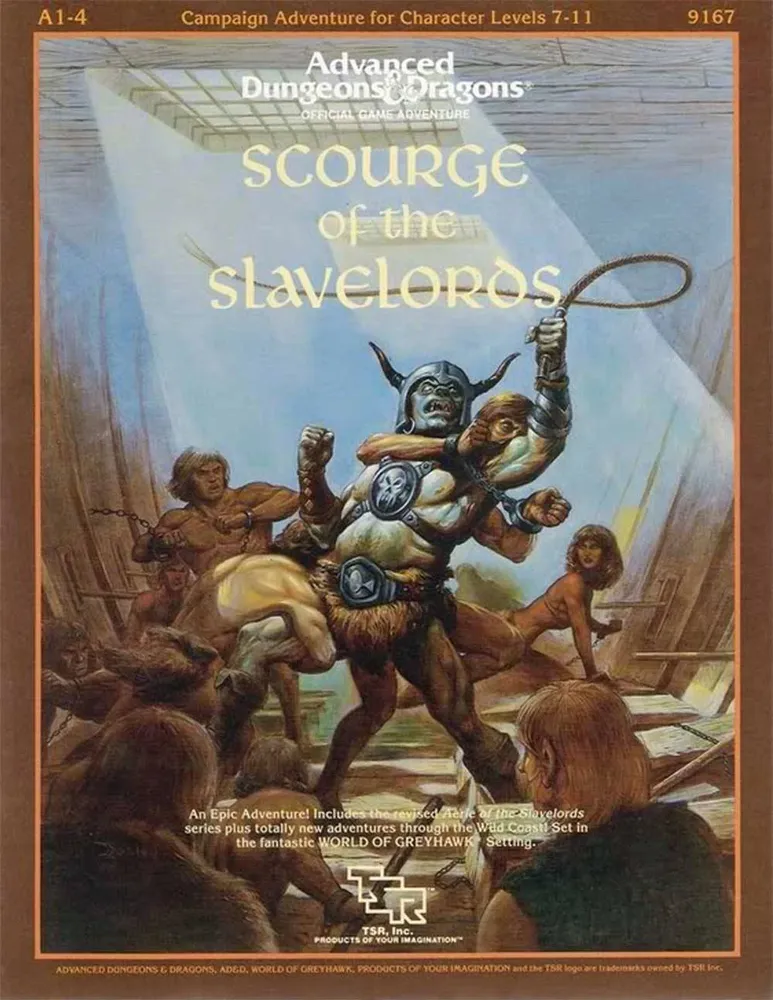
This reworking was designed to follow supermodule Temple of Elemental Evil and precede supermodule Queen of the Spiders, giving a full campaign that could take players from 1st level up to 20 or beyond!
In 2000, Wizards of the Coast released “Slavers,” a sequel to the original adventure that I have and need to get around to reading some day…
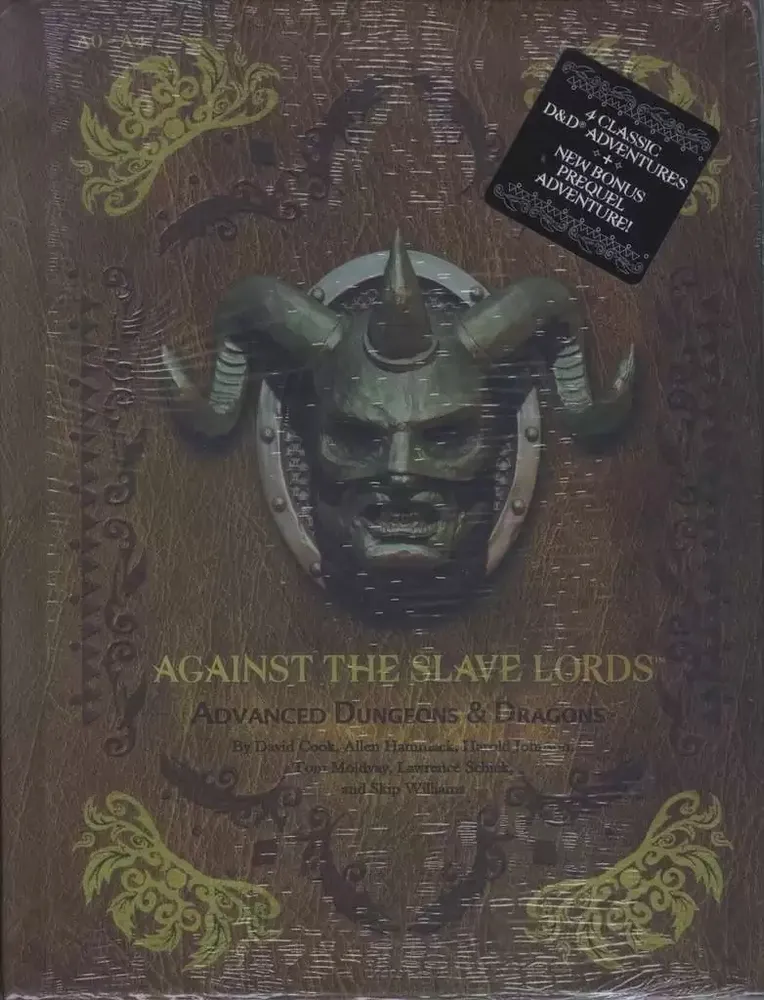
In 2013, WotC released “Against the Slave Lords,” a reprint of the original 4 adventures with an added “A0” adventure that can be used to launch a full campaign from the beginning. The series has had a huge influence!
Okay, that’s it for this edition of Old School Dungeons & Dragons! More to come in the future!


