The Kathleen Folden memorial blog post

There’s been a bit of commotion going on in the town of Loveland, Colorado lately: an art exhibition at the Loveland Museum/Gallery included a controversial art piece titled, “The Misadventures of the Romantic Cannibals,” by artist and Stanford Professor Enrique Chagoya.  The piece, which consists of 12 comic-book like panels that incorporate religious imagery, is concluded with a panel that shows a Christ-ish figure enjoying a bout of oral sex.  This last image has sparked a wave of indignation amongst so-called Christians that it insults their religion.

Well, one of them took it upon herself to end the controversy (via the Loveland Reporter-Herald):

A woman wielding a crowbar smashed a display case Wednesday at the Loveland Museum/Gallery, ripped out a piece of artwork that has been the center of growing controversy and shredded it into small pieces, witnesses said.

Kathleen Folden, 56, of Kalispell, Mont., was arrested shortly after the 4 p.m. incident and charged with felony criminal mischief.

I hardly need to explain where I stand on this, do I?  Folden is an awful, disturbed person whose religious views are on par with the Taliban’s. (Remember when they shelled Buddhist statues? I do.)

It is a source of constant amazement to me how so-called Christians think that violent acts are a natural response to a non-violent “provocation”.  It is also amazing to me how poorly they have learned from their Lord and savior:

Folden was wearing a T-shirt printed with the Christian slogan, “My Savior Is Tougher Than Nails.”

Let me speak directly to Folden for a moment: If you’d actually read the New Testament, Folden, you’d know that even when nailed to a cross, Christ is said to have forgiven his persecutors.  He didn’t fight back or act out when ridiculed, tortured, and murdered. However, you think he can’t handle somebody drawing a naughty picture of him?  Have you ever heard the phrase, “turn the other cheek”?

Kathleen Folden, I’m no longer really a Christian, but I have to say that you’re a piss-poor example of one.

Unfortunately for you, there’s a thing called the “internet” now, where images are preserved and can be seen by any and all who care to do so.  Your attempt at artistic censorship, though violent and inhumane, will only make people more interested in seeing Chagoya’s work.

With that in mind, I present “The Misadventures of the Romantic Cannibals,” in sarcastic honor of Folden’s stupid achievement:

If I find a better resolution image of it on the internet, I will post that, as well.  To Hell with you, Folden — literally.

Posted in ... the Hell?, Religion | 22 Comments

Weird science facts, August 1-August 14

It’s that time of week again: the Twitter #weirdscifacts for August 1 to August 14 are below the fold!  As time passes, it’s been getting harder to find new facts, so I’ve been increasingly relying on the posts and twitter observations of others.

Continue reading

Posted in Weirdscifacts | 1 Comment

Returning from Scientopia…

So I’ve finally come to making a decision that I’ve been agonizing over for the past few weeks: I’ve decided to leave Scientopia and return to my WordPress blog here at skullsinthestars.com.

Suffice to say that this isn’t due to any problems with the Scientopia crowd, who are awesome; I really just feel that I’m not that comfortable at this time being part of a collective.

Thanks to everyone in the Scientopia crowd for their camaraderie during the past couple of months, and I’ll see everyone on the internet and twitter!

As I’ve noted, you can find me from now on right here at skullsinthestars.com, starting more or less immediately, with the usual RSS feed.

Posted in Personal | 3 Comments

Kitty fostering: Mango and Mandarin!

We’ve had a new pair of foster kitties in our house for over a week, but I haven’t been able  to get pictures of them because they’ve been hiding under the bed!  On Sunday, Terry of F.U.R.R. (whose rescue kitties we’re fostering) came to our rescue and helped us move them to another room with fewer hiding spots.

Tonight we had our first real one-on-one (without Terry) interaction with the cats.  These two — sister and brother Mango and Mandarin — are much less acclimated to people than our previous fosters and take much more effort to work with at this stage.  They were hiding under a dresser when we came in and we had to gently pull them out — with much hissing — and make them interact.  In short, as trained by Terry, you calmly follow them around until they get bored and allow you to pet them.

And don’t you know it, it worked!  We got both kitties out and purring and being generally okay with us petting them.  They were calm enough for us to get some pictures.  Here’s Mandarin:

And here’s Mango:

They’re beautiful kitties, and actually quite docile once they’ve calmed down!  If you know anyone in the vicinity of Charlotte interested in adopting these two, please point them towards Terry at F.U.R.R.!  You can also donate to F.U.R.R. here.

Update: F.U.R.R. now has a YouTube video about their kitties.  If you love cats, however, be warned: you may tear up a bit at this:

Posted in Animals, Personal | 3 Comments

ResearchBlogging editor’s selections: cells of ice, heavy metal flowers, white dwarf v. neutron star, and the Ig Nobels!

skyskull “Dr. SkySkull” selects several notable posts each week from a miscellany of ResearchBlogging.org categories. He blogs at Skulls in the Stars.
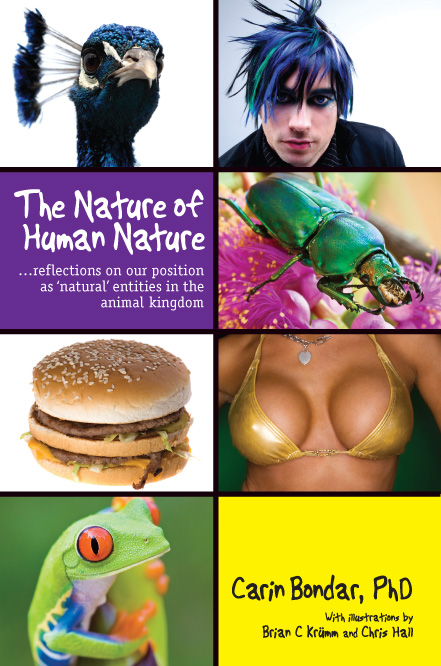
  • Was Ice the Original “Cell” in Early Earth? Though scientists have a reasonably good grasp on the evolution of life on Earth, there is much less understanding of how life began. Michael Long of Phased describes an intriguing hypothesis which suggests that voids in ice crystals may have served as a cell wall, keeping primitive RNA strands together and accelerating their interaction.
  • HEAVY METAL SHIELDS FLOWERS FROM DISEASE. In what appears to be a major evolutionary win, it has been found that a certain small species of flower sucks up heavy metals, which in turn protects it from bacterial infection. Casey Rentz of Natural Selections discusses the research, and its potential practical impact.
  • What Happens When A White Dwarf Collides With A Neutron Star? It’s a question you’ve always wanted to know the answer to, right? Now researchers have simulated the results of such a clash of the titans; Joseph Smidt of The Eternal Universe summarizes the catastrophic results.
  • The Ig Nobels have been announced! Finally, it’s that time of year again: the winners of the awards for the most bizarre and entertaining research have been released! Christie Wilcox of Observations of a Nerd gives us the rundown on the prizes in all categories.

Check back next Monday for more “miscellaneous” suggestions!

Posted in General science, Science news | Leave a comment

Weird science facts, July 18-July 31

The Twitter #weirdscifacts from July 18 – July 31 are below the fold!

Continue reading

Posted in Weirdscifacts | Leave a comment

ResearchBlogging editor’s selections: WEIRD evolution, pelican’s beak, and rainforest reactors

skyskull “Dr. SkySkull” selects several notable posts each week from a miscellany of ResearchBlogging.org categories. He blogs at Skulls in the Stars.

  • Reflections on the WEIRD Evolution of Human Psychology. There are lots of psychology studies out there with interesting conclusions, but how universal are the results? Eric Michael Johnson of The Primate Diaries in Exile looks at recent research that shows that many of these supposedly universal results are really, well, WEIRD!
  • The Pelican’s Beak: Success and Evolutionary Stasis. We tend to look at species (such as the coelacanth and the horseshoe crab) that have remained unchanged over great stretches of time as “primitive” compared to us; in reality, though, the opposite is in a real sense the case. Using the pelican as an example, Brian Switek of Laelaps investigates concepts of “evolutionary progress” and “evolutionary stasis”.
  • The Amazon Rainforest Reactor – A Rain Factory. Over at A Scientific Nature, Michael Gutbrod describes research showing that the Amazon rainforest acts as a biogeochemical reactor to sustain itself!

Check back next week for more “miscellaneous” suggestions!

Posted in General science, Science news | Leave a comment

Weird science facts, July 04-July 17

The Twitter #weirdscifacts from June 20 – July 03 are below the fold!

Continue reading

Posted in Weirdscifacts | Leave a comment

Optics basics: surface plasmons

My goal in my “basics” series of posts is not just to introduce the most elementary topics in optical science, but also to give background on some of the more advanced concepts for future reference.  Much of my own research, and consequently my blog interests, center on nano-optics — the study of the behavior of light on scales much smaller than the wavelength of light — and one specific aspect of nano-optics that has grown tremendously in importance over the past ten years is the concept of a surface plasmon.

Broadly speaking, a surface plasmon is a traveling wave oscillation of electrons that can be excited in the surface of certain metals with the right material properties. Because a plasmon consists of oscillating electric charges, they also have an electromagnetic field associated with them which also carries energy. There’s a lot of terminology to explain in that short definition, and in this post I’ll explain what a surface plasmon is, the properties of surface plasmons, and how those properties make them useful in nano-optical applications.

Continue reading

Posted in Optics basics | 8 Comments

ResearchBlogging editor’s selections: the Peruvian coffee paradox, galactic positioning, going green, the Alpine Fault, and hurricane plankton

skyskull “Dr. SkySkull” selects several notable posts each week from a miscellany of ResearchBlogging.org categories. He blogs at Skulls in the Stars.
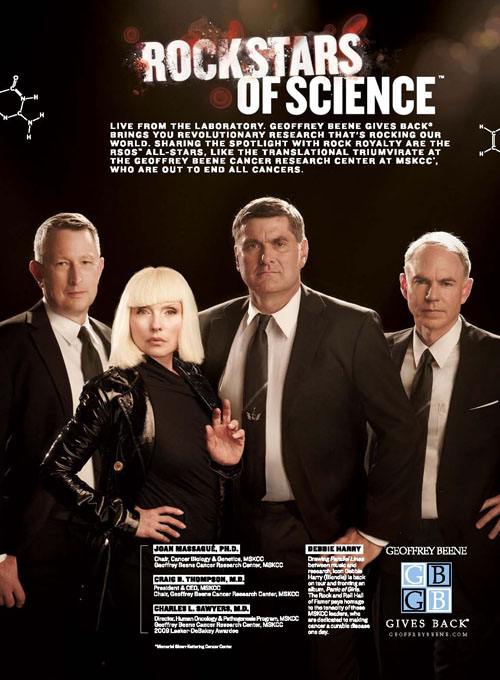
  • Peruvian Coffee: Matching Consumption With Production. Though Peru makes and exports awesome coffee around the world, locals primarily drink Nescafé! Krystal at Anthropology in Practice looks at this seeming cultural disconnect, and draws an analogy with Soviet sausages to help explain what is possibly going on.
  • How do we know…? Where we are in the Galaxy. Astronomers seem to have a pretty clear idea of the Sun’s location within the Milky Way galaxy, but how do they know? Niall at we are all in the gutter gives a concise introduction to the science behind our galactic positioning.
  • Going green… literally. Though human beings have devoted a lot of effort to drawing energy from sunlight as a renewable energy source, we’re just amateurs in the process compared to plants! Brian at the Berkeley Science Review Blog describes two recent innovations in the understanding and implementation of plant-like photosynthesis.
  • All quiet on the Alpine Fault? A couple of weeks ago, New Zealand was shaken up by a very strong earthquake. This wasn’t necessarily a surprised, as it is a seismically active area, but what is surprising is how quiet the nearby Alpine Fault has been. Is it “due” for a massive earthquake? Chris of Highly Allochthonous looks at the history of the region and the inevitability of an Alpine Fault earthquake.
  • Can tiny marine plants steer some of the world’s biggest storms? Finally, Vivienne of Outdoor Science looks at a surprising hypothesis — that tiny phytoplankton that permeate regions of the ocean actually have an influence on the location and severity of hurricanes in the region!

Check back next Monday for more “miscellaneous” suggestions!

Posted in General science, Science news | Leave a comment