I just got back last night from a trip to Albuquerque, New Mexico to give my Falling Felines and Fundamental Physics talk. While I was there, my host was gracious enough to invite me to an evening event at The National Museum of Nuclear Science and History, dedicated to “preserving and presenting the story of the Atomic Age.” I didn’t have a lot of time to spend at the exhibits, but I took a few photos and thought I would share them here!
The event itself was a talk and ribbon cutting for a new temporary exhibit of the history of the Air Force Research Laboratory Phillips research site, which did a lot of the nuclear and rocketry work post-WWII. The presentation, by the AFRL historian, was fun and surprisingly interesting! (I wasn’t sure how interesting a talk on a lab’s history would be.) Afterwards, the ribbon was cut and folks were allowed to explore the new exhibit.
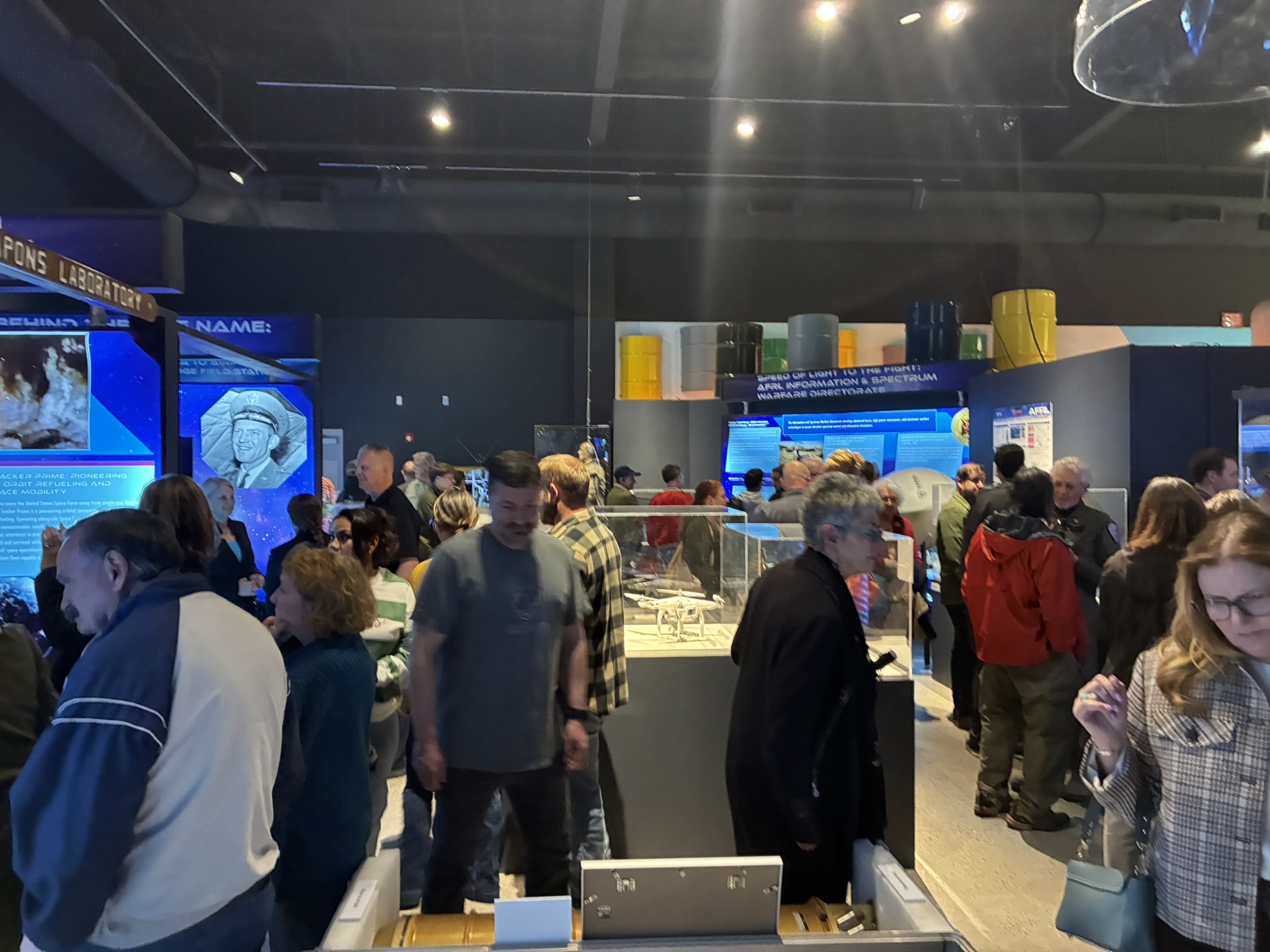
Let me just share a few highlights for me from the AFRL exhibit. One is the “Plastinaut,” a dummy designed to mimic the density of the human body that could be internally fitted with radiation dosimeters. It was designed for measuring the amount of radiation a human astronaut would be exposed to at high altitudes (and, if I recall correctly from the talk, from flying through actual nuclear mushroom clouds).
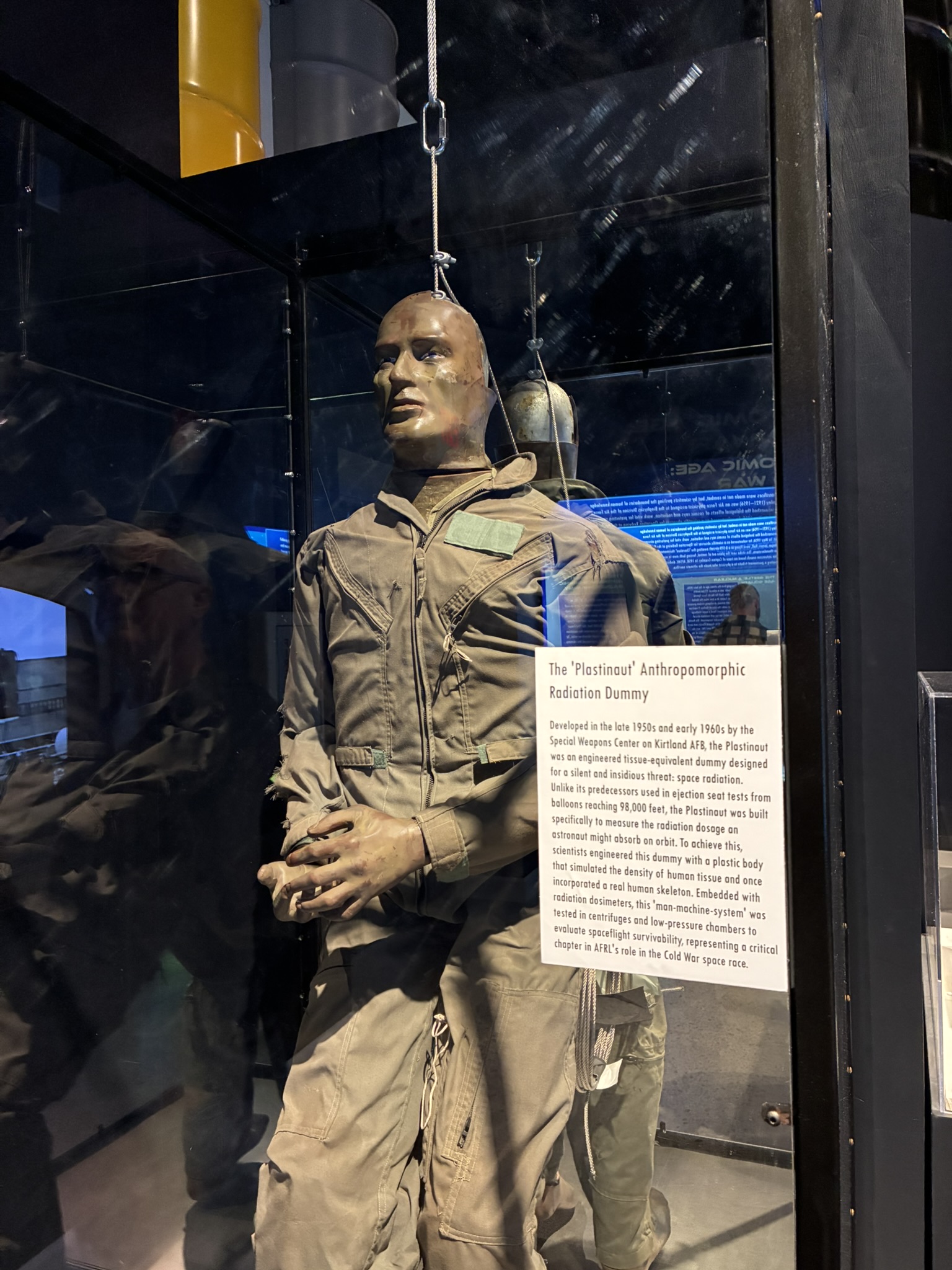
This next one warranted a photo just because it looks cool: a genuine laser rifle! This device was not designed to cause permanent harm but instead temporarily dazzle enemy troops. (Though, as the historian noted in an aside, the power level could be turned up, presumably to permanent vision damage levels.)
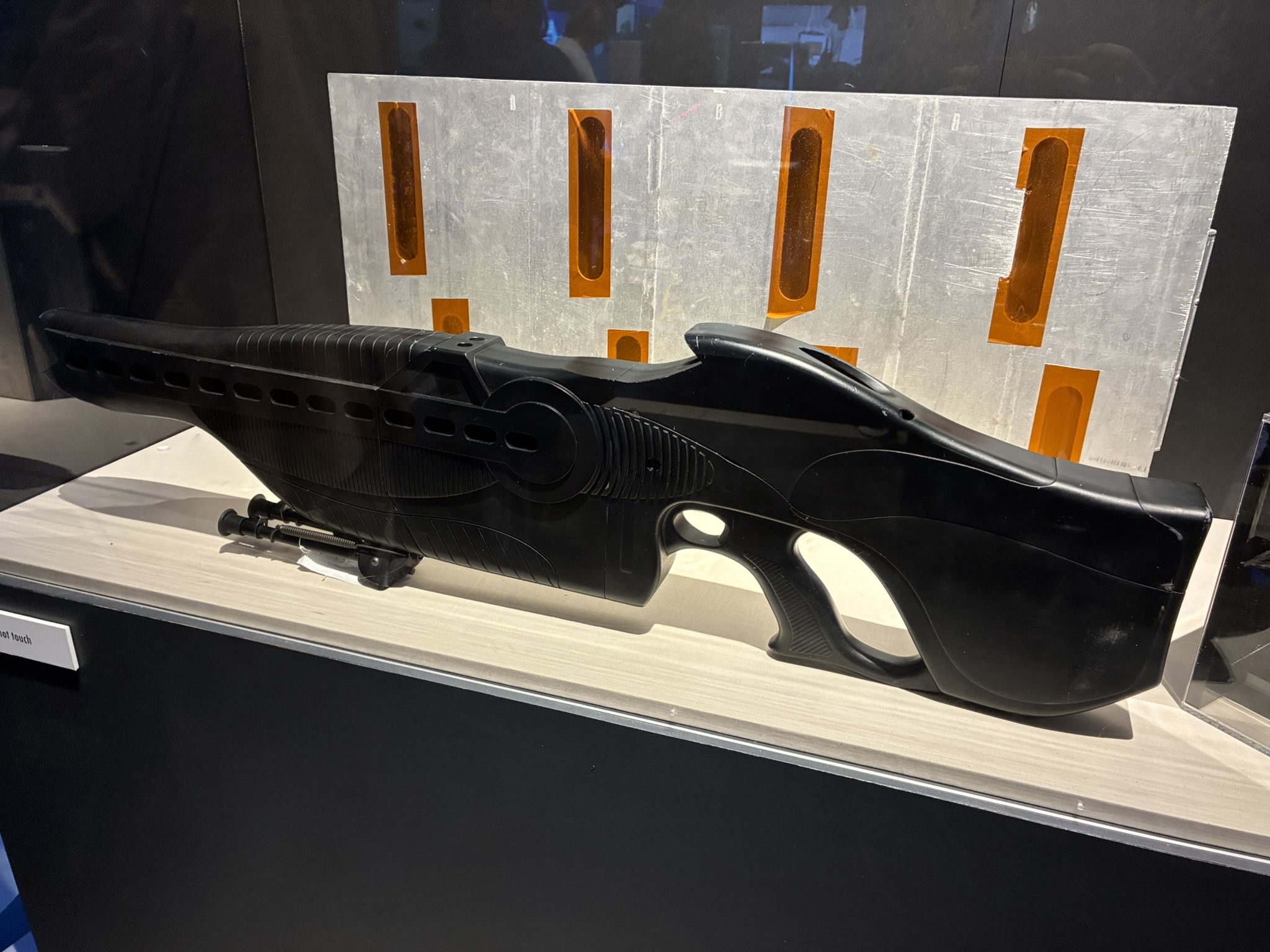
One other thing that I couldn’t take a photo of because it no longer exists but was featured in the exhibit and the talk is the military’s 1962 closest equivalent to a battlemech: the GE Beetle! This was a radiation-hardened 77 ton machine that could be piloted safely in areas where radiation would kill an unprotected human in minutes. Its arms were, when it was functioning, delicate enough to pick up an unboiled egg — the problem is that it was hard to keep the massive machine functioning properly and it was eventually abandoned in the desert.
Why did we even need such a machine? Well, as crazy as it seems today, at the time there were plans for nuclear-powered bombers that would be able to remain airborne basically as long as the crew had supplies to sustain themselves. But if those bombers crashed or were shot down, the crash site would be a radiation hazard and the Beetle could be used for search, rescue, recovery and cleanup operations.
I only had a few minutes to wander the rest of the museum, but snapped some photos that caught my eye. One of these was the artist Jim Sanborn’s recreation and interpretation of various atomic experiments at Los Alamos in 1944.
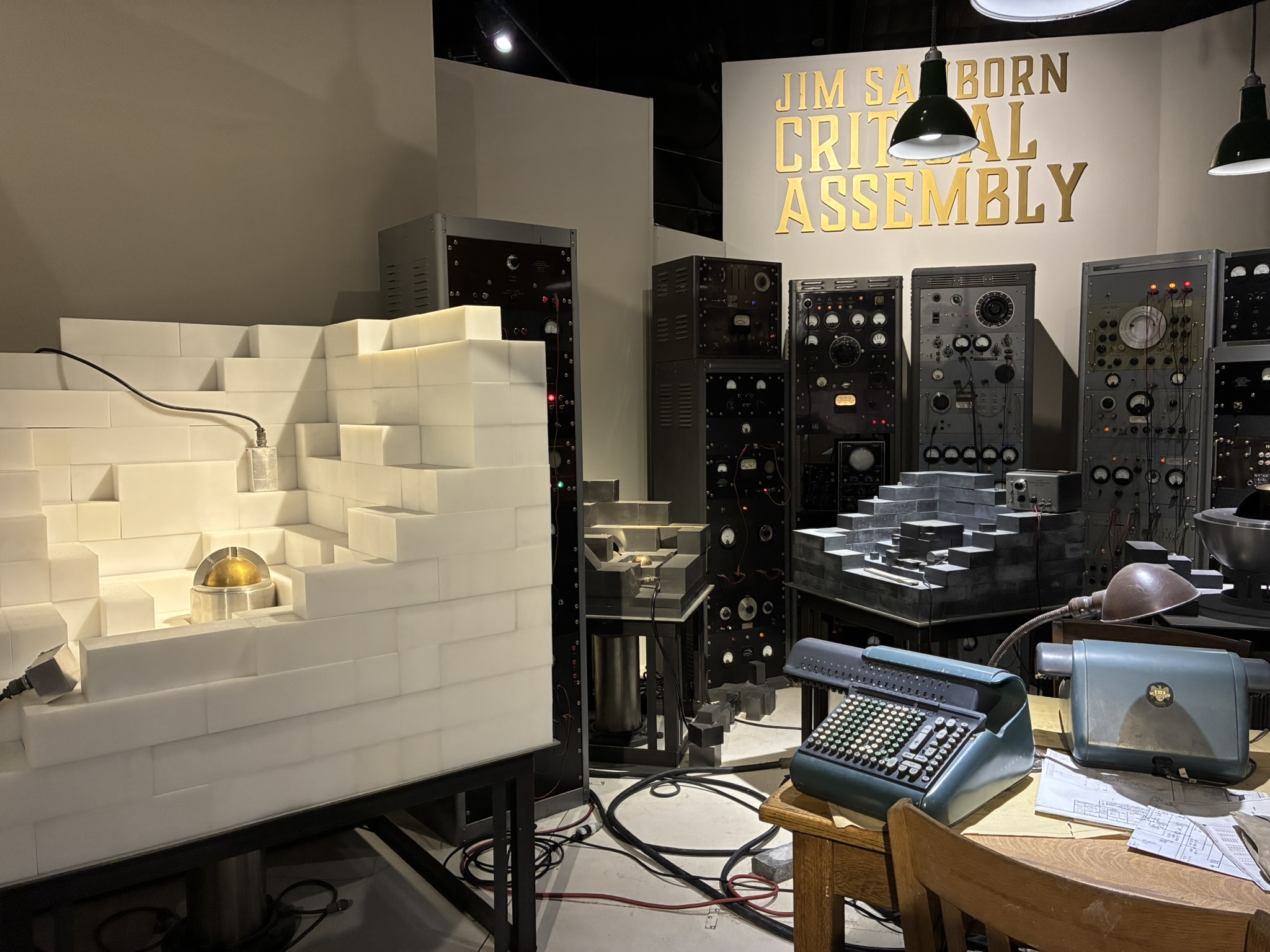
“Evocative of both the brilliance of the collective human mind and the potentially devastating power of knowledge, this exhibition is about the allure of pure science and the ethical dilemmas scientific researchers have faced for decades.”
One of the nice things about the museum is that it isn’t simply cheerleading our scientific achievements but looking at the impact of it, both good and bad, on humanity.
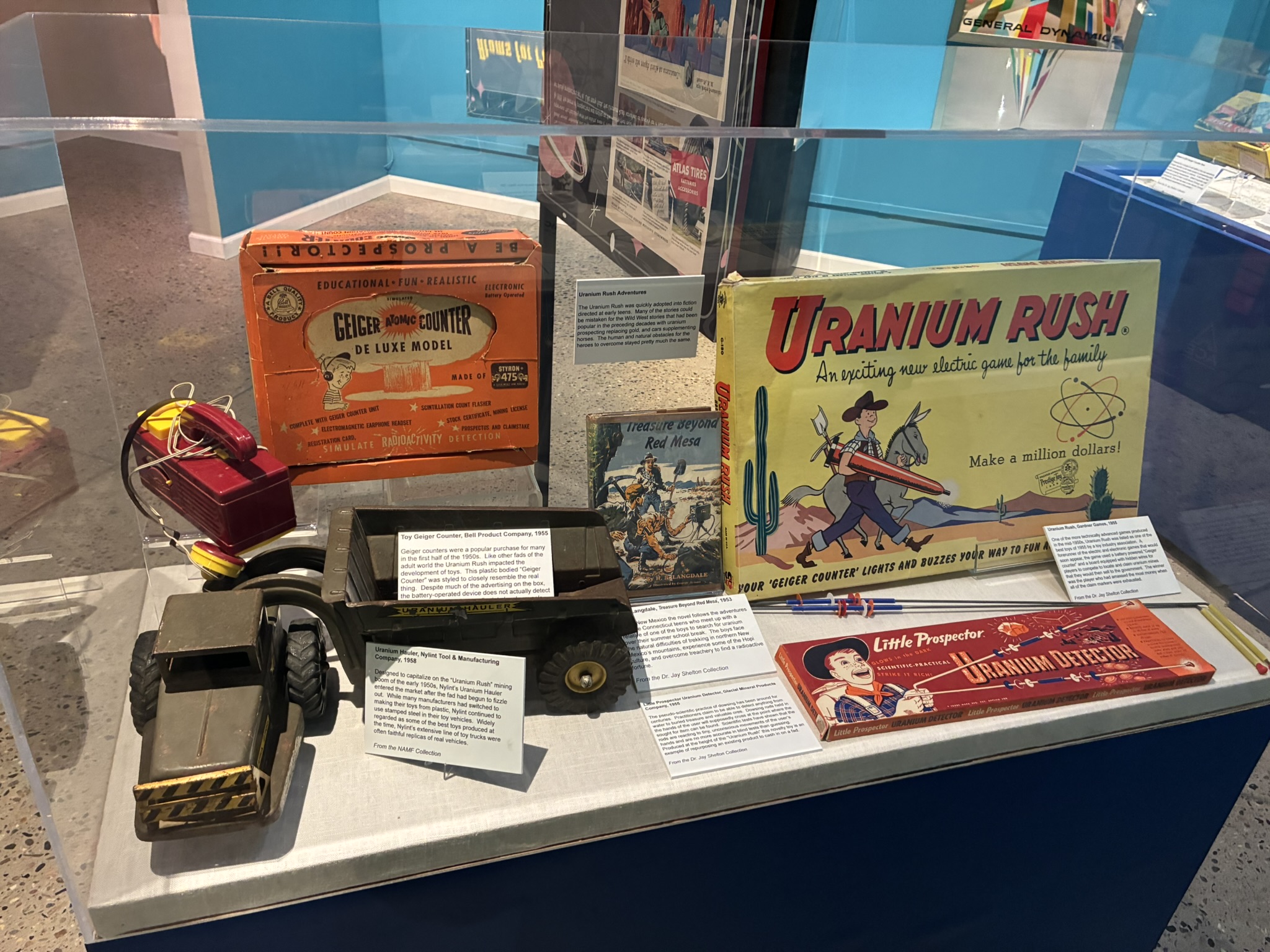
The area of the museum that intrigued me the most was the extensive collection of nuclear-themed or even radioactivity-infused toys of the early atomic era! This includes actual Geiger counters as well as simulated electric Geiger counters in board games like Uranium Rush, which is kind of like Monopoly except for gobbling up as many uranium claims as one can.
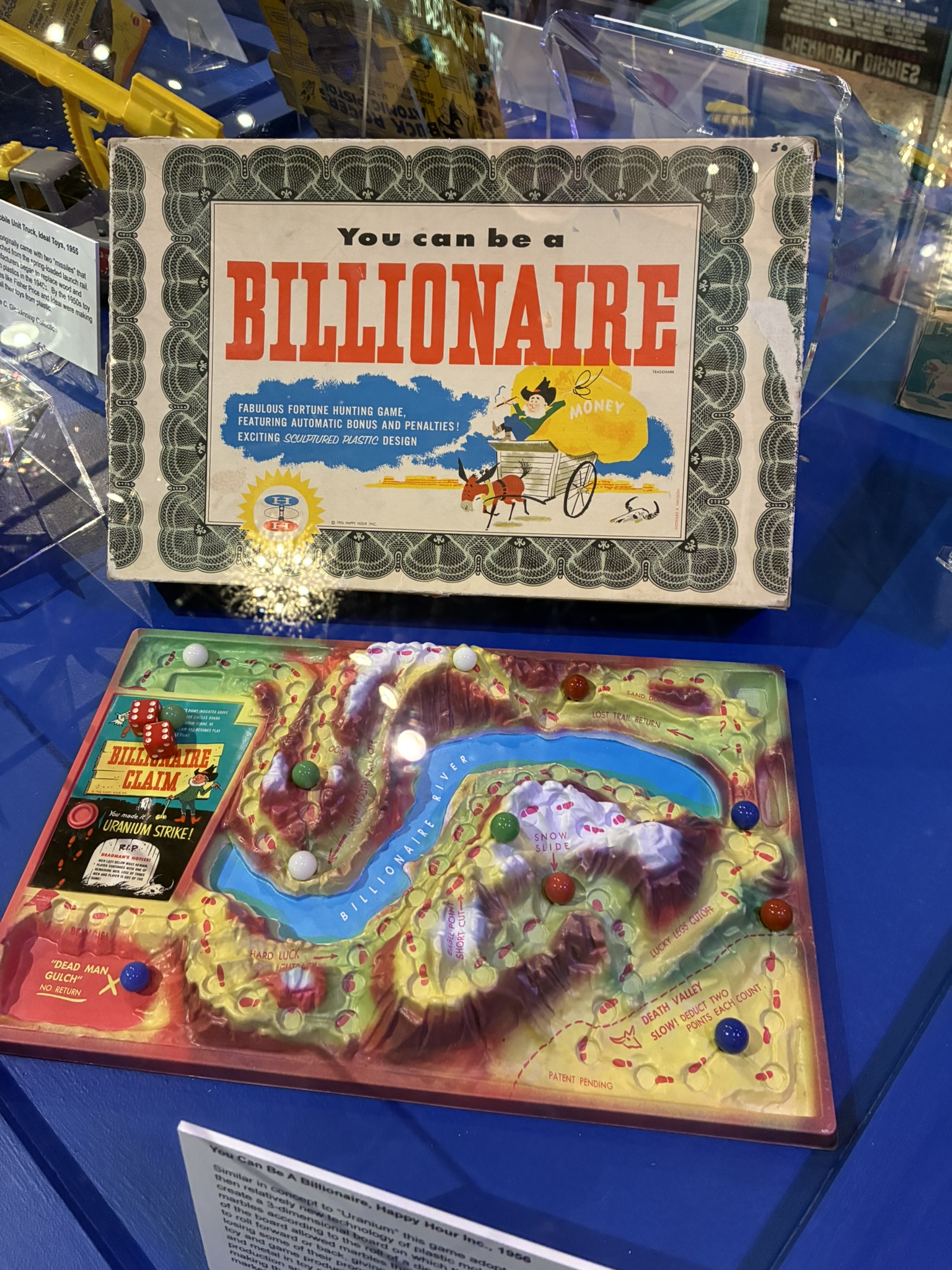
That wasn’t the only “get rich mining uranium” board game out there! The 1956 You Can Be a Billionaire game was a race to get to a uranium strike and thus strike it rich.
This next image was one I wasn’t expecting but was a huge dose of nostalgia for me: the Eagle I toy model from the TV show Space: 1999!
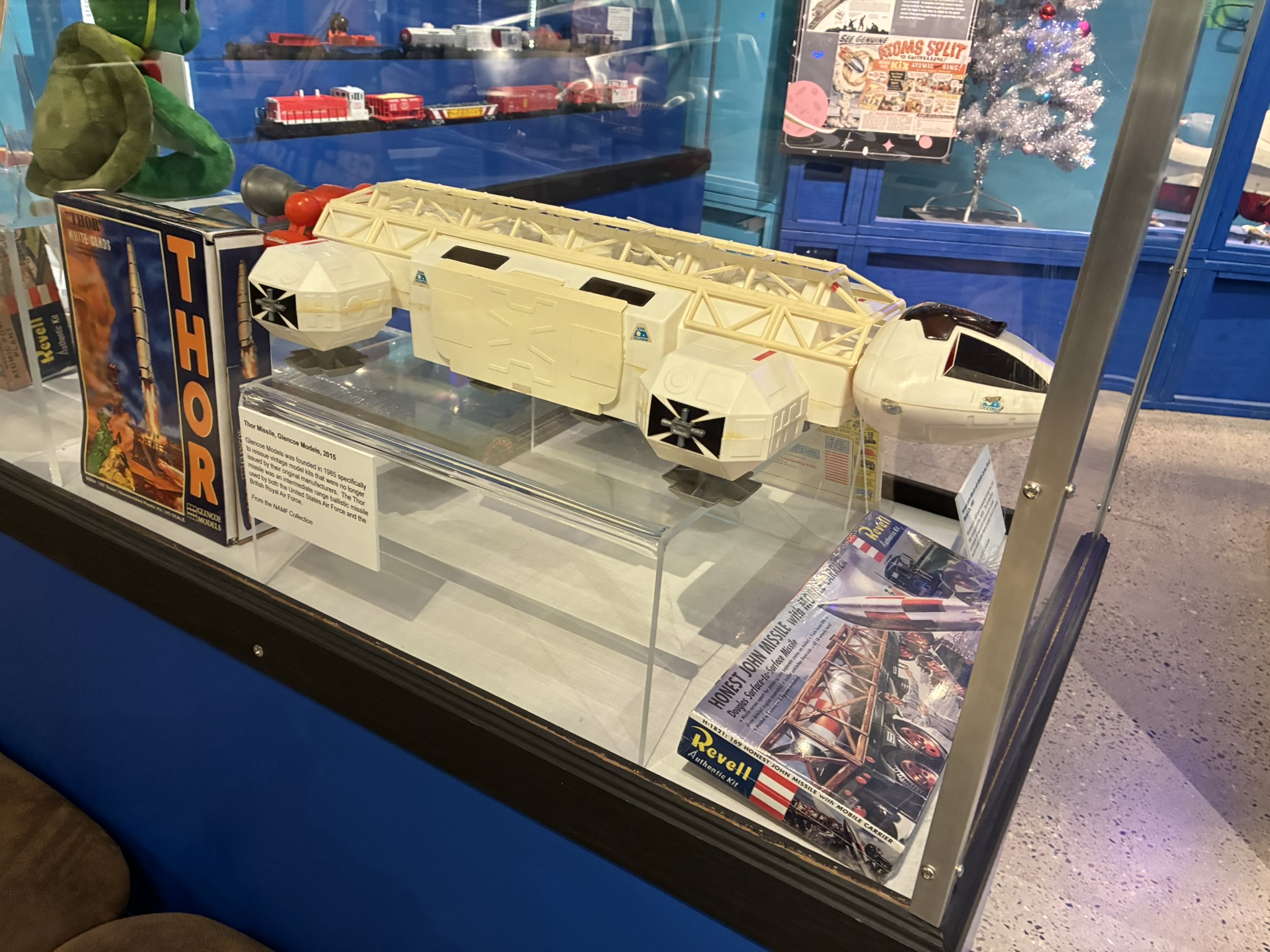
This actually makes sense, however, as the plot of the show was that an explosion of radioactive waste stored on the moon launches it out of orbit and into deep space and the astronauts on the moon must figure out how to survive. Every boy my age in 1977 wanted this dang Eagle I toy.
Some educational toys actually carried radioactive substances, like the Gilbert U-238 Atomic Energy Laboratory!
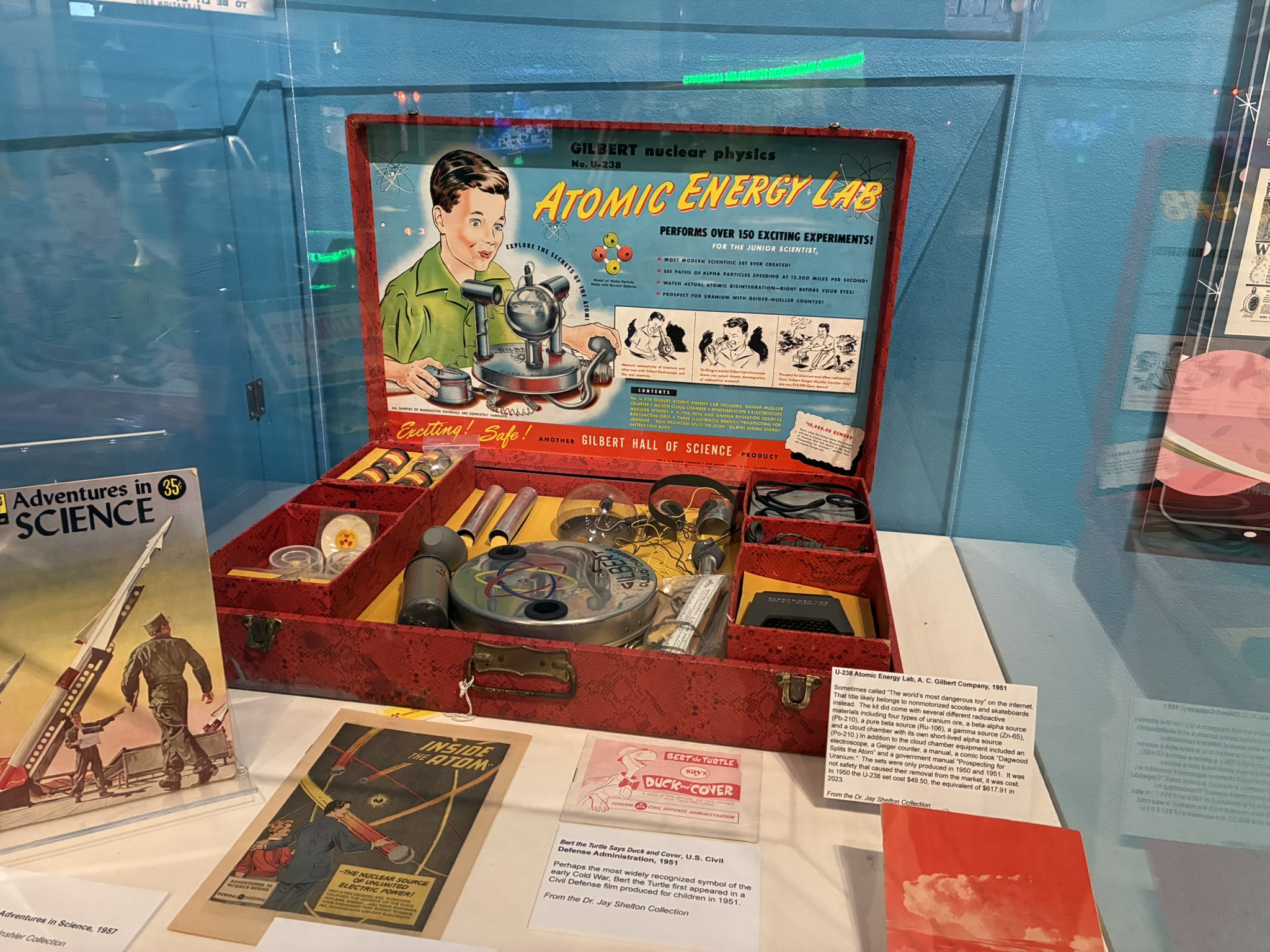
This set actually included uranium and other radioactive sources, though all low-level sources. Still, it boggles the mind that this was actually sold to children! (Personally, I wish I had grown up in an era where I could’ve had one of these.) The kit also included a spinthariscope for witnessing individual radioactive decays!
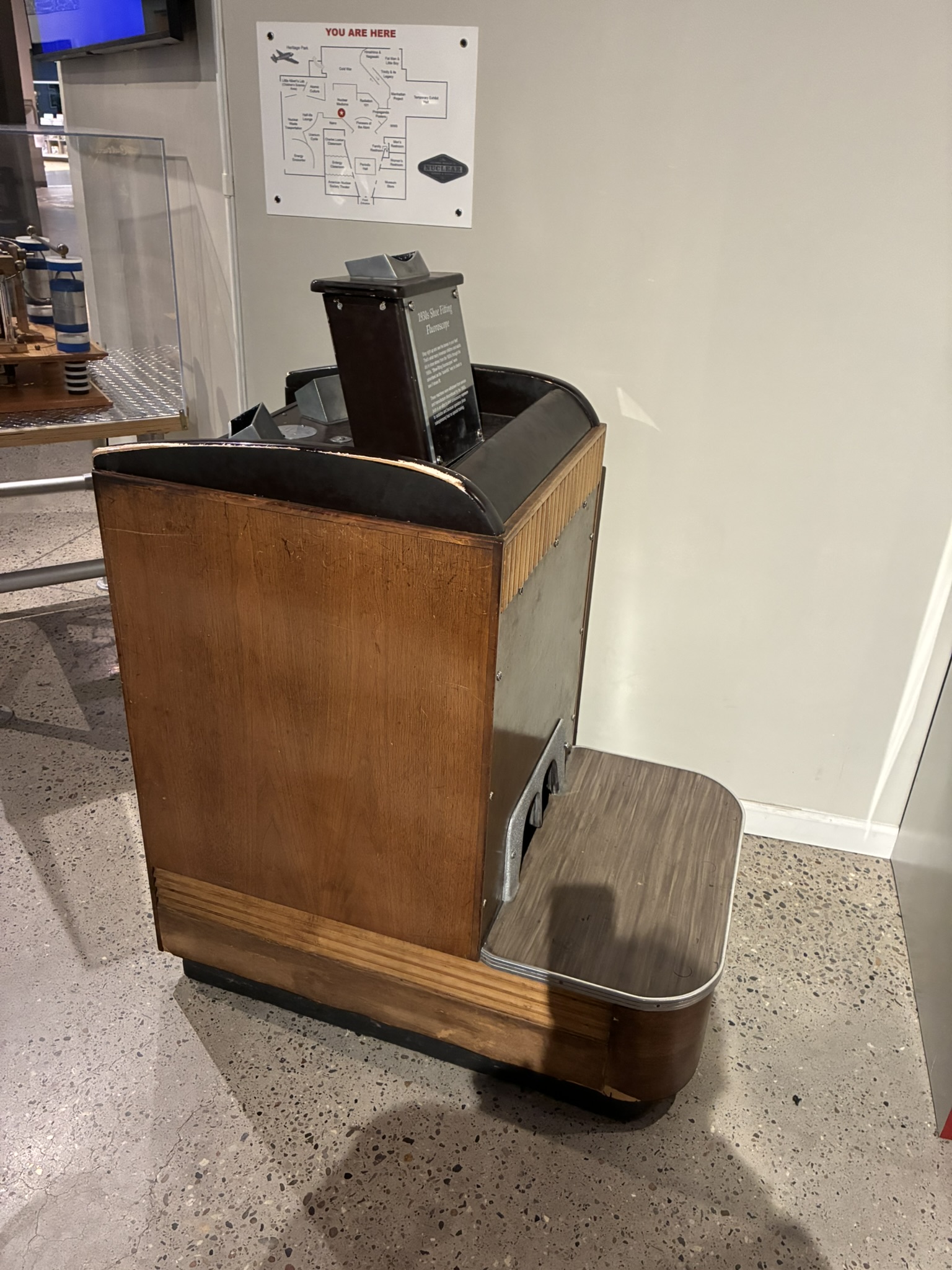
Speaking of applications of radioactivity that are wild to think about today, the museum includes one of the infamous x-ray shoe fitters. People in shoe stores could have their fit analyzed by x-raying their feet! These days, it’s broadly recognized that this isn’t a good enough reason to give yourself additional radiation exposure, even at a low level.
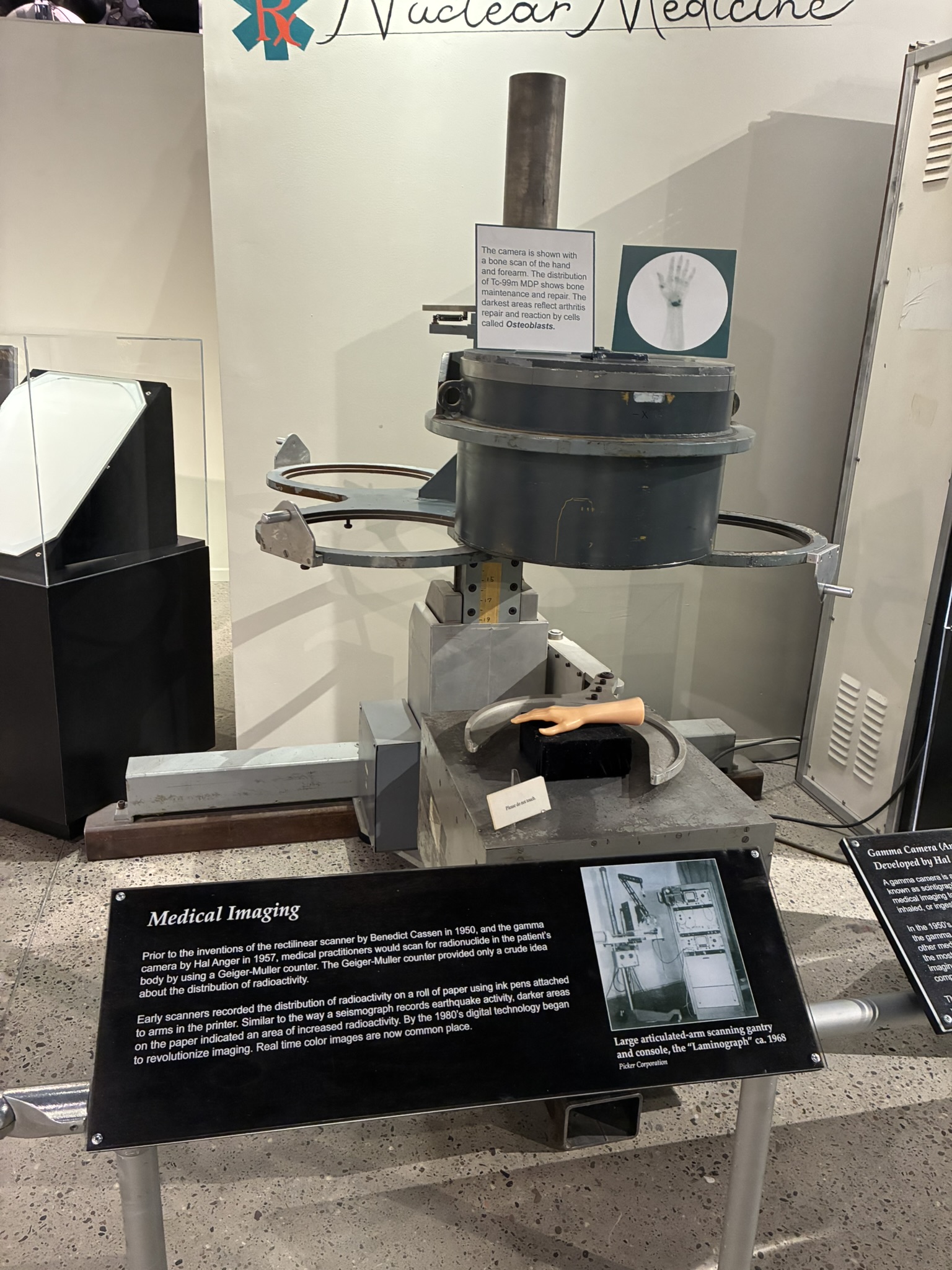
The museum also has exhibits on early medical imaging devices, like this one that could detect the distribution of ingested radioactive tracers.
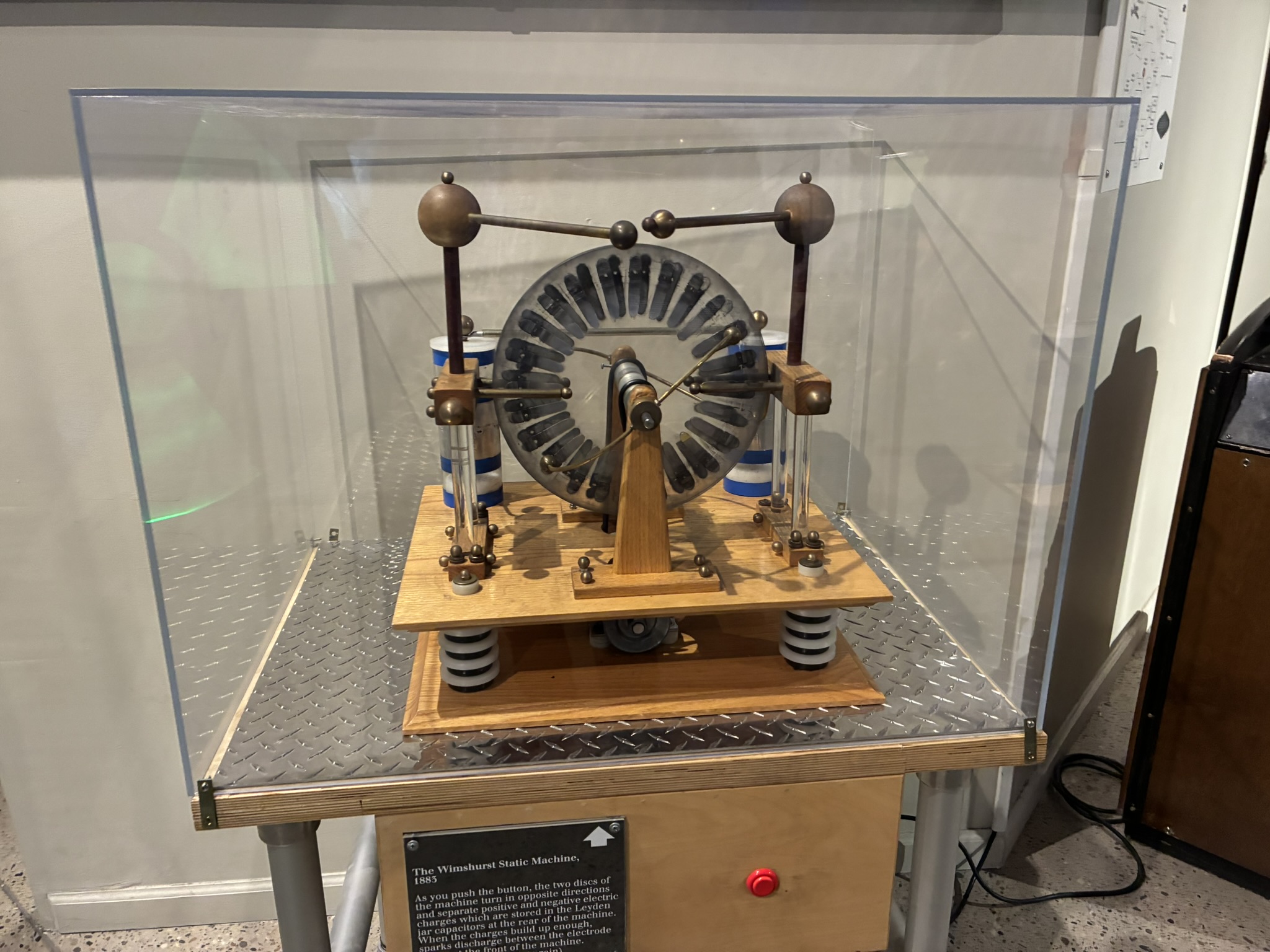
I’m not sure what this next photo has to do with nuclear physics, but I took a photo anyway because I know what it is and I have one! It is a Wimshurst machine that can produce high electric voltages through electrostatic induction. I should probably write a blog post about how these work sometime!
So even though it was a relatively short visit, I had a great time at the museum! They also have an outdoor area with nuclear age aircraft, but I was at the museum at night and in the rain so I didn’t have a chance to explore them. It is a worthwhile and unique museum to visit if you have the time.
Let me end with one more photo that I didn’t look closely enough to figure out why it was there, but my family had one of these when I was a kid: a silver Christmas tree!