Book 13 of 26 books for 2024! Fighting to complete most of my objective, in spite of life throwing me a lot of tough curveballs.
I’ve spent a significant amount of time talking about the work of Junji Ito, a groundbreaking manga horror writer. His works are bizarre, often surreal, fantastically grotesque, and genuinely haunting. There are a number of famous complete graphic novels by Ito, notably Gyo and Uzumaki, but there are also many collections of his shorter works. The most recent, released in July of 2024, is Alley.
The volume collects ten of Ito’s short stories, all of which apparently date from before 2011 (when this edition was first printed in Japanese). They are all fascinating and, as you can see from the cover art, creepy as hell.
Book 12 of 26 books for 2024! Let’s see if I can get to 50% read by the end of the weekend…
I have long been a fan of the work of Henry Kuttner, who was perhaps the most versatile of the later pulp fiction authors that followed in the wake of Robert E. Howard and H.P. Lovecraft. I’ve written about his works many times before on this blog: he wrote science fiction, pulp adventure, sword-and-sorcery fantasy, and more. This includes, with wife and regular collaborator C.L. Moore, what I consider to be one of the best science fiction stories of all time, Private Eye. Kuttner was one of those rare talents who could write about anything for anyone, a true mercenary of a writer
On a trip to China this past week for work, I recently reread a collection of Henry Kuttner’s cosmic horror short stories, The Book of Iod.
I emphasize “reread” because I apparently read these stories a long time ago on my kindle while on a trip somewhere else! I’ve come to realize that there are many books that I read on kindle while traveling and then completely forget to blog about when I come back! Rereading The Book of Iod, I didn’t recognize any of the stories on the second pass, but I nevertheless enjoyed them greatly.
Book 11 of my 26 books for 2024 goal! Still gonna try to make it to 26!
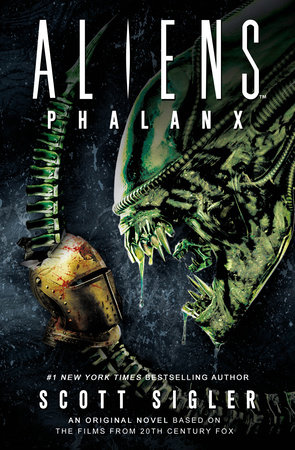
Sometimes I come across a book premise that is so intriguing that I snap up the book almost as a reflex action. Such is the case with Scott Sigler’s Aliens: Phalanx, that came out in 2020. I rarely pay much attention to genre novels, which is probably why I didn’t hear about this one when it first came out, but it was so, so worth the read.
As the title indicates, it is a novel set in the Aliens extended universe of movies and book, which of course was sparked by the original 1979 movie Alien. In the 45 years since the original movie was released, there have been countless follow-ups, all of which attempt to do something interesting and new with the well-trodden source material. Most of them, from my experience, are variations on the same sci-fi story: a group of unwitting space travelers come across one or more xenomorphs and the bodies start piling up.
Every year since I’ve started this blog, I’ve published a few classic open access stories of horror for the Halloween season! In recent years, I’ve started to make a theme for each year.
This year, the theme is “revenants”: spirits who have returned from the dead because of unfinished business, often revenge. Without further ado, let’s look at some classics…
Afterward, by Edith Wharton (1910). “You won’t know till afterward. You won’t know till long, long afterward.” Ned and Mary Boyne, recently come into wealth due to Ned’s business dealings, are looking for a country home in England in which to retire. They are intrigued by one that is said to be haunted by a ghost — but you will not realize it is a ghost until long, long afterward. They laugh this story off, until its true meaning and implications come to haunt them — literally. This is simply one of the greatest ghost stories of all time and its premise and its execution are absolutely brilliant.
The Sweeper, by A.M. Burrage (1930). Tessa Winyard takes a job as a companion to old Miss Ludgate, but immediately finds her to be a curious woman. Though she seems to care not about donating to charities, she is unfailingly kind to individual beggars. Even more striking, however, is that Miss Ludgate is afraid of Autumn, and in particular of the leaves falling from the trees. Something is coming for her, slowly and inexorably, and if it does not claim her in one Autumn it will claim her in the next.
Herbert West– Reanimator, by H.P. Lovecraft (1921). A narrator recounts his work with the brilliant Herbert West, a doctor who is performing experiments in an attempt to bring corpses back to life. The experiments become increasingly extreme and lead to increasingly violent attacks, until finally West’s mob of living dead subjects decide to put an end to him. Lovecraft apparently meant for this to be a parody Shelley’s Frankenstein, though Lovecraft’s tale ends up having its own macabre power.
Frankenstein, by Mary Wollstonecraft Shelley (1818). Speaking of Frankenstein, I only recently got around to reading this classic tale of revenge, in which Frankenstein is haunted by the cruel being that he gave life to in his hubris.
The Screaming Skull, by F. Marion Crawford (1908). On a dark and stormy night, a retired sea captain tells a visitor about a human skull that resides in his house — a skull which has always returned when discarded, and which may be seeking vengeance.
The Confession of Charles Linkworth, by E.F. Benson (1912). Charles Linkworth is executed for the murder of his mother-in-law, though he protested his innocence throughout the trial. Dr. Teesdale was the doctor supervising the execution, and declared Linkworth dead. But was he really dead? Soon, Teesdale began receiving phone calls at night, from one who claimed to be Linkworth…
The Shadows on the Wall, by Mary E. Wilkins-Freeman (1903). Simply one of the greatest ghost stories of all time. A family is thrown into turmoil and mourning when brother Edward dies suddenly of a mysterious malady. This leaves family business unsettled, as Edward had quarreled with his violent brother Henry just before his death. As the family comes to grip with the loss and its implications, they are shocked by the appearance of a shadow cast on the wall that appears to have no source.
The Colossus of Ylourgne, by Clark Ashton Smith (1934). A story set in a fictional medieval province, it starts with villagers noting that the corpses of the dead have begun to rise up and converge on the ruined castle of Ylourgne. There, a necromancer plans diabolical magics to wreak vengeance on the community that wronged him, and it is up to a student of the occult to stop him.
The Mezzotint, by M.R. James (1904). One of my favorite stories by one of the greatest writers of ghost stories of all time! A collector of antiquities acquires a mezzotint — a particular type of engraved image — of a seemingly uninteresting house. However, when colleagues notice that the scene in the image seems to be subtly changing, they all rush to document a dark story unfolding slowly before their eyes.
People of the Dark, by Robert E. Howard (1932). A story of supernatural revenge of a very different type! “I came to Dagon’s Cave to kill Richard Brent.” Our narrator plans murder out of jealousy, but in the surroundings of Dagon’s Cave he soon realizes that he has a greater destiny within their twisted walls. One of my favorite REH stories, and that’s saying a lot!
There were a lot of great stories available for this topic; I hope you enjoy the read! Happy Halloween!
Just to have a nice image for the post, here’s the image of the Classic D&D module X2: Castle Amber, with a cover directly inspired by Clark Ashton Smith’s The Colossus of Ylourgne!
I’ve been spending more time making videos lately on TikTok, and I saw a video from a young woman inadvertently demonstrating the concept of anholonomy, which is related to everything from Foucault’s pendulum to light polarization to falling cats! I had to do a fun video on the phenomenon, which I posted of course on TikTok. For those who are interested:
Incidentally, let me reassure blog readers that I’m not stopping blogging — I’m just exploring doing some videos as well as some written science posts!
Book 10 of my 26 books for 2024 goal! Still way behind but I might still be able to pull it off.
This will be a relatively short post, as I just wrote an article for Dead Reckonings about Laird Barron’s latest collection of horror fiction, Not a Speck of Light, that just came out last month — and I don’t want to repeat myself!
I’ve written about Laird Barron’s fiction a number of times on this blog, and he’s been one of my favorite authors of horror since I first came across his story “The Redfield Girls” in the 2010 anthology Haunted Legends. I’ve also had the pleasure of becoming acquainted with him on social media and, I like to think, at least casual friends. I’ve enjoyed each of his short story collections and he brings a unique flavor of weirdness to horror fiction.
Barron diverted his focus to crime novels after the release of his 2016 horror anthology Swift to Chase, so it was nice to see him return to the horror genre. That isn’t to say that he wasn’t writing horror: he had stories published in a variety of places from 2015-2021, and these are the stories that appear in Not a Speck of Light.
Without going into too much detail (again, saved my words for Dead Reckonings), I can say that the tales include monsters, ghosts, apocalyptic events, cosmic horror, and some strangeness that I don’t even have good words to describe. It is another fantastic collection by Barron. Perhaps the best praise I can give it is that it got me reading again after slowing down significantly in the middle of the year.
So, if you enjoy strange and unsettling horror fiction, I can recommend Not a Speck of Light!
Hi all! I always like to post nice book news here, partly for my own recollection, but I learned today that my book on Invisibility: The History and Science of How Not to be Seen was shortlisted for the 2024 Phi Beta Kappa Award in Science!
Now as it turns out, I was unaware of this honor until I received the email that said that my book was not selected as the final winner of the award, but it really is just an honor to be nominated! (Though the $10k prize would have been nice.)
In less official but still “make me feel good news,” a friend on Bluesky pointed out that comics author Ryan North had posted that he was reading my book and enjoying it, which made he happy! He is apparently reading it for background for his work on the Invisible Woman book.
It is often the case in science that the human imagination can outpace our technical abilities, and the result is that many remarkable inventions are conceived and their basic principles laid out long before anyone has the capability to construct them.
One great example of this is the idea of a negative refractive index material, which I have talked about a number of times on this blog. Such a material would reverse the normal direction of light refraction, and the possibility that such materials might be constructed was first proposed in 1968 by the Russian physicist Victor Vesalago. However, nobody knew how to make such a material at that time, so it was only around the year 2000 that researchers rediscovered Vesalago’s work and demonstrated that it was now feasible to construct negative index materials, ushering in the modern era of metamaterials in optics.
Here, I want to talk about another example that is a little less well-known. In 1928, the Irish physicist Edward Hutchinson Synge proposed a technique for beating the resolution limit of conventional optical systems, in principle to an arbitrary degree! This work essentially laid out the foundations of what would later be known as near-field microscopy, a significant subfield of optics that only took off in the 1980s, some fifty years after Synge’s first publication on the subject appeared. Synge also earned the approval of a particularly famous scientist in the process of publication, as we will see.
So let’s look at Synge’s remarkable discovery! But first, we should talk a bit about why there is a resolution limit in conventional optical systems, which makes Synge’s work so important.
Book 9 of my 26 books for 2024 goal! (If you notice that book 8 is missing on the list, that was a private review of an upcoming book for a publisher, which I’m counting, because I’m way behind!)
A lot of horror novels work by being unpredictable, and providing a lot of twists and turns that keeps the reader guessing — and shocked — throughout their run. Others, however, have a sense of doomed inevitability to them, where the reader knows with near certainty that doom is approaching, and the book is all about following that painful path to the horrific end. Joan Samson’s The Auctioneer is a book that is like that, where from the very first page you are inexorably ground down. I immediately thought of it as I finished reading The Abyss (1981) by Jere Cunningham, which has recently been reprinted by my friends at Valancourt Books.
The novel is set in the Appalachian hill town of Bethel, which has been in decline for years after the abrupt closure of M-19, the nearby coal shaft that is the deepest ever dug. The mine was closed after an accident, but the coal company is back to reopen it and bring employment and prosperity to the people of Bethel, who welcome it.
I’m still finishing the draft of my electromagnetic optics textbook, which I told the publisher I’d finish on Monday. So, as you might expect, that’s been consuming most of my attention lately and I haven’t had time to blog.
But I wanted to note that I was reminded that my blog turned 17 years old today!
That’s a lot of years, and a lot of posts, and hopefully much more to come!
Anyway, thanks for reading, and will see you all soon!
The author of Skulls in the Stars is a professor of physics, specializing in optical science, at UNC Charlotte. The blog covers topics in physics and optics, the history of science, classic pulp fantasy and horror fiction, and the surprising intersections between these areas.




 Skulls in the Stars