ResearchBlogging editor’s selections: the artful dodge, ancient drugs, supermassive black holes and quantum spin

skyskull “Dr. SkySkull” selects several notable posts each week from a miscellany of ResearchBlogging.org categories. He blogs at Skulls in the Stars.

  • The ‘artful dodge’: The danger of a smooth talker. These results could explain pretty much all of politics!  Rita Hendrich at The Jury Room describes a study that demonstrates that, in politics, answers that artfully dodge questions poll better than direct answers.
  • Looking to the Past in Search of New Drugs. Dan Bailey at Smells Like Science describes an ironically novel approach to drug development — analyzing the remnants of chemicals used by the ancients!
  • Supermassive Black Holes. How much do you know about black holes?  At his eponymous blog, The Astronomist introduces us to the ideas of black holes, popular misconceptions about them, and the importance of supermassive black holes!
  • Get those computers spinning. An important ingredient in quantum computing schemes is the idea of quantum spin; at All That Matters, Joerg Heber explains the concept and how it relates to recent research results.

Check back next Monday for more “miscellaneous” suggestions!

Posted in General science, Science news | Leave a comment

The Giant’s Shoulders #30 is out!

The Giant’s Shoulders #30 is now out at Whewell’s Ghost, and is A (Scientific) Christmas Carol! Many thanks to Rebekah Higgitt for hosting and putting together a lovely carnival!

The next edition is tentatively scheduled to be hosted at Morning Coffee Physics on January 16th; submissions are due on January 15th.  They can be sent directly to the host blog or through blogcarnival.com (though, as of this writing, blogcarnival is currently offline).

Posted in General science, Science news | Leave a comment

Weird science facts, December 8-December 14

Here are the Twitter #weirdscifacts for December 8th through December 14th!

270. Dec 08: Amazing trip of Isabel Godin des Odonais c. 1769 through the Amazon in search of her naturalist husband! (via@DrBondar‘s interview w/ Dr. Frederickson.)  Isabel’s husband had traveled the length of the Amazon to make preparations for their joint return to France, but political forces kept him from returning to her and they were separated for 20 years.  In 1769, she joined a 42 person party to travel in search of him, and all members save Isabel ended up dying along the way.  She wandered alone for nine days before being rescued by a group of natives; the couple was finally reunited in 1770!

271. Dec 09: The pen-tailed tree shrew consumes approx. 10-12 glasses of wine/night in nectar equivalent.

272. Dec 10: John Parsons (1914-1952) — CalTech rocket propulsion researcher and occultist. Before each test launch, Parsons would chant Aleister Crowley’s hymn to Pan.  He ended up blowing up himself in 1952 working on chemicals in his home laboratory.

273. Dec 11:  Astronomer William Herschel (1738-1822) used horse manure to make molds for his telescope mirrors. (via @allinthegutter)

274. Dec 12: Percy Spencer invented the microwave oven in 1945 when a magnetron melted a candy bar in his pocket.

275. Dec 13: Janet Parker, the last person to die of smallpox… in 1978. Smallpox is one of the few diseases that was able to be eradicated from all natural sources, making it essentially extinct by the 1970s.  However, labs still contained specimens, and Janet Parker worked above such a lab and caught the illness through the ventilation system.  The head of the microbiology department in charge of the smallpox later killed himself evidently because of guilt.

276. Dec 14: Solar powered hornets???

Posted in Weirdscifacts | 2 Comments

Richard Marsh’s A Second Coming

I’ve discussed the works of Richard Marsh (1857-1915) quite often on this blog; he was a British-born author of horror and thrillers, and was stunningly successful at it in his time.  His most famous novel was his breakout supernatural story The Beetle (1897), which even surpassed Dracula at the time in popularity!  I have yet to read a weird story by Marsh that I haven’t enjoyed immensely.

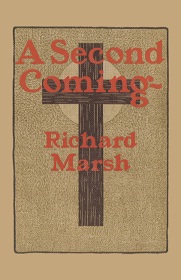
Marsh’s works disappeared from the public eye for half a century, but have been reappearing in print thanks to the valiant efforts of Valancourt Books.  Recently they released one of his books that is quite different from the others, A Second Coming (1900):

The cover, a reproduction of the original, pretty much sums up the plot: Christ has finally returned to Earth, and he has come amongst the citizens of post-Victorian London.  The book is a departure from Marsh’s other works, in that it is an attempt at “serious” literature, albeit with an undeniably “weird” element remaining.  I found it surprisingly compelling, in spite of my lack of connection to organized religion — or perhaps because of it.

Continue reading

Posted in Religion, Weird fiction | 2 Comments

ResearchBlogging editor’s selections: lost language, redefining Great Britain, solar powered hornets, and meeting the Milky Way!

skyskull “Dr. SkySkull” selects several notable posts each week from a miscellany of ResearchBlogging.org categories. He blogs at Skulls in the Stars.

  • At a Loss for Words: Modern Lessons From a Lost Language. This year, a 17th century letter in Peru was uncovered that contains traces of an unknown and otherwise lost language.  This is fascinating in and of itself, but Krystal D’Costa of Anthropology in Practice discusses how this discovery reflects on the modern race to document rapidly vanishing languages.
  • Redefining Great Britain. Traditionally, maps have been drawn using geographical features, population centers, and a nontrivial amount of politics.  Recently, though, a group of researchers decided to look at a new metric for defining the boundaries of regions: telephone networks.  Over at Maniraptora: Tastes Like Chicken, GrrlScientist explains the details.
  • Solar powered hornets? There’s been a lot of talk over the past week or so about arsenic-eating bacteria, but there are plenty of other creatures that draw sustenance from unusual sources!   Dan Bailey at Smells Like Science describes recent research that suggests that a certain species of hornet may be partially solar powered!
  • Meet the Milky Way. Finally, sarah at One Small Step introduces us to: The Milky Way!  She describes a new citizen science project in which regular folks can play a role in classifying objects in our own galaxy.

Check back next week for more “miscellaneous” suggestions!

Posted in General science, Science news | Leave a comment

What scientists in 1903 wanted for Christmas!

For most scientists, the arrival of new equipment can feel a lot like getting toys on Christmas day.  There’s the excitement of opening the package, the giddy thrill of discovery of what the equipment can do, followed by an almost frenzied period of time playing with it and figuring out how it works.  These days, I’m a theoretical physicist, so my thrills are limited to books, computers and software, but it is still a great feeling when new stuff arrives for me to work with.

Recently, while I was looking for a paper published in Nature in 1903, I happened across a series of advertisements in a supplementary issue of the magazine.  These ads, clearly targeted towards those of a scientific persuasion, immediately fascinated me.  They provide a unique snapshot of not only the science of the time, but also the business of science at the time.  They illustrate what scientific discoveries were new and “hot” in the community, what kinds of equipment were popular enough to become commercial products, and what sort of jobs and services were available.  I thought I’d provide a survey of these advertisements, which probably are a good indication of what scientists at the beginning of the 20th century were hoping to find under the tree at Christmas!

Continue reading

Posted in History of science, Physics | 6 Comments

The Nature of Human Nature, by Carin Bondar

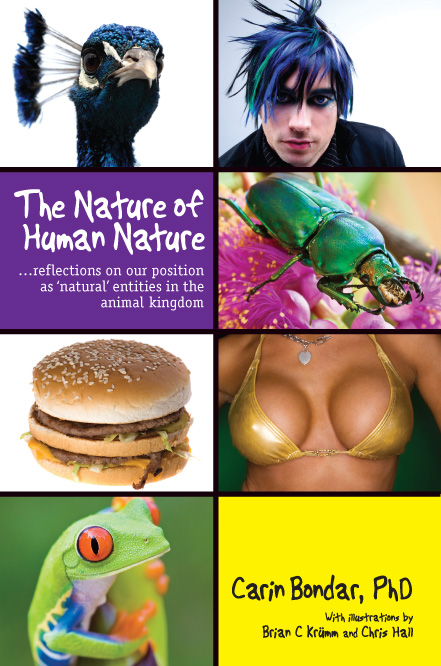
In recent months, I’ve been trying to make a more concerted effort to read and review the flurry of science books being published by the excellent bloggers and twitterers out there. A couple of months ago, I picked up Written in Stone by Brian Switek and The Nature of Human Nature by my Twitter pal and biologist Dr. Carin Bondar:

I reviewed Brian’s book at the beginning of November; I started Dr. Bondar’s book soon after but a heavy workload (and a perplexing and inexplicable desire to write a novel in a month) limited me to reading a short chapter roughly every few days.  Fortunately, the book is well-suited for that sort of schedule, as I note below.  I finished it the other day and thought I’d share a few thoughts on this very enjoyable and charming book!

Continue reading

Posted in Animals, General science | 5 Comments

Weird science facts, December 1-December 7

Here are the Twitter #weirdscifacts for December 1st through December 7th!

263. Dec 01: While developing the bubble chamber c. 1950, physicist Donald Glaser tested early prototypes filled with beer. Bubble chambers are used in high-energy physics to detect and trace the paths of subatomic particles.  They consist of a chamber of superheated liquid; this liquid forms bubbles when particles pass, allowing their tracks to be photographed.  If a magnetic field is applied to the system, the curved trajectories of the particles can be used to deduce their charges and momentum, as well.  Glaser needed a liquid with low surface tension to make this work, however, and beer was one option he tried.  “His experiments with beer left nothing but a stench in the room and raised a few eyebrows, he said. Instead, he filled the tubes with diethyl ether.”

264. Dec 02: Posted another #weirdscifacts for the day, but the arsenic bacteria deserve to be on the list! (@edyong209‘s post) The results are being disputed, however, so it will probably take some time before we know if this fact will stick!

264a. In 1966, physicist Luis Alvarez performed a photo analysis of the Kennedy assassination, improving on the FBI analysis. Alvarez became intrigued by the case after seeing photos of the assassination in LIFE magazine, and decided to investigate what could be learned from the film.

265. Dec 03: Alexander Graham Bell devised a metal detector to find the 2nd bullet that hit assassination target James Garfield in 1881. (Bell’s device failed to find the bullet, and instead detected the metal bed springs.)

266. Dec 04: Nightmare fodder: the goliath bird-eating spider.

267. Dec 05: Louis Slotin, and the horrifying criticality accident that killed him in 1946. Slotin was guiding an experiment in nuclear chain reactions when the slip of a screwdriver let two pieces of material come together to form a critical mass.  Slotin slapped away a piece, stopping the reaction, but he received a fatal dose of radiation in the process, dying 9 days later.

268. Dec 06: The singing sands! (This is an earlier post by @JenLucPiquant that I saved for a later fact!)

269. Dec 07: A popular mathematical puzzle goes back at least as far as ancient Egypt. (h/t @anthinpractice)

Posted in Weirdscifacts | Leave a comment

Editor’s selections: flying snakes, wormholes, metallic glasses and hungry crabs

skyskull “Dr. SkySkull” selects several notable posts each week from a miscellany of ResearchBlogging.org categories. He blogs at Skulls in the Stars.
Running a little late this evening — end of semester grading is overwhelming my days!  Here are my Monday’s selections, a little behind schedule:

  • The Flying Snake Portion of your Dissertation Work… Snakes are not the first thing that naturally comes to mind when one thinks of aerodynamics.  However, Scicurious at Neurotic Physiology discusses one of the most unusual sights of the animal kingdom — the “flying snake” — and the research done on its flight capabilities!
  • Searching for wormholes with general relativity. Wormholes are a staple of science fiction, but if they actually exist, how would we find them?  Greg Fish at weird things discusses the possibilities, and the rather gruesome possibilities that might result from journeying through a wormhole!
  • 50 years of metallic glasses. Under most natural conditions, metals form a nice crystalline structure.  In a lab, however, they can be made to take a glassy state — Joerg Haber of All That Matters explains how it is done, and what it is good for!
  • Cape Cod Crabs Consume Haline Hay. Where has all the haline hay gone?  Some careful scientific detective work has indicated that crabs are the culprit; Sam of Oceanographer’s Choice gives a clear explanation of the evidence so far, and what other questions should be answered.

Check back next week for more “miscellaneous” suggestions!

Posted in General science, Science news | Leave a comment

Re (not the sun god) hypothesizes a solar atom (1903)

ResearchBlogging.orgIt is fair to say that the decade surrounding the start of the 20th century was an amazingly perplexing time to be a physicist.  Mounting experimental evidence strongly suggested that something was amiss with classical physics, especially in the understanding of matter on the atomic level.  With the exception of a few tantalizing hints, however, almost nothing was known of atomic structure.

The lack of information led to a flurry of speculation.  In a post I wrote some time back, we discussed some eight hypothetical models of the atom that were introduced, many of them by the greatest scientists of the time.  I noted that there were three important clues to atomic structure that theoreticians had to work with:

  1. The presence of electrons.  It was well-known that atoms contained electrons.
  2. The periodic table.  Presumably any model of atoms would have to explain the regular structure of the periodic table.
  3. The Balmer/Rydberg formula.  Atoms were known to absorb and radiate light only at discrete frequencies.  In the 1880s Balmer and Rydberg developed an empirical formula that perfectly characterized the radiative spectrum of hydrogen, and closely matched other atoms.  An atomic model would need to explain this experimentally-observed interaction between light and matter.

There was at least one other very important clue to the nature of atoms that I did not mention in my earlier post: radioactivity.  Since the late 1800s, physicists and chemists were aware that certain heavy atoms could give off unusual radiation of a previously unknown nature.  Three types of radioactivity were observed, dubbed alpha, beta, and gamma rays.  Ultimately, a comprehensive description of the atom would have to explain why some atoms were radioactive and others were not.

At least one author drew his inspiration for atomic structure directly from the observation of radioactivity.  In 1903, Paris scientist Filippo Re wrote a short paper titled, “Hypothèse sur la nature des corps radioactifs,” in which he speculated that atoms coalesce from a cloud of constituent parts much like stars form from the condensation of gas in nebulae.  This model provides yet another fascinating insight into the thinking of physicists of the time, and we discuss Re’s entire paper here.

Continue reading

Posted in History of science, Physics | 10 Comments