My appearance on WCCB TV!

In the annals of “shameless self-promotion,” I should note one more appearance I’ve made in local media!  Yesterday, a journalist from WCCB TV in Charlotte stopped by my office to interview me on camera about invisibility physics and the interesting possibilities associated with it.  The spot appeared on television in the Charlotte area last night; here’s a link to it!

I haven’t actually watched the spot yet (I get anxious about my appearances on screen), but please let me know what you think! I’ll probably watch it myself on DVR this evening.  I had a lot of fun doing the interview, as it gave me an opportunity to get a “behind the scenes” view at how news features are made.

In another bit of news, I also had a brief interview with a journalist from The Daily Tar Heel that went up last week!

Posted in Invisibility, Personal | 3 Comments

Communication via vortices?

This is the second in a series of posts about the upcoming OSA Frontiers in Optics meeting in Orlando.  This post covers research related to the presentation FM3F.1: Alan E. Willner, Multiplexing Information-Carrying Orthogonal Beams using Orbital Angular Momentum States.  To be (hopefully) cross-posted at the Frontiers in Optics blog.

Do you think your internet is too slow?  If you’re like me, you probably do, even though the speed of data transmission has exploded over the past 15 years.  When I was in graduate school, dial-up modems that could download 56 kbit/s (56 thousand bits per second) were state of the art, whereas today some broadband business connections* can download 400 Mbit/s (400 million bits per second)!  But even still I want more data, and at a faster rate — and I’m not alone!

Fortunately, it is possible that the rate of telecommunications may increase dramatically in the near future.  Over the past couple of years, researchers have demonstrated the possibility of transmitting data at a rate of over a terabit/second (one million million bits per second), in both free space** and an optical fiber***, by giving the light that carries the data a “twist” before transmission!

Continue reading

Posted in Optics | Leave a comment

A brief NPR interview with me on invisibility!

Continuing my recent streak of self-aggrandizing posts, I wanted to point out (again, for those who don’t follow me elsewhere) that I recorded a short interview the other day for our local Charlotte NPR affiliate, WFAE, on the physics of invisibility.  You can listen to my interview online here.

As a fun game — try and count how many times* I say “actually” during the extremely short interview!  I don’t normally do that — I suspect that the topic of invisibility seems so counter-intuitive that I kept trying to point out what is really possible, and that resulted in me saying “actually” a lot.

*******************

* The correct answer is 100 billion times.

Posted in Invisibility, Personal | Leave a comment

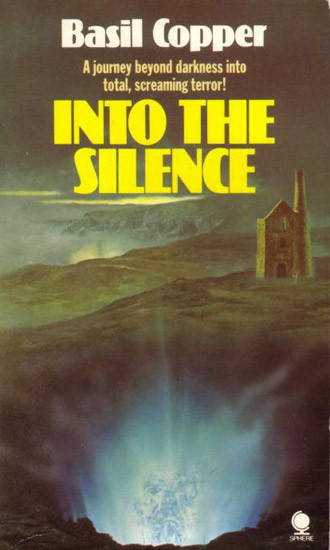
John Blackburn’s “A Scent of New-Mown Hay” and “The Flame and the Wind”

Valancourt Books has been releasing new editions of classic John Blackburn books faster than I can blog about them!  I’ve spent a fair amount of time talking about Blackburn on this blog, and with good reason: he was an amazing writer of horror and thrillers, and immensely popular in his time.  As The Penguin Encyclopedia of Horror and the Supernatural put it,

He is certainly the best British novelist in his field and deserves the widest recognition.

Blackburn’s work fell out of print after his death and it is only recently that Valancourt began to re-release them in new edition, some of which have introductions written by me!  I thought I’d briefly highlight two of these: A Scent of New-Mown Hay (1958) and The Flame and the Wind (1967).

Continue reading

Posted in Horror | Leave a comment

Dr. SkySkull talking invisibility in the News & Observer!

This has already been making the rounds via other social media today, but for those who aren’t on Facebook or Twitter (lookin’ at you, Dad!), I was interviewed by the News & Observer about invisibility physics and the article appeared today!

Me, looking kinda invisible.  Double exposure image by Todd Sumlin.

Me, looking kinda invisible. Double exposure image by Todd Sumlin.

It’s worth mentioning that this didn’t start as an article with a focus on me (not that I’m complaining).  Reid Creager at the Observer originally contacted me for background on invisibility physics for a planned article on the subject, but apparently the conversation was interesting enough that it turned into a Q&A article with me.

Todd Sumlin visited me to take the photo above last week, and we had a lot of fun with it.  He made me look semi-transparent by taking a double exposure: one with me in the picture, one without.  We used a set of journals as a backdrop, but the multi-colored journals obscured my face.  My solution was to put black-bound PhD dissertations from my office, including my own, behind me.  I noted on Twitter last week that this may have been the first practical use of my PhD!

I’m rather happy with the article as it turned out — feel free to let me know what you think in the comments!

Posted in Invisibility, Personal | 4 Comments

1842: Jean-Daniel Colladon guides light with water

Big technological advances often start with very humble beginnings.  If you’re reading this post on the internet right now, it is almost certain that the information has come to you at some point in the journey in the form of light passing through fiber optic cables.  These transparent glass threads almost perfectly trap light within them, allowing it to journey without harm from one end to another.

The end of a bundle of fiber optic cables, showing the light emerging.  Via Wikipedia.

The end of a bundle of fiber optic cables, showing the light emerging. Via Wikipedia.

The use of light to carry digital information allows massive amounts of data to be transmitted over long distances in a cheap and efficient manner, and is the foundation of modern telecommunications.

Though fiber optics of sufficient quality to be practical are a relatively recent invention dating to the 1960s*, the origin of the light-guiding principle goes back much, much further: about 170 years!  In 1842, Swiss physicist Jean-Daniel Colladon (1802-1893) showed that one can guide light with a falling stream of water — and the experiment is simple enough to do at home, as I will show.

Continue reading

Posted in History of science, Optics, Physics demos | 4 Comments

Weird Fiction Monday: Treatment

It’s time for Weird Fiction Monday, when I post stories that I’ve written — both new and old — for the entertainment (hopefully) of my readers!  As always, I note that I haven’t done extensive editing of the tales here, so don’t be surprised to find the writing a little rough.  

This piece was recently submitted — and rejected — for the original anthology Fearful Symmetries, funded by Kickstarter and edited by Ellen Datlow.  After the rejection, I thought about submitting it elsewhere, except (a) I don’t have the time or the experience to do it, and (b) I don’t know if it is in fact any good!  For now, I post it here and move on to other projects.

Treatment

“So you want to know why I began to investigate the paranormal?”

The question came without warning and, caught off guard, I stammered out a hasty denial. I had known Alfonso Cuellar for decades, and my visit, I said, was simply a chance to catch up after years of lost contact. My answer sounded false, however, and it was; I had come to visit Alfonso specifically to find out why he had abruptly thrown away a career and pursued a fantasy.

Continue reading

Posted in Fiction | 4 Comments

Weird fiction Monday: Fish in the Sea

It’s time for Weird Fiction Monday, when I post stories that I’ve written — both new and old — for the entertainment (hopefully) of my readers!  As always, I note that I haven’t done extensive editing of the tales here, so don’t be surprised to find the writing a little rough.  

While I’ve got round robin stories on my mind, I thought I would share a part of one I contributed to a number of years ago — 13, to be precise.  Back in the day, my friend Damon was organizing a number of round robin writing exercises, to be passed around by email.  In one of them, each participant had to build on a story based on a choice of one of five words offered.  In this case, I picked the word “crab.” 

Not sure where this little snippet came from — perhaps my cynical single life at the time — but nobody ever followed up on my contribution, no doubt wondering what the hell I was talking about.  I found this piece quite amusing, however, and some of my strangest work. 

Fish in the Sea

“Your table is available, sir,” the crab said, straightening its tie.  “Would you care to wait for the second member of your party, or be seated immediately?”

Anderson swallowed uncomfortably to clear his throat, and shook his head.

“I can be seated right now.  That’s fine.”

With a dip of its eyestalks, the crab host scooped up a pair of menus in one of its claws, waved the other one over its body in a sort of encouraging gesture, and scuttled towards the main dining room of the restaurant.

Anderson followed, walking slowly to avoid overrunning the creature, and he looked around nervously at the patrons of the establishment.  He mildly cursed under his breath.  All around him were crabs.  At the table he was passing on his right, two crabs clinked champagne glasses together that were held gingerly in serrated claws.  Ahead on the left, a pair of wide-bodied, bright orange crabs were tearing mercilessly at their meal, pulling the fleshy carcass apart with wild abandon.  A small spatter of skin landed on Anderson’s jacket, and he flicked it off hastily.

Then the maître d’ was beckoning him to a table, and Anderson found himself sitting, accepting a menu that was scored with many tiny claw holes punched into it.

No doubt about it, this was a crab joint.  Anderson cursed himself for allowing himself to be set up on yet another blind date by his friends.  He should have learned by now.

“David Anderson?” gurgled a voice beyond his menu.  Anderson lowered his menu carefully, and barely repressed a disappointed outcry.  A Portuguese man o’war was squatting before him, wearing a yellow rose on its body that matched the one on his own jacket.  The evening was clearly doomed even before it had begun.

Mustering all of the dignity he could afford, Anderson accepted and shook the proffered stinger, trying not to wince as its poison burned his hand.


Posted in Fiction | 1 Comment

The Challenge from Beyond, with Moore, Merritt, Lovecraft, Howard, and Long

No matter how much classic weird fiction I read, there is still plenty out there that I have not read, or even heard about.  Recently I was surprised to learn about a five-part tale of weirdness, The Challenge from Beyond (1935), written by some of the greatest authors of weird fiction of the era: C.L. Moore, A. Merritt, H.P. Lovecraft, Robert E. Howard, and Frank Belknap Long.

challengefrombeyond

The piece was commissioned as one of two “round robin” stories for Fantasy Magazine, one being written by famed names in science fiction and the other written by famed names in weird fiction.  In a “round robin,” each author writes a section or chapter of a story and the next author in line must pick up and continue the story using only what came before as a guide.

Continue reading

Posted in Horror, Lovecraft | 2 Comments

Supersymmetry in optics?

This is the first in a series of posts about the upcoming OSA Frontiers in Optics meeting in Orlando.  This post covers research related to the presentation FM4C.5: Mohammad-Ali Miri; Matthias Heinrich; Demetrios N. Christodoulides, SUSY-generated complex optical potentials with real-valued spectra.  To be (hopefully) cross-posted at the Frontiers in Optics blog.

(Edited to make a few additional observations.)

One of the most fruitful strategies in optics research is to investigate the implications of concepts and mathematics used in seemingly very different fields of physics.  The most dramatic example of this today is the foundation of the field of transformation optics, which uses the mathematical tools of general relativity to create novel optical devices.  As I’ve discussed in previous posts, treating matter as an effective “warping” of space has led to the theoretical development of exotic objects such as invisibility cloaks, “perfect” optical illusions, and even optical wormholes.

With this in mind, it was probably inevitable that scientists would tap even more unlikely fields for inspiration.  In a recent paper*, researchers at CREOL and the Max Planck Institute for the Physics of Complex Systems apply the mathematics of supersymmetry in the design of optical structures.

If you’re not familiar with supersymmetry**, it is best known as a hypothesis in particle physics that literally doubles the number of elementary particles that exist in nature, and serves as one possible extension of the standard model of physics that attempts to provide a unified “theory of almost everything.”  It turns out, however, that supersymmetric math can be applied to more mundane problems, including quantum mechanics and optics, the latter of which we consider in this post.

Continue reading

Posted in Optics | 4 Comments