J.B. Priestley’s Benighted

Valancourt Books, traditionally specializing in fiction of Edwardian era and older, has recently started printing new editions of excellent but forgotten 20th century novels.  I, of course, have written introductions for a number of the books of John Blackburn (Bury Him Darkly, Broken Boy and Nothing but the Night for starters), but there are plenty of other intriguing books that Valancourt has been releasing, as well.

One that caught my eye was J.B. Priestley‘s short 1927 novel Benighted.

benighted

Cover of the Valancourt edition, reproduced from the original.

This was the second novel of J.B. Priestley (1894-1984), a prolific author who published 26 novels during his lifetime.  It was with his third novel, The Good Companions, that Priestley achieved major success, but Benighted was significant in its own right, being made into the 1932 film The Old Dark House, starring the iconic Boris Karloff.

What is it about?  The movie title is rather perfect, as the story is of a genre of what may be called “old dark house” stories.  In such stories, a group of people are gathered by design or fate in a old sinister house, are trapped within it together by circumstance and subjected to unspeakable horrors.

Continue reading

Posted in Mystery/thriller | Leave a comment

The Giant’s Shoulders #58 is out!

I was a little slow in posting about it, but the 58th edition of the history of science blog carnival, The Giant’s Shoulders, is up at Asylum Science!  In this edition, you can read about:

  • cosmonauts who had to survive the Siberian forest after surviving space,
  • fixing astronomical equipment with earwax,
  • Victorian issues with masturbation,
  • Margaret Thatcher’s dubious connection with soft-serve ice cream,
  • and much more!

Many thanks to Mike Finn and Jenn Wallis for putting together an excellent carnival!

The next edition of The Giant’s Shoulders will appear at the Something by Virtue of Nothing blog on 16th May 2013.  Posts are due for submission by May 15, and can be submitted directly to the host, to  ThonyC at The Renaissance Mathematicus or to me right here!

Posted in General science, Science news | Leave a comment

April 10, 1815: Mount Tambora blows up

Today is the 198th anniversary of the largest volcanic event in recorded history, the deadly and devastating eruption of Mount Tambora on the island of Sumbawa in Indonesia.  The eruption was four times as powerful as that of its later and more famous sibling, Mount Krakatoa, in 1883, and was equivalent to an 800 megaton explosion.  For comparison, the Fat Man and Little Boy nuclear weapons dropped on Japan during World War II were roughly 12.5 kilotons each, and the largest nuclear weapon ever built — the Soviet Union’s Tsar Bomba — was tested at a relatively paltry 50 megatons.

The island of Sumbawa, with Mount Tambora clearly seen.  Via Wikipedia.

The island of Sumbawa, with Mount Tambora clearly seen. Via Wikipedia.

The eruption of Tambora is a troubling reminder of the powerful forces that lie sleeping within the Earth.  When the mountain blew, it ejected an estimated 160 cubic kilometers of material, with an eruption column some 43 kilometers high.  Before the eruption, the mountain was 14,100 feet tall, and one of the tallest in Indonesia; afterwards, only 9,354 ft of its height remained.  Ash was distributed throughout the upper atmosphere worldwide, resulting in significant climate effects, as we will note below.

The death toll from the eruption was horrific: some 12,000 people were killed as a direct result of the eruption, with even more dying in the aftermath from famine and disease.  The most modern estimate suggests 71,000 people died in total.

In that era, worldwide communication was still slow and unreliable.  There are not many detailed reports of the eruption itself, and its aftermath.  On this grim anniversary, I thought I would share some of the original first-hand accounts of the event and the devastation.

Continue reading

Posted in General science, History of science | 3 Comments

Colin Wilson’s The Philosopher’s Stone

I have to admit: I almost didn’t finish reading Colin Wilson‘s 1969 novel The Philosopher’s Stone, recently reprinted by Valancourt Books.  The novel is, in my opinion, a slow-starter; it takes quite some time for this curious story to find its focus.  Once it does get started, though, Wilson’s curious mix of science fiction, history, philosophy and horror  — written as an answer of sorts to the work of H.P. Lovecraft — is quite eerie and compelling.

philosophersstone

What is it about?  Like most of Lovecraft’s stories, it centers on intellectuals who delve too deeply into forbidden history — and inevitably draw the unwelcome attention of nearly omnipotent and uncaring beings more ancient than the Earth itself.

Continue reading

Posted in Horror, Lovecraft, Science fiction | 7 Comments

Another video of the Kaye effect

I finally managed to get some video editing software to work, and I have put together a more polished video of the Kaye effect, including some slow-motion shots of the streams!

(If the embed doesn’t work right now, try the direct link.)

Please feel free to let me know what you think of the video in the comments!

Posted in Physics, Physics demos | 9 Comments

Physics demonstrations: A short discussion of the Kaye effect

I’ve been gearing up for the second year of the UNC Charlotte Science and Technology Expo, which will be happening on campus on Sunday, April 21st.  I’ve been preparing a number of weird and unusual demos for the expo, and today I did my first run of the Kaye effect.  The video below shows the results of my experiments.

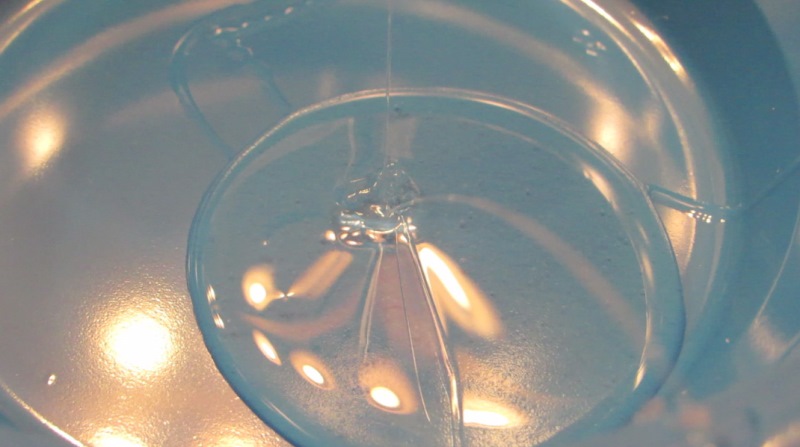
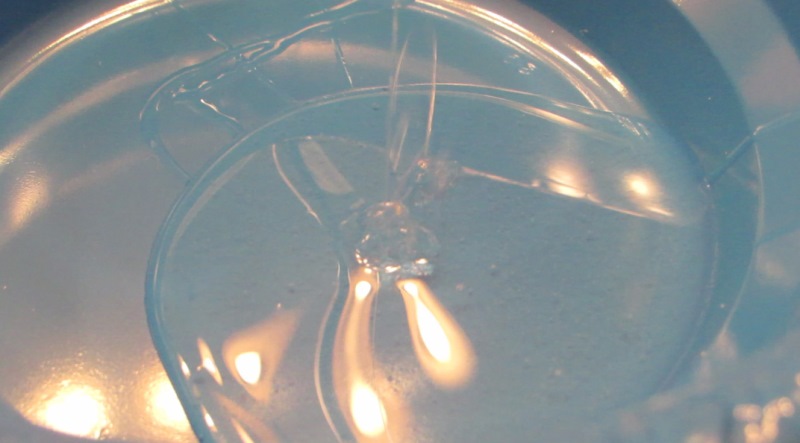
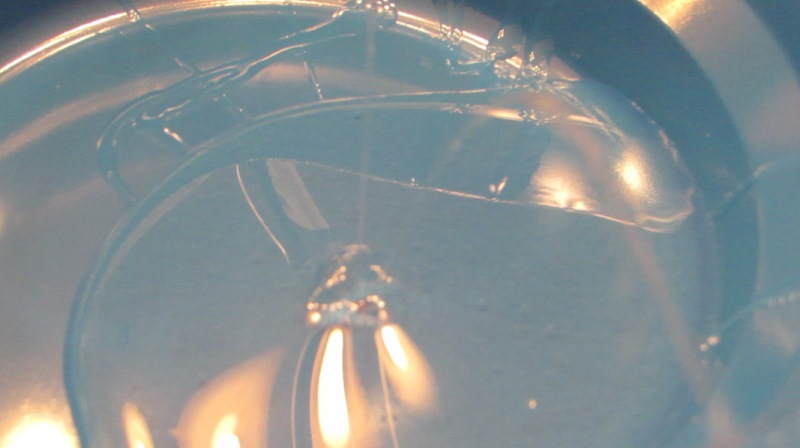
A thin stream of liquid soap is pouring into a plate below.  Though most of the time it just clusters in a pile, it occasionally fires off an arcing streamer!  These streamers of fluid can actually fly quite far — the ones in my initial experiment were traveling up to 8 inches, leaving the bowl entirely.  Here’s a snapshot of one of the streams, coming towards the camera:

kayephoto01

The Kaye effect was first reported in 1963 by British engineer Alan Kaye, who noticed this unusual behavior when working with complex organic liquids.  A complete explanation for this phenomenon remained uncertain until 2006, when Dutch researchers did some clever work to elucidate the effect.

So how does this work?  It has been long known that liquid soap and shampoo are shear thinning fluids: this means that, under stress, the fluid flows better and becomes more “liquid-like.”

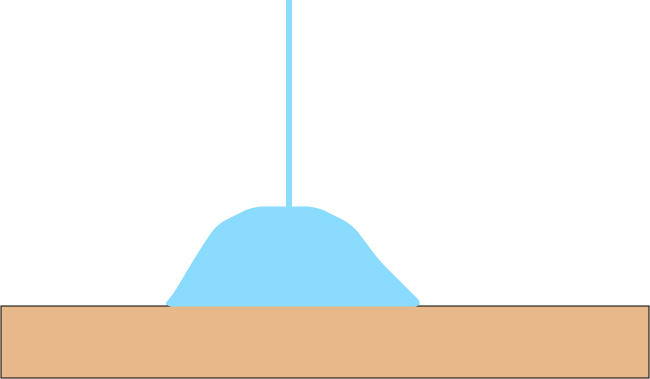
Most of the time, the soap just forms a heap on the bottom of the bowl:

kaye01

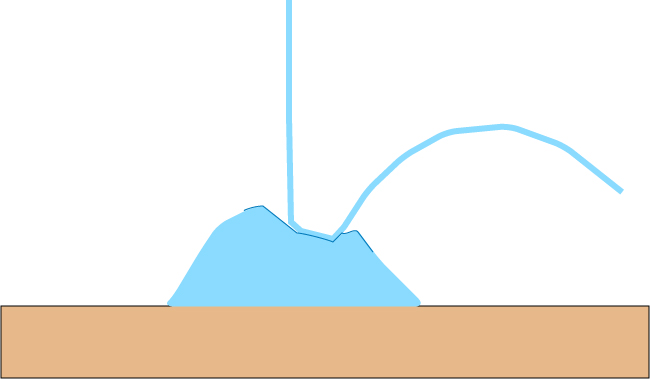
Occasionally, however, a dimple forms at the top of the pile. Then a thin layer of shear-thinned fluid forms in the dimple, making a slippery barrier between the heap and the descending stream, preventing their merging.  The stream is deflected and launches from the dimple like a ski jumper:

kaye02

Other shear thinning fluids include non-drip paint and ketchup, meaning that it might be possible to do a similar experiment with them!  Shear thinning fluids are sort of the converse of shear thickening fluids like oobleck, which acts like a solid when put under pressure.  It is even possible to walk on the surface of oobleck if one moves quickly enough!

The Kaye effect can be a great attention-getting demonstration for science expos, which is why I’m working on it.  Even more impressive is the observation (by the 2006 Dutch team) that the Kaye effect can be made stable if one makes it run downhill — essentially one ends up with a bouncing stream of liquid soap!

Now that I’ve got the basic phenomenon working, I’m going to tackle the downhill trick next.

The Kaye effect is really straightforward to achieve: I used a ring stand to hang a cake icing dispenser above a bowl.  With a 1 mm icing tip, I got a sufficiently thin stream of soap.

(I’m also hoping to make a more sophisticated video of the Kaye effect, but that will have to wait until I can figure out why my video editing software is constantly crashing.)

Here’s a pair of additional snapshots of streams from the video:

kayephoto02


kayephoto03

Posted in Physics, Physics demos | Leave a comment

Vimana: a sci-fi short film kickstarter

I’ve been quite busy with a lot of official work lately, so posting new science stuff has been light.  There are a few posts in the works, but they require a bit more research before publishing.

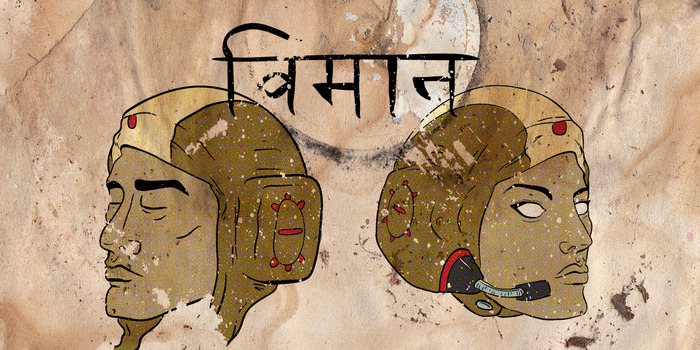
In the meantime, I thought I’d pass along a link to a Kickstarter to fund a short science fiction film: Vimana!  I received a nice email from Natalie Mirsky, a cinema student at USC who is producing the film for her thesis project with fellow students.

It sounds like an interesting idea, and I thought I’d see what my blog readers think!  If you have any thoughts, comments or suggestions for the filmmakers, please feel free to drop them a line on Kickstarter or leave a comment here.

Posted in Science fiction | 1 Comment

The Club Dumas, by Arturo Pérez-Reverte

For reasons that I never quite understand, some books that I purchase end up sitting on my shelf, unread, for months or even years.  Typically, when I come back to read them, I end up mentally kicking myself for avoiding them for so long.

Such is the case with The Club Dumas, the 1993 novel by Spanish author Arturo Pérez-Reverte, that I finished reading the other day.

clubdumas

I first learned of this book by watching its 1999 film adaptation, The Ninth Gate, starring Johnny Depp and directed by Roman Polanski.  The movie has its charms, but pales in comparison to the clever mystery-mixed-with-subtle-horror crafted by Pérez-Reverte.

Continue reading

Posted in Horror, Mystery/thriller | 7 Comments

John Blackburn’s “Nothing but the Night”

I’m happy to announce that another of John Blackburn’s classic horror novels has been reprinted by Valancourt Books, and again it features an introduction by me — Nothing but the Night!

nothingbutthenight


When a bus crashes that is carrying orphans from the Van Traylen Home, one of the children, Mary Valley, is injured and taken to the hospital for observation.  Psychiatrist Peter Haynes is convinced that something is wrong with the young girl, who suffers from traumatic nightmares of events that she could not possibly have experienced.  A visit from Mary’s biological mother Anna Harb, psychic and once convicted murderer, goes terribly wrong as the woman attempts to throw the child down the stairs, declaring that she is a “soul that should never have been born.”

An additional murder sparks a manhunt for Harb on the lonely island of the Van Traylen Home.  But General Kirk of the Foreign Intelligence Service suspects that something even more sinister is afoot.  Three members of the Van Traylen Fellowship have died recently in mysterious circumstances; could the deaths be connected?  And what is their relationship to Mary Valley and Anna Harb?  Kirk and scientist Marcus Levin join the hunt around the Van Traylen Home, but they are unprepared for the true horror that will be revealed — in the darkness and fires of Guy Fawkes Night!

Nothing but the Night, like most of Blackburn’s novels, is a short, fast-paced read with plenty of twists and turns.  Unlike many of his works, Blackburn hints early on at the sinister secret behind the plot — only the densest reader will fail to realize that something is really, really off with Mary Valley — but nevertheless the final revelation surpassed my most gruesome expectations.

Blackburn’s books are quite hard to put down. He has a wonderful ability to tell a story where events seem to be spiraling out of control faster and faster, building incredible tension while keeping the mystery until the very end.  Nothing but the Night is one of his strongest books, written at the height of his career, and is well-worth a read.

Interestingly, it is the only Blackburn novel to have been made into a major motion picture, also titled Nothing but the Night and starring Christopher Lee and Peter Cushing.  The movie is faithful to the plot but fails to capture the pacing and tone of the book.

I’ve been on a Blackburn binge lately, in order to write good introductions!  I’ve got a few introductions to write still, but will also be returning to blogging about a wider variety of horror novels in the near future.


Posted in Horror, Personal | Leave a comment

From blazing skies to bogus shamrock: The Giant’s Shoulders #57 is out!

The 57th edition of the history of science blog carnival The Giant’s Shoulders is up at Stories from the Stores, the Science Museum’s blog!  In this edition, you can read about:

  • A collection of posts on meteorite history, inspired by the recent terrifying meteor detonation over the skies of Russia,
  • Discussions of the history of women in science for international women’s day,
  • A famous map of cholera,
  • And more!

Thanks to Alison Boyle for putting together a great carnival!  Next month’s edition will be hosted by Mike Finn and Jen Wallis at the Asylum, and entries can be submitted directly to the hosts, to me via Twitter or email, or to Thony C at the Renaissance Mathematicus till the 15th April.

Posted in General science, Science news | Leave a comment