“The Further Adventures of Sherlock Holmes: The War of the Worlds”, by Manly and Wade Wellman

These days, there are countless “mashups” in fiction, in which two or more disparate genres, characters or series are brought together or into conflict.  We’ve seen werewolves versus vampires, such as in the Underworld series of films; we’ve also seen Pride and Prejudice and Zombies, Abe Lincoln: Vampire Hunter, and Sherlock Holmes versus Cthulhu, in Shadows Over Baker Street.

Mashups seem to have become exceedingly common in recent years, but it is worth noting that they have been around for quite some time!  One that caught my eye in recent months is The Further Adventures of Sherlock Holmes: The War of the Worlds (to be called FASHWW for brevity), written by Manly Wade Wellman and his son Wade Wellman and released in book form in 1975:

The title pretty much makes it obvious, but nevertheless I will explain the premise of the book: Arthur Conan Doyle’s Sherlock Holmes is present when the “Martians” from H.G. Wells’ War of the Worlds attack, and he sets himself against them!  Is it a titanic battle of mind versus monster?  We shall see…
Continue reading

Posted in Mystery/thriller, Science fiction | 7 Comments

1813: Faraday learns about the politics of science

Those of us in science like to envision our profession as a noble (“Nobel”?) calling, above the petty squabbles that taint other endeavors.  The reality, of course, is that science is susceptible to politics just like any other field.  One can argue that, as a community, we tend to rise above such things in the end, but each of us inevitably has some sort of eye-opening introduction to political ploys.

I remember my own very well: while I was still a graduate student in high-energy physics, I was sitting next to my advisor listening to various students and postdocs present their research to the overall collaboration.  Most talks went smoothly and uncontested, but when my advisor’s postdoc presented, he was bombarded with an extended series of almost hostile questions.  I leaned over and asked my advisor why the postdoc was getting such a hard time.  My advisor replied, in essence, “One answer is that this is an important result and everyone wants to make sure we get it right.  Another answer is that I’m his advisor.”

Even the greats have had their moments when their idealistic views were first tempered by a dose of cynical reality.  A particularly amusing anecdote is related to the great physicist and chemist Michael Faraday (1791-1867), when he first applied for a position with the famous chemist Humphry Davy.

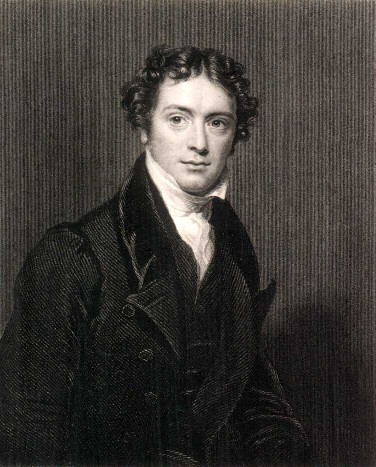
Michael Faraday in 1829

Continue reading

Posted in ... the Hell?, History of science | 20 Comments

Science Online 2012: The Music Video!

As you may have heard, two weeks ago I was attending Science Online 2012, a meeting of online science communicators and one of the most fun events I’ve ever attended!  Period.

To commemorate the event, Carin Bondar of PsiVid and carinbondar.com (and genuinely wonderful person) put together an incredibly awesome video of the fun being had!  You can watch the video on the PsiVid site; pretty much all of the Science Online folks have certainly seen it but I wanted to share it with those readers of the blog who may not have come across it.

(I didn’t embed the YouTube video directly because I want to give Carin the pageviews at her blog!)

If you want to look for me, I appear 3 times briefly in the video, most conspicuously as “The Thinker” early on!

Posted in Personal | Leave a comment

Weird science facts, January 25 — January 31

Time for another week of Twitter #weirdscifacts!  This week I wrapped up some facts about the North Carolina Museum for Natural Sciences and started some facts gleaned from Discovery Place’s “Mummies of the World” exhibit!  We also have a bonus fact!

683. Jan 25: #weirdscifacts via @naturalsciences: Longleaf pines undergo a growth spurt to “get above” brush fires.  These pines depend on brush fires to survive, but must grow rapidly to escape the fire-susceptible sapling stage.

683a. Titanoboa, the extinct mega-snake!!! Unfortunately, titanoboa went extinct before it could eat Jon Voight (for real). (h/t @laelaps)

684. Jan 26: The Russian “water computer” of 1936!  This computer was built to solve partial differential equations; if the technique had persisted for long enough, we might be referring to “computer bugs” instead as “computer clogs”.  (h/t @jenlucpiquant)

685. Jan 27: #weirdscifacts via @naturalsciences: Female tree bats mate in fall, but don’t fertilize eggs until after hibernation, in spring!  It requires a lot of energy in order to hibernate with an actual baby on the way, so the female bat simply stores the male’s semen until spring.

686. Jan 28: Final #weirdscifacts via @naturalsciences: the hellbender salamander, which “breathes” through its skin!  The salamander has lungs, but it spends most of its time underwater and breathing through its skin.

687. Jan 29: Why swim when you can walk? The odd locomotion of the handfish.  Unlike mudskippers, which use their fins to walk on land, the handfish seem to “walk” underwater.

688. Jan 30: #weirdscifacts via @myrmecos: the spider that is disguised as its ant prey

689. Jan 31: #weirdscifacts via @discoveryplace “Mummies”: The Detmold child, a 6500 year old mummy.  This mummy predates King Tut by 3,000 years!

Posted in Weirdscifacts | Leave a comment

Brian Keene’s “Earthworm Gods”

I haven’t blogged about horror fiction for a while — work, travel and holidays have conspired against me!  This post is an attempt to catch up.

A few years ago, I had a plan to do a blog post surveying weird fiction books about the apocalypse.  After some initial research, I put the project on hold for a while, because apocalyptic fiction has a long, long, long history!  For instance, in 1826 Mary “Frankenstein” Shelley wrote a novel The Last Man, describing the end of humanity due to a devastating plague — and this is not the earliest novel about the end of the world, by far!

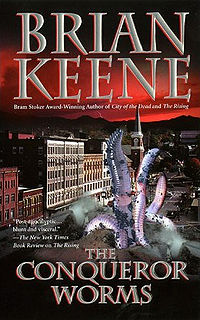
Though I didn’t write the post (yet), I did explore and read quite a number of books that looked at “The End”; one of those that caught my eye was Brian Keene’s The Conqueror Worms:

I have to admit, I expected something rather schlocky when I read the title of the book: it reminded me of many of the cheesy “creature feature” novels I read as a high school student, in which two-dimensional, indistinguishable characters get knocked off one by one by some sort of really absurd monster. (Cough cough Killer Crabs cough cough!)

What I got instead, was a book far more thoughtful — and with much more depth than I expected!  It turns out the title was quite misleading as to the tone of the book: Keene’s preferred title is Earthworm Gods, which was changed by the Dorchester Publishing Company for the first paperback edition.

Since then, Keene has had a falling out with Dorchester, and the book is scheduled to be rereleased (under Earthworm Gods) sometime in the near future by Deadite Press.  In light of this, I thought it would be an appropriate time to say a few words about Earthworm Gods

Continue reading

Posted in Horror | Leave a comment

Science Online 2012: A visit to the North Carolina Museum for Natural Sciences

The second of a series of posts chronicling my observations and experiences at Science Online 2012, which I attended last week.

I love museums!  My parents, especially my father, started taking me to science museums and zoos in the Chicago area from a very young age.  I grew up amongst such diverse distractions as dinosaurs, lunar landing modules, ancient Egyptian culture, and dolphin shows!

So when I had an opportunity to tour the North Carolina Museum of Natural Sciences in Rayleigh, NC during Science Online 2012, I jumped at the chance!  In fact, I had two chances: the conference reception was held in the museum on Thursday evening, and I signed up for a tour of the facility on Friday afternoon, including some fascinating behind-the-scenes peeks.

It is a wonderful museum, one which is in the process of completing a major expansion to be opened in April.  I thought I’d share some of the photos I took during the trip.

Continue reading

Posted in General science, Travel | 3 Comments

Science Online 2012: Weird and Wonderful Stories in the History of Science

This is the first of a series of posts summarizing my observations and experiences at Science Online 2012, which I attended last week.  

When I was starting out as a student of physics, most of the stories I heard about the history of physics were anecdotes about the eccentric behaviors of various famous figures.  There is so much more that we can learn from the history of science, however, and at the same time that we entertain people with stories from the past we can educate them about how science works.

This was, in essence, the idea behind a session co-moderated by myself and Brian Malow (Science Comedian) at Science Online 2012, “Weird and Wonderful Stories in the History of Science”.  We asked people to share their weird stories of science and tried to provide some thoughts on the lessons that those stories taught.  What follows is a rough transcript of the stories & events of the session.  At the end, we also had a bit of a discussion of books that tell excellent stories about historical science; a list of those books is provided at the end of the post!

Continue reading

Posted in History of science, Personal | 10 Comments

Weird science facts, January 18 — January 24

Been a quiet week on the blog, thanks to my participating in Science Online 2012, which was one of the most fun and interesting events ever!!! We’re back with Twitter #weirdscifacts, however, and this week includes a number of facts learned at the North Carolina Museum of Natural Sciences during a tour of their excellent facilities!  (I’ll have more to say about Science Online 2012 over the next few days.)  We also have one bonus fact this week that was too interesting not to share!

676. Jan 18: Cows kill more people nationally every year than sharks do worldwide.  This one came from Science Online keynote speaker Mireya Mayor!  (h/t @maggiekb1)

677. Jan 19: #weirdscifacts at a bar, via @SFriedScientist : no domestic turkeys can have sex!

678. Jan 20: Sea monsters: misidentified whale penises?  I’ve heard it speculated plausibly before that many sea serpents were misidentified giant squid, but this post by @scicurious give an… alternate… interpretation to some sightings!

679. Jan 21: #weirdscifacts via @naturalsciences: the shrimp Acanthephyra purpurea “vomits” bioluminescence to blind predators! (Post by @laelaps!)

680. Jan 22: The mysterious elliptical “Carolina Bays“, of not-quite-certain origin!  (h/t @naturalsciences)

681. Jan 23: #weirdscifacts of @naturalsciences: Bladderwort, a carnivorous plant that essentially vacuums up prey through roots!

682. Jan 24: #weirdscifacts via @naturalsciences: Red-cockaded woodpecker uses tree sap to make nests too sticky 4 snakes 2 enter!

682a. Bonus #weirdscifacts via @astVintageSpace: how to keep an astronaut from swearing on the Moon?  Communication with mission control was publicly broadcast — this was a problem when one astronaut was an uncontrollable cusser!

Posted in Weirdscifacts | Leave a comment

Weird science facts, January 11 — January 17

Still going strong on Twitter #weirdscifacts! This will likely be the last significant post of the week, due to my attending ScienceOnline 2012!

(I posted my facts one day late this week, in solidarity with those in opposition to the very stupid SOPA/PIPA bill, for what it’s worth.)

669. Jan 11: Teletanks: the radio-controlled Soviet tanks used during WWII!  With all the recent excitement and controversy about surveillance and predator drones, it is somewhat surprising to realize that remote controlled vehicles were used so long ago.  (h/t @tobascodagama)

670. Jan 12: Parrondo’s mathematical paradox, “a losing game-playing strategy that wins”.

671. Jan 13: Granular convection, aka “Brazil nut effect“: why the biggest nuts end up on top of the pile!

672. Jan 14: The 1953 Flint-Worcester tornados — blamed by congressmen on nuclear testing.  This horrific tragedy was the result of such atypical weather that congressman incorrectly blamed it on recent nuclear testing.  (h/t @patrickneville)

673. Jan 15: The Collatz conjecture: another odd and unproven mathematical hypothesis.  (h/t @patrickneville, again!)

674. Jan 16: Icebergs can melt enough to flip over, creating big waves! This is somewhat obvious, when you think about it — a sudden collapse of a side of an iceberg can upset its balance, making it flip over.  (h/t @discoveryplace)

675. Jan 17: While imprisoned, physicist Arago relied on monkeys to groom him & keep him lice-free.  Arago was captured by the Spanish while on a ship that was transporting exotic animals to Napoleon.  He was incarcerated in a broken windmill with the animals, but they turned out to provide an important service!  (from my blog post!)

Posted in Weirdscifacts | 2 Comments

The Giant’s Shoulders #43 is out — People, places & things!

The 43rd edition of the history of science blog carnival The Giant’s Shoulders is out today over at  The Dispersal of Darwin!  Go there to read about the people, places and things of the history of science, including:

  • Victorian poet scientists
  • Legends of “cursed” glaciers
  • A pictorial history of the mysterious wolverine (the animal, not the X-Man!)

Many thanks to Michael Barton for putting together an excellent and intriguing edition of the carnival!

We’re still desperately looking for future hosts of the carnival for the next few months!  I’m hoping, now that the holidays are behind us, that people will step forward to volunteer to host.  Please drop us a comment if you’re interested and/or send an email to one of the carnival managers.

Posted in General science, Science news | 2 Comments