What scientists in 1903 wanted for Christmas!

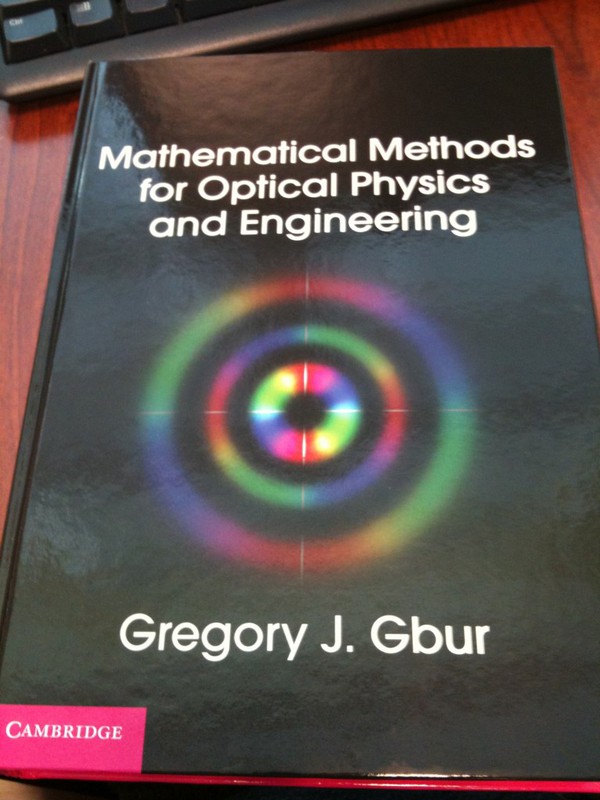
For most scientists, the arrival of new equipment can feel a lot like getting toys on Christmas day.  There’s the excitement of opening the package, the giddy thrill of discovery of what the equipment can do, followed by an almost frenzied period of time playing with it and figuring out how it works.  These days, I’m a theoretical physicist, so my thrills are limited to books, computers and software, but it is still a great feeling when new stuff arrives for me to work with.

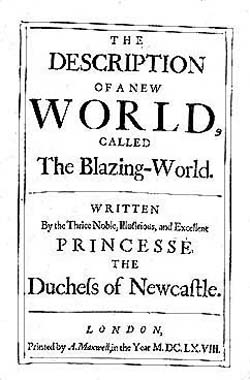
Recently, while I was looking for a paper published in Nature in 1903, I happened across a series of advertisements in a supplementary issue of the magazine.  These ads, clearly targeted towards those of a scientific persuasion, immediately fascinated me.  They provide a unique snapshot of not only the science of the time, but also the business of science at the time.  They illustrate what scientific discoveries were new and “hot” in the community, what kinds of equipment were popular enough to become commercial products, and what sort of jobs and services were available.  I thought I’d provide a survey of these advertisements, which probably are a good indication of what scientists at the beginning of the 20th century were hoping to find under the tree at Christmas!

Continue reading

Posted in History of science, Physics | 6 Comments

The Nature of Human Nature, by Carin Bondar

In recent months, I’ve been trying to make a more concerted effort to read and review the flurry of science books being published by the excellent bloggers and twitterers out there. A couple of months ago, I picked up Written in Stone by Brian Switek and The Nature of Human Nature by my Twitter pal and biologist Dr. Carin Bondar:

I reviewed Brian’s book at the beginning of November; I started Dr. Bondar’s book soon after but a heavy workload (and a perplexing and inexplicable desire to write a novel in a month) limited me to reading a short chapter roughly every few days.  Fortunately, the book is well-suited for that sort of schedule, as I note below.  I finished it the other day and thought I’d share a few thoughts on this very enjoyable and charming book!

Continue reading

Posted in Animals, General science | 5 Comments

Weird science facts, December 1-December 7

Here are the Twitter #weirdscifacts for December 1st through December 7th!

263. Dec 01: While developing the bubble chamber c. 1950, physicist Donald Glaser tested early prototypes filled with beer. Bubble chambers are used in high-energy physics to detect and trace the paths of subatomic particles.  They consist of a chamber of superheated liquid; this liquid forms bubbles when particles pass, allowing their tracks to be photographed.  If a magnetic field is applied to the system, the curved trajectories of the particles can be used to deduce their charges and momentum, as well.  Glaser needed a liquid with low surface tension to make this work, however, and beer was one option he tried.  “His experiments with beer left nothing but a stench in the room and raised a few eyebrows, he said. Instead, he filled the tubes with diethyl ether.”

264. Dec 02: Posted another #weirdscifacts for the day, but the arsenic bacteria deserve to be on the list! (@edyong209‘s post) The results are being disputed, however, so it will probably take some time before we know if this fact will stick!

264a. In 1966, physicist Luis Alvarez performed a photo analysis of the Kennedy assassination, improving on the FBI analysis. Alvarez became intrigued by the case after seeing photos of the assassination in LIFE magazine, and decided to investigate what could be learned from the film.

265. Dec 03: Alexander Graham Bell devised a metal detector to find the 2nd bullet that hit assassination target James Garfield in 1881. (Bell’s device failed to find the bullet, and instead detected the metal bed springs.)

266. Dec 04: Nightmare fodder: the goliath bird-eating spider.

267. Dec 05: Louis Slotin, and the horrifying criticality accident that killed him in 1946. Slotin was guiding an experiment in nuclear chain reactions when the slip of a screwdriver let two pieces of material come together to form a critical mass.  Slotin slapped away a piece, stopping the reaction, but he received a fatal dose of radiation in the process, dying 9 days later.

268. Dec 06: The singing sands! (This is an earlier post by @JenLucPiquant that I saved for a later fact!)

269. Dec 07: A popular mathematical puzzle goes back at least as far as ancient Egypt. (h/t @anthinpractice)

Posted in Weirdscifacts | Leave a comment

Editor’s selections: flying snakes, wormholes, metallic glasses and hungry crabs

skyskull “Dr. SkySkull” selects several notable posts each week from a miscellany of ResearchBlogging.org categories. He blogs at Skulls in the Stars.

Running a little late this evening — end of semester grading is overwhelming my days!  Here are my Monday’s selections, a little behind schedule:

  • The Flying Snake Portion of your Dissertation Work… Snakes are not the first thing that naturally comes to mind when one thinks of aerodynamics.  However, Scicurious at Neurotic Physiology discusses one of the most unusual sights of the animal kingdom — the “flying snake” — and the research done on its flight capabilities!
  • Searching for wormholes with general relativity. Wormholes are a staple of science fiction, but if they actually exist, how would we find them?  Greg Fish at weird things discusses the possibilities, and the rather gruesome possibilities that might result from journeying through a wormhole!
  • 50 years of metallic glasses. Under most natural conditions, metals form a nice crystalline structure.  In a lab, however, they can be made to take a glassy state — Joerg Haber of All That Matters explains how it is done, and what it is good for!
  • Cape Cod Crabs Consume Haline Hay. Where has all the haline hay gone?  Some careful scientific detective work has indicated that crabs are the culprit; Sam of Oceanographer’s Choice gives a clear explanation of the evidence so far, and what other questions should be answered.

Check back next week for more “miscellaneous” suggestions!

Posted in General science, Science news | Leave a comment

Re (not the sun god) hypothesizes a solar atom (1903)

ResearchBlogging.orgIt is fair to say that the decade surrounding the start of the 20th century was an amazingly perplexing time to be a physicist.  Mounting experimental evidence strongly suggested that something was amiss with classical physics, especially in the understanding of matter on the atomic level.  With the exception of a few tantalizing hints, however, almost nothing was known of atomic structure.

The lack of information led to a flurry of speculation.  In a post I wrote some time back, we discussed some eight hypothetical models of the atom that were introduced, many of them by the greatest scientists of the time.  I noted that there were three important clues to atomic structure that theoreticians had to work with:

  1. The presence of electrons.  It was well-known that atoms contained electrons.
  2. The periodic table.  Presumably any model of atoms would have to explain the regular structure of the periodic table.
  3. The Balmer/Rydberg formula.  Atoms were known to absorb and radiate light only at discrete frequencies.  In the 1880s Balmer and Rydberg developed an empirical formula that perfectly characterized the radiative spectrum of hydrogen, and closely matched other atoms.  An atomic model would need to explain this experimentally-observed interaction between light and matter.

There was at least one other very important clue to the nature of atoms that I did not mention in my earlier post: radioactivity.  Since the late 1800s, physicists and chemists were aware that certain heavy atoms could give off unusual radiation of a previously unknown nature.  Three types of radioactivity were observed, dubbed alpha, beta, and gamma rays.  Ultimately, a comprehensive description of the atom would have to explain why some atoms were radioactive and others were not.

At least one author drew his inspiration for atomic structure directly from the observation of radioactivity.  In 1903, Paris scientist Filippo Re wrote a short paper titled, “Hypothèse sur la nature des corps radioactifs,” in which he speculated that atoms coalesce from a cloud of constituent parts much like stars form from the condensation of gas in nebulae.  This model provides yet another fascinating insight into the thinking of physicists of the time, and we discuss Re’s entire paper here.

Continue reading

Posted in History of science, Physics | 10 Comments

Weird science facts, November 24-November 30

Here are the Twitter #weirdscifacts for November 24 through November 30th!

256. Nov 24: Stubbins Ffirth (1784-1820) sought to prove yellow fever not contagious by drinking undiluted vomit from sufferers. Can I get an “eeeeew”?  He actually began his experiments by rubbing vomit on cuts he made in his arms, progressed to frying it and inhaling the fumes, and eventually drinking it. Ffirth was *totally* wrong, however: he had used… samples… from late-stage patients who were no longer contagious.  In other words, he was lucky not to have killed himself.

257. Nov 25: The Sylacauga meteorite — the first documented extraterrestrial object known to injure a human being.

258. Nov 26: A species of squid comes very near to achieving flight! (Hat-tip to @DrCraigMc)

259. Nov 27: In 1803, Giovanni Aldini performed electrical experiments on an executed criminal that made spectators fear he was alive again! Convicted murderer George Forster’s body was provided to Aldini for experiments in Galvanism (the stimulation of muscles by electric current).  The January 18th, 1803 edition of the Newgate Calendar reports on the hanging of Forster and what followed:

He died very easy; and, after hanging the usual time, his body was cut down and conveyed to a house not far distant, where it was subjected to the galvanic process by Professor Aldini, under the inspection of Mr Keate, Mr Carpue and several other professional gentlemen. M. Aldini, who is the nephew of the discoverer of this most interesting science, showed the eminent and superior powers of galvanism to be far beyond any other stimulant in nature. On the first application of the process to the face, the jaws of the deceased criminal began to quiver, and the adjoining muscles were horribly contorted, and one eye was actually opened. In the subsequent part of the process the right hand was raised and clenched, and the legs and thighs were set in motion. Mr Pass, the beadle of the Surgeons’ Company, who was officially present during this experiment, was so alarmed that he died of fright soon after his return home.

Some of the uninformed bystanders thought that the wretched man was on the eve of being restored to life. This, however, was impossible, as several of his friends, who were under the scaffold, had violently pulled his legs, in order to put a more speedy termination to his sufferings. The experiment, in fact, was of a better use and tendency. Its object was to show the excitability of the human frame when this animal electricity was duly applied. In cases of drowning or suffocation it promised to be of the utmost use, by reviving the action of the lungs, and thereby rekindling the expiring spark of vitality. In cases of apoplexy, or disorders of the head, it offered also most encouraging prospects for the benefit of mankind.

The professor, we understand, had made use of galvanism also in several cases of insanity, and with complete success. It was the opinion of the first medical men that this discovery, if rightly managed and duly prosecuted, could not fail to be of great, and perhaps as yet unforeseen, utility.

Emphasis mine!

260. Nov 28: The Centennial Light: a lightbulb that has been burning almost continuously for 109 years.

261. Nov 29: The town that went mad (France, 1951), by Neuroskeptic.

262. Nov 30: c. 1903, chemist Soddy advocated inhaling *radium* as a cure for tuberculosis! To researchers of the time, radioactivity was practically a magical process, one that seemed to provide an almost limitless source of energy.  With this in mind, it is perhaps not surprising that people would think of it possessing healing power; it is surprising, however, that a chemist was the advocate!  For the record, radium is over 1 million times more radioactive than uranium — inhaling or ingesting it is a bad, bad idea.

Posted in Weirdscifacts | 2 Comments

ResearchBlogging editor’s selections: wishing on a dinosaur, the 4th down odds, the town that went mad, dead star navigation and deep-water sand dunes

skyskull “Dr. SkySkull” selects several notable posts each week from a miscellany of ResearchBlogging.org categories. He blogs at Skulls in the Stars.

Here in the U.S., we’re just coming off our Thanksgiving weekend; to celebrate, we’ve got a couple of Thanksgiving-themed posts in this week’s selections!

  • This Thanksgiving, Make a Wish on a Dinosaur. One Thanksgiving tradition is to make a wish off by breaking the wishbone of a Turkey.  Brian Switek of Laelaps uses this tradition to discuss how the discovery of clavicles in dinosaurs led to a greater acceptance of the bird/dinosaur connection.
  • Thanksgiving and Football: Why you should always go for it on 4th and short. Another big tradition is to sit and watch one or more football games before and after the Thanksgiving feast!  Brad Walters at Cortical Hemming and Hawing takes a look at a statistical study of football that suggests, contrary to common practice, that one should almost always go for it on the 4th down.
  • The Town That Went Mad. Everybody goes a little crazy over the Thanksgiving holiday, usually from dealing with relatives.  At his eponymous blog, Neuroskeptic looks at the curious case of a French town where, in 1951, a large number of people went literally psychotic.
  • Navigating by the (dead) stars. After the Thanksgiving feast comes the treacherous task of navigating oneself home (okay, I’m really stretching the Thanksgiving connection, now).  At we are all in the gutter, Niall explains how certain types of stars can be used to navigate spacecraft in a sort of cosmic-GPS.

Finally, did you know that sand dunes can be formed in really deep water?  Brian Romans at Clastic Detritus talks about fascinating deep-water sand dunes that have been found in the South China Sea.

Check back next week for more “miscellaneous” suggestions!

Posted in General science, Science news | Leave a comment

On scientists, cheerleaders, and rockstars

There’s been a lot of talk on scienceblogs over the past few weeks about the usefulness of a pair of science outreach programs: namely, “science cheerleaders” and “rockstars of science”.  The original “science cheerleader is Darlene Cavalier, who was inspired to start the “science cheerleaders” to improve scientific literacy, promote citizen scientists and inspire young girls to pursue STEM careers.  To get a sense for their activities, here’s a video of their recent performance at the U.S.A. Science and Engineering Festival:

The “Rockstars of Science” campaign is also geared towards promoting science; for the past two years, it has paired famous musicians with revolutionary researchers, in an effort to portray the researchers as “celebrities” in their own way:

The “Rockstars of Science” images were printed in GQ magazine in mid-November, thus sparking the recent discussion.

Lots has been said about these two campaigns, pro and con.  I don’t necessarily have anything completely new to add to the discussion (most of my initial thoughts have appeared in in bits and pieces in a variety of blog posts) but I wanted to write about the two campaigns anyway to show my (qualified) support for them.

Continue reading

Posted in ... the Hell?, General science | 24 Comments

I pwned NaNoWriMo… again!

I’m a winner in National Novel Writing Month!  For those who haven’t been following, I surrendered most of my free time in the month of November to write a 50,000 word novel.  I finished my word count ahead of schedule, completing 50,506 words late last night.

Of course, I have to display a winner’s badge on my blog:

I’m going to add a badge to the side column, as well!

The novel isn’t quite finished; I have about 3 chapters left to write of it, which I will complete in the next couple of months.  After that, I’ll look into rewriting and editing it extensively and, if that works out, possibly getting it published!

In the meantime, I’m looking forward to having evenings in which I don’t stay up past midnight writing.  Also, I’m going to get back to my regular science and weird fiction blogging starting immediately.  Among the things to tackle over the next couple of weeks:

  • Recent results in invisibility physics, including the idea of a “space-time cloak”
  • A post on yet another early speculative model of the atom
  • Some thoughts on science rockstars and cheerleaders
  • Reviews of a bunch of science-y books
  • A discussion of compressive sensing
  • An explanation of the rather mysterious Wood’s anomaly

Stay tuned!

Posted in Fiction, Personal | Tagged | 6 Comments

Call for hosts for The Giant’s Shoulders!

I noticed recently that, after December, we have no hosts lined up for the history of science blog carnival!  If you’re interested in hosting over the next few months, please leave a comment, or let one of the carnival managers, Dr. SkySkull or ThonyC, know!  (If you have a nice idea for a special edition of the carnival, let us know that, too!)

Posted in General science, Science news | 2 Comments