A trip to Savannah, Georgia

Last weekend, the wife and I celebrated our first-year wedding anniversary by taking a 3-day trip to Savannah, Georgia.  Savannah is one of those rare American cities that has maintained a significant portion of its historic neighborhood, and this neighborhood is highlighted by a large number of green open squares that were first planned when the city was founded in 1733.

Savannah is a rather hard city to photograph for a novice like myself: buildings are quite close together and there are a large number of very old trees, making it difficult to get nice scenic shots.  These same properties make it a very lovely area to walk and explore, however, and I thought I’d share some of the pictures I did manage to take, including shots of the wonderfully atmospheric Bonaventure Cemetery.
Continue reading

Posted in Cemetery, Travel | 3 Comments

ResearchBlogging editor’s selections: bilingual animals, horse-hunting hyenas, the nature of dark matter and toiletology

  • Bilingualism as a preadaptation for language. Can animals other than humans be “bilingual”?  This fascinating question is addressed in research described by Sean at The Adventures of Auck.
  • The horse-hunting hyenas of Srbsko Chlum-Komin Cave. We can learn a lot by studying what an animal eats — and what parts it eats!  Brian at Laelaps explains how the bone piles of ancient hyena dens tells us more than just what animals were hunted.
  • Dark matter confronts observations. In a detailed post, The Astronomist at his eponymous blog discusses theory and observation relating to the specific nature of dark matter.
  • Toiletology. What can the signs describing a toilet tell us about the inclusiveness of a society?  Ingrid at Language on the Move explains.

See y’all next Monday for more “miscellaneous” highlights!

Posted in General science, Science news | Leave a comment

The Shadowy Thing, by H.B. Drake

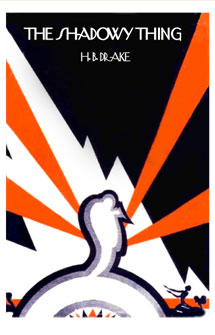
I’ve been having a lot of good luck with my fiction reading lately, and have a backlog of really good (and weird) fiction to blog about.  One that actually gave me a pleasant surprise is The Shadowy Thing (1928), by Henry Burgess Drake (1893-1964):

The Shadowy Thing is another in Hippocampus Press’ “Lovecraft’s Library” series, reprinting rare works of weird fiction that Lovecraft owned and thought highly of.   Though I’ve generally been very satisfied with books Lovecraft loved (The Metal Monster, The Place Called Dagon), it hasn’t always been the case (The Dark Chamber); I admit that I wasn’t particularly optimistic about Drake’s book.

My apprehensions were misplaced!  Once I started reading, I could hardly put down The Shadowy Thing: it is a compelling story with unrelenting tension that builds to a truly ghastly climax.

Continue reading

Posted in Horror, Lovecraft | Leave a comment

Singular Optics: Light chasing its own tail

(Title stolen shamelessly from my postdoctoral advisor, who I assume will forgive me.)

As I’ve noted numerous times in previous posts, one of the fundamental properties that characterizes wave behavior (i.e. that makes a wave a wave) is wave interference.  When two or more waves combine, they produce local regions of higher brightness (constructive interference) and lower brightness (destructive interference), the latter involving a partial or complete “cancellation” of the wave amplitude.

Researchers have long noted that the regions of complete destructive interference of wavefields, where the brightness goes exactly to zero, have a somewhat regular geometric structure, and that the wavefield itself has unusual behavior in the neighborhood of these zeros.   In the 1970s this structure and behavior was rigorously described mathematically, and further research on this and related phenomena has become its own subfield of optics known as singular optics.  Singular optics has introduced a minor “paradigm shift” of sorts to theoretical optics, in which researchers have learned that the most interesting parts of a light wave are often those places where there is the least amount of light!

In this post we’ll discuss the basic ideas of singular optics; to begin, however, we must point out that most people have the wrong idea of what a “typical” interference pattern looks like!

Continue reading

Posted in Optics | 29 Comments

12 days until The Leviathan’s Shoulders #23!

There’s 12 days left to submit entries for the 23rd installment of The Giant’s Shoulders, a special edition dubbed “The Leviathan’s Shoulders”!  It will be hosted by Kevin Zelnio over at Deep Sea News, and will be a special “oceans edition” of the carnival.  All ordinary entries will still be accepted, but bloggers are encouraged to submit posts on the history of science that deal specifically with oceans and ocean life!   Entries can be submitted through blogcarnival.com or directly to the host blog, as usual.

Posted in General science, Science news | Leave a comment

ResearchBlogging editor’s selections: Digital distractions, echos from a black hole, and peer-to-peer storage

  • Dealing With “Digital Distractions” in the Classroom. I’ve certainly wondered what the best approach is to students who are using laptops in the classroom!  Krystal at Anthropology in Practice asks whether a blanket ban on them is the right approach.
  • A blast from a black hole’s past. The black holes at the center of many galaxies are “active”, in that they give off tremendous amounts of energy; our galaxy’s black hole does not.  Has it always been that way?  Sarah at SarahAskew discusses observations of an “echo” that suggests that it has not!
  • Peer-to-peer data storage. Finally, David at Sciencetext talks about the ups and downs of using peer-to-peer communications as a system to store and protect data!

Check back next week for more “miscellaneous” selections!

Posted in General science, Science news | 2 Comments

ResearchBlogging editor’s selections: fair chimps, cataclysmic variables, and marine sharpshooters

Check back next week for more “miscellaneous” suggestions!

Posted in General science, Science news | Leave a comment

Mathematical Methods for Optical Physics and Engineering on Amazon!

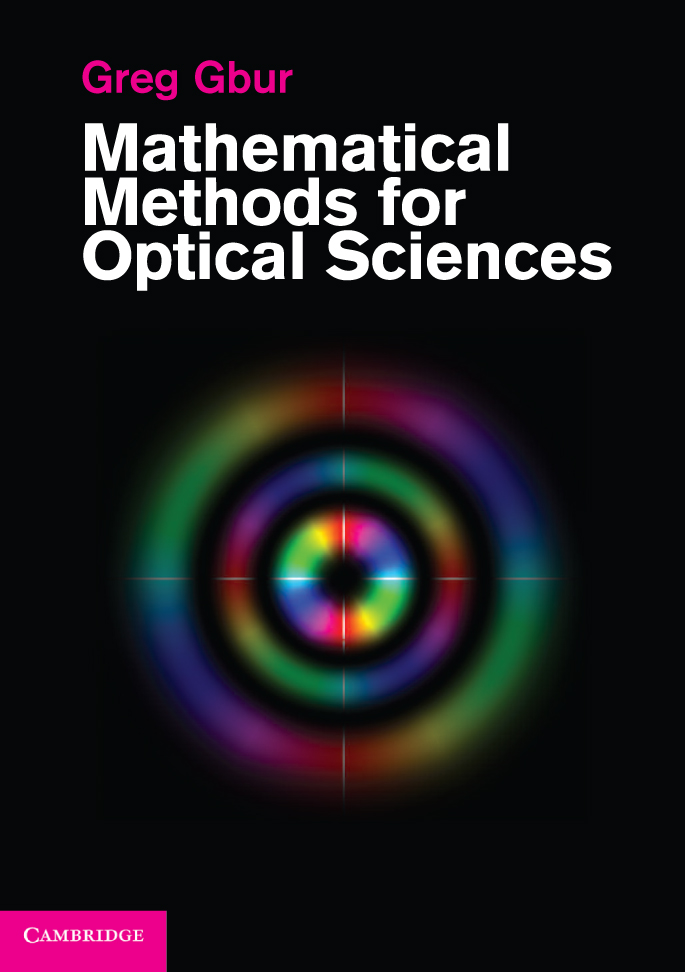
Couldn’t resist posting a short note that my textbook now has an Amazon page!  The cover image hasn’t been added yet, so I may have to take matters into my own hands and put it up myself:

Posted in Personal | 10 Comments

Richard Matheson’s Shadow on the Sun

No matter how much Richard Matheson I’ve read — and I’ve read a lot — it always turns out that there’s a bit more out there that I’ve managed to miss!

If you aren’t familiar with Richard Matheson‘s name, you’re nevertheless familiar with his work — starting in 1950, he has penned countless science fiction and horror tales, many of which have been filmed as major motion pictures and Twilight Zone episodes.  I did a “horror masters” post on him some time back, noting his most memorable works such as Duel, Nightmare at 20,000 Feet, I am Legend, and The Shrinking Man.  He also was a significant influence in the creation of The Night Stalker movies and television series in the 1970s, having penned the screenplay of the two films.

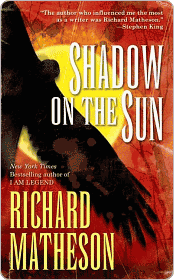
Matheson is a prolific writer who has written in many genres, but unfortunately many of his novels have been hard to find.  Recently, though, I stumbled across a reprint of a novel of his that I hadn’t read before, Shadow on the Sun (1994):

The novel was written during his “western” phase of writing in the 1990s, during which he wrote a number of novels about gunslingers.  Shadow on the Sun is set in the Wild West, but it is also a horror novel!

Continue reading

Posted in Horror | Leave a comment

ResearchBlogging editor’s selections: bulletproof T-shirts, spinning light, beauty for birds, and flocking folks

  • Bulletproof T-shirts? Who’da thought it was possible?  Christie over at Observations of a Nerd discusses recent successful attempts to “bulletproof” T-shirts!
  • Measuring the Angular Momentum of Light. Light can carry angular momentum, and therefore can impart a “twist” into objects it illuminates, but the effect is typically very weak.  Chad at Uncertain Principles discusses an experiment that successfully measured this light-field torque… which was done in the 1930s!
  • What Is Beauty? Your Kids’ Newest Art Critic.  Do animals have a sense for the artistic?  Jason at The Thoughtful Animal describes a study done to test whether pigeons can tell between good and bad art.
  • Why (and How) People of a Feather Flock Together.  We’ve all been stuck in crowds before, but science behind modeling such pedestrian traffic usually makes simplifying assumptions.  David at Mind Matters explains some new research that includes an important complicating factor: the tendency of people to travel in groups!

Check back next week for more “miscellaneous” selections!

Posted in General science, Science news | 4 Comments