Michael Faraday and the waterspouts (1814)

This week, one of the most fascinating/frightening videos to be posted online was of a waterspout that ran aground on a Brazilian beach, hurling debris and terrifying vacationers.  Weaker than the similar-looking tornadoes that appear over land, most waterspouts have speeds no greater than 50 miles per hour, though that is certainly fast enough to hurl debris and cause damage, injury, and possibly death.

Waterspouts on the beach of Kijkduin near The Hague, the Netherlands on 2006 August 27.  Photo by Skatebiker, released into public domain & available on Wikipedia.

Waterspouts on the beach of Kijkduin near The Hague, the Netherlands on 2006 August 27. Photo by Skatebiker, released into public domain & available on Wikipedia.

The video reminded me again of an event from the life of Michael Faraday, one of the most important researchers in the history of physics.  Faraday would make a number of fundamental contributions to science, including the discovery of electromagnetic induction as well as the link between magnetism and light.  Long before his fame, however, he wrote about waterspouts that he observed while traveling in Italy. I thought I would share his remarks, providing a little context as to his circumstances at the time.

Continue reading

Posted in History of science | Leave a comment

#365papers, part 3!

I’ve joined a group of folks on Twitter who have vowed to read roughly a paper a day for an entire year, and will summarize my reading here occasionally.  Part 1 can be read here, and part 2 can be read here.  Links are provided for those with university access who are interested in reading more.

One note: I’ve been using twitter, for the most part, to record which papers I’ve read, but I’ve been really bad at it!  In some cases, I’ve ended up “filling in” papers that I read to make up for those I’ve lost track of, and the dates between twitter and here may not always agree.

1/31: Rotational frequency shift, I. Bialynicki-Birula and Z. Bialynicka-Birula (1997).  I’ve mentioned the “angular Doppler effect” before, in which circularly polarized light undergoes a frequency shift when the source or detector is rotated.  It also turns out that vortex beams, with a “twist phase,” experience such a rotational shift as well!  This is something I’m gearing up to blog about in the near future.

2/1: Radiation pressure on a free liquid surface, A. Ashkin and J. M. Dziedzic (1973).  There is a long-running controversy in optics: does the momentum of light increase, or decrease, on entering a transparent medium?  We still don’t have a definite answer, but this paper in the 70s made an ingenious test.  By shining a beam of light onto a liquid from above, they found that the liquid bulged outward slightly, suggesting that the momentum increases.  Others have found other effects…

Continue reading

Posted in Optics | 1 Comment

Dr. SkySkull and the mystery of the subluminal superluminal light!

References in a scientific paper are supposed to answer questions, not raise them, but sometimes they inadvertently create a minor mystery for the reader.  A few weeks back, I blogged about the curious phenomenon of subluminal vacuum beams of light, i.e. pulsed beams of light that travel slower than the vacuum speed of light c = 3 × 108 meters/second even in vacuum.  One of the pulses beams tested experimentally, a so-called Bessel beam, has had its speed measured extensively in the past — however, the original paper* on the speed of a Bessel beam, published in 2000, refers to it as a superluminal beam of light!  This paper contains both theoretical and experimental work verifying their result, which I should say at the get-go is all correctly done.

There was no explanation in the subluminal paper for this discrepancy — how can a pulse of light moving slower than the vacuum speed c also be considered as moving faster than the vacuum speed c?  The answer leads us to some interesting aspects of Einstein’s special relativity as well as optics — Dr. SkySkull is on the case!

Continue reading

Posted in ... the Hell?, Optics | 5 Comments

Robert Aickman’s Dark Entries

It took me far longer than it should have, but I have finally read a collection of short stories by Robert Aickman (1914-1981).  Though the 1960s and 1970s, he published 48 supernatural tales, some of which are acknowledged as classics, that were collected in 8 volumes.  These collections were hard to find until last year, when new editions finally came out.  I picked up the first of these, Dark Entries, and devoured it last week.

darkentries

I was doubly intrigued to read Aickman’s work.  Not only is he highly regarded by some of the greatest weird fiction writers of our time such as Neil Gaiman, Ramsey Campbell and Peter Straub, he comes from an impressive lineage: his grandfather is none other than Richard Marsh, the master of the macabre that I’ve obsessively written about many times on this blog.

On this first outing, though, I have to admit that I was a little underwhelmed.  There are stories of undeniable brilliance, but an equal number of stories that I found primarily baffling.  Let’s summarize each of them…

Continue reading

Posted in Horror | 5 Comments

#365 papers, part 2!

I’ve joined a group of folks on Twitter who have vowed to read roughly a paper a day, and will summarize my reading here occasionally.  Part 1 can be read here.  Links are provided for those with university access who are interested in reading more.

1/12: Shadow effects in spiral phase contrast microscopy, A. Jesacher, S. Fürhapter, S. Bernet, and M. Ritsch-Marte (2005).  It turns out that filtering an image through an optical vortex phase mask performs excellent edge enhancement of the image!  In this paper, the authors demonstrate that this enhancement can be tweaked to provide directional “shadow effects,” allowing different edges to be selectively highlighted.

1/13: Radial Hilbert transform with Laguerre-Gaussian spatial filters, C-S. Guo, Y-J. Han, J-B. Xu, and J. Ding (2006). Obviously I’m working on the section of my book discussing using vortex masks for edge enhancement!  In this paper, the authors look at using Laguerre-Gaussian filters, which represent very “pure” vortex states, for this filtering.

1/14: Image processing with the radial Hilbert transform: theory and experiments, J.A. Davis, D.E. McNamara, D.M. Cottrell, and J. Campos (2000).  This was the first paper about using vortex filters for edge enhancement.

Continue reading

Posted in Optics, Personal | Leave a comment

So what’s up with that “slower than light” light?

Over the years, there has been a lot of hype about the possibility of “superluminal” light: namely, light than can travel faster than the vacuum speed of light c = 3\times 10^8 meters/second, which is overwhelmingly considered the absolute speed limit of the universe.  I’ve talked about superluminal light before, and the related discoveries always turn out to be somewhat less spectacular than they sound, though they always provide some strange insights into the physics of light.
Recently, though, an even stranger discovery has been making the rounds in the press*: an experiment performed by researchers in Glasgow and Edinburgh** shows that appropriately-prepared light particles (photons) can travel even slower than the vacuum speed of light — in vacuum!

Kind of like its superluminal siblings before it, this discovery has caused a bit of confusion.  In this post I’ll try and shed some light on the phenomenon, showing why it is both less and more than it appears.

Continue reading

Posted in Optics | 4 Comments

Null-field radiationless sources: even more invisible than invisible?

I spend a lot of time talking about invisibility on this blog, as it is a subject near and dear to me: I did my PhD work, completed in 2001, on early historical forms of invisibility.  I like to tell people that I’m an invisibility hipster, and that I worked on invisibility “before it was cool.”

The field has progressed dramatically since I first did my work, and in recent years I’ve been playing a bit of “catch up” with my own invisibility work, trying both to build on the newest insights as well as apply knowledge from the old theories.

This past fall, my student Elisa and I used this approach to ask and answer a curious question: can something be more invisible than invisible?

Our answer was published in a paper titled “Null-field radiationless sources,” that appeared in November in Optics Letters.*  Ordinary invisible objects, including cloaking devices, are objects that don’t scatter any light outside the domain of the object; a potential null-field object will potentially not scatter light inside, as well!

Continue reading

Posted in Invisibility, Optics | 1 Comment

#365papers, part 1!

At the beginning of this year, my friend Jacquelyn Gill (who blogs over at The Contemplative Mammoth) suggested an interesting resolution for academics like us: read at least one scientific paper a day for the entire year.  This has been hashtagged on twitter as #365papers and, as I am always up for the latest fad, I decided to join in.  I seem to be too unfocused to actually tweet details about each paper I read, so I thought I would summarize my reading every week or so right here, with a short description of what each paper is about!

So, without further ado… here’s part 1 of 365 papers!*

Continue reading

Posted in Physics | 3 Comments

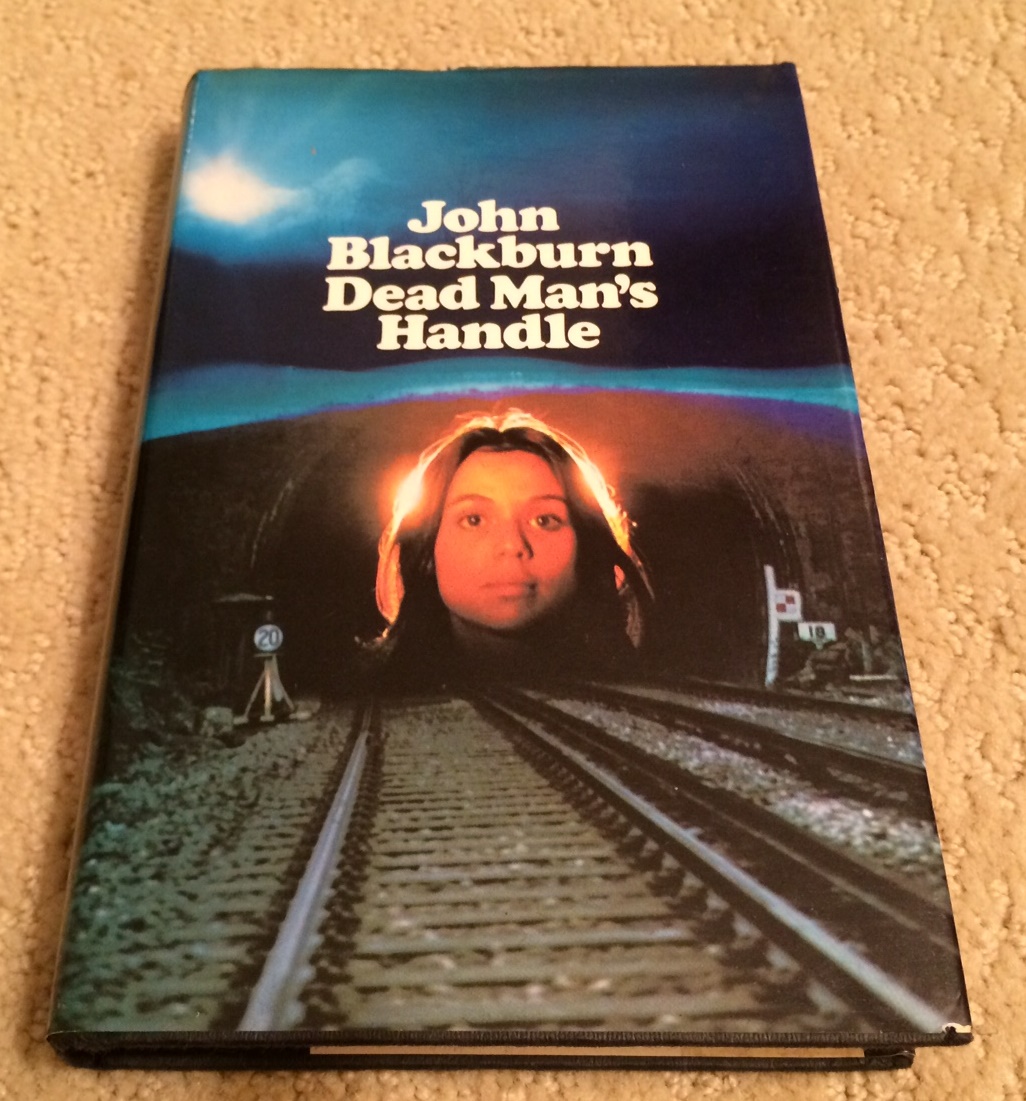
John Blackburn’s Dead Man’s Handle

This post marks a minor personal milestone: with the book featured in it, I have now read all of John Blackburn‘s published works.  I put off reading this one for quite some time for a reason that I’ll explain at the end of the post.  The novel, Dead Man’s Handle (1978), was written near the end of what I might call Blackburn’s “original” writing career.

deadmanshandle

Though Blackburn would publish four more books in his lifetime, the last two — A Book of the Dead (1984) and The Bad Penny (1985) are reworkings of his earlier novels, Blue Octavo (1967) and A Sour Apple Tree (1958), respectively.  After Dead Man’s Handle, his last truly new books were Sins of the Father (1979) and A Beastly Business (1982).

I mention this because there is a bit of a decline in the quality of his work near the end of his career, and this is one reason that I was somewhat slow to read this particular book.  However, it is a rather unique mixture of mystery and horror, with a truly ghastly twist at the end.

Continue reading

Posted in Horror, Mystery/thriller | Leave a comment

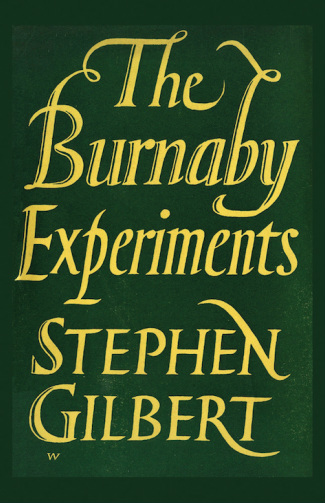
The Burnaby Experiments, by Stephen Gilbert

I really should be writing about novels other than those published by Valancourt Books, and I will, but they have released so many eye-catching books in recent years that I’ve had a hard time staying away.  Most recently, I read their edition of The Burnaby Experiments (1952), by Stephen Gilbert.

burnabyexperiments

The goal of the titular experiments is likely familiar to those who have experienced a lot of horror and science fiction: to find out what lies beyond death.  You may have seen the movie Flatliners in 1990, for instance, or read the 1993 novel The Terminal Experiment by Robert Sawyer.  Or, like me, you may have independently written a story based on the same theme years earlier.

Gilbert’s novel offers a unique and very personal take on the concept, however.  In fact it is semi-autobiographical, and the implications of that subtext are perhaps more disturbing than the actual story at times.

Continue reading

Posted in Horror | Leave a comment