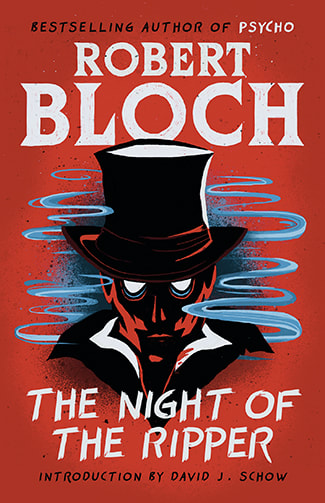
Ms. Adventure, by Jess Phoenix

Book 22 of 26 books for 2024! I made my secondary goal for the year, considering I fell short of my original goal. However, for 2025, I think I’ll aim for 30 books, to push myself…

One thing I love about social media is learning about the lives and work of researchers in different fields and with different life experiences from my own. One person whose career I’ve followed with interest for years is Jess Phoenix, volcanologist and advocate for science and representation in science. Somehow I missed that her memoir Ms. Adventure was published in 2021, and once I found out I immediately snapped it up.

Ms. Adventure explores the development of Phoenix’s career through the lens of major research expeditions that she has participated in, starting with an undergraduate trip to Death Valley and ending with a 2015 documentary trip to a violently active volcano in Ecuador. Along the way, we learn about the challenges and dangers of geological fieldwork and learn a lot about geology as well, as Phoenix explains the research that was being done and the science behind it.

The book carries its share of drama, as well! Fieldwork can be quite dangerous and Phoenix shares all of her, well, misadventures and injuries and mistakes along the way. She even talks about her early struggles with college as a history major and how she nearly dropped out entirely. I found this refreshing because very few people seem to realize how many successful scientists had some sort of existential career struggle at some point in their career. For me, I like to point out that I nearly failed algebra in junior high school, and at that time there was no evidence that I would eventually become a theoretical physicist!

The dangers of fieldwork are not only associated with natural phenomena. Phoenix talks about how her expeditions have had run-ins with horse thieves and drug cartels, and it is a fascinating reminder that even in the wildest parts of nature the human element has to be weighed as part of the risks.

The penultimate chapter, describing Phoenix’s participation in a Discovery Channel documentary about volcano research, is quite eye-opening as to how such shows are made, often without any significant regard for the actual research being done. She talks quite openly about how she and the other cast members were pressured into participating in staged drama and how they had to fight back and negotiate in order to make the resulting program actually a fair and educational representation of the work they do. (It is also good information for me in case I am ever asked to participate in anything of the sort, though I doubt I will!)

Overall, Ms. Adventure is a fascinating memoir of the life of a fascinating and outstanding researcher, and it is worth reading to learn more about science and the often difficult ways it has to be done. It is also a great book to share with any young women in your life who are contemplating whether or not they can or should get involved in science!

Posted in Women in science | Tagged , , , , | Leave a comment

Twelve Tales of Suspense and the Supernatural, by Davis Grubb

Book 21 of 26 books for 2024! I should be able to reach 22, maybe 23, because I can read a book every 2 days, roughly…

I was browsing my shelves for books to read that wouldn’t take that much time, and found this gem I had forgotten purchasing at all: Twelve Tales of Suspense and the Supernatural, by Davis Grubb (1965).

I don’t even remember when I bought this, but I can see why I bought it: the author is Davis Grubb, who is best known for writing the 1953 novel The Night of the Hunter that was made into an absolute classic movie by Charles Laughton in 1955. Having never read Grubb’s work before, I was curious if his short stories would live up to the power of the movie I had seen, and the answer is: not quite, but I still enjoyed the read!

Continue reading
Posted in Mystery/thriller, Weird fiction | Tagged , , , , | 2 Comments

Hiero’s Journey, by Sterling E. Lanier

Book 20 of 26 books for 2024! I should be able to reach 22, because I can read a book every 2 days, roughly…

This one caught my eye a while back while I was browsing my favorite vintage gaming store site, Wayne’s Books, and after a few moments of hesitation, I had to snap it up! The book is Hiero’s Journey (1973), by Sterling E. Lanier, and my copy is a 1983 edition.

The cover is quite accurate! It features a protagonist, Hiero, who rides what amounts to a giant moose and is friends with an intelligent bear. The book is a pure tale of adventure with incredible worldbuilding and real heart. By the time I finished, I was fully invested in Hiero’s quest and the well-being of him and his associates.

The book is also of great significance in the history of Dungeons & Dragons, though we’ll come to that in a moment…

Continue reading
Posted in Fantasy fiction, Robert E. Howard | Tagged , , , , | 3 Comments

The Citadel of Fear, by Francis Stevens

Book 19 of 26 books for 2024! Can I reach 22 before year’s end?

I definitely underestimated Francis Stevens on this one. Stevens was the pseudonym of Gertrude Barrows Bennett (1884-1948), an author of fiction that now tends to fall under the label of “dark fantasy.” Quite a long time ago, I read a complete collection of her short fiction and followed up with her 1920 novel Claimed!, about a man who stubbornly refuses to return the possession of a dark power of the seas. Looking back on those blog posts, that were written some 15 years ago, I found Stevens’ work enjoyable but not exceptional. At the same time, I picked up a vintage copy of her novel The Citadel of Fear, first published in 1920, but somehow didn’t get around to reading it at the time. You can see from the gorgeous cover art why this 1970 edition of the book caught my eye.

As I started the novel, I was initially unimpressed, perhaps distantly remembering my views of previous works of Stevens that I had read. It begins like a rather familiar “lost civilization” pulp adventure story, but then transforms into something… quite different. And clever. And even powerful!

Continue reading
Posted in Horror, Lovecraft | Tagged , , , , | 1 Comment

Gwen in Green, by Hugh Zachary

Book 18 of 26 books for 2024! Maybe I’ll make at least 22…

Valancourt Books has been doing a great literary service by reprinting “Paperbacks from Hell” such as Carnosaur, and I’ve been reading as many of them as I can reasonable handle. One that I picked up some time ago and had not yet gotten around to is Gwen in Green, by Hugh Zachary, first published in 1974.

As they often do, Valancourt also used the original cover art for the book, which is actually pretty accurate and telling about the novel itself!

Continue reading
Posted in Horror | Tagged , , | Leave a comment

The Case Against Satan, by Ray Russell

Book 17 of 26 books for 2024! Hoping to hit 20.

I think everyone on the planet is familiar with William Peter Blatty’s 1971 novel The Exorcist and the William Friedkin-directed 1973 adaptation, which is widely considered one of the greatest horror movies of all time and inspired countless others. But did you know that there was an earlier novel about two priests fighting to exorcise a demon from a young woman, written by Ray Russell? Let me talk about The Cast Against Satan, which was first published in 1962.

This particular Penguin edition was released in 2015, with a foreword by the incomparable Laird Barron, but it took me ages to get around to reading it.

Continue reading
Posted in Horror | Tagged , , , | Leave a comment

Raft, by Stephen Baxter

Book 16 of 26 books for 2024! Still aiming for 20.

There’s a series of works published by Orion Publishing Group known as SF Masterworks, and it has been going since 1999 and so far has nearly two hundred unique titles. As the name suggests, the books are all classic works of science fiction, and though the list includes many famous titles, it also includes works of lesser-known authors, and it has been a joy to discover some really excellent books through the series.

The one that most recently caught my eye was Raft, by Stephen Baxter, which was his debut novel, first published in 1991 and expanded from a short story he wrote in 1989. The SF Masterworks edition was published in 2018.

The premise of the novel is a fascinating one, and the elevator pitch goes something like this: Some 500 years ago, a spaceship from Earth accidentally passed into a parallel universe where the force of gravity is a billion times greater than in our universe. The force largely tore their massive ship to pieces, and now the descendants of the original survivors live on small “islands” of matter, eking out an existence trading with each other. There is the Raft, the main hub of civilization, built around the ruins of the original starship, and there is the Belt, a ring of habitations orbiting around a small burned out star from which they extract precious iron. These habitations reside within a nebula filled with air, meaning that humans can travel without life support between destinations; this travel is done on flying trees native to the nebula.

Rees has lived his whole life as a miner on the Belt, prevented from traveling to the Raft due to the strict class hierarchy of their society. He has always been curious and clever, however, so when a chance to escape does arise, he takes it, going in search of answers to a question that has haunted him — why is the nebula dying, and what can humanity do to save itself?

Continue reading
Posted in Science fiction | Leave a comment

The Opener of the Way, by Robert Bloch

Book 15 of 26 books for 2024! Still aiming for 20.

Valancourt Books, of who I am a huge fan of, continues to impress with quality editions of quality authors. Recently, they have started reprinting the works of horror master Robert Bloch, best known for writing Psycho, which led to the famous Hitchcock movie. Fans of horror fiction probably love him best for his weird horror short stories, which includes cosmic horror in the vein of H.P. Lovecraft. Bloch corresponded with Lovecraft regularly until the latter’s death, and Lovecraft served as a mentor to the young Bloch.

The Opener of the Way was the first published collection of Bloch’s stories, originally released by Arkham House in 1945. The Valancourt edition, featuring a new introduction by horror great Ramsey Campbell and an eye-catching new cover, was just released in fall of 2024.

The book features 22 stories from Bloch’s early career, and I do mean early: he started writing professionally at age 17 and the collection came out when he was 28. The stories are very rough and arguably unpolished, but they also represent some of Bloch’s most imaginative work, when he was experimenting with a variety of story types and styles.

Continue reading
Posted in Horror, Lovecraft | Leave a comment

Life Lessons From Historical Women, by Eleanor Morton

Book 14 of 26 books for 2024! Still aiming to get to at least 20 for the year, which would be a triumph considering this year.

The first thought that I had when I finished reading Eleanor Morton’s Life Lessons From Historical Women? I thought: Eleanor Morton is a good person.

This may seem somewhat like an odd thought to have after reading a book written by a professional comedian, and the book is indeed very funny, but it is also an extremely moving tribute to all those women out there, past and present, who are changing their world for the better, in large ways and small. Morton’s compassion stands out on every page, as does her willingness to connect the struggles these historical women faced with modern day oppression.

And, again, let me say that the book is also very funny.

Continue reading
Posted in History, Women in science | Leave a comment

My tips for scientific conference presentations

This semester, I decided to replace the final exam in one of my upper-level graduate courses with a short 15 minute presentation on a scientific paper related to the course topic. To give the students some guidance, I provided a list of my tips for given short conference presentations, and I thought: why not share it here? Then at least I will have an easy place to point students in the future. At this point, I have about 30 years of experience giving presentations at conferences and elsewhere, so hopefully this information will turn out to be useful.

If you’re not interested in tips for scientific presentations, you can safely ignore this post. 🙂

Guiding principle #1: A 15-minute conference presentation is not intended to give detailed information, it is more of an advertisement. You want to provide enough information for the audience to understand “Why was this work done?” (background), “How was it done?” (methods), “What did we learn?” (results). Your goal is to convince the audience that they should go read your printed publication on the subject, where they can get all the details.

Guiding principle #2: You should structure your presentation like you are telling a story. There should be a narrative flow throughout the presentation that leads the audience naturally from slide to slide. One way I’ve put it in the past is that every slide should ask a question that the next slide answers. Even many professional scientists will give a talk as a list of isolated results with no strong connection between them. Constructing the talk with the “ask a question/answer a question” approach to building your slide deck will give the slides a natural flow and avoid awkward pauses where you look at the next slide and try to remember why you put it there at all.

Beyond those guiding principles, here’s a list of random tips to keep in mind:

Continue reading
Posted in Personal, Physics | 2 Comments