“Moon? What Moon? Never seen it.” (c. 1804)

I risk dipping too often into the well of the life of François Arago, but this evening during my lecture I had to share an anecdote from his autobiography, and thought it was worth sharing here as well!

At the end of 1803, Arago entered the Polytechnic School at the age of 17 with the intention of becoming an artilleryman.  The science and math-based curriculum was challenging, but the students were generally up to the challenge.  More so apparently, in some cases, than the professors running the class.  From Arago’s autobiography:

When a professor has lost consideration, without which it is impossible for him to do well, they allow themselves to insult him to an incredible extent. Of this I will cite a single specimen.

A pupil, M. Leboullenger, met one evening in company this same M. Hassenfratz, and had a discussion with him. When he re-entered the school in the morning, he mentioned this circumstance to us. ” Be on your guard,” said one of our comrades to him; “you will be interrogated this evening. Play with caution, for the professor has certainly prepared some great difficulties so as to cause laughter at your expense.”

Our anticipations were not mistaken. Scarcely had the pupils arrived in the amphitheatre, when M. Hassenfratz called to M. Leboullenger, who came to the board.

“M. Leboullenger,” said the professor to him, “you have seen the moon?” “No, sir.” “How, sir! you say that you have never seen the moon?” “I can only repeat my answer – no, sir.” Beside himself, and seeing his prey escape him, by means of this unexpected answer, M. Hassenfratz addressed himself to the inspector charged with the observance of order that day, and said to him, “Sir, there is M. Leboullenger who pretends never to have seen the moon.” “What would you wish me to do?” stoically replied M. Le Brun. Repulsed on this side, the professor turned once more towards M. Leboullenger, who remained calm and earnest in the midst of the unspeakable amusement of the whole amphitheatre, and cried out with undisguised anger, “You persist in maintaining that you have never seen the moon?” “Sir,” returned the pupil, “I should deceive you if I told you that I had not heard it spoken of, but I have never seen it.”  “Sir, return to your place.”

After this scene, M. Hassenfratz was but a professor in name; his teaching could no longer be of any use.

I mentioned this anecdote in class today because the class was catching a lot of my mistakes on the board and was otherwise quite engaged in what I was talking about!  After they caught the third or fourth error, I noted that I was worried that I was losing their respect, and shared Arago’s story.  It was a great lecture, though — I had a lot of fun and the class and I laughed a lot!
Posted in ... the Hell?, History of science | 1 Comment

Augustin-Jean Fresnel’s early years

I posted this on Google+ earlier, but it seemed worthwhile to expand it into a blog post.

Augustin-Jean Fresnel (1788-1827) is, in my opinion, one of the underappreciated giants in optical physics.  Though Thomas Young’s double slit experiment was the first one to demonstrate the wave nature of light, it was the later efforts of Fresnel that put the wave properties of light on firm theoretical footing and really popularized the idea.

The famous and important part of Fresnel’s life involves the 1819 Prize Contest of the Académie des Sciences.  At that point, most scientists were still convinced that light was fundamentally a particle, not a wave, phenomenon; the prize committee was so convinced that they posed as the prize question an explanation of diffraction, fully expecting someone to propose a corpuscular explanation that would vindicate their views.  Fresnel, however, explained the observed diffraction phenomena using his painstakingly-formulated wave theory.  One of the members of the committee, Poisson, argued that Fresnel’s theory predicted an impossible result: a bright spot of light in the direct shadow of an opaque disk.    Fresnel’s friend Arago did the experiment, however, and confirmed that “Arago’s spot” in fact does occur!  This dramatic demonstration marked the turning point in scientific opinion in favor of the wave theory of light.

Having had such a powerful influence on the world of science, one might expect that Fresnel had an auspicious youth — however, is only partly true!  After Fresnel’s passing, his good friend François Arago wrote a biography of him and presented it at the 1830 meeting of the Académie; it includes the following striking passage.

Augustine John Fresnel was born the 10th of May, 1788, at Broglie, near Bernay, in that part of the ancient province of Normandy which now forms the department of Eure. His father was an architect, and in this quality had been entrusted by the military engineer with the construction of the Fort of Querqueville, at one of the extremities of the harbour of Cherbourg; but the revolutionary storm having forced him to abandon this work, he retired with all his family to a moderate property which he owned near Caen, at Matthieu, a little village which already was not without some notoriety, being the birthplace of the poet John Marot, father of the celebrated Clement.  Madame Fresnel, whose family name (Mérimée) was also to become one day dear to literature and the arts, was endowed with the most happy qualities of heart and mind; the solid and varied instruction which she had received in her youth enabled her to assist actively, during eight consecutive years, in the efforts which her husband made for the education of their four children. The progress of the eldest son was brilliant and rapid. Augustine, on the contrary. advanced extremely slowly in his studies; at eight years of age he could scarcely read. This want of success might be attributable to the very delicate condition of the young scholar, and to the precautions which it rendered necessary; but it will be still better understood when it is known that Fresnel never had any taste for the study of languages; that he always set very little value on the exercises which address themselves solely to the memory; that his own, which was moreover very rebellious generally, refused almost absolutely to retain words from the moment that they were detached from a clear argument and displaced in arrangement: I must also own, without hesitation, that those whose predictions concerning the future of a child are founded on the precise estimate of the first places which he obtained at the college, in theme or in translation, would never have imagined that Augustine Fresnel would become one of the most distinguished savants of our epoch. As to his young comrades, they had, on the contrary, judged with that sagacity which rarely deceives them: they called him “the genius.” This pompous title was unanimously accorded him on account of the experimental researches (I may be allowed this expression, it is but just) to which he devoted himself at the age of nine years, whether for determining the relative length and bore which give the greatest power to the little elder-wood popguns which children use in their play, or in determining which are the woods, dry or green, which are best to use in making bows, under the double consideration of elasticity and strength. The physicist of nine years old had, indeed, executed this little work with so much success, that the toys, hitherto very inoffensive, had become dangerous arms, which he had the honour of seeing proscribed by an express resolution of the assembled parents of all the combatants.

I’ve emphasized two passages here.  The first: Fresnel, later to be a paradigm-shifting theoretical physicist, could hardly read at age eight!  Though I would not presume that I am on the same level as Fresnel, I’m reminded of the fact that I nearly failed algebra in junior high, but nevertheless am now a theoretical physicist myself.

The second passage demonstrates that genius can manifest itself in many different ways:  the young Fresnel managed to “improve” the toys of his youth so well that the neighborhood parents needed to ban the weaponry!

Fresnel is yet another example demonstrating that one should not look for intelligence in too narrow a manner.  The next revolution in science may come from anyone, with any sort of unusual background.

Posted in History of science, Optics | Leave a comment

The Giant’s Shoulders #44 — The Grand Bazaar Edition — is now up!

The 44th edition of The Giant’s Shoulders, the history of science blog carnival, is up over at The Renaissance Mathematicus! In it, you can read about:

  • The tale of the first woman to go around the world — in the guise of a man!
  • The use of scientific knowledge of poisoning in early detective novels,
  • A Vitruvian man earlier than Leonardo’s!

Thanks to Thony Christie for a great edition!  

Next edition of the carnival will be hosted right here, at Skulls in the Stars, hosted by moi!  Entries are due on the 15th of March, and can be submitted via blogcarnival.com, or directly to the host blog.

Posted in General science, Science news | Leave a comment

What a scientist looks like! (Also on Scientific American)

One of the neat things that has evolved out of the recently-concluded Science Online 2012 is the new site “This is What a Scientist Looks Like“.  Founded by the excellent Allie Wilkinson, the site solicits photos and descriptions of scientists that challenge the stereotypical perception that all scientists are old white dudes with no hair wearing lab coats and carrying test tubes!

The site has been getting quite a bit of positive attention, and yesterday it was featured in an article on Scientific American’s website, including a picture of: me!  Jumping out of a hot air balloon!

Check out the Scientific American article, as well as the main site.  Scientists are a pretty diverse bunch, in gender, age, race, activities — and hair color!

Posted in General science, Personal | Leave a comment

Weird science facts, February 8 — February 14

This week was an eventful one!  I was at Disney World with my wife, so one of our facts is about roller coaster history.  In honor of the memory of Whitney Houston, I posted a musical fact. For Valentine’s Day, I found an… um… sexual organ related fact…

697. Feb 08: From the annals of weird inventions: rose-colored eyeglasses for chickens!  I learned about these on the reality show Storage Wars, when Barry Weiss came across some in a storage locker he purchased.  The glasses are intended to keep the chickens from cannibalizing each other at the sight of blood.

698. Feb 09: The supersoaker was invented by a rocket scientist! (h/t @MiriamGoldste)

698a. The 1948 Donora industrial smog, which killed 20 and helped spark the clean air movement.  Before this incident, the public seems to have been unaware of the possibility of man-made fatal environmental disaster on a grand scale.

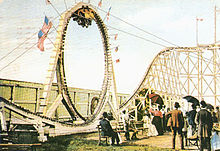
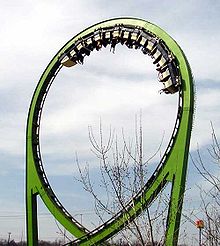
699. Feb 10: Early 1903 looping roller coaster, Flip-Flap Railway, produced 12 G’s and snapped some rider’s necks.  Modern looping coasters have a “clothoid” shape, like an inverted tear drop, with relatively wide curve at the bottom and a sharp curve at top (images via Wikipedia):

 The reason for this is elementary physics: in order for a roller coaster car to successfully clear the top of an ordinary circular loop, such as the Flip-Flap Railway (shown below), the rider must be exposed to incredibly high, even fatal, G-forces at the bottom.  By widening the entrance curve at the bottom of the loop, the forces are reduced to a safe level.

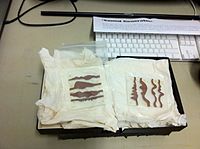
700. Feb 11: The “drawn sound” technique of music synthesis, oramics, invented by Daphne Oram.  “Oramics” involves drawing images on 35mm film as a “mask” of transmitted light; the light is received by photocells that interpret the result as sound.  A picture of such “drawn sound” is shown below (via Wikipedia):

701. Feb 12: Archaeologists strike gold in quest to find Queen of Sheba’s wealth!  (Via @BoneGirlPhD)

702. Feb 13: The 2008 destruction by the inadvertent draining of Lake Delton.  (One of many videos can be watched here.)

703. Feb 14: “Angel lust”, otherwise known as a “death erection“.  I had known for years about the possibility of a hanged man producing an erection, but I had not until now considered how odd it is from a scientific point of view.  (h/t @arthurpdent42)

Posted in Weirdscifacts | Leave a comment

Weird science facts, February 1 — February 7

ATTACK OF THE ANOTHER WEEK OF TWITTER #WEIRDSCIFACTS!!!

690. Feb 01: Atolla wyvillei, the deep-sea jelly that use bioluminescence to “scream” for help when attacked!  Bioluminescence is used in many different ways in the ocean, but the most unusual is perhaps this jelly’s strategy!  When attacked, it flashes frantically, hoping to draw a predator that will eat its attacker.

691. Feb 02: Case of hypothermic man, 2 hours in cardiac arrest, resuscitated, no neuro deficits.  We are used to the idea that a person has minutes, at most, to live when their heart stops.  When “preserved” at low temperature, however, people can survive extended periods with no circulation, and still come out with no lasting neurological damage. (h/t @msbellows)

692. Feb 03: Butterflies want to drink your blood, sweat & tears. (Post by @maggiekb1)

693. Feb 04: The saga of M.L. Humason, who went from mule skinner & janitor to observational astronomer!  (via @brx0)

694. Feb 05: Many owls have asymmetric ear size & placement, allowing better prey location. (This fact was posted in honor of #SuperbOwlFacts!)

695. Feb 06: The world’s oldest living organism lives in the Mediterranean.  (h/t @jacquelyngill)

696. Feb 07: The sex-changing frog, the chemical company, and the trash-talking scientist.  (via @motherjones)

Posted in Weirdscifacts | 2 Comments

“The Further Adventures of Sherlock Holmes: The War of the Worlds”, by Manly and Wade Wellman

These days, there are countless “mashups” in fiction, in which two or more disparate genres, characters or series are brought together or into conflict.  We’ve seen werewolves versus vampires, such as in the Underworld series of films; we’ve also seen Pride and Prejudice and Zombies, Abe Lincoln: Vampire Hunter, and Sherlock Holmes versus Cthulhu, in Shadows Over Baker Street.

Mashups seem to have become exceedingly common in recent years, but it is worth noting that they have been around for quite some time!  One that caught my eye in recent months is The Further Adventures of Sherlock Holmes: The War of the Worlds (to be called FASHWW for brevity), written by Manly Wade Wellman and his son Wade Wellman and released in book form in 1975:

The title pretty much makes it obvious, but nevertheless I will explain the premise of the book: Arthur Conan Doyle’s Sherlock Holmes is present when the “Martians” from H.G. Wells’ War of the Worlds attack, and he sets himself against them!  Is it a titanic battle of mind versus monster?  We shall see…

Continue reading

Posted in Mystery/thriller, Science fiction | 7 Comments

1813: Faraday learns about the politics of science

Those of us in science like to envision our profession as a noble (“Nobel”?) calling, above the petty squabbles that taint other endeavors.  The reality, of course, is that science is susceptible to politics just like any other field.  One can argue that, as a community, we tend to rise above such things in the end, but each of us inevitably has some sort of eye-opening introduction to political ploys.

I remember my own very well: while I was still a graduate student in high-energy physics, I was sitting next to my advisor listening to various students and postdocs present their research to the overall collaboration.  Most talks went smoothly and uncontested, but when my advisor’s postdoc presented, he was bombarded with an extended series of almost hostile questions.  I leaned over and asked my advisor why the postdoc was getting such a hard time.  My advisor replied, in essence, “One answer is that this is an important result and everyone wants to make sure we get it right.  Another answer is that I’m his advisor.”

Even the greats have had their moments when their idealistic views were first tempered by a dose of cynical reality.  A particularly amusing anecdote is related to the great physicist and chemist Michael Faraday (1791-1867), when he first applied for a position with the famous chemist Humphry Davy.

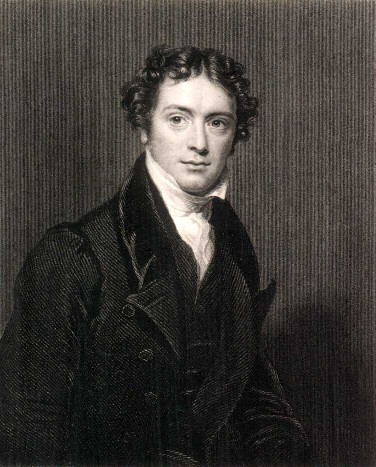
Michael Faraday in 1829

Continue reading

Posted in ... the Hell?, History of science | 20 Comments

Science Online 2012: The Music Video!

As you may have heard, two weeks ago I was attending Science Online 2012, a meeting of online science communicators and one of the most fun events I’ve ever attended!  Period.

To commemorate the event, Carin Bondar of PsiVid and carinbondar.com (and genuinely wonderful person) put together an incredibly awesome video of the fun being had!  You can watch the video on the PsiVid site; pretty much all of the Science Online folks have certainly seen it but I wanted to share it with those readers of the blog who may not have come across it.

(I didn’t embed the YouTube video directly because I want to give Carin the pageviews at her blog!)

If you want to look for me, I appear 3 times briefly in the video, most conspicuously as “The Thinker” early on!

Posted in Personal | Leave a comment

Weird science facts, January 25 — January 31

Time for another week of Twitter #weirdscifacts!  This week I wrapped up some facts about the North Carolina Museum for Natural Sciences and started some facts gleaned from Discovery Place’s “Mummies of the World” exhibit!  We also have a bonus fact!

683. Jan 25: #weirdscifacts via @naturalsciences: Longleaf pines undergo a growth spurt to “get above” brush fires.  These pines depend on brush fires to survive, but must grow rapidly to escape the fire-susceptible sapling stage.

683a. Titanoboa, the extinct mega-snake!!! Unfortunately, titanoboa went extinct before it could eat Jon Voight (for real). (h/t @laelaps)

684. Jan 26: The Russian “water computer” of 1936!  This computer was built to solve partial differential equations; if the technique had persisted for long enough, we might be referring to “computer bugs” instead as “computer clogs”.  (h/t @jenlucpiquant)

685. Jan 27: #weirdscifacts via @naturalsciences: Female tree bats mate in fall, but don’t fertilize eggs until after hibernation, in spring!  It requires a lot of energy in order to hibernate with an actual baby on the way, so the female bat simply stores the male’s semen until spring.

686. Jan 28: Final #weirdscifacts via @naturalsciences: the hellbender salamander, which “breathes” through its skin!  The salamander has lungs, but it spends most of its time underwater and breathing through its skin.

687. Jan 29: Why swim when you can walk? The odd locomotion of the handfish.  Unlike mudskippers, which use their fins to walk on land, the handfish seem to “walk” underwater.

688. Jan 30: #weirdscifacts via @myrmecos: the spider that is disguised as its ant prey

689. Jan 31: #weirdscifacts via @discoveryplace “Mummies”: The Detmold child, a 6500 year old mummy.  This mummy predates King Tut by 3,000 years!

Posted in Weirdscifacts | Leave a comment