Those who have been reading this blog for a while know that I’ve become a really big fan of Bertram Mitford (1855-1914). His novels, written in the late 1800s, are on the surface adventure novels which draw on his experiences living and working in South Africa. Valancourt Books has been valiantly reprinting many of Mitford’s novels, and I’ve discussed three of them here: The Weird of Deadly Hollow, Renshaw Fanning’s Quest, and The Sign of the Spider. All are excellent novels which possess much more depth of character and meaning than one would expect. The Sign of the Spider, with its anti-hero protagonist and descent into darkness, both literal and metaphorical, is now one of my favorite novels.
Already some time ago, I picked up the first book in Mitford’s tetralogy of Zulu novels, The King’s Assegai, also published by Valancourt:
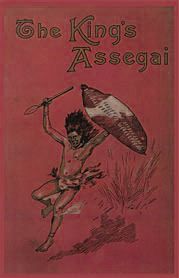
Curiously, I waited a long time before actually reading it, unlike Mitford’s other books. I suspect I had a little dread about reading a Westerner’s fictional interpretation of “African savages”, or perhaps I simply didn’t think I could get into a novel about African warriors. (I had a discussion to this effect on an earlier Mitford thread.) In any case, I shouldn’t have been worried — though I didn’t enjoy it as much as I did Mitford’s other work, The King’s Assegai is an excellent adventure story which gives a very human (and not stereotypical) view of tribal Africa.
Continue reading →






 Skulls in the Stars