
In my investigations of classic pulp magazines over the past year, I’ve come across some classic stories and real gems that I had forgotten about. One of these guilty pleasures is “Giants From Eternity,” by Manly Wade Wellman, published in the July 1939 issue of Startling Stories.
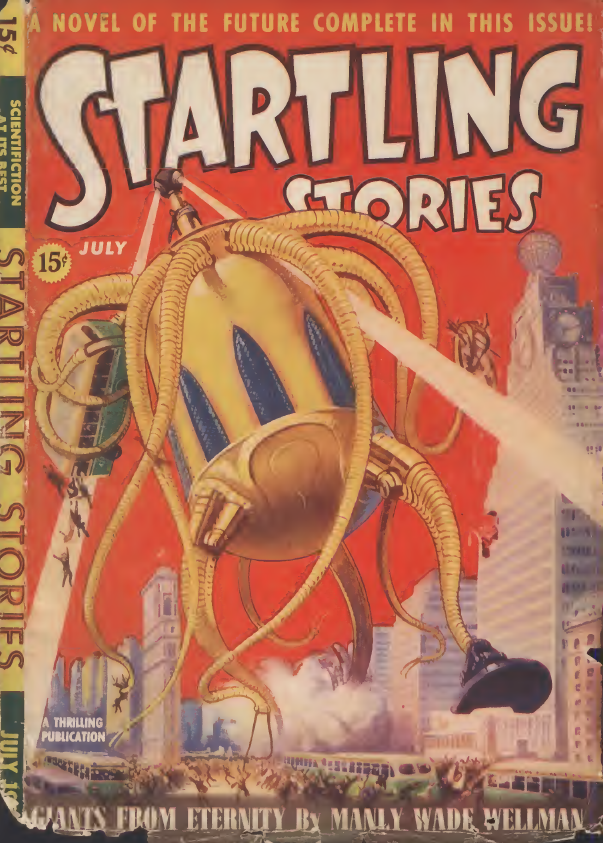
I’m a big fan of Manly Wade Wellman’s work; his Silver John series of stories and novels, about a wandering Appalachian minstrel who fights evil with wit and a song, are absolutely delightful. With his son, he wrote a story about Sherlock Holmes squaring off against H.G. Wells’ invaders from The War of the Worlds! I’ve also written about Giants From Eternity before, when I read it in a modern edition, though I read it and blogged about it over a decade ago!
Digging up the story in magazine form gives me an excuse to take another look at the story, and share the original images from the magazine! (And once you know what the story is about, you’ll see why.) If you want to read it in advance, the issue is available on the Internet Archive, or you can buy a modern edition.
Continue reading







 Skulls in the Stars