Thought I’d start reblogging some of my old physics posts that I enjoy, so here’s one from 2022 on why you always think your headlights are off when it’s raining at night!
One of the topics of the history of science that has continued to fascinate me is the discovery of the principle of conservation of energy. As I discussed in my three-part series “Booms, Blood, and Beer” (part 1, part 2, part 3), some of the key discoveries were made by the most unlikely of investigators: a cannon-borer Count Rumford (booms), a physician Julius Robert Mayer (blood) and a brewer (beer).
The story of Mayer in particular has always fascinated me. He was a German physician who decided, after earning his license to practice medicine, to work as a ship’s doctor on a Dutch merchant ship sailing to Indonesia in 1840. While on the trip, he spend a lot of time observing and pondering nature, and some of his observations got him thinking about a law of conserved “force” that would be a philosophical complement of sorts to the law of conservation of matter. One key observation for him was seeing that, during a standard bloodletting of the sailors when they arrived in Jakarta, the venous blood was much redder than he was used to seeing in Europe. In discussions with other doctors, he learned that this is because less oxygen is consumed to heat the body in the hot climate of Indonesia than in the chilly northern parts of Europe.
Julius Robert Mayer, from a 1905 German biography by Dr. S. Friedlaender.
This mechanism was already known by science at the time, but it triggered a train of thought in Mayer that became his obsession. At the time, there was much discussion about the nature of heat: what is it that makes some things warmer than others? The prevailing theory was that heat is its own physical fluid, called caloric, that could be released from a substance by friction or combustion. Also known but less popular was the (correct) theory that heat is simply the collective random motion of atoms and molecules. Heat spreads because some of those “hot” molecules collide with neighboring “cold” molecules and transfer their energy to them. Mayer’s thoughts about the generation of heat by the human body led him not only to consider heat a form of motion, but to postulate that there is a conserved “something,” that he called “force,” that could be used to unify thinking about physical phenomena throughout nature, from simple collisions of inanimate objects to the workings of living creatures.
Mayer was complete correct on the general principle, but he was no physicist. His early attempts to create a theory of what would eventually be called conservation of energy were crude and inaccurate — but contained the kernel of a truth that had never before been successfully elucidated. After submitting his first paper for publication (which would fail), he wrote to his scientist friend Carl Baur to explain his ideas and get feedback, where he first wrote what I call “The most beautiful wrong equation in history.”
In this post, we go through Mayer’s first (translated) letter to Baur and see how even incorrectly formulated ideas can be amazing — and beautiful. I used Google Translate along with some very crude understanding of German to handle the translations. The translations come from an 1890 book of Mayer’s collected papers.
Book 29 for my 2025 goal of 30 books for the year! As is now default for me, my link to the book is through my bookshop dot org affiliate account.
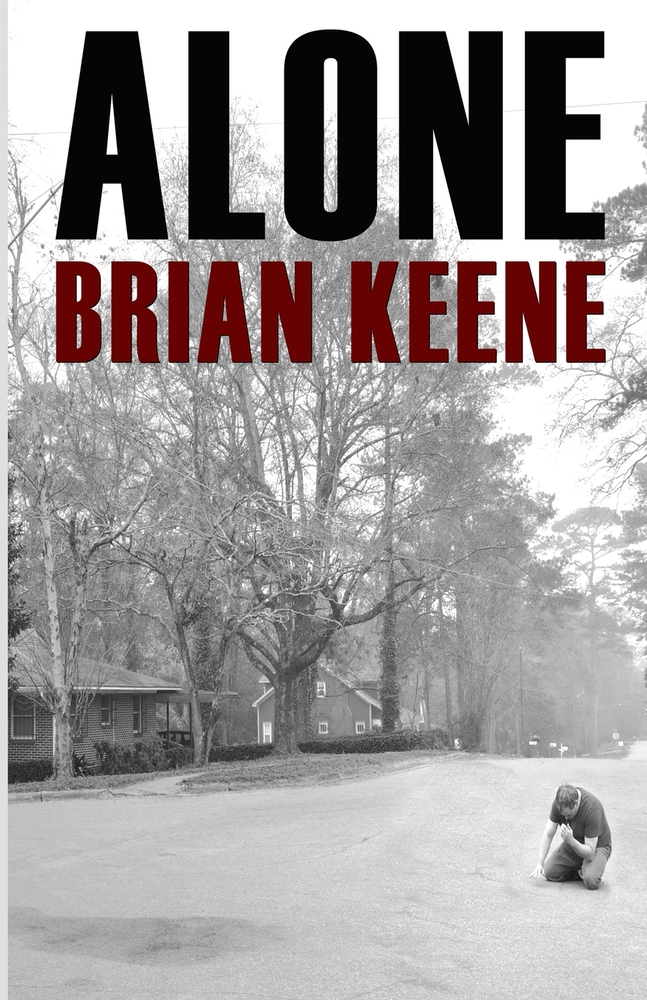
Near the “official” end of my book goal for the year, well ahead of schedule! I’m currently in the midst of reading several other books, but I thought I’d take a brief detour and read a book by the prolific and talented horror author Brian Keene, Alone (2011).
This is perhaps cheating a little bit in my book goals, as it is a short novelette — 46 pages — but I’m counting it, dammit!
This past Friday, I celebrated the Halloween season by going to a ghost story reading at Daniel Stowe Botanical Gardens. I sat around a campfire with a bunch of other people with a glass of wine, listening to a staff member read stories as the daylight faded and darkness overwhelmed. The stories were a mix of some stories specifically written about the Gardens themselves and some that were more traditional sounding stories about monsters in the woods and ghosts haunting rural cabins.
I had a great time, and it got me thinking about how I would love to read ghost stories to people around a campfire, and also started thinking about what stories would be fun to read! I posted a random list on Bluesky, and I had so much fun thinking about it I thought I would share the list here and elaborate on it.
Unlike my Halloween Treats posts, the stories I’m suggesting here are not necessarily public domain: I am thinking more about what would be fun to read aloud instead of what is free to read! I provide links to books whenever they are not freely available.
In my opinion, part of what makes a story good for reading aloud is having a really “punchy” ending, which these stories have!
Book 28 for my 2025 goal of 30 books for the year! As is now default for me, my link to the book is through my bookshop dot org affiliate account.
Not long ago, Titan comics sent me a review copy of a recent compilation of Conan the Barbarian stories, which I was delighted to read and discuss on the blog. Not long afterward, they offered to send a copy of the new Solomon Kane comic series, Solomon Kane: The Serpent Ring, with art and writing by Patrick Zercher, and I jumped at the chance. Not only did I start my blog in part to talk about the stories of Robert E. Howard and related authors, but the title of the blog — Skulls in the Stars — is the title of one of Howard’s best Solomon Kane stories.
Every year since I’ve started this blog, I’ve published a few classic open access stories of horror for the Halloween season! In recent years, I’ve started to make a theme for each year.
This year, the theme is “haunted houses,” which probably needs no further explanation, so let’s get into some stories! The only note is that we stretch the definition of “house” as we proceed…
Illustration of The Shunned House, from Weird Tales, October 1937.
The Shunned House, by H.P. Lovecraft (1937). A doctor and his nephew investigate a strange house that has been shunned for decades, not realizing the danger lurking within it and the horrible thing that lies beneath it…
The Haunted and the Haunters; or, The House and the Brain, by Edward Bulwer-Lytton (1859). Another classic haunted house story, in which a rationalist attempts to exorcise the spirits from a house with a particularly strange haunting. The link is to a copy of the original text on the Internet Archive, which includes an often-removed epilogue beginning with “But my story is not yet done” that makes the tale even weirder.
Number 13, by M.R. James (1904). A twisted tale of missing space from the master of ghost stories M.R. James. A man staying in room 12 at the “Golden Lion” inn notices that his room appears smaller at night and that a room 13 appears next door that was not present during the day.
The Whistling Room, by William Hope Hodgson (1910). Carnacki the Ghost Hunter is called to investigate a chamber in a mansion that exhibits an eerie whistling sound. He soon finds himself trapped with a malevolent supernatural being that could consume him utterly.
The Upper Berth, by F. Marion Crawford (1926). Sharing again one of the most effective ghost stories ever written, with one of the best closing lines of any such story, as well! When the sailor Brisbane takes an Atlantic voyage on the ship Kamtschatka, he is assigned the lower berth in room 105. Soon he realizes that his chamber may be occupied by something not quite human.
The Fall of the House of Usher, by Edgar Allan Poe (1839). Poe’s classic story of the last family members of the House of Usher and how their house itself is tied to their own fate.
The Vacant Lot, by Mary E. Wilkins-Freeman (1903). Sometimes the haunting persists even when the building is gone. A family finds themselves troubled by strange happenings that seem to be connected to the vacant lot next door to them.
Negotium Perambulans, by E.F. Benson (1922). A man returns to his childhood village, intrigued by the stories of a monstrous creature that haunts one of the houses in town. When he learns that an old friend, an artist, has taken up residence in the house, he has an opportunity to experience the horrors it contains first-hand.
The Man From America, by Michael Arlen (1925). This story is absolutely wonderful and has a twist for the ages! Two Londoners make a bet with a gentleman from America that he can’t spend the entire night in a haunted house. This bet will end in a place that none of them are expecting.
Happy Halloween, and I hope the stories give you a few fun chills!
Book 27 for my 2025 goal of 30 books for the year! As is now default for me, my link to the book is through my bookshop dot org affiliate account.
Chuck Tingle honestly has yet to disappoint in even the slightest. His latest book, Lucky Day, just came out in August and I finally got around to reading it this week, and it is another fantastic novel of weird fiction.
Four years earlier, the world was rocked by what became known as the Low-Probability Event: a tragedy in which eight million people died within a few hours by exceedingly unlikely coincidences. Vera, once a statistics and probability professor with an optimistic future, was traumatized by the events of the LPE and now barely lives at all, isolating herself at home and surviving primarily on ramen noodles. The LPE was so random, cruel and pointless that it has shaken Vera’s very sense of purpose in life.
Then Special Agent Layne of the Low-Probability Event Commission visits her, seeking her help. The Commission has found a seeming connection between the LPE and the Great Britannica Hotel, a Las Vegas casino that manages to turn a profit despite actually having games that favor the guests to win. Vera had studied the casino herself before the world tragedy, and Layne wants her input in pushing the investigation further.
As the two dig deeper, they find that there are more improbable events happening, and even events that go against the known laws of physics. The very survival of the world may hinge upon whether they can uncover the secret of the Great Britannica and put an end to it…
Second, I was asked for an interview on BBC Crowdscience to answer questions about — what else? — the physics of how cats land on their feet when they fall! The interview just went up today in a segment of answers to listeners’ questions and you can listen to it here.
I always enjoy outside interviews and collaborations, and I hope you enjoy my participation in them as well!
I’m now in my mid-50s and my parents are in their 80s and are starting to experience the age-related cognitive problems that most of us will eventually encounter if we live that long. My dad in particular has very poor short-term memory now and is living in a senior home, a situation he finds rather dull considering he spent his life being a wanderer both at home and abroad.
To help keep him entertained, I’ve been finding boardgames that we can play together when I visit. This turns out to be a non-trivial challenge for several reasons. Memory issues make learning any new game rather challenging, so rules have to be relatively simple and intuitive — no Magic Realm for us! This means that most of the games available are ones that are tailored more towards children, but this is also not ideal because neither my dad nor I are in the mood to play Candyland. There are classic games that he still has a recollection of how to play, like Monopoly, but that game is absolutely terrible and genuinely not fun. As I told my dad, Monopoly is only fun because of the people you’re playing it with. Another constraint is time — I don’t want to play a game that takes several hours for a single session, so games with a 20-30 minute turnaround are ideal. That way we can play a couple of different games and multiple rounds when I visit.
So I’ve been experimenting with various games to find a set that we can play regularly, are easy enough to learn, fast to play, and entertaining enough to play repeatedly. I thought I would share my results and give a ranking of their suitability for this purpose.
NOTE: all the games I mention here are good games in general, so my ranking is not about whether they’re good in general, but all about their suitability for playing with seniors with memory issues.
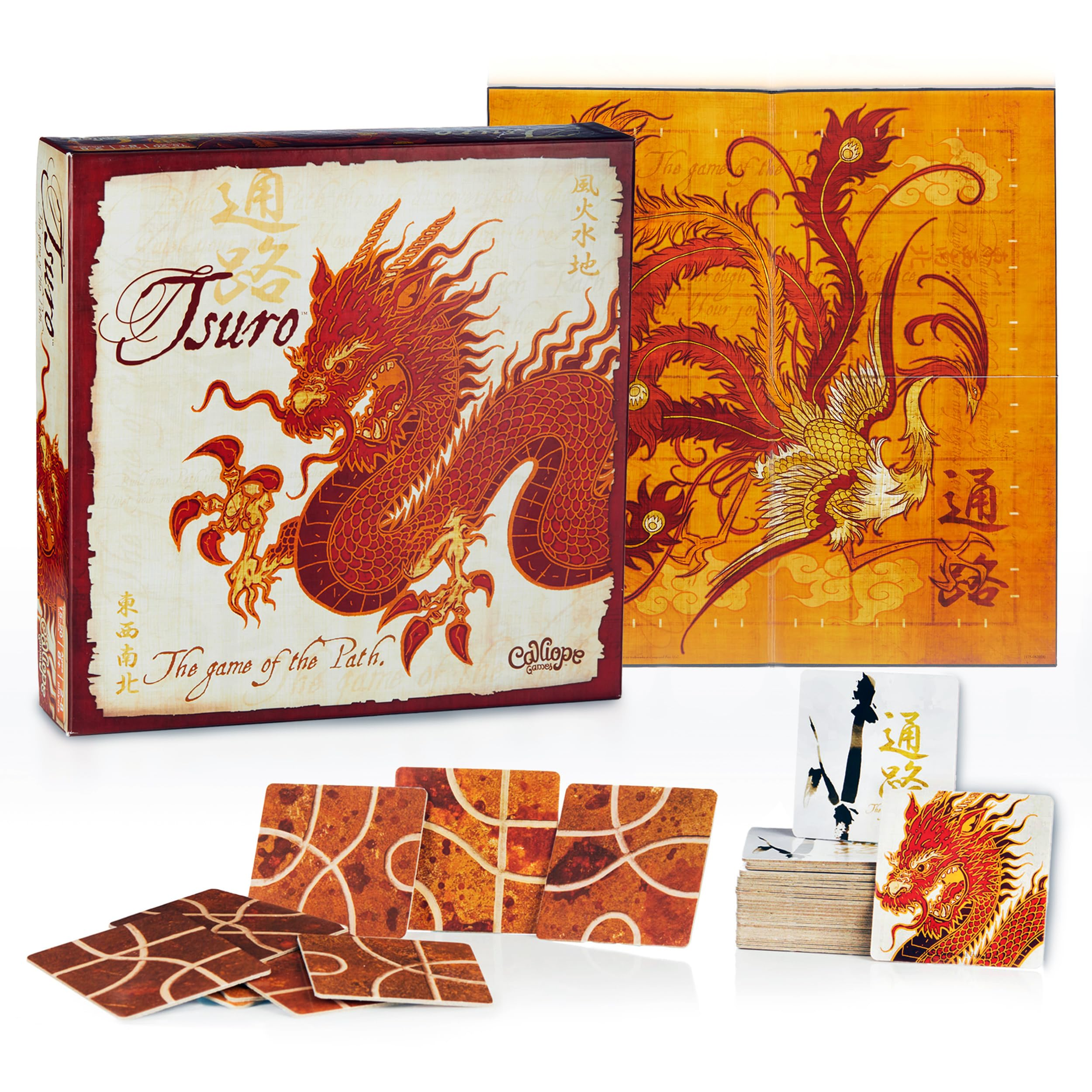
Tsuro: 9/10. I’ve had this game for ages and it is good for all ages and pretty much any occasion. Players take turns laying out a path tile in front of their token and following the path as far as they can go. The goal is to be the last one run off the edge of the board. Very simple rules that are quick to learn and follow, and the game has a nice mix of randomness (tile drawing) and strategy (choose one of three tiles in your hand to place). The only limitation for aging seniors is the abstract nature of the game — I noticed that it is perhaps a little harder to follow simply because it doesn’t represent situation in the real world to give context and help the player remember the objective and the strategy. Still, one I’ve played the most with my dad.
The author of Skulls in the Stars is a professor of physics, specializing in optical science, at UNC Charlotte. The blog covers topics in physics and optics, the history of science, classic pulp fantasy and horror fiction, and the surprising intersections between these areas.




 The author of Skulls in the Stars is a professor of physics, specializing in optical science, at UNC Charlotte. The blog covers topics in physics and optics, the history of science, classic pulp fantasy and horror fiction, and the surprising intersections between these areas.
 Skulls in the Stars