
Book 14 for my 2025 goal of 30 books for the year!
Hard-boiled detective stories often start in a similar manner: a gritty private investigator has a gorgeous dame walk through his office door with a case — but that woman is a femme fatale who has a hidden agenda that will likely spell trouble for the PI. In the case of Harry Turtledove’s latest novel, Twice as Dead, the woman in question is much more fatale than in a normal story: she is a vampire.
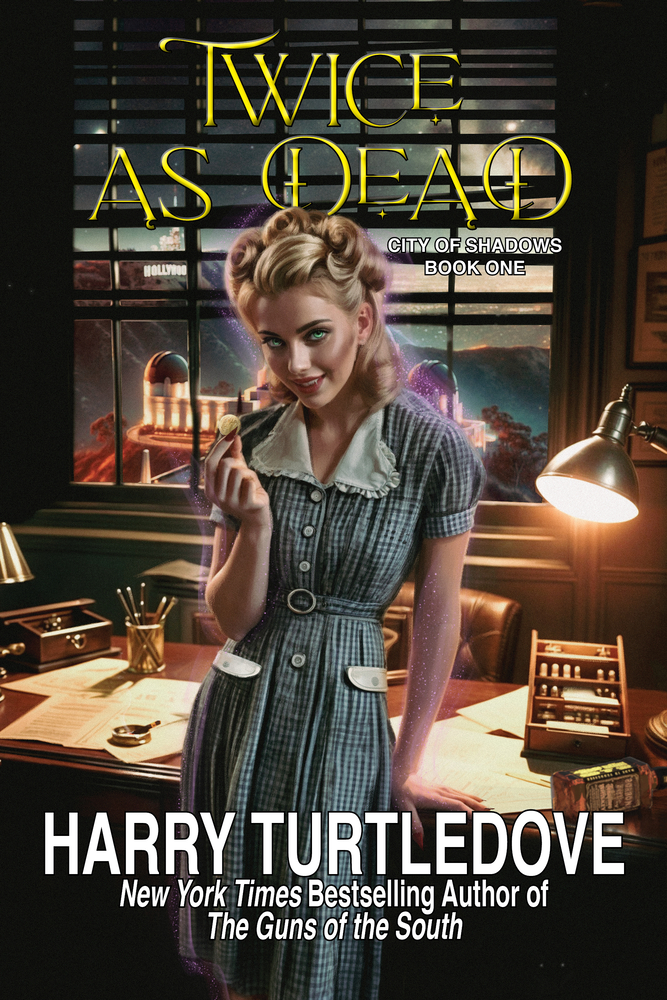
The private investigator is Jack Mitchell, a chain smoking, hard drinking private detective in a post-WWII Los Angeles that is very different from the historical one. Vampires live openly in the city in their own Vampire Town, coming out only at night. Ghosts exist, and some even work for the police department. Zombies are big business, being rented out as tireless laborers for menial tasks. And magic is real, and spellcasters can summon demons — or worse — into our reality.
The vampire is Dora Urban, and she hires Mitchell to find her half brother Rudolf Sebestyn, who has gone missing without warning. Against his own misgivings, and the warnings of the talking cat Old Man Mose who deigns to live with him, Jack takes the case, and finds himself increasingly smitten with the beautiful, mysterious and powerful Dora. He has plenty of bills to pay and is way behind on paying them, so he ends up taking two other cases at the same time: an investigation into a man’s cheating wife and another missing persons case where a factory worker didn’t return home from work one night. As Jack digs deeper into each of these cases, he finds that there is more going on than he imagined, and strange connections arise between his investigations. Complicating things, crooked members of the LAPD show a keen interest in Mitchell’s activities, and aren’t above sending rodent spies to keep track of him. By the end of the story, all of the cases will cross paths, and Los Angeles might be forever changed by their revelations.
Continue reading



 Skulls in the Stars