Bertram Mitford’s In the Whirl of the Rising

Last week I found myself in the mood for some adventure fiction, and that made me immediately think of Bertram Mitford!  A contemporary and competitor of sorts of H. Rider Haggard, Bertram Mitford (1855-1914) was a prolific writer of novels set in Africa.  Thanks to Valancourt Books, I’ve read a number of his works: The King’s Assegai (1894), The Weird of Deadly Hollow (1891), Renshaw Fanning’s Quest (1894), and the sublime The Sign of the Spider (1896).  Having almost tapped out all of Valancourt’s Mitford selections, and not being a big fan of reading books online, I was happy to find a few other Mitford books have been recently released in print form*.

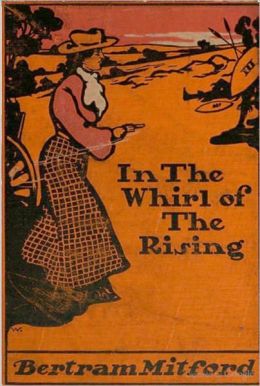
What appears to be the original cover of In The Whirl of the Rising, from the Barnes & Noble Nook edition.

What appears to be the original cover of In The Whirl of the Rising, from the Barnes & Noble Nook edition.

In the Whirl of the Rising, published in 1904, is an action thriller set in Southern Africa that tells the story of a native uprising against the British settlers, and the fight by the settlers to survive against murderous warriors.  As one might imagine from the subject matter, to today’s sensibilities it is a very problematic book.  It is nevertheless well written, and one can learn a lot about 19th century colonialism in reading it.  Also, I would argue that Mitford gives hints that he is slightly more enlightened than many of his contemporary countrymen.

Continue reading

Posted in Adventure fiction | Leave a comment

How anti-vaccination is like a nuclear bomb

Update: tweaked the descriptions of nuclear physics to be a little more specific.

I’m not sure that anything fills me with despair more than the trend of parents refusing to vaccinate their children. A couple of weeks ago, an article in The Hollywood Reporter described how affluent Hollywood schools are experiencing outbreaks of whooping cough and measles that haven’t been seen since, well, before vaccination.  These are nasty diseases, debilitating and potentially fatal.  It is shameful and not a bit terrifying that people are more or less deliberately bringing back illness that predominantly targets the very young.

But why do they do it?  From the article, we have this depressing tidbit:

According to more than a dozen area pediatricians and infectious disease specialists THR spoke to, most vaccine-wary parents have abandoned autism concerns for a diffuse constellation of unproven anxieties, from allergies and asthma to eczema and seizures.

In other words: once the link between vaccines and autism was shown not only to be mistaken but in fact fraudulent, people found other reasons to rationalize their actions.

Another statement from the same article left me utterly flabbergasted:

Experts on both sides of the issue say these families seem unconcerned about herd immunity — often questioning the legitimacy of the very concept…

Reading such things is genuinely painful to me.  For those unfamiliar with the term, “herd immunity” is the — uncontroversial to science and medicine — idea that a properly vaccinated population provides additional protection to everyone in the community, vaccinated and unvaccinated alike.  This is extremely relevant to the question of “anti-vaccination,” because it suggests that the group benefits pretty much disappear when enough of the population stops vaccination.

I find it pretty much unthinkable that people wouldn’t believe in herd immunity; I can only hope that they don’t completely understand how it works.  With this on my mind, it occurred to me on the drive home the other day that herd immunity can be readily explained by analogy with a phenomenon in physics — nuclear chain reactions and critical mass.  In short, we can argue that group vaccination is akin to keeping a nuclear substance below its critical mass — and failing to vaccinate is mathematically akin to setting off a nuclear bomb.

Continue reading

Posted in ... the Hell?, General science, Health | 14 Comments

Dr. SkySkull’s Monday Cavalcade of Interesting Science Stuff – September 15, 2014

While I’m working on more detailed blog posts, here’s a collection of interesting science-related stuff I came across over the past week!

Will hopefully have another cavalcade of science stuff next week!

Posted in General science, Science news | 1 Comment

Dr. SkySkull’s Monday Cavalcade of Interesting Science Stuff – September 8, 2014

In order to make my blogging a little more regular, I thought I would start doing a weekly roundup of interesting science-based posts from around the internet! Also, there’s so much good stuff out there that should be shared.  With this in mind, I present the first edition of what will hopefully be a more or less regular feature: Dr. SkySkull’s Monday Cavalcade of Interesting Science Stuff!

This week’s intriguing posts:

  • How a 19th Century Math Genius Taught Us the Best Way to Hold a Pizza Slice.  In this wonderful post, Aatish Bhatia of Empirical Zeal explains how the mathematics of curvature — most commonly encountered in the theory of general relativity — gives us the best way to hold a pizza slice.  Rarely will you find a post that explains complicated mathematics so clearly and ties it to simple everyday phenomena so well.

  • What Kind of Demon Sorcery Created This Laser-Spitting Fish?  At io9 Animals, Jason Goldman describes the curious case of a fish that seems to spit out light itself!  The explanation of what’s really going on is equally fascinating, and is a great example of evolutionary processes playing off each other.

  • Jack the Ripper was Polish 23-year-old barber Aaron Kosminski, new book claims.  Science, screwup, or scam?  The author of a new book claims to have found the only surviving piece of forensic evidence related to the Jack the Ripper case, and to have used surviving DNA to identify the killer, through the DNA of a relative.  Interesting story, but there are a lot of reasons to be skeptical.

  • ‘Could happen at any time’ God particle could DESTROY universe, warns Stephen Hawking. Boy, Stephen Hawking has gotten cynical lately, hasn’t he?  Four years ago, he warned us that aliens could arrive to destroy us all, and now he’s warning that the Higgs field (not particle) could become unstable and wipe out the universe at any time.  Folks should relax, though — Hawking was not talking about experiments at the LHC wiping out the planet, but rather the theoretical possibility that an inherent instability in nature could go horribly wrong for us.  My thoughts?  As a general rule, anything that has a finite probability of happening in the universe already would have happened.  In a radio interview, Katie Mack throws some cold water on the hysteria.

  • How archer fish gun down prey from a distance.  It’s a good week for “spitting fish” news. Archer fish have the amazing ability to shoot jets of water at their prey, knocking insects from trees and into the water to be eaten.  New research shows that the fish have an extraordinary amount of control over the speed and duration of their jets, adjusting for maximum impact at the target.

  • World’s largest dinosaur discovered. Finally, we have good news for dinosaur fans: a new species has been unearthed, the largest ever discovered!  Named Dreadnoughtus schrani, this herbivore was as tall as a two-story building and weighed some 59,000 kilograms.  Even better, the skeleton was found remarkably complete.

That’s it for this week!  Check back next Monday for more news.

Posted in General science, Science news | Leave a comment

Physics demonstrations: Faraday disk

I’m prepping a new course to teach this semester: undergraduate Electromagnetism II!  I’m trying to put together some nice simple demos to illustrate principles in the class, and I’ll blog some of those that work and are interesting.

When Michael Faraday discovered the phenomenon of electromagnetic induction in 1831, paving the way for the complete unification of electricity and magnetism, he came up with a variety of experiments to demonstrate the effect.

One of them is now known as the Faraday disk, and it is very easy to construct — though I ended up buying one.  My version is shown below.

faradaydisk1

All of the parts are visible in this photo.  By turning a hand crank, one rotates a copper disk between a pair of magnets (the black disks), one generates an electrical current that runs from the outer edge of the disk to the central axis.  Wires connected to these two points runs to the red and black plugs, through which one can measure the voltage difference generated.  It isn’t a spectacular amount — I measured about 5 millivolts, max — but it demonstrates the phenomenon known as rotational electromotive force.

As we have noted, however, Faraday interpreted his disk experiment as electromagnetic induction, not rotational emf.  It turns out that he was kinda wrong — but he was also kinda right!  The explanation of this simple experiment involves some rather deep concepts in physics, and inevitably leads us to Einstein’s theory of special relativity.

Continue reading

Posted in Physics, Physics demos | 23 Comments

7 years of blogging!

I’ve been rather busy with my academic duties lately and haven’t had much time to update my blog with new science and fiction posts.  Because of this, I almost completely missed the fact that August 14th marked the 7th anniversary of this blog!  My first post was on August 14th, 2007, with the title “Educate or bust,” based on the name of an obscure Robert E. Howard story.  That title still captures the spirit of what I try to do here at “Skulls in the Stars,” and what I hope to continue doing in the future.

With this in mind, here’s a few teasers of posts I’m planning and working on for the next few months.  This list is partly to keep people intrigued, but also to keep me inspired!

  • A physics demonstration in which I attempt to generate “frozen lightning” in the form of a Lichtenberg figure.
  • A somewhat poetic look at the importance of early physics discoveries related to heliocentrism through the writings of its biggest advocates.
  • A history of physics post about the very first “vortex of light” discovered in the 1950s, and the strange optics that inspired its discovery.
  • An in-depth post about the most important physics research that nobody ever talks about.  (This one has been in the works for years.)
  • A “how-to” discussion about my favorite social media platform, twitter, and how to use it in a productive way.
  • The optics of impossibility!  Many things that traditionally were thought to be literally impossible in optics have now been demonstrated experimentally (usually with some important caveats).  This post will survey how these discoveries are changing the technological possibilities with light.
  • A look at one of the strangest planets in the Solar System, and probably not the one you think.
  • Some blogging about my own research into invisibility and cloaking, after I finally get the papers written and published!
  • More blog posts about the history of electricity and magnetism, particularly in the 19th century.  The first of these I’ve been looking at is the work of Heinrich Lenz.

I’ve got lots of ideas — I just need to find the time to work on them!  I’d also like to thank everyone who follows or subscribes to my blog for your interest.  Hopefully, the next seven years will be as fun as the first!

Posted in Personal | 7 Comments

Fred Hoyle’s “The Black Cloud”

I am utterly fascinated by active scientists who also write fiction, particularly science fiction.  There have been more of them than the average person realizes, including physicist Robert W. Wood, who co-wrote The Man Who Rocked the Earth (1915) and The Moon-Maker (1916), and astronomer Simon Newcomb, who wrote His Wisdom the Defender (1900).  I would also add to this list millionaire inventor John Jacob Astor, who wrote A Journey in Other Worlds in 1894.  The tradition continues to this day, as illustrated by my friends Blake Stacey, who wrote Until Earthset (2008), and Andrew David Thaler, who wrote Fleet (2013).

There are still more out there, I’m sure, that I have yet to come across.  This was demonstrated to me recently, when I encountered astronomer Fred Hoyle’s 1957 novel The Black Cloud.

First edition cover of The Black Cloud, via Wikipedia.

First edition cover of The Black Cloud, via Wikipedia.

I learned of this book through the always excellent Valancourt Books, who will be releasing a new edition in 2015.

Set in the year 1964, the novel focuses on the efforts of an international group of scientists as they try and save humanity from a massive black cloud that is approaching the solar system from interstellar space.  You’ll notice that I say “save humanity” instead of “stop the cloud,” because there is no stopping the cloud: it is an object of planetary scale, and the best mankind can do is anticipate its behavior using the laws of physics and attempt to plan accordingly.

Continue reading

Posted in Science fiction | 1 Comment

Emily Carroll’s Through the Woods

Let me say this immediately: Emily Carroll’s work is amazing.  Her work first came to my attention, as it did for many people, through an io9 post describing some of the best horror webcomics available.  The post included a link to Carroll’s story His Face All Red, which was by far the best of them, and I was hooked.  Since then, I’ve kept a constant vigil for the occasional new comic to appear on her site.

Happily, Carroll recently released a printed collection of almost all new horror comics, Through the Woods.

Through-the-Woods-Cover


The collection includes five stories, four of which are previously unpublished, and the tales are bookended by an introduction and a conclusion that are equally creepy.

The five stories are:

  • Our Neighbor’s House.  Three children are given explicit instructions by their father on what to do when he goes hunting in the woods.  Of course, they don’t quite follow these instructions…
  • A Lady’s Hands Are Cold.  A young woman is forced by her father into marriage with a wealthy lord.  When she arrives at his manor, she learns that he — and the home — hold terrible secrets.
  • His Face All Red (previously published online).  A man and his older brother head into the forest at night to find the monster that is killing the village animals.  The horrors they discover, however, are completely different.
  • My Friend Janna.  Janna and her friend have made a great game out of pretending to speak to the dead.  Toying with the spirit world has terrible consequences, as they will learn.
  • The Nesting Place.  When boarding school lets out for the summer, Mabel goes to stay with her brother and his fiancée in their country home.  Rebecca — the fiancée — seems perfect, so why does Mabel feel uncomfortable around her?  And why does their housekeeper tell Mabel not to go in the woods — ever?

Carroll’s stories tap into what I can only call primal fears.  They feel like the darkest of fairy tales, and often follow a very similar structure.  The illustrations are elegant and often very subtle, conveying a sense of dread with color and shadow.  Carroll, like all great horror writers, knows that showing a monster is nowhere near as scary as hinting at it.

The book is rather short — you can read the entire thing within an hour if you like — but the tales merit repeated reading.  I’ve already read it through two times, and before it was available I read His Face All Red at least a dozen times online.

In conclusion: I very much recommend Through the Woods.  I’m looking forward to more works from Emily Carroll, and hope I won’t have long to wait.

Posted in Horror | Leave a comment

H.G. Wells’ stories about BUGS

Update: Added one more Wells bug story!

This short post is something of a public service.  Earlier today I saw some tweets from film critic Scott Weinberg referencing an urban legend related to the very silly 1977 Bert I. Gordon film Empire of the Ants.  I had never heard of the movie before, and I certainly didn’t know that the movie was based on a short story by the incredible science fiction author H.G. Wells!

I had never heard of the story before, though this is not surprising — Wells was ridiculously prolific, writing dozens of novels and non-fiction books over the course of his life, in addition to short stories.  Most people are only familiar with a handful of his most famous works — The Invisible Man, The Time Machine, The War of the Worlds, The Island of Doctor Moreau — though he wrote many intriguing and forward-thinking novels such as his chilling story of nuclear war, The World Set Free.

So I was curious about the story, and of course it is available to read online from in a variety of places.  Being me, however, I had to go right back to the source.  Thanks to the magic of Google books, I was able to find the original 1905 issue of The Strand magazine containing the story.  One of the great things about these Edwardian magazines is that they often illustrated the stories in question, and The Empire of the Ants is no exception.

Emboldened, I also dug up another H.G. Wells story about bugs — The Valley of Spiders, which appeared in a 1903 edition of Pearson’s Magazine.  Wells was quite famous by this point, and got quite a spectacular title image:

valleyofspiders


So my public service of the day?  To provide pdfs of the two illustrated stories!  The Valley of Spiders is quite a bizarre and fascinating tale, while The Empire of the Ants reminds me somewhat of John Wyndham’s much later novel, Web.

The Valley of Spiders

The Empire of the Ants

Enjoy!

Update: Being obsessed with being thorough, here’s one more Wells story about a bug, though of a significantly different nature!  It apparently first appeared in the late 1800s, but I found an illustrated version of it in a 1905 volume of Pearson’s.

A Moth — Genus Novo

Posted in Horror, Science fiction | Leave a comment

Physics demonstrations: Geiger counter

Update: Fixed a couple of incorrect statements regarding cosmic rays and the radiation of uranium.  Thanks to encephalartos for the corrections!

In recent months, I’ve been diving wholeheartedly into learning how to build and design electronics.  My ultimate goal is to build a Tesla coil, but before I do, I’ve been warming up with a variety of kits and designs online.

Not too long ago, I learned that it is possible to buy a kit to build a basic Geiger counter, for only around $100!  I jumped at the opportunity and, after some minor modifications, started checking for radioactivity!

mygeiger


If you compare this with the image of the original kit below, you can see that I’ve protected all of the circuitry in a plastic case.  I also added an external switch as well as a spiffy drawer handle from Lowe’s.

sensitivekit

So you probably know that a Geiger counter detects radioactivity, but how does it work — and what sort of things can you detect?  I thought I would write a short post discussing this, ending with a video showing my Geiger counter in action.

Continue reading

Posted in Physics demos | 6 Comments