1844: Mayer mentions his work on conservation of energy

As noted in a previous post, I’ve started translating a collection of correspondence of the amazing German physician Julius Robert Mayer, who around 1840 traveled to Indonesia as a ship’s doctor and along the way discovered and elucidated, for the first time, the principle of conservation of energy.

I thought I’d share a brief snippet of one recent letter I translated, written to his friend Paul Friedrich Lang. This is the first mention I’ve found of Mayer’s discovery in his letters; the discovery was made around 1840 and he first published his work in 1842. This letter comes from March of 1844, and this brief description made me chuckle:

You see that there is still something of the mathematician in my way of thinking; and in fact I am constantly trying to devote all the time I have to an attempt to gain a mathematically clear understanding of natural phenomena, whereby my horizons are broadened even further and I arrive at real results, which it would be far too boring to even mention here.

It is really quite funny that Mayer says that his results would be “far too boring to even mention here,” considering he is referring to work on conservation of energy, which is a transformative concept that literally touches every aspect of physics!

At this point, I suspect Mayer was already engaged in controversy about priority of discovery, as his paper appeared in 1842 and Joule’s work on the same topic appeared in 1843; this brief snippet says little about the storm of controversy that would soon erupt.

Anyway, more later!

Posted in History of science | Leave a comment

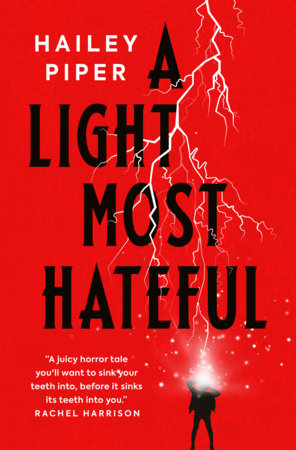
Latest Dead Reckonings is out!

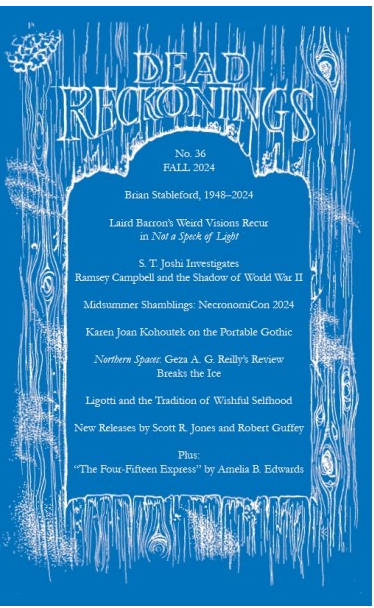
Hi folks! For those who are familiar, I occasionally write book reviews for the horror and weird periodical Dead Reckonings, and the most recent issue is out!

I wrote about Laird Barron’s recent collection of horror fiction, a return to his roots; I also wrote about it in brief here late last year. I managed to secure the first spot in the issue, which is probably less due to my writing acumen and more due to the fact that Laird Barron is cool as hell.

Anyway, just wanted to share — more blog posts soon!

Posted in Horror, Personal | Leave a comment

The Andromeda Anthology, by Fred Hoyle and John Elliot

Book 5 for 2025! My goal is 30 this year, and I’m off to a great start.

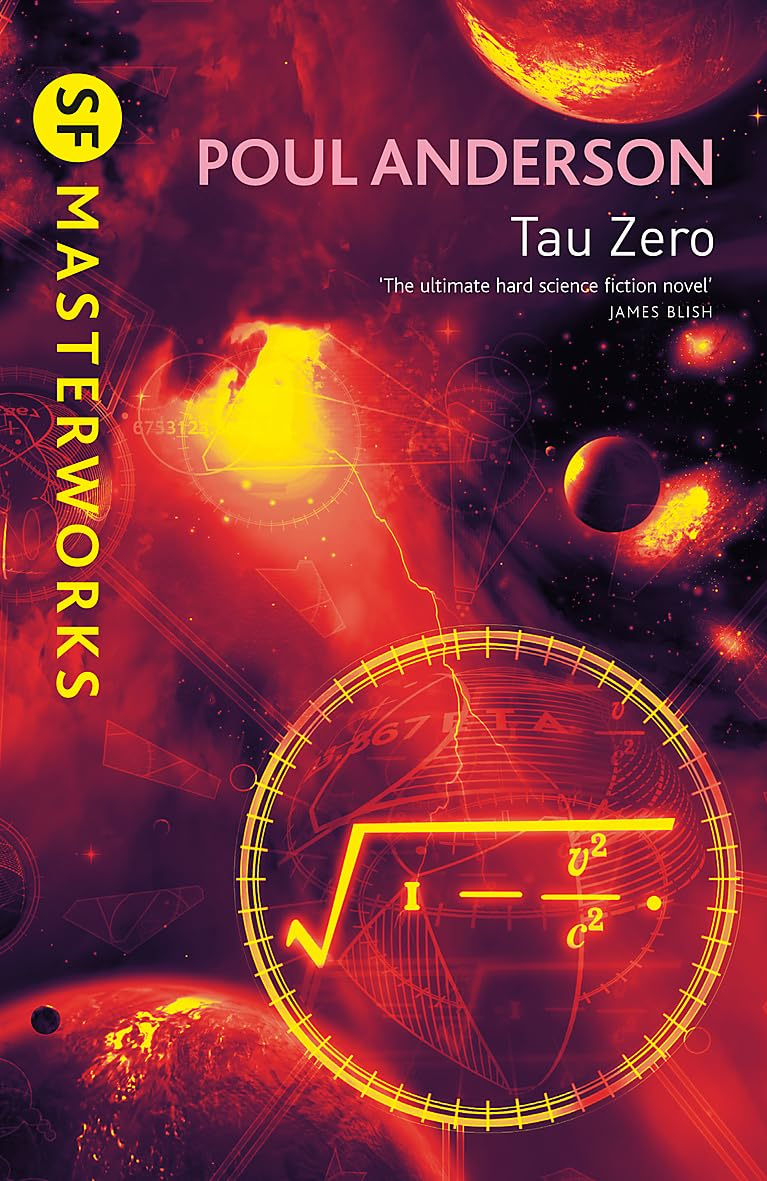
Since I’ve been enjoying the “SF Masterworks” series like Connie Willis’ Doomsday Book, I popped by the store a week ago to see if any others looked intriguing. The one that really caught my eye is the so-called Andromeda Anthology (1962/1964), by Fred Hoyle and John Elliot.

Probably the biggest draw for me was seeing the name Fred Hoyle! Hoyle was an astronomer and theoretical astrophysicist, and I was already familiar with his work through his very unusual 1957 novel The Black Cloud. That novel was an intriguing alien first contact story, and the Andromeda Anthology is another — albeit a very different type of first contact!

Continue reading
Posted in Science fiction | Tagged , , , , | 1 Comment

More on Mayer and Tyndall (1862)

I’ve previously written about the amazing story of Julius Robert Mayer, the physician — not physicist — who first conceived of the concept of conservation of energy, and how he was then discredited by the British scientific community in favor of James Joule, who independently discovered and published the concept a year after Mayer did.

Recently, I picked up an old 1893 collection of Mayer’s surviving correspondence, and I am currently working my way through translating it (with the help of Google translate, which has gotten much better). But in the meantime, I found absolutely charming letters between Mayer and John Tyndall that I wanted to share here.

To review the history, though it can be found in full at the link above and I encourage folks to go read this amazing story: Mayer was utterly broken by the most prominent physicists in Britain, who in a fit of nationalism decided that Joule should get sole claim for the discovery of conservation of energy, evidence be damned. Mayer ended up taking a fall from a window that may have been a suicide attempt, and ended up in a cruel psychiatric institution for some time. But in 1862, London was hosting the International Exhibition (like a World’s Fair) and the Royal Institution asked John Tyndall, Irish physicist, to prepare a lecture on the exceedingly British discovery of “energy.” Tyndall agreed, but performed extensive research on the history of the subject to make sure he was getting it right. Along the way, he discovered the papers of Mayer, and he and his colleague Rudolf Clausius were astounded at Mayer’s insights and discoveries.

Continue reading
Posted in History of science, Physics | Tagged , , , , | Leave a comment

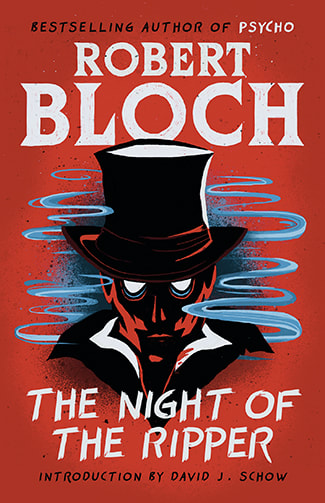
The Night of the Ripper, by Robert Bloch

Book 4 for 2025! My goal is 30 this year.

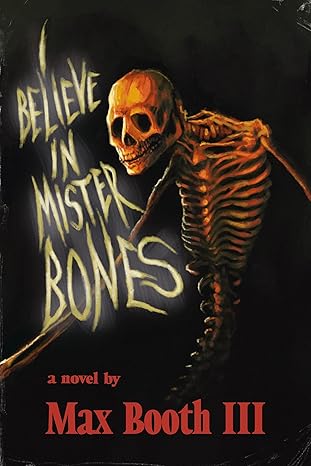
My friends at Valancourt Books have recently been reprinting the works of horror master Robert Bloch, most famous for penning Psycho (1959) but also an award winning author of many other frightening novels and short stories. I recently read Valancourt’s reprint of Bloch’s The Opener of the Way, and that led me to his 1984 novel The Night of the Ripper.

One of Bloch’s early breakthrough stories was “Yours Truly, Jack the Ripper,” a story about a man tracking a seemingly immortal Jack the Ripper in “modern era” (in Bloch’s time) Chicago. The Night of the Ripper is therefore, in a sense, a return to Bloch’s roots, focusing on the real-life character that propelled him indirectly to fame. The story is not supernatural this time, but a true murder mystery — and it is informed by Bloch’s own extensive research as a “Ripperologist.”

Continue reading
Posted in Horror, Mystery/thriller | Tagged , , , , | Leave a comment

Doomsday Book, by Connie Willis

Book 3 for 2025! My goal is 30 this year.

Now that my rush to fulfill my arbitrary book-reading deadline for last year is done, I can relax and read books that are a bit longer. One I’ve had on my shelf for possibly years is Doomsday Book, by Connie Willis (1992). Once again I relied on a nice inexpensive “SF Masterworks” edition that weighed in at 587 pages.

My review, in short: this book is amazing, and easily qualifies for the title of “masterwork.” It is a story of a time travel journey gone wrong, as the traveler in the past and her colleagues in the present struggle with their own unexpected crises.

Strangely, one can’t help but wonder if Connie Willis is a time traveler herself, because her novel remarkably anticipates many of the crises that have hit humanity in modern times!

Continue reading
Posted in Science fiction | Tagged , , , , | 2 Comments

Talking Invisibility on the Peculiar Book Club!

For those who aren’t yet tired of me talking about the physics of invisibility and my book about it, a couple of days ago I was a guest on the Peculiar Book Club, hosted by Brandy Schillace! It was a really fun show and great experience and I got a lot of great questions from the club. The whole thing was recorded, so you can watch it here:

Posted in Invisibility, Personal | Leave a comment

Godel’s Proof, by Ernest Nagel and James R. Newman

Book 2 for 2025! My goal is 30 this year. This is actually a book I read years ago but it was time for a reread to try to better understand the subject.

I honestly wish more people would explore mathematics and not avoid it as much as possible, because it is a stunningly beautiful subject. Even if one does not have the time or inclination to master it, there are many mind-boggling mathematical subjects that can be at least roughly understood by a dedicated layperson with the right information in front of them. The mathematics of infinity, for example, is something I’ve blogged about in the past and it is just fascinating and some of the most important proofs related to it require no higher math at all to gain an understanding of.

One topic I’ve always been fascinated with is the incompleteness theorems of Kurt Gödel, first published in 1931. The actual paper is quite involved to read and understand, and requires a lot of background context to properly understand what Gödel accomplished. Fortunately, there is a book out there that makes a valiant effort to explain it in non-technical terms: Gödel’s Proof, written by Ernest Nagel and James R. Newman and first published in 1958. I have a copy of the NY University Press edition of 1986:

It is a slim book: 102 pages in my edition, not counting appendices and the index. It leads the reader through a brief history of 19th and early 20th century mathematics to appreciate what Gödel proved in his paper, which shook the foundations of mathematics.

Continue reading
Posted in Mathematics | Tagged , , , , | Leave a comment

Bury Your Gays, by Chuck Tingle

Book 1 of 30 for 2025! I’m off to a great start with a great book.

Back in 2023 I read Chuck Tingle’s debut horror novel Camp Damascus and absolutely loved it. Tingle followed up not long after with Bury Your Gays, another horror novel focusing in particular on “queer horror.”

Don’t let the subgenre of “queer horror” lull you into thinking that this is somehow too specialized for general readers of horror — it is a horror novel through and through, and an astoundingly clever one with a lot of imaginative ideas!

Continue reading
Posted in Horror | Tagged , , , , | Leave a comment

The Gods Themselves, by Isaac Asimov

Book 23 of 26 books for 2024! I managed to sneak in one more for 2024; next year, I’m aiming for 30.

I’ve written a lot about Michael Faraday on this blog, and one of my favorite anecdotes is the conversation he had with Humphry Davy when he first accepted a job from him. Faraday, trained as a bookbinder, thought that the trades were “vicious and selfish” and that the sciences were “amiable and liberal.” Faraday told this to Davy, and recalled his response:

He smiled at my notion of the superior moral feelings of philosophic men, and said he would leave me to the experience of a few years to set me right on that matter.

The reality is that scientists can be mean and petty and science can be incredibly politicized and wander far from a noble pursuit of truth, as can humanity as a whole — even when the consequences can be catastrophic. This is largely the theme of Isaac Asimov’s classic 1972 novel The Gods Themselves. Somehow, I’ve had this book on my shelf for years and think I actually started reading it at one point but got distracted with other things: while wandering my bookshelves, I came across the long-neglected copy and decided it was time to read it. And I’m glad I did!

In the novel, humanity has discovered a new, effectively unlimited, source of energy by swapping matter with an alien universe. But when a few scientists suspect that this exchange may have unforeseen catastrophic consequences, they find that their attempts to warn people are thwarted at ever turn by human nature.

Continue reading
Posted in Science fiction | Tagged , , , , | 1 Comment