Weird Fiction Monday: Convergence

It’s time for Weird Fiction Monday, when I post stories that I’ve written — both new and old — for the entertainment (hopefully) of my readers!  As always, I note that I haven’t done extensive editing of the tales here, so don’t be surprised to find the writing a little rough.

I finished this story just this evening, having started it back in May of 2011.

Convergence

The story I am telling happened about three years ago. There isn’t any particular reason to tell it now, other than the hope that, by finally writing it down, I might remember some crucial detail, some neglected observation, which would finally make sense of things. If I could find some sort of explanation for the events, maybe I could stop thinking about them after all this time.

Continue reading

Posted in Fiction | 10 Comments

So, what is a “temporal cloak”, anyway?

ResearchBlogging.orgI’ve been saying for a few years that optical science has entered a truly remarkable new era: instead of asking the question, “What are the physical limitations on what light can do?”, we are now asking, “How can we make light do whatever we want it to do?”  Among other things, we can make light travel “faster than light“, we can focus light through a highly scattering material, we can take high-resolution pictures with low-resolution sensors, and even make particles “fly” on a “wind” of light!

Inevitably, though, many of these discoveries get misinterpreted in popular news accounts to the point that their real significance is lost in a haze of science fictional, or even supernatural, hype.  A good example of this is the “picosecond camera” that I described last week, which is an amazing achievement but also possesses a number of technical limitations that make it not quite a “camera” in the ordinary sense of the word.

This week, the experimental realization* of a “space-time cloak” or “temporal cloak” by researchers at Cornell University has made national news.  This novel device differs from the “invisibility cloaks” discussed previously on this blog in that it hides temporal events, not spatial objects.  Loosely speaking, this has also been referred to as a “history editor”.  Naturally, the discussion of “cloaking” has again brought out references to “Harry Potter cloaks” and other dramatic imagery; the reality is much more mundane, but still fascinating — and an amazing achievement.  Let’s take a look at what was done, what was not done — and why it’s quite cool!

Continue reading

Posted in Invisibility, Optics | 6 Comments

Weird science facts, December 28 — January 3

Happy New Year! A new year, another week of new Twitter #weirdscifacts!

655. Dec 28: Beware the “ball-cutter fish“!  What’s the worst interpretation of the term “ball-cutter fish” you can imagine?  Yep, that’s what it is! (via @kzelnio & @deepseanews)

656. Dec 29: The 1903 discovery of safety glass was literally an accident

657. Dec 30: In the early 1900s, “glow-in-the-dark” radium condoms were actually sold!  The discovery of radioactivity, particularly radium, led people to suggest it as essentially a “miracle substance”, with pretty much every use imaginable.  I’ve noted in these facts before chemist Frederick Soddy’s suggestion to inhale radium as a cure for tuberculosis; putting radium on one’s junk adds a whole new cringe-factor, however.  (h/t @highlyanne)

658. Dec 31: Samoa just lost a day by moving date line around itself!  A nice New Year’s fact!  The choice of the location of the date line has always been a convention; due to increased trade with places like Australia that lay across the date line, Samoa found it convenient to move it to be more in sync with its trading partners. (h/t @chrislindsay9)

659. Jan 01: The Catatumbo River lightning: 40k flashes of lightning per night! I  had chronicled in a previous fact that Kifuka, Africa is apparently the world record holder in lightning intensity, with 158 strikes per square km per year!  Why is Catatumbo not listed at the top?  My guess is that the linked article is in error in referring to 40k “strikes” per night, and that all the lightning is cloud-based.  Nevertheless, the intensity is so bright that it serves as a natural lighthouse!  (h/t @jenlucpiquant)

660. Jan 02: How a cone snail catches and kills its fish!  (h/t @ericmjohnson)

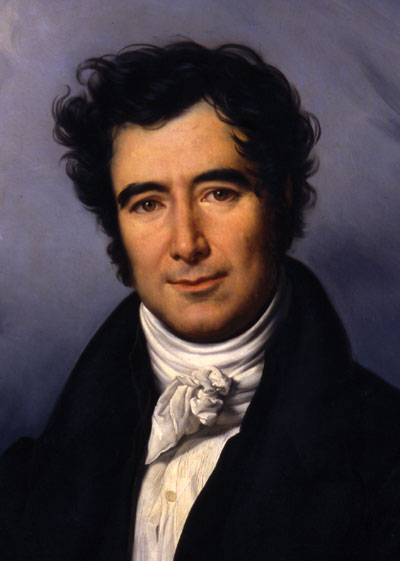
661. Jan 03: c. 1805, physicist Francois Arago talked a friend out of trying (and likely succeeding) to assassinate Napoleon!  This comes  from Arago’s autobiography, which is so wild that I’m going to have to blog about it in the near future!  This incident occurred when Arago was still in school; Napoleon demanded a “loyalty oath” from the students, and many of those who refused were drummed out of school.  One of Arago’s friends who was expelled later confided to Arago that he planned to assassinate Napoleon, had trained extensively as a marksman and had picked an ambush point along the Emperor’s parade route! Arago managed to delay his friend’s plans and later convinced him to pursue other activities.

Posted in Weirdscifacts | 2 Comments

A camera fast enough to watch light move?

ResearchBlogging.orgA few weeks ago, a new optical imaging system grabbed headlines throughout the world.  This system, labeled a “picosecond camera”, can seemingly record images so fast that it can  actually track the motion of light itself!  Consider the following video taken by the camera (source):

If you were to be shown this video without any context, you would justifiably think that it represents someone slowly sweeping a “searchlight” of sorts over the cylinder and tomato.  What you are really seeing, however, is the evolution of a spherical wave of light as it spreads from the lower right corner of the image towards the upper left.  Of course, you are seeing the light reflected from the various objects as it spreads, but the camera is so fast that it is able to make a movie of a light pulse as it travels.

There are caveats, of course: the finished image that you are seeing is not simulated, but is nevertheless the result of computational techniques and many, many, repeated experiments.  This isn’t really a “bug”, though, but a “feature”: the researchers at the MIT Media Lab’s Camera Cultures group have devised a clever method to show us something truly unique — and these visualizations may have practical applications.

Continue reading

Posted in Optics | 6 Comments

Weird Fiction Monday: The Brotherhood of Lightning

It’s time for Weird Fiction Monday, when I post stories that I’ve written — both new and old — for the entertainment (hopefully) of my readers!  As always, I note that I haven’t done extensive editing of the tales here, so don’t be surprised to find the writing a little rough.

This story is a tribute to a good friend of mine, and the hero of the story is based closely upon his personality and life.  If you’re attentive, you can figure out his name from the story!  This was the first piece of writing I finished for the New Year!

The Brotherhood of Lightning

When I first looked in the rearview mirror and saw the flashing lights of the police car behind me, I was actually relieved. That may sound strange at first, but you see, I get pulled over a lot. It doesn’t matter what city I’m in, or what vehicle I’m in, or even if it’s a borrowed vehicle; on average, I get stopped by the cops probably once a month. I never get a ticket, though. I’m pulled over for a variety of reasons, but there’s never any grounds to write me up. The best I can explain it? Police find me fascinating.

So when I saw the flashing lights behind me, I was relieved because I could hopefully get some directions from the patrolman after he satisfied his curiosity about me. When the officer got out of his vehicle and unsnapped the holster of his sidearm, however, that relief began to wane, a bit.

Continue reading

Posted in Fiction, Personal | 2 Comments

Weird science facts, December 21 — December 27

Time for a holiday edition of Twitter #weirdscifacts!  Alas, there’s nothing particularly holiday-themed about this collection of facts, but they are weird!

648. Dec 21: Scientific paper retraction by reason of insanity?  In 1951, an entomologist published a paper about “a mite infestation of her scalp that resisted all treatment and was undetectable to anyone other than herself”.  It is now thought that her infestation was imaginary, in what is referred to as “delusional parasitosis”.  (h/t @bonegirlphd)

649. Dec 22: The diamond weevil actually has diamonds (of a sort) on it!  The “diamonds” in question are not true diamonds made of carbon, but are crystals with the same sort of molecular structure.  (h/t @bug_girl)

650. Dec 23: Magnetic bacteria!!?? I actually forgot to include the link on this tweet originally!  Remarkably, a variety of bacteria contain magnetic nanoparticles that allow them to “swim” along magnetic field lines.  (via @boraz and by @labratting)

651. Dec 24: There is actually a beetle named after Robert Redford! (h/t @bug_girl!)

652. Dec 25: What is the psychology of a prisoner or prison guard? The 1971 Stanford prison experiment

653. Dec 26: Uranus is the coldest planet in the solar system: as low as 49 degrees Kelvin above absolute zero on cloud tops!  Most planets generate heat in their interior that, together with solar radiation, keeps the surface temperature relatively high.  Uranus is evidently missing that internal source of heat, and is consequently very cold.

654. Dec 27: The gentleman who “hacked” the wireless telegraph in 1903!  We tend to think of hacking as a very recent phenomenon, but during a public demonstration of Marconi’s telegraph the machine started printing out rude messages, seemingly of its own volition!  The culprit was a fellow wireless dabbler whose own research had been frustrated by Marconi’s stifling patents. (h/t @nickycast)

Posted in Weirdscifacts | 1 Comment

Todd Strasser’s “The Wave”

I haven’t had the opportunity to talk about any weird fiction for a while, and I thought I’d get back on the horse by discussing a short novel that technically isn’t “weird fiction”, but it definitely is weird and fiction!

This one has in fact been on my mind for quite some time: the very short young adult novel The Wave, written in 1981 by Todd Strasser.

The Wave tells the story of what seems at first to be an innocent high school classroom experiment.  When history teacher Ben Ross shows his class a movie about the Holocaust, his students can’t understand how ordinary Germans could be drawn into such an inhuman ideology.  Troubled by his inability to understand this himself, the next day in class he introduces “The Wave”: a new movement to inspire discipline and community. For the first lesson, he introduces them to the slogan “Strength through discipline”, in which they must follow the teacher’s commands in an efficient and unquestioning manner. The next lesson, “Strength through community”, teaches the students to sacrifice their individuality in the service of their greater community.  In the third lesson, Ross teaches the class “Strength through action”, in which they put their new-found discipline and community to use in achieving their goals.

At first, the experiment seems, counter to intuition, to be a positive one.  But soon “The Wave has taken on a life of its own, spreading to hundreds of students in the school, and Mr. Ross is being treated as an almost militaristic leader.  When sporadic violence erupts, in the name of “The Wave”, Ross’ brightest students (and non-“Wave” members) begin to worry that he has created a monster — and may not be willing or able to stop it anymore.

Continue reading

Posted in Weird fiction | 3 Comments

A Michael Faraday Christmas: “Forces of Matter”!

This post was written somewhat in conjunction with Jennifer Ouellette, who is posting at the same time at Cocktail Party Physics about Michael Faraday’s other classic Christmas lecture, The Chemical History of a Candle.  Check it out, too!

Ah, Christmas!  This is the time of year when I get together with family, exchange presents — and ruminate on the life and work of Michael Faraday.

It might seem an odd non sequitur to think about physicist and chemist Michael Faraday (1791-1867) during the holidays, but it is in fact highly appropriate.  In addition to being a master scientist who helped unify the forces of electricity and magnetism, as well as magnetism and light, Faraday was a master lecturer.  In 1825, in his new role as director of the laboratory of the Royal Institution, he instituted a yearly series of Christmas lectures to inform and educate the general public (especially young people) about science — these lectures are still ongoing today.  Between 1827 and 1860, Faraday personally gave the Christmas lectures nineteen times, speaking on a variety of subjects.

Faraday giving a Christmas lecture in 1856 (source).

Unfortunately, records of only two of these lectures have survived: A Chemical History of a Candle (first given in 1848) and The Various Forces of Matter and their Relations to Each Other (given in 1859).  Both of them are brilliant examples of clear scientific exposition, and in spite of how little was truly understood about physics and chemistry in the era they are still educational and even timeless.  On this Christmas, I thought it would be worth looking at some aspects of Faraday’s fascinating views on the “forces of matter” in 1859.

Continue reading

Posted in History of science | 3 Comments

Weird science facts, December 14 — December 20

Whew! It’s gotten quite tricky to turn up unused #weirdscifacts, even though I’m sure I’m hardly scratching the surface.  Nevertheless, I’m still going strong!

641. Dec 14: Dolphins playing with humpbacked whales??!!  We’ve seen interspecies cooperation in previous weird science facts, but this is the first one we’ve shown that involves different species playing with one another.  (h/t @edyong209)

642. Dec 15: This is amazing: first “smoke recordings” of human voice from 1860 reconstructed in 2008.  Amazing still isn’t a strong enough word: “awe inspiring” is the phrase that now comes to mind.  These smoke recordings represent the first recordings of the human voice, but it took nearly 150 years for these recordings to be played back.  To listen to them feels like listening to a ghost from the past.

643. Dec 16: New post: Sir Edmond Halley takes a dive! (1714)  This of course is my own post on Sir Edmond Halley, most known for “Halley’s comet”.  Way back in 1714, Halley had perfected the diving bell to the point where he could comfortably stay for an hour or more under 60 feet of water!

644. Dec 17: IPHAS named a nebula after Crown Prince of Spain as wedding gift.  (h/t @allinthegutter)

645. Dec 18: #weirdscifacts from last month: spiders dosing their web with poison?  (h/t @drrubidium)

646. Dec 19: ‘Vocal fry’ is spreading among young American women, thanks to pop music?  This ‘fry’ is a creaking sound used by pop stars to reach low notes.  It turns out that research shows it becoming trendy in normal speech, at least among American English speakers.   (via @moximer)

647. Dec 20: Is it possible to swim in the sand? The sandfish lizard can! “Sandworms.  You hate ’em, right? *I* hate ’em!”

Posted in Weirdscifacts | 2 Comments

My 1000th skydive!

Well, I finally did it — I made my 1000th skydive!  On the 18th of December, 2011, my friends came out to join me in celebrating this milestone.  The video is posted below.

We had done a practice jump (number 999) earlier, which didn’t go so great, so we opted to make number 1000 a relatively simple jump.  The goal was simply to get all nine of us together in a “round” formation, then to have me go in the middle and spin around, and finally have me return to the “round” before break-off.

Remarkably, we pulled it off!  I say “remarkably” because every previous “100 jump milestone” of mine has been a disaster, at least in terms of accomplishing the formation goals we set.

The video was done by my friend Terry Hopkins, and the others on the skydive were a combination of my regular jump friends and some new friends!

(Incidentally, if 1000 skydives seems like a lot, I should point out that there are people out there who have made 40,000 skydives!)

Posted in Personal, Sports | 8 Comments