The Giant’s Shoulders #33 is up!

Today’s the day to read your monthly compilation of history of science posts — The Giant’s Shoulders #33 is out at The Renaissance Mathematicus!  ThonyC was busy, so Sascha the canine philosopher filled in to give us an excellent carnival through the eyes of a dog!

The next edition will be back under human control — Jai Virdi at From the Hands of Quacks will host the April carnival.  Entries should be submitted by the 15th of the month to the Blog Carnival website or directly to the host blog.


Posted in General science, Science news | 1 Comment

Weird science facts, March 2 — March 8

In less than a week, I’ll have done a #weirdscifacts a day for a full year!!!!!!!!!!!!!!

Here are the past week’s facts:

354. Mar 02: Physics Nobelist Shockley was troubled, and once attempted suicide with solo game of Russian roulette.

355. Mar 03: The gin-and-tonic laser! We’ve noted in previous facts that physicists like to do interesting things with booze — Glaser’s experiments with bubble chambers using beer, for instance.  Post by @oliviakoski!

356. Mar 04: Curse of the cubic! Lots of mathematicians who worked on polynomial equations met bad ends.

357. Mar 05: In 1919, radium was world’s most expensive substance at $3 million/ounce. The Curies, who discovered radium, took years and processed tons of raw ore to get a tenth of a gram of the substance.  It discuss the history briefly in this old post; with this in mind, it is not surprising that the substance ended up being so expensive! (via yesterday’s “Final Jeopardy”; I got it right!)

358. Mar 06: Have I mentioned yet that Brian May of “Queen” has a Ph.D in astrophysics? May was studying astrophysics before the band took off; in recent years, he went back to school and finished his degree!

359. Mar 07: Chemist Carl Scheele (1742-1786) likely died from his extensive exposure and taste testing of chemicals, including cyanide! Nobody is certain what exactly caused his death, but it was almost certainly due to experimentation.  He apparently was also aware of the risks, referring to his poor health as “the trouble of all apothecaries”.

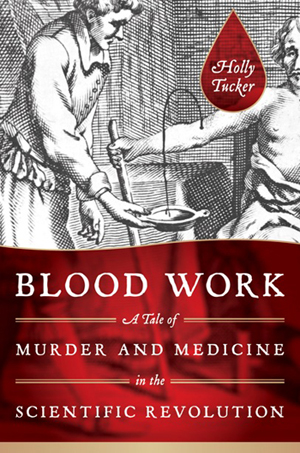
360. Mar 08: When George Washington died in 1799, a doctor offered to resurrect him via blood transfusion! (via @history_geek’s newly-released book “Blood Work“!)

Posted in Weirdscifacts | 8 Comments

6 days until the deadline for The Giant’s Shoulders #33!

This is the monthly reminder that the deadline for The Giant’s Shoulders, the monthly history of science blog carnival, is only six days away! The Giants’ Shoulders #33 will be hosted by Sascha the canine philosopher at The Renaissance Mathematicus. Submissions as usual either direct on the host c/o Thony C. or at the Blog Carnival website by 15th March at the latest.

As an important aside, we still desperately need more hosts for upcoming editions of the carnival!  If you’re a historian of science of just a blogger with an interest in the history of science, please consider volunteering for an upcoming month!

Posted in General science, Science news | Leave a comment

Cats, cats, cats!

I’m struggling to get a new optics post going for the blog; I’ve got a number of possibilities I’m exploring, but it will likely take a few days to get it going.  In the meantime, I realized I haven’t done a catblogging post for a long, long time!  Now seems like a great time to share some pictures that I’ve had around for a while of the kitties!

Continue reading

Posted in Animals, Personal | 17 Comments

Peter Straub’s Ghost Story

I have historically had a curious quirk about my fiction reading that I suspect a lot of people share: the more famous a work is, the less motivated I am to read it.  This may be the hipster within me acting out, but fortunately in more recent years I’ve combated this tendency and have caught up on a number of books I should have read a long time ago.

Among my recent victories was finally reading Peter Straub’s Ghost Story (1979):

Straub’s book was a bestseller upon its release, a watershed in Straub’s career, and even resulted in a 1981 movie (more on this in a moment).  There probably isn’t much I can say about this monumental work that hasn’t already been said a zillion times on the internet before, but it’s my blog and I’m going to share my thoughts on it anyway!

Continue reading

Posted in Horror | 8 Comments

A short promotional post: Math Methods is available on Amazon!

At the risk of turning this blog into a series of shameless self-promotions (perhaps it is already too late), I should note that my textbook is now available on amazon.com!

I wasn’t paying close attention, because Amazon originally showed it as being released at the end of February, but it seems it got released in the middle of the month instead.

In what seems to be good news: even though it’s only been on the market for a short time, as of this writing Amazon has only one copy left in stock!  The book is either selling well or they didn’t bother to stock any copies!  (Also, how is it that there are already 2 “used” copies being sold — at $20 higher cost than a “new” one?)

P.S.  For instructors out there who might be considering using the book in a class: there will be a solutions manual, which I am currently trying to finish!  It’s taking some time to compile the solutions from old homeworks that I’ve used in class.  Hopefully within the next month I’ll have the manual available through the Cambridge site.

Posted in Optics, Personal | 6 Comments

My interview on Peer Review Radio!

Those who follow me on Twitter have already heard this, but for those who haven’t: I was interviewed by Adrian Ebsary for an episode of Peer Review Radio that was broadcast on Tuesday!

The episode is titled, “Go sing it on the mountain — communicating science online”, and I pontificate in it on the history of science, open science, and of course online science communication.  I’m in great company, as the other interviewees are Bora Zivkovic, Chris Gunter, and Marie-Claire Shanahan.

Give it a listen if you have a chance, and let me know what you think!  To be honest, I haven’t listened to the finished episode myself yet — I’m afraid to find out what I sound like!  (I’ll be listening over the next couple of days.)

It was my first official radio interview, and it was a lot of fun! Thanks to Adrian for inviting me!

Posted in General science, History of science, Personal | 8 Comments

Weird science facts, February 23 — March 1

I’m getting tantalizingly close to having posted a full 365 days of #weirdscifacts on Twitter!  Here are the past week’s facts:

347. Feb 23: Paleontologist C.D. Walcott (1850-1927) was inspired to study Cambrian strata when his wagon hit & split open a sandstone fossil rock. Lots of scientists have had their careers dictated by odd chance: we’ve mentioned previously physics Nobel prize winner Chadwick, who intended to study math but accidentally sat in on the physics entrance exam!  Walcott’s career was literally determined by a bump in the road.  (Source for #weirdscifacts [pdf, p. 5])

348. Feb 24: Largest recorded beaver dam: 2790 ft long, in Northern Alberta, Canada. That is, for the record, over nine football fields in length!  It was obviously made by multiple families of beavers working together.

349. Feb 25: In 1929, Werner Forssmann put a catheter into his own heart, tying up a nurse who tried to stop him! With the catheter in place, he then walked himself up to the X-ray room to take an image and prove that he had accomplished his goal.  (h/t for last #weirdscifacts to @JenLucPiquant and @io9, and this article)

350. Feb 26: Getting X-rays from scotch tape! I wrote a blog post on the subject some time ago.  When tape is peeled, electric charges are separated between the peeled and unpeeled portions.  In a vacuum, the electrons can “jump” back across the gap, and release X-rays upon deceleration.  Don’t worry — under ordinary circumstances (ordinary atmospheric pressure), there are no X-rays released.

351. Feb 27: The cousin of the Schrodinger’s cat thought experiment: quantum suicide!

352. Feb 28: The Campbell-Stokes sunshine recorder — invented in 1853 and still used today. With a wooden bowl and a glass sphere, you too can record the intensity of sunlight over the course of the day! (h/t @patrickneville)

353. Mar 01: “Cactus Walking On 20 Legs Found In China“. This ancient creature was a type of spindly worm, and is only known through the fossil record.  Did it actually “walk”?  We don’t know for sure.  Nevertheless, it is a very weird creature. (Post by @rkrulwich)

Posted in Weirdscifacts | 3 Comments

The Saga of the Scientific Swindler! (1884-1891)

When reading of the achievements of a giant of scientific thought such as Einstein, Feynman or Darwin, it is far too easy to envision the person, and scientists in general, as some sort of being above the worries of daily life.  The reality, of course, is that scientists are subject to the same emotions and problems as the rest of humanity: they can be irrational at times, angry at others.  Scientists can be fleeced by a clever con-man — and can even become the con-man themselves.

In the 1880s, a fascinating chain of letters appeared in the magazine Science and in other publications, including the New York Times.  The scientific community was being victimized by a clever confidence man, who was working his way into members’ trust and then stealing from them.   The exploits span at least 7 years and stretch over much of the United States.  Most surprising about it, however, is that the con artist was so successful because he was apparently trained as one of their own.

In this post we’ll trace the path of this mysterious swindler and the chaos he wreaked upon the scientific community.  Along the way, we’ll get a glimpse of the social interactions of scientists at the time and their very human nature, for good and ill.

Continue reading

Posted in ... the Hell?, History of science | 53 Comments

Weird science facts, February 16 — February 22

I’ve been working on another history of science post, but it is taking quite a bit of effort, so I haven’t posted anything on the blog since last week’s Twitter #weirdscifacts!  Sorry if it seems like I’m all weird science facts, all the time, but new posts will be coming soon.

Incidentally, you may notice that I’m really, really close to having done a full year’s worth of #weirdscifacts!!! I’d like to present some pretty weird stuff for the final week, so if you’ve got something bizarre to share, please let me know.

340. Feb 16: Another fun Komodo dragon fact: young smear themselves w/ feces to avoid being eaten by adults. Komodo dragons are not above eating their young, but they are averse to eating poo.

341. Feb 17: Lesson concerning self-experimentation: Reichelt’s 1912 disastrous & fatal Eiffel Tower parachute test. The amazing thing is that Reichelt was given permission to run the test using a dummy.  He ostensibly had arrived at the tower to do such a test, but revealed his intention to do the jump himself at the last minute.  Impulsiveness + skydiving = bad idea.

342. Feb 18: Abraham Lincoln tried to square the circle! (by @divbyzero)  “Squaring the circle” refers to the classic mathematical problem of drawing a square with the same area of a given circle using only a compass and a straightedge.  The problem in this form goes back at least as far as the ancient Greeks, though even earlier mathematicians tackled closely related ideas.  It was proven to be impossible in 1882, but unfortunately Lincoln didn’t live long enough for the revelation.

343. Feb 19: The man who stuck his head in a particle accelerator. (h/t @patrickneville)  Considering the beamline of an accelerator is, in essence, carrying a beam of radiation in it in the form of ultra-high energy particles, it is considered a bad idea to stick any part of the body into the beam.  The fact that safety mechanisms were not present to prevent such an occurrence is amazing in itself.

344. Feb 20: Highest g-force survived by a human: 46.2g (!), c. 1950.  Intentional test by pilot John Stapp. Keep in mind that this is equivalent to suddenly becoming 46.2 times as heavy!  Stapp would be subject to rapid accelerations/decelerations via rides on a rocket sled.  To consider how crazy this is, before Stapp’s work the human body was thought to be able to survive 18 g’s at most.

345. Feb 21: Telescopes can, and have been, made out of big pools of spinning liquid mercury. Mercury is highly reflective, and when a dish of it is spun the surface forms a perfect parabola, ideal for image formation.  A giant mercury mirror is much, much cheaper than a solid mirror; the disadvantage is that the mercury mirror can’t be tilted, for obvious reasons.

346. Feb 22: Bloop!  ‘Nuff said. This one also counts as a #creepyscifacts!  In 1997, an unidentified, extremely loud low frequency sound was detected in the ocean.  The signal seems to have been produced by a living creature, but was louder than any known animal can produce.  The online promo material for the movie Cloverfield tied the “Bloop!” to the movie’s monster.

Posted in Weirdscifacts | 4 Comments