Leonard Cline’s The Dark Chamber

Lovecraft’s essay Supernatural Horror in Literature is a great starting source for finding very good but relatively unknown horror gems.  I’ve been slowly working my way through Lovecraft’s picks, and recently Leonard Cline’s The Dark Chamber (1927) caught my eye:

thedarkchamber

Lovecraft adored this novel!  After working his way up the library waiting list to read it, he wrote ecstatically about it to Donald Wandrei on March 16, 1928:

My only reading since “Witch Wood” has been “The Dark Chamber” by Leonard Cline, & this is an absolutely magnificent work of art!  Poetry — song — & the ultimate quintessence of atmospheric morbidity & horror.  It rambles unfortunately in its effort to build up a dense miasma of unwholesomeness & madness, but even the divagations are authentic art.  And the main stream is superb — the terrible quest of a scholar back through the corridors of memory, personal & ancestral.  Ugh!  The strange odour…. & that hellish hound Tod, that bays in the night…. Don’t miss it!

A good recommendation, eh?  In a rare occurrence, however, I find myself somewhat in disagreement with Lovecraft.  I enjoyed The Dark Chamber, but found it fell short of my expectations.

Continue reading

Posted in Horror | 4 Comments

Thomas Levenson’s Newton and the Counterfeiter

About a month ago, I noted that Thomas Levenson’s book Newton and the Counterfeiter (2009) is now available:

newton

The book is the story of how the great scientist Isaac Newton, after making the discoveries which electrified the scientific world, took a job as the Warden of the Royal Mint, an official charged with protecting the nation’s currency.  In this role, he came into contact, and conflict, with a criminal mastermind and counterfeiter William Chalconer, and the two would play a game of cat-and-mouse with life literally at stake.

When I’ve told people about this book, they ask, “For real?”  They naturally assume that the book is historical fiction, but it is in fact a true story!

I bought the book immediately, but didn’t read and review it right away: I figured that a book with such subject matter would naturally be an instant hit!  But as Tom Levenson noted on his own blog, the book has not gotten the publicity it needs (I would say deserves), so I thought I’d do my own part to draw people’s attention to it.

It deserves your attention, too: if you’re a fan of history, a fan of science, a fan of true crime stories, a fan of economics, or just interested in reading a good, true, tale, Newton and the Counterfeiter is well worth your time.

Continue reading

Posted in History of science, Physics | 8 Comments

Maxwell on Faraday

I’m working on a few longer posts at the moment, but in the meantime I thought I’d share a nice little passage I came across while looking through James Clerk Maxwell‘s A Treatise on Electricity and Magnetism (1873).  Maxwell, of course, was the scientist who theoretically put together, for the first time, a complete set of equations of electricity and magnetism, the eponymous Maxwell’s equations, and also used these equations to postulate that light is an electromagnetic wave.

I’ve blogged a lot about the accomplishments of Michael Faraday, who did most of the experimental legwork which allowed Maxwell to make his discovery.  This relationship was not lost on Maxwell, who had nothing but unadulterated praise for his predecessor in the introduction to his own text:

Continue reading

Posted in History of science, Physics | 3 Comments

Skating a rollercoaster?

I know people will call me nuts, but this looks like fun: via The Daily Mail, we learn that an extreme sports enthusiast took a high-speed ride on a rollercoaster — on specially designed roller skates!

An adrenaline junkie has taken in-line skating to new heights and set a new world record after racing down a roller coaster at speeds of 56mph.

Dirk Auer decided to go where no sane man or woman had gone before and skated down an 860 metre track in just over a minute.

Wearing specially designed in-line skates, the German made the attempt on the Mammoth roller coaster at the Trips Drill theme park in Stuttgart.

There’s several photos accompanying the feat, including this one:

From a physics point of view, this is sort of interesting.  On the one hand, it’s probably easier to skate a coaster than it looks, because the banked turns of the coaster are designed to keep the forces a rider experiences pointing down into the track, meaning that one would expect that forces tugging from side to side are not too bad.  On the other hand, I get the impression that Auer was traversing the coaster faster than a normal car would, which means that the banked turns would not compensate as well for his motion.

I predict that I won’t have to wait too long to try such a thing: I’m guessing some enterprising theme park manager will design a ride similar to Auer’s feat, though probably not one going quite so fast…

Posted in Sports | 2 Comments

Hummingbirds move fast!

Less than 24 hours after putting up a new hummingbird feeder, we have this:

hummingbird01

hummingbird02

This one is from a little later in the day:

hummingbird03

We’ve got a lot of birds visiting our yard these days, so much so that we’ve had to get more feeders.  I’ll put up more bird pics once I get good ones (damn cardinals never sit still).

Posted in Animals | 7 Comments

Lord Dunsany’s Pegana

A bit over a month ago, I decided to read a few of Lord Dunsany’s plays after reading Lovecraft’s glowing review of them in Supernatural Horror in Literature.  The plays are wonderfully eerie and capture the spirit of ancient myths and folktales, in which people sin against the Gods, and the Gods, in a pissy mood, bring divine justice against the sinners.

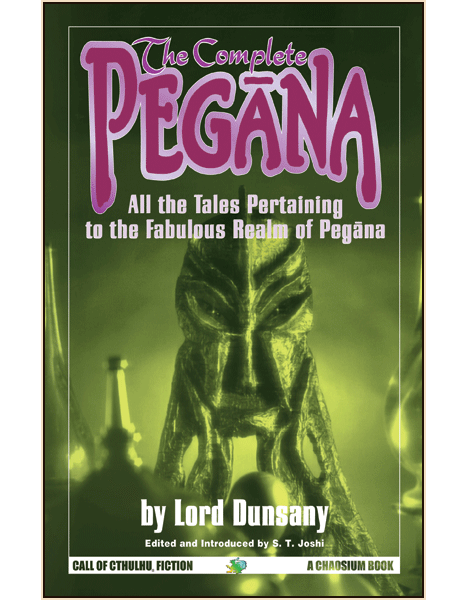
Dunsany’s most influential works relating to ancient myths are his Pegana1 stories, within which a complete fictional pantheon and its associated mythology are constructed.  Below is the cover of the Chaosium edition, which collects all of Dunsany’s tales of Pegana:

pegana

The Complete Pegana combines three of Dunsany’s collections: The Gods of Pegana (1905), Time and the Gods (1906), and three later stories grouped as Beyond the Fields We Know.

In a word, these tales are magnificent!  There have been plenty of authors who have created their own fictional mythos, but I can’t think of any other who so perfectly captures the spirit of ancient myths and bends that spirit to his own purposes.

Continue reading

Posted in Fantasy fiction, Lovecraft | 4 Comments

CAREER award craziness!

Sorry the blog has been quiet recently.  I’m in the midst of putting the finishing touches on an NSF CAREER award proposal, and that’s been taking up all my mental energy.  The proposal is due on Wednesday, so I’ll be back to blogging stuff in a couple of days.

Fortunately  or unfortunately, I should have tenure by this time next year and thus ineligible to put myself through this again…

Posted in Personal | 1 Comment

Edward Lee’s Ghouls

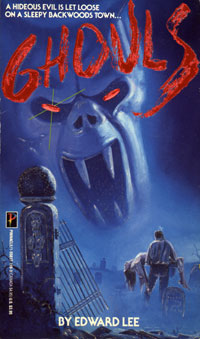
When I was a teenager, I used to read a lot of horror novels, some good, many very bad. In fact, I gave up on reading horror for a number of years due to my frustration. After starting the blog, though, I decided to hunt down and reread those novels which stayed with me through the years. A lot of pretty good books have come and gone, and deserve at least a mention. My first reread was Seth Pfefferle’s Stickman, some time ago; my second is Edward Lee’s Ghouls (1988):

ghouls

Edward Lee is known as one of the most “hardcore” horror authors writing today, combining graphic sex and violence with supernatural horror.   Ghouls is technically not his first novel, but it is his first major novel and is characteristic of his later works though not quite as graphic.

Continue reading

Posted in Horror | 4 Comments

The Giant’s Shoulders #13: A day at the fair!

Welcome to the 13th edition of The Giant’s Shoulders, the history of science blog carnival!  This carnival marks the one year anniversary since its inception, so I thought I’d take us somewhere special and historical — the fair! Not just a county fair, not just a state fair — but a World’s Fair! Specifically, the 1893 World’s Columbian Exposition:

Court_of_Honor_and_Grand_Basin

The Columbian Exposition holds a special place in my heart: it was the first World’s Fair in Chicago,  and it was held on the very spot I spent my undergraduate years.  A number of other things made their first appearance at the Fair:  Nikola Tesla’s alternating current electrical system was unveiled in its first large-scale demonstration to illuminate the fair, and the world’s first Ferris Wheel was constructed there.

To celebrate the 1-year anniversary of the carnival, I’ve seized control of the various exhibit halls of the Columbian Exposition to present this month’s carnival entries!

Continue reading

Posted in General science, History of science | 19 Comments

That’s roughly a ‘2’ with 16 zeros after it…

Via Huffington Post, we get the following bit of banking absurdity:

A New Hampshire man says he swiped his debit card at a gas station to buy a pack of cigarettes and was charged over 23 quadrillion dollars.

Josh Muszynski (Moo-SIN’-ski) checked his account online a few hours later and saw the 17-digit number – a stunning $23,148,855,308,184,500 (twenty-three quadrillion, one hundred forty-eight trillion, eight hundred fifty-five billion, three hundred eight million, one hundred eighty-four thousand, five hundred dollars).

Muszynski says he spent two hours on the phone with Bank of America trying to sort out the string of numbers and the $15 overdraft fee.

Two immediate interpretations come to mind:

  1. Americans really have racked up a shocking amount of personal debt.
  2. The taxes on cigarettes have gone ridiculously high.

Feel free to suggest other interpretations in the comments.

I especially like the fact that he was on the phone with the bank for two hours about this.  I can just hear the service representative: “Sir, are you certain that you haven’t written any 23 quadrillion dollar checks this week?”

(Unrelated news: Next Giant’s Shoulders will be up tomorrow, right here!)

Posted in ... the Hell? | 3 Comments