
Over a decade ago, at the beginning of this blog, I wrote a blog post about some classic math puzzles where a nonsensical result is arrived at by seemingly plausible mathematics; in the post, I challenged folks to figure out the mistake before reading the answers! That post went viral, and was for a while the main driver of traffic to my blog. (Now the main driver is a post about how to hook up a PlayStation 2 to a modern TV.)
This week, I’ve been finishing up my next book project, on the history of invisibility, and in hunting down some references, I had to go to a 1904 issue of The Strand magazine. This led me down a rabbit hole of weirdness, and I wrote a long viral twitter thread about everything I found.
This included another math puzzle, which I post below!
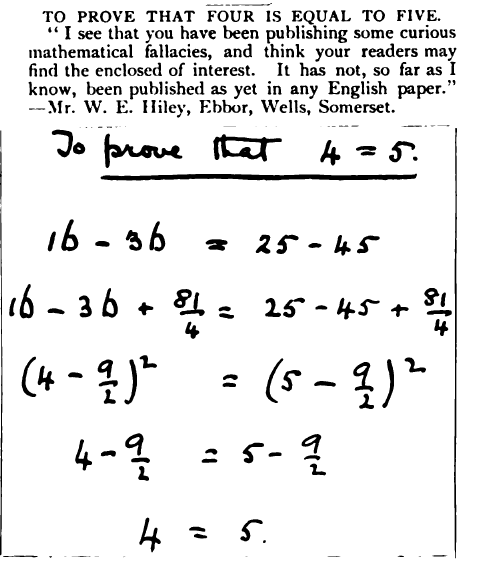
The solution to this puzzle is similar to one from my older post, but I thought I would share it anyway and let people figure out where the math went wrong! A hint, and then the answer, given below the fold.
Continue reading


 Skulls in the Stars