Fake Book Titles Extravaganza!

I blame my twitter friend Bhaal_Spawn.  One Friday, a couple of months ago, she joined into a #FakeBookTitleFriday hashtag, in which one Photoshops new (and silly) titles onto covers of old books that are otherwise suggestive. Her thread can be seen here.

Of course, the concept of making fake book titles is not new, as Paperback Paradise has been posting hilarious covers for quite a while now, but I hadn’t felt the urge to try my hand at them myself.  But I was suddenly inspired (and probably looking for approval from Bhaal_Spawn, who is totally cool), and I started my own rapid-fire set of Fake Book Titles.

And I’m still doing them!  I must admit that I’m a bit addicted at this point. It is not only a way for me to exercise my funny bone, so to speak, but also to get some practice at Photoshop, so it’s a win-win for me.  But not everyone who follows the blog follows me on twitter, so I thought I’d share the massive collection of titles I’ve made so far over here, for your entertainment!  (I also wanted to collect them all in one place.)

Here they are, in order of my tweeting them!  Note that many of them use foul language, and a couple have partial nudity, so if this offends you, you might want to steer clear!

So without further ado, here are my Fake Book Titles!

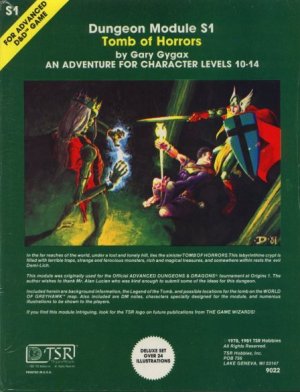
Original title: Nurse In Training.

Continue reading

Posted in ... the Hell?, Silliness | 6 Comments

History of the Conservation of Energy: Booms, Blood, and Beer (Part 2)

Part 2 of a trilogy of posts describing the history of the discovery of conservation of energy, inspired by my research on “Falling Felines and Fundamental Physics.” Part 1 can be read here.

In 1798, Count Rumford presented the first significant challenge to the caloric theory of heat, arguing that the seemingly endless amount of heat that could be generated by boring cannons was inconsistent with the idea that heat is a fluid that lies latent in all materials — and can therefore be exhausted.  Rumford subscribed to the alternative, and it turns out correct, theory: that heat is the observable effect of random motion of particles.

But Rumford did not significantly shift the scientific consensus. In the view of most researchers, the evidence still strongly favored the caloric theory, and Rumford’s results were viewed by some as actually bolstering that theory.

It would be a number of years before the next true milestone in the idea of conservation of energy, and it would also come from an unlikely source: a physician, serving as a doctor on a ship sailing to the Dutch East Indies.  Julius Robert Mayer would introduce the first formal statement of what we now know as the conservation of energy — by making an amazingly astute observation about blood.  His discovery, however, would cost him dearly in the long run.

Continue reading

Posted in History of science, Physics | 2 Comments

Dreadnought, by April Daniels

A young girl, who is alienated from her friends and family because she feels she must hide who she truly is, witnesses a battle between the world’s greatest superhero, Dreadnought, and a mysterious powerful new enemy.  In the end, Dreadnought falls. Before he dies, however, he passes on the power of Dreadnought to Danny, who must now decide what to do with this incredible gift.

It is, in its broad strokes, a familiar story.  But in April Daniels’ 2017 novel Dreadnought, Danny is a trans girl, born into a male body. The power of Dreadnought transforms Danny’s body into the form that she knew it always should be — but this comes with its own challenges, which pile on top of the burden of having inherited the mantle.

Though, as I said, the origin story of Dreadnought here is a broadly familiar one, April Daniels spins it into a fun, fast-paced, and enjoyable tale, with an impressive amount of world-building and interesting twists.

Continue reading

Posted in Adventure fiction, Science fiction | Leave a comment

Way of the Worm, by Ramsey Campbell

Over the summer, I blogged about the first two books in the “Three Births of Daoloth” trilogy by Ramsey Campbell, an ambitious work of cosmic horror that spans decades and follows the struggles of Dominic Sheldon against a family that threatens to destroy not only his family and life but the very world.

This October, the third book in the trilogy, The Way of the Worm, was released, and I wasted no time in reading it.

In my humble opinion: Ramsey Campbell has accomplished a rare and impressive feat: the creation of a compelling, intriguing, and haunting trilogy of horror.  As I noted in my previous post, it is relatively rare to see trilogies in horror that are a single, complete story arc.

Continue reading

Posted in Horror | 1 Comment

History of the Conservation of Energy: Booms, Blood, and Beer (Part 1)

Another post inspired by my research into my Falling Felines and Fundamental Physics book!

Energy cannot be created or destroyed, but merely converted from one form to another.

Such is a typical statement of the law of conservation of energy, one of the most important unifying principles of physics.  We constantly experience its effects in our day to day lives, whether we recognize it or not.  When we accelerate our car, for instance, chemical energy in the fuel is converted into rotational energy in the wheels (with some lost as heat), which is in turn converted into kinetic energy — energy of motion — which carries us from place to place. When we step on the brakes to stop the car, that kinetic energy is converted into heat and some sound energy.

The conservation of energy proves the non-existence of perpetual motion machines: in order for a machine to provide unending motion, it must have an inexhaustible source of energy to power it. Or, in other words: you can’t get more energy out of a machine than you put into it.

An illustration of a perpetual failure, via volume 1 of The Harmsworth Magazine, 1899.

The conservation of energy has even led to important new discoveries. In the 1920s, physicists realized that energy (and momentum) was seemingly not conserved in the process of beta decay, in which an electron or positron is emitted from an unstable atomic nucleus.  Though some physicists (looking at you, Niels Bohr) were tempted to throw out the principle of energy conservation altogether, Wolfgang Pauli suggested in 1930 that there must in fact be another particle released in the decay — chargeless, nearly massless, and hardly interacting with ordinary matter. Experimental searches confirmed the existence of the neutrino, which is a key component in the current “theory of everything,” the Standard Model of Physics.

Though the conservation of energy is of fundamental importance in physics, it is a relative newcomer in the history of the subject.  Isaac Newton’s Principia was published in 1687, marking the start of quantitative theoretical physics, but conservation of energy was not established until the 1840s, over 150 years later.

Even more curious is the manner in which the three key discoveries were made. The earliest major breakthrough was made via cannon-boring, the next work was done by a doctor, and the conclusive research was done by a brewer! Hence, a simplified history of the discovery of the conservation of energy can be described as booms, blood, and beer!

In this post, I’ll summarize the early history of the subject, and talk at length about the “booms” part of the history. In the next two posts, we’ll cover “blood” and “beer.”

Continue reading

Posted in History of science, Physics | 2 Comments

Burnt Offerings, by Robert Marasco

For many years, I marveled at what appeared to be a genuine dearth of quality haunted house novels.  There are a number of undeniable classics, such as Jay Anson’s The Amityville Horror (1977), Stephen King’s The Shining (1977), Shirley Jackson’s The Haunting of Hill House (1959), and Richard Matheson’s Hell House (1971), but beyond these it becomes much harder to find good examples.

It turns out that there are, however, plenty of amazing haunted house tales; they’ve been lurking, just out of sight, for years, lost and largely forgotten like the houses they describe.  My friends at Valancourt Books have been leading the charge in reprinting some amazing work, such as Michael McDowell’s The Elementals (1981), Jack Cady’s The Well (1980), and Archie Roy’s Devil in the Darkness (1973), the latter of which I wrote an introduction for!

But my reading habits are fickle, and for some reason I put off investigating another classic released by Valancourt back in 2015, Robert Marasco’s Burnt Offerings (1973).

Continue reading

Posted in Horror | 2 Comments

RIP Simon, 2002-2018

It has been a hard year in many ways, but the worst of it has been the loss of numerous loved ones.  Last night, our beloved kitty Simon passed away suddenly at age 16, apparently from a heart problem.

Simon in September of 2015.

It is hard for me to write about the loss of another kitty, after Fluff and Sabrina earlier this year, so this post may not be as long as I’d like: it’s just too painful.  But I wanted to share some memories of this beautiful boy, and convey how much I’ll miss him.

Continue reading

Posted in Animals, Personal | 4 Comments

Of Men and Monsters, by William Tenn

I’ve noted a few times already that the series of SF Masterworks released by the Orion Publishing Group is a great way to get exposed to some great science fiction that has otherwise fallen off the radar in recent years. I’ve read Brian Aldiss’ Non-Stop (1958) and Nicola Griffith’s Ammonite (1992) in this reprint series, and being pleasantly surprised have gone through a number of others that I will blog about in due course.

One of those that I read some time ago and am only getting to writing about now is Of Men and Monsters (1968), by William Tenn.

The story is set in a distant future in which titanic, technologically-superior aliens have conquered Earth. Human civilization has collapsed, and the remnants of humanity have devolved into a primitive tribal state, living in the walls of the aliens’ homes.  From there, they make forays out into the dangerous living spaces, looking for food and supplies to subsist on.

Yes, humans are the mice in the walls of the aliens’ houses.

Continue reading

Posted in Science fiction | Leave a comment

Pendulums, spheres, and the spinning Earth

The first of what will hopefully be a small series of posts inspired by research on my Falling Felines and Fundamental Physics book, which will be sent to the publisher this week!  Made some small updates for clarity to the post since publishing.

In 1851, French physicist Léon Foucault achieved the seemingly impossible: he discovered a way to bring the motions of the cosmos into the lecture hall for anyone to see and understand.

The invention I’m talking about is now known as Foucault’s pendulum: a free-swinging pendulum that changes its direction of swing over the course of the day, and is a direct demonstration of the rotation of the Earth.

Though people of Foucault’s era certainly were aware of the rotation of the Earth, Foucault’s pendulum allowed anyone to see this motion, in real time.  Soon after Foucault’s discovery, his experiment was set up all over the world. People flocked to lecture halls with pendulums installed; after an hour-long presentation by a physicist, the audience could observe for themselves that the direction of swing had changed, directly in accordance with prediction.

Illustration of an 1861 Foucault pendulum demonstration at the London Polytechnic Institute. Image from The World of Wonders (1883).

Lots of people are aware of the connection between Foucault’s pendulum and the rotation of the Earth. Far fewer, however, are aware that the totality of Foucault’s pendulum experiments, done all around the world, demonstrate something just as profound: that the Earth is a sphere!

Explaining how this latter demonstration works takes a bit of effort, but the payoff is a profound understanding of a deep role that geometry plays in physics. In this blog post, I thought I would discuss everything about Foucault’s pendulum: its history, how it shows rotation, and how it shows the roundness of the Earth.

Continue reading

Posted in History of science, Physics | 4 Comments

Halloween Treats 2018

Every year, since the beginning of this blog, I’ve posted a selection of classic horror and ghost stories for Halloween, as “treats” for my readers! I was originally inspired to do this after I saw Miriam Burstein, who runs The Little Professor, do it first. In a brief exchange on twitter, we talked about how many of the original links to stories we used over the years have broken; I thought that, this year, I would largely focus on tweeting new links and summaries to some of my favorite stories!

For those interested in looking back, you can read the old editions here:   200720082009201120122013201420152016, 2017 and my 2010 post on the true story of the “Lady of the Lake“.

Let me add some of my greatest hits!

The Upper Berth, F. Marion Crawford (1886). Simply one of the best ghost stories ever written. A narrator describes his experiences in a seemingly haunted ship’s cabin. The ending sentences are some of my favorite in horror fiction.

Waxwork, A.M. Burrage (1927). For a story, a journalist volunteers to spend the night alone in a wax museum’s chamber of horrors, filled with replicas of some of the worst murderers in history. But he finds that he may not be the only thing alive in the museum. (This story introduces one of the best serial killers in horror fiction, btw.)

Who Goes There, John W. Campbell (1938, pdf link). This is the original short story that inspired John Carpenter’s classic movie The Thing! It’s back on my mind due to the fact that it has been announced that an expanded novel length version of the short story has been found and will be printed. When scientific researchers at a remote Antarctic research station discover a frozen alien spacecraft, they in fact release something that might not only kill them, but end all life on Earth.

The Masque of the Red Death, Edgar Allan Poe (1842).  One of my favorite horror stories of all time!  While the horrible Red Death plagues the countryside, Prince Prospero throws a lavish and decadent party within his sealed castle.  No amount of wealth can truly stave off death’s grasp, however.  This story has one of the greatest closing lines in all of horror fiction.

His Face All Red, Emily Carroll (2010).  Emily Carroll almost instantly became an recognized master of horror with His Face All Red, a story that starts with an incredible twist and builds an almost unbearable level of dread.  Carroll’s illustrations, and use of the flexibility of the web page, make it a true work of art.

Lukundoo, Edward Lucas White (1927). A casual conversation about the supernatural leads to a man recounting one of his experiences in Africa, when he came to the aid of a colleague in trouble. But the colleague was much more than ill: he was suffering from a particularly pernicious curse, inspired by a hatred whose origin was almost unfathomable.

The Derelict, William Hope Hodgson (1912). Hodgson is one of the relatively neglected grandmasters of horror fiction, with a massive œuvre of weird fiction.  Many of his tales match his joint loves of horror and the ocean, and The Derelict is a prime example.  A crew of sailors happen upon an abandoned ship that holds a monstrous and terrible secret.

The Shadows on the Wall, Mary Wilkins Freeman (1903).  A story of domestic horror.  A family struggling to recover from a terrible tragedy finds their efforts hindered, and haunted, by the presence of a shadow on the wall without a source.

“Oh Whistle and I’ll Come to You, My Lad”, M.R. James (1905).  One of the best stories by perhaps the greatest ghost story author of all time — no Halloween post would feel right without him! A man finds an ancient whistle whilst walking a beach in England.  When he blows it on a whim, he awakens a particularly bizarre and unconventional horror.

Hope you enjoy these classic stories! Happy Halloween!

Posted in Horror | Leave a comment