“Mathematical Methods” on sale for $62 at Cambridge!

Just a quick note: for those who might have been interested in my textbook, Mathematical Methods for Optical Physics and Engineering, but who found the list price a bit expensive, Cambridge University Press is selling it for 30% off until April 30th!

If my calculations are correct, £38.50 = $62, so it’s quite inexpensive right now — grab a copy while you can!

I should also note that Cambridge has put a large number of books in their optics catalog at 30% off until the end of the month.  Some great titles looks to be available for really cheap (including mine).

Posted in Personal | 3 Comments

The Moon-Maker, by Arthur Train and Robert Williams Wood

The 1916 novel The Moon-Maker by Arthur Train and Robert Williams Wood is, even at first glance, an unusual book for a number of reasons.  First, it is a science fiction novel written in 1916, long before science fiction had become a genre in its own right.  Second, it is a sequel to The Man Who Rocked the Earth, written in an era when sequels were relatively rare.  Third, it was co-written by a very important physicist, Robert Williams Wood, whose work I’ve talked about in several previous posts (here and here).

The book is quite ground-breaking in a number of other ways as well, however, not the least of which is its early, unique and accurate depiction of interplanetary space travel!  Having just finished reading it last week, I thought I’d share some thoughts on this intriguing novel.

WARNING: since The Moon-Maker is a direct sequel to The Man Who Rocked the Earth, this review necessarily contains spoilers about its predecessor.

Continue reading

Posted in Science fiction | 4 Comments

An American in Spain, part 4: Onward to Seville

Part 4 of a photo travelogue of my recent trip to Spain with my wife and her family! (Part 1Part 2, Part 3)

On Sunday, we got up relatively early to catch a train from Madrid to Seville.  The train ride was about 3 hours, but quite frankly it was nice to have an excuse to sit and relax for a while after the previous three days of intense sightseeing!  Even Madrid’s Atocha Station was worth seeing, however, due to its lush tropical interior.

Interior of Madrid's Atocha Station.

The train ride was excellent!  The seats were comfortable and roomy, and had convenient power outlets.  Perhaps the most remarkable thing: at one of the stops, technical difficulties caused a 15 minute delay in the train.  When we got underway again, it was announced that all passengers would receive a full refund because of that delay!  An airline that adopted such a policy would be out of business within an hour.

Seville is an old city with a rich history stretching back almost three thousand years.  Perhaps the most notable events were the conquest of the city by the Moors in 712 C.E., which brought Muslim art and culture into the region, and the Catholic reconquest of the area by King Fernando III of Castille in 1248 C.E.   The city  maintains an interesting mix of Muslim and Christian cultural styles, especially in its old landmarks, as we will see.

Continue reading

Posted in Travel | 1 Comment

An American in Spain, part 3: Palaces and parks in Madrid

Part 3 of a photo travelogue of my recent trip to Spain with my wife and her family! (Part 1, Part 2)

As I’ve noted in the past parts of this travelogue, our hotel in Madrid was located very close to the Palacio Real: the Royal Palace.  For the beginning of our third day in Madrid (well, the third day for my wife and I), we went to take a tour of the palace itself!

We approached from the north side, taking in the Gardens of Sabatini yet again.

Palacio Real, from the Jardines de Sabatini.

Continue reading

Posted in Travel | Leave a comment

An American in Spain, part 2: Art and Egypt in Madrid

Part 2 of a photo travelogue of my recent trip to Spain with my wife and her family.

Though my wife and I had arrived in Spain smoothly on Thursday the 29th of March, things didn’t go so well for her family.  My sister-in-law (SIL), mother-in-law (MIL) and niece-in-law #2 (NIL2) were supposed to fly in the same day from Cleveland.  However, the connecting flight from Cleveland to Newark was inexplicably delayed, causing them to miss their Madrid connection.  Further screw-ups by United Airlines (yeah, I’m calling you out by name) resulted in the trio being stranded overnight in Newark.  Their bags would be lost along the way, as well, and wouldn’t all catch up to us until we reached Seville several days later.

Continue reading

Posted in Travel | 4 Comments

An American in Spain, part 1: Madrid

At the end of March, I had the great opportunity to take a trip to Spain with my wife and her family.  My wife’s niece is spending a college semester in Granada, and we traveled out to visit her during her spring break, spending several days in Madrid, Seville, and Granada.  I took a helluva lot of pictures during the trip — probably some 500 total — and I thought I’d share some images and thoughts about the trip.

The first few days were spent in Madrid, the capital of Spain, and I’ll start with posts about our stay in that city.  Many of my pictures are panoramas stitched together with multiple images, so don’t be surprised to see the same person in several places in the same picture, or people who are only half there!

Continue reading

Posted in Travel | 5 Comments

John Derbyshire: wrong even 176 years ago

Update:  Added a couple sentences to clarify that I’m not attacking psychology or psychometrics, but rather the simple-minded attempts distort these fields to justify racism.  Also revised my statements about Derbyshire’s particular claims, to be more explicit about the flaws in his “intelligence = IQ” argument.

Pretty much the entire internet is outraged, rightly, at a recent post by the odious National Review columnist John Derbyshire, who a few days ago penned a remarkably racist screed in Taki’s Magazine titled “The Talk: Nonblack version”.

Some background: in the aftermath of the truly appalling and unjustified murder of Trayvon Martin, a young black man,  many black parents have revived “The Talk“.  A practice that goes back to the Civil War era, “The Talk” might be summarized as explaining to a black man that: “At any time, I could encounter a stranger who believes he knows me, knows my character, and my motives, based on my appearance alone”.  It is a sad reminder that African-Americans must take extra care in their interactions with others, especially armed authority figures.

This idea set off Derbyshire, who came up with the “Nonblack version” of “The Talk”, which includes such blatantly racist nuggets as:

(10c) If planning a trip to a beach or amusement park at some date, find out whether it is likely to be swamped with blacks on that date (neglect of that one got me the closest I have ever gotten to death by gunshot).

There’s plenty to be said about such idiocy, but what really concerns me is the following:

(11) The mean intelligence of blacks is much lower than for whites. The least intelligent ten percent of whites have IQs below 81; forty percent of blacks have IQs that low. Only one black in six is more intelligent than the average white; five whites out of six are more intelligent than the average black. These differences show in every test of general cognitive ability that anyone, of any race or nationality, has yet been able to devise. They are reflected in countless everyday situations. “Life is an IQ test.”

There it is: Derbyshire really thinks that black people are simply dumber than white people.

Plenty of folks are shredding Derbyshire’s idiocy: for instance, see Angry Black Lady’s post on Raw Story savaging him.  But I want to take another tack here, and point out that the sort of pseudoscientific tripe that he’s peddling about black intelligence has been around, and criticized, for a long, long, long time.  To demonstrate this, I want to take a look at a paper that was published in the Philosophical Transactions of the Royal Society of London way back in eighteen-hundred-and-fucking-thirty-six, and whose author demonstrated better science, intelligence and morality than Derbyshire ever will.  The paper, by Friedrich Tiedemann, is titled, “On the Brain of the Negro, Compared with That of the European and the Orang-Outang,” and argues against the prevailing view of the time that blacks are inherently unintelligent and much more kin with apes.

Continue reading

Posted in ... the Hell?, History of science, Politics | 24 Comments

Asamatsu Ken’s Queen of K’n-Yan

Been a crazy time at work lately, and things look to remain crazy for a couple more weeks! In the meantime, I’m catching up on some of my weird fiction blogging.

One of the most remarkable and persistent aspects of the work of horror author H.P. Lovecraft is the consistent and extensive mythology he built throughout his stories.  Horrific gods such as the tentacled Cthulhu and the sinister Nyarlathotep that were introduced in one story would reappear in others, or at least be mentioned in frightful whispers.  Sinister cities, degenerate beings, and forbidden books of lore are shared between many tales.

These “Cthulhu mythos” give the reader the impression that he or she is merely scratching the surface of a larger sanity-shattering reality, and help give the stories the feeling of what is now referred to as “cosmic horror”.  Lovecraft’s contemporary protégés added to the mythos themselves, dramatically growing the size of the universe; Lovecraft himself encouraged others to build upon it.  The tradition is still going strong, as many authors have written their own mythos stories, and even built their own subsections of Lovecraft’s universe; see, for example, the delightfully unsettling Sesqua Valley of W.H. Pugmire.

I recently came across another Lovecraft-inspired novel written by the Japanese author Asamatsu Ken, titled Queen of K’n-Yan:

This book, translated from the Japanese, tells the story of a beautiful, perfectly preserved mummy of a young woman discovered in a massive tomb in China.  The mummy is brought to Japan by a Japanese research corporation, and a molecular biologist from a neighboring university is asked to come help sequence the mummy’s DNA.  The mummy is not quite human, however, and it quickly becomes clear that the corporation is seeking to do more than study the creature…

Continue reading

Posted in Horror | 2 Comments

Weird science facts: “Why am I still doing this?” edition

I’ve definitely decided to stop doing a Twitter #weirdscifacts a week, but it’s hard to slow down!  I’ll be travelling for the rest of the week, however, so I’ll be forced to stop at last — here’s a few facts to keep you entertained.  I’ll be posting intermittently over the next few days.

739. Mar 21: Deep-sea nature is gross: behold the “bone-eating snot flowers“! 

740. Mar 22: Researchers have introduced a new form of robotic underwater motion: the robo-jelly!  (Via @Verbal_SeduXion)

741. Mar 23: 1939: grad student George Dantzig solved 2 famous unsolved math problems when he mistook them for homework problems. 

742. Mar 24: Whale falls: the whale carcasses that support entire deep-sea ecosystems.

743. Mar 25: The science of cats falling from high-rises.  There have been (statistical) studies done of the remarkable survival rate of cats falling from tall buildings.  It becomes almost obvious when you realize how much of a cat’s time is spent in the trees, and how often accidental falls must occur.

744. Mar 26: 18th century bone telescopes found in old toilets in Amsterdam.  It’s odd enough to imagine telescopes made out of cow legs, but it’s even weirder to think that someone threw such expensive items into a toilet!  (Via @BoneGirlPhD)

745. Mar 27: How the urea in the Greenland shark inspired an Inuit legend!  I get quite amused at thinking about how this legend got started.  Inuit #1 eating a Greenland shark: “Ack!  This thing tastes like pee!”  Inuit #2: “How do you know what pee tastes like?”

Posted in Weirdscifacts | 2 Comments

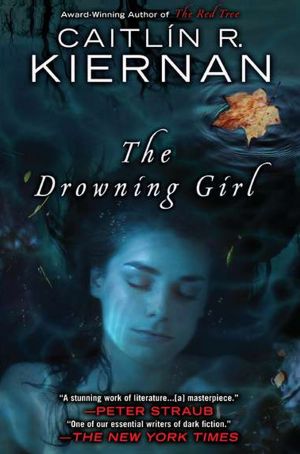
Caitlin R. Kiernan’s The Drowning Girl

Good ghost stories are hard to find these days.  Though there is much wonderful horror out there to read (and watch), in my opinion there are few authors that capture the ghostly sense of dread as well the early 20th century masters such as M.R. James and E.F. Benson.     I’ve often wondered about this: has the world simply become too modern, too crowded, and even too connected to make ghost stories as effective as they once were?

Such stories don’t even have to be about a literal ghost; it’s hard to say exactly what characterizes a ghost story, by these stories always have a sense of the eerie, of the unnatural — and of death.

This month, Caitlin R. Kiernan’s newest novel, The Drowning Girl, was published, and it meets all the criteria of a ghost story, even if it may not be one:

The Drowning Girl is a memoir written by an insane young woman, and it is about her encounters with a mermaid, a werewolf, a siren, and a ghost — or perhaps none of these, or perhaps all of these at once.  It is a compelling and haunting story which kept me reading from pretty much the very first page.

Continue reading

Posted in Horror | 1 Comment