Weird science facts, June 1 — June 7

Once again, the Twitter #weirdscifacts for the previous week!

445. June 01: “17th c. Archimedes”, Étienne-Gaspard Robert, suggested using mirrors to burn ships in 1796 war of France vs. Britain! I’ve written before about the Archimedes “death ray”, and numerous experiments to test whether it is feasible.  What I didn’t realize is that someone, namely Robert, wanted to implement it in war!  The proposal was rejected, perhaps not surprisingly.

446. June 02: Did 2nd century Roman fishing ships carry live fish tanks?  The evidence isn’t certain, but it is certainly plausible that Roman ships had tanks of live fish, with fresh water being pumped in.  This meant that fresh fish could be distributed over a wider trading area.  (h/t @history_geek)

447. June 03: Foreign accent syndrome: Traumatic brain injury can leave a person speaking w/ a foreign accent! 

448. June 04: The “hairy frog” that breaks its own bones to produce claws. Wolverine, anyone?  The claws are apparently a last-ditch defense mechanism, inadvertently discovered when a researcher picked one of the frogs up!

449. June 05: Rodney Fox: From near-fatal shark attack victim, to shark killer, to major shark conservationist.  Fox was nearly killed by a great white shark while fishing for abalone off of the coast of Australia; the shark tore him open so extensively that only his wetsuit was holding his internal organs in.  After recovering from his attack, Fox gained notoriety as a shark killer, but eventually grew fascinated with the creatures and became a significant shark researcher and documentary maker.

450. June 06: The 1725 story of the “lying stones”, fake fossils that wrecked the career of Johann Beringer

451. June 07: c. 1922, Hungarian physicist Leo Szilard finished his PhD thesis — conception, research, and writing — in three weeks.  This is described in Richard Rhodes’ excellent history The Making of the Atomic Bomb.  To be fair, Szilard actually worked for sixth months on a relativity problem assigned by his advisor Max von Laue.  Stumped by the problem, the proactive Szilard decided to find his own thesis topic!  Over the course of 3 weeks, he picked a difficult, supposedly unsolvable problem in thermodynamics, solved it, and wrote it up!  He presented it first to Einstein, who was skeptical at first but quickly won over.  Szilard then presented the manuscript to von Laue, who took it home.  The next morning, von Laue called to tell Szilard that the manuscript had been accepted as his thesis!


Posted in Weirdscifacts | 4 Comments

A David Brooks meme update!

A couple of weeks ago, I described my participation in a very silly internet meme about conservative pundit David Brooks.  In short: Joshua Green, senior editor at The Atlantic, saw the following picture of excited telephoning Brooks and thought it was worth some photo-manipulation:

I joined in the fun, as you can see in the previous post!  There are two amusing updates to the story, however, that I had to share!

First: Joshua contacted me recently to do another Brooks photoshop job!  After Brooks trashed Palin on the day of her visit to a motorcycle rally, it seemed like a fun picture to use to complement a sarcastic blog post on the subject.  My picture is below, and can be seen in its place on The Atlantic as well:

It’s especially funny that I’m not a particularly skilled Photoshopper! Though I’ve played around a little bit with the program on and off for a few years, things only really started to click when I first played around with the Brooks meme! I guess I’m a good software learner…

If that wasn’t entertaining enough, get this — Brooks was shown the meme inspired by him!  You can watch his reaction yourself at the link above, or check the embedded video at the 3 minute, 30 second mark:

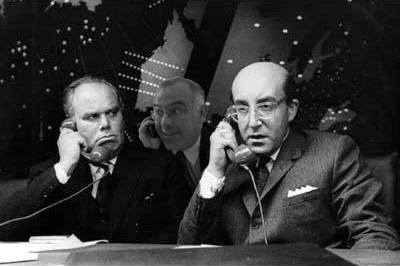
He’s shown a variety of Brooks meme pics, and the last one happens to be my Dr. Strangelove:

If nothing else, this whole experience has shown what strange opportunities for entertainment the internet can provide!

Okay, back to serious science and weird fiction posts…

Posted in ... the Hell?, Personal | Leave a comment

13 days until the deadline for The Giant’s Shoulders #36!

This is the regular monthly reminder that there’s only 13 days left until the deadline for the 36th edition of The Giant’s Shoulders, the history of science blog carnival!  If you’ve got a history of science post you’ve been thinking about writing, now’s a good time to get started; entries can be submitted directly to the host blog or through BlogCarnival.com.

This month’s carnival is being hosted by Darwin’s Bulldog at The Dispersal of Darwin! Check back here or go directly there on the 16th to see the carnival!

P.S. We’re running short on hosts for future editions of the carnival again! If you’re interested in hosting in the next few months, please let one of the organizers (Thony C. or me) know!

Posted in General science, Science news | Leave a comment

Weird science facts, May 25 — May 31

Here are the Twitter #weirdscifacts for the past week!

438. May 25: Halomonas titanicae, a new species of bacteria found in 2010 to be eating the Titanic!  This is doubly odd, in that the bacteria eats iron oxide and also that it was found on the wreckage of the Titanic.

439. May 26: 2009 was the year that remote-controlled cyborg beetles came into existence!  One can see why the military would be interested in a tiny, remote-controlled surveillance bug!  One can also see video of the testing.

440. May 27: The regular appearance of the Fibonacci sequence in plants. The Fibonacci sequence, which really started as an abstract mathematical concept, surprisingly shows up a lot in plant growth.

441. May 28: The “Slinky” was invented by accident when a naval engineer inadvertantly knocked a spring from a shelf.  Designer Richard James was attempting to develop springs that could stabilize sensitive instruments on ships in rough seas.

442. May 29: Humpback whales trap fish in a “net” made of bubbles

443. May 30: The 1962 experiment to determine effect of LSD on elephants

444. May 31: The Candiru: an Amazonian spiny fish that has been known to swim up the human vagina and urethra!  Ouch!

Posted in Weirdscifacts | 1 Comment

Mpemba’s baffling discovery: can hot water freeze before cold? (1969)

“My name is Erasto B Mpemba, and I am going to tell you about my discovery, which was due to misusing a refrigerator.”

With those words, Tanzanian student Erasto Mpemba entered scientific history, and also sparked a scientific mystery and controversy that remains ongoing today, some 40 years later!

The phenomenon Mpemba found is now known as the Mpemba effect, and is the very counterintuitive idea that, under certain circumstances, a quantity of very hot/boiling liquid can freeze faster than an equal quantity of cold liquid!

ResearchBlogging.orgHow is this possible?  The remarkable thing is that nobody really knows, even though the first observations were reported to the scientific community in 1969.  The story of the discovery, and the consequent mystery, is worth a bit of exploration — and the Mpemba effect carries numerous important lessons about the nature and method of scientific discovery.

Continue reading

Posted in Physics | 164 Comments

Water has properties that are positively electrifying!

ResearchBlogging.orgMost people certainly understand how important water is for our survival, but we often overlook how weird it can be.  I can compile a short, though not exhaustive, list off the top of my head:

  • Water is less dense in solid form (ice) than in liquid form.  Ice cubes float, and ice forms at the top of lakes, protecting the fish and other organisms below from the cold.  Water is one of only a handful of substances for which this is true.
  • Water can be supercooled, and “instantly” frozen.  Very pure water can have its temperature lowered below the freezing point — supercooled — while remaining a liquid.  Any significant disruption of the liquid, such as pouring, will make it freeze almost instantaneously, as the video at this link shows.
  • In the right circumstances, hot water can be frozen faster than cold water! In 1963, a Tanzanian secondary school student named Erasto Mpemba noticed that hot ice cream mix froze faster than cold ice cream mix.  He pointed this out to a visiting physics lecturer, and the two published their experimental observations in 1969.  The effect is now known as the “Mpemba effect“.

Equally odd, but even less known, is the curious ability to bend a stream of water with static electricity.  I did this experiment at home a couple of weeks ago, and a snapshot of the result is below:

The rod is made of glass, and is what is generally known as a friction rod. The rod begins electrically neutral, but is stripped of electrons when rubbed with a piece of silk, leaving a net positive charge behind.  It is this positive electrical charge that attracts the water.

Why is water so strongly attracted to static electricity?  It turns out that the answer is somewhat complicated, and the complete explanation was a bit of a minor mystery for nearly eighty years!

Continue reading

Posted in Physics | 49 Comments

Weird science facts, May 18 — May 24

Here are the Twitter #weirdscifacts for the past week!

431. May 18: Paris syndrome: some visitors to Paris experience hallucinations, feelings of persecution, etc.  The city, which has such an influence on people’s imaginations around the world, apparently can overwhelm some of those who finally arrive.

432. May 19: William Perkin’s 1853 attempt to develop a malaria treatment instead led to first synthetic dye

433. May 20: Saturn’s rings can sport waves

434. May 21: The whip scorpion — no stinger or venom, but shoots acid from its rear! 

435. May 22: The hexagon at Saturn’s North Pole, and its explanation!  It is quite astonishing that very regular geometric figures can appear in a rather chaotic setting.  (h/t my friend PD)

436. May 23: In 1892, you could already get music on demand through your phone!  (h/t @jenlucpiquant and @boraz)

437. May 24: Nudibranchs: odd and beautiful “sea slugs”!  There are plenty of unusual features of nudibranchs, but here I just marvel at their variety and unusual and beautiful appearance.  An example is shown below, via Wikipedia.  (inspiration via @DrBondar)

Posted in Weirdscifacts | 2 Comments

Foster kitten update!

I thought I would do an update on the status of the momma cat and her five kittens that we’ve been fostering!  We’re now at the seventh week of age, and the kittens are really tiny versions of cats at this point, with all the playfulness, craziness, and peeping that one would expect!  We’ve also named all of the kittens, and pictures and names are provided below.

Continue reading

Posted in Animals, Personal | 7 Comments

Weird science facts, May 11 — May 17

Still going strong on the #weirdscifacts!  Here are the past week’s selections that appeared on Twitter.

424. May 11: The bombardier beetle: sprays boiling acid at any predators that attack it! 

425. May 12: Anophthalmus hitleri — a blind cave beetle that was named in honor of Adolf Hitler! The beetle was discovered and named by a scientist in honor of Hitler’s election as Chancellor of Germany, long before his infamy.

426. May 13: Soviet Dr. I.I. Ivanov’s bizarre attempts c. 1926 to breed a human-ape hybrid

427. May 14: The basilisk lizard, aka the “Jesus lizard”, can walk on water!  A video of the lizard in action can be viewed here.

428. May 15: “Blue Peacock“, the 1950s nuclear landmine project that planned to use live chickens to keep warm.  This sounds quite absurd, but it was probably considered a very simple and practical solution.  As opposed to more high-tech or complicated methods that could be difficult to implement or fail in the field, here they could just throw a few chickens in a box and run for it!

429. May 16: Character in Vonnegut’s “Cat’s Cradle” based on “indifferent” scientist Irving Langmuir.  Vonnegut’s brother worked with Langmuir; Kurt had the impression that Langmuir was a scientist who was indifferent to the implications or consequences of his research.

430. May 17: 1938 execution/experiment of John Deering, in which his heartbeat was monitored during firing squad.  Deering, a perpetrator of multiple murders, agreed to have his heart monitored during his execution as a scientific experiment, thought to be the first of its kind.

Posted in Weirdscifacts | 4 Comments

A very silly David Brooks meme…

The other day, a photograph appeared on the internet(s) of conservative pundit David Brooks striking a ridiculously enthusiastic pose.  The picture in question:

Joshua Green, senior editor at The Atlantic, thought this picture was meme-worthy, and solicited creative uses of Brooks’ image.  Well, being a fan of random silliness and not a terribly big fan of David Brooks (to put it mildly), I thought I would try my hand at a few David Brooks photoshop jobs.

The pictures are below; it is worth noting that before this I’ve never done any significant work in photoshop before!

Continue reading

Posted in ... the Hell?, Silliness | Leave a comment