The Giant’s Shoulders #1 is up!

The first edition of The Giant’s Shoulders is now up at A Blog Around The Clock. Being the first, there’s a huge number of entries to the carnival, so check it out!

The next edition will happen at The Lay Scientist, with entries due August 15th. Let’s keep it going!

Posted in Science news | Leave a comment

Einstein vs. Whittaker, with Born in the middle

My former thesis advisor is the greatest! I recently helped him update an electronic compilation of his collected papers, but refused any payment for my services. He ignored me and sent me a copy of The Born-Einstein Letters, a compilation of correspondence between Albert Einstein and Max Born between 1916 and 1955.

This gives me an opportunity/excuse to discuss one of my favorite exchanges between the pair, concerning Sir Edmund Whittaker’s book A History of the Theories of Aether and Electricity.

Continue reading →

Posted in History of science, Physics, Relativity | 9 Comments

In depth: depth of focus and depth of field

Update: The original website with its digitally-altered ‘miniworld’ pics seems to have been taken down.  I’ve constructed a few of my own ‘miniworld’ pics to give the reader an idea of what I’m talking about:

zuiderkerk02

jaapedenbaan

florabama

From now on, I save an archive of all photos I use from the internet!

While stumbling through the ‘tubes the other day, I came across a very cute series of photos, an example of which is pictured below:

Is it a picture of a real place, or a picture of a miniature model? All the pictures are apparently of real places, digitally modified via Photoshop to make them look tiny! If you are skeptical, you can see the original picture of Stonehenge in the snow here, and what looks to be the original of Tokyo Tower here.

I’m not a digital photo expert, but it looks like a number of ‘tricks’ were used to make the pictures look miniature, including the simple psychological effect of always having views from above. The most significant modification, though, is of the focus: in the modified pictures, the foregrounds and backgrounds are out of focus, and this alone can fool the eye. Why is this?

This effect is a clever exploitation of the concept of depth of field, and its related ‘cousin’, depth of focus. I thought I’d do a short post about the idea (my friend Personal Demon suggested the topic months ago, actually) and the related mathematics. Along the way we’ll introduce a few simple lens topics from geometrical optics.

Continue reading →

Posted in Optics | 10 Comments

Five days left until The Giant’s Shoulders!

Just a reminder that the deadline for submissions to the first edition of The Giant’s Shoulders is coming up on July 15th!  Entries should be sent to Coturnix at A Blog Around The Clock.

For the first edition, there is obviously no requirement for entries to have been written since the last edition, so we’ll take anything (only chronologically speaking, of course).   We’ll be automatically including all the entries for the “Classic Papers Challenge” that I hosted a few months back, as well.

Posted in Science news | Leave a comment

Invasion of the gluten-lacers!

I never thought I’d be happy to be diagnosed with a disease.

I’ve teased my fiancée for some time for having a similar attitude. She has had chronic, misdiagnosed medical problems for quite a few years. Her frustration is palpable, and understandable, but I couldn’t help but tease her gently that she often would seem genuinely delighted at the possibility of having a problem.

But a diagnosed disease can be treated, which is where the excitement comes from. I was recently diagnosed with celiac disease, and it was truly a relief.

Continue reading →

Posted in Health | 6 Comments

Rant time: The End of Theory? (Updated)

This one’s already been passed around the blogosphere like a cheap bottle of wine, but I feel the urge to comment on it myself. A recent issue of Wired Magazine has an essay by Chris Anderson with the very provocative title, “The End of Theory: The Data Deluge Makes the Scientific Method Obsolete.” The argument, in short, is that computers have gotten so good at processing massive amounts of data that we don’t have to understand the underlying processes that produce the data anymore: we can just let computer algorithms sort through the data and give us explanations. Anderson labels this new, model-free age “the Petabyte Age.”

This article and this attitude really irks me, and not just because I am a theorist by trade: the attitude presented here is, to my mind, so wrong-headed that it is actually hurtful to the progress of science. Let’s take a look at some of the claims.

Continue reading →

Posted in ... the Hell?, General science, Science news | 10 Comments

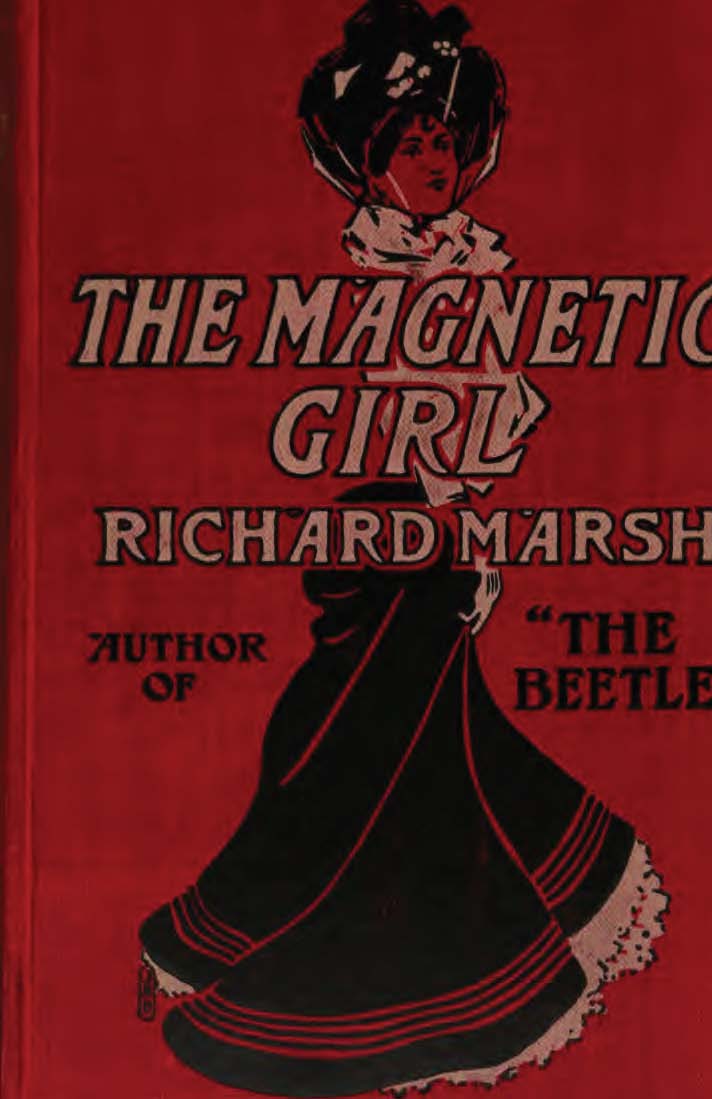
Richard Marsh’s The Magnetic Girl

I thought I’d do a post on one more book by Richard Marsh that I’ve read, The Magnetic Girl (1903), currently only available on Google books.

The Magnetic Girl is significantly different than the other books by Marsh that I’ve discussed previously (The Beetle, The Joss, The Goddess, Curios). Although it is still undeniably a ‘weird tale’, with an unexplained supernatural element about it, it is not a horror story or a mystery: nobody is killed and no crimes are committed. The Magnetic Girl is, in fact, Marsh’s take on a comedic novel, with just a smidgen of social commentary thrown in for good measure. I give some details below the fold…

Continue reading →

Posted in Fantasy fiction | 2 Comments

Lawn chair ballooning lives on!

Via CNN, I learn today that Kent Couch of Bend, Oregon managed to fly 200 miles from Oregon to Idaho in a lawn chair ‘powered’ by helium balloons.

Such stories have long been ‘urban legend’ fodder, ever since the first lawn chair enthusiast, Larry Walters, took off in 1982 in the Los Angeles area.  Walters ended up drifting some 16,000 feet above Long Beach, flew into the flight path of the Long Beach Municipal Airport, and ended up landing in some high-voltage power lines.  The FAA fined him heavily for the feat, but that didn’t stop other enthusiasts from taking up the chair.  The full details, including Walters’ tragic suicide later in life, can be found at Snopes.

Couch, who had obviously been inspired to do his flight by Walters’ feat, had made two previous balloon trips.  He had declared previously that he wouldn’t stop until he met his goal of getting out of state.

What sort of equipment does one take for an interstate lawn chair ride?  According to CNN,

…he carried a Red Ryder BB gun and a blow gun equipped with steel darts. He also had a pole with a hook for pulling in balloons, a parachute in case anything went wrong, a handheld Global Positioning System device with altimeter, a satellite phone, and two GPS tracking devices. One was one for him, the other for the chair, which got away in the wind as he landed last year.

For food he carried some boiled eggs, jerky and chocolate.

The final part of the story that didn’t surprise me comes at the end:

Couch flew hang gliders and skydived before taking up lawn-chair flights. He estimated the rig cost about $6,000, mostly for helium. Costs were defrayed by corporate sponsors.

Emphasis mine.  We skydivers are known for figuring out new ways to risk injury or death.

At least Couch planned for the legal logistics better than he predecessor.  Not only did he not get fined for his trip, he actually had corporate sponsorship!

Posted in Sports | Leave a comment

What a drag: Arago’s Experiment (1810)

Note: This post is my contribution to the first-ever edition of The Giant’s Shoulders, a new blog event compiling posts concerning classic science papers.

I’ve been meaning to get back to my series of posts on relativity, but things have gone slower than I expected because of my obsessive desire to truly understand the historical scientific issues that were prevalent at the time.

In the meantime, I’ve been thinking about an interesting, infrequently-discussed topic in special relativity: the behavior of light on propagation through moving matter. This question was inspired by a comment on Uncertain Principles some time ago. In fact, one of the earliest hints of special relativity came from an experiment performed by François Arago in 1810 on ‘stellar aberration’, nearly 100 years before Einstein’s landmark 1905 paper! In this post I’ll discuss Arago’s experiment, its historical context, and the conclusions that were drawn from it.

Continue reading →

Posted in History of science, Optics, Physics, Relativity | 20 Comments

Metropolis, complete at last (?)

Via Blake at Science After Sunclipse, I learn that a complete version of Fritz Lang’s silent masterpiece Metropolis has been found in Buenos Aires.

I’m quite excited about this.  For those who haven’t seen it, Metropolis is arguably the greatest silent film of all time, a science fiction film about a futuristic city separated into the ‘haves’ who live in glorious skyscrapers, and the ‘have-nots’ who toil underground to keep the city working.  I only got around to seeing the film perhaps 5-10 years ago, and was moved both by the amazing imagery and the surprising depth of the story.  One of the most amazing things to realize while watching the film is that all the special effects were done without the aid of CGI!

Continue reading →

Posted in Entertainment | Leave a comment