
Update: Added one more Wells bug story!
This short post is something of a public service. Earlier today I saw some tweets from film critic Scott Weinberg referencing an urban legend related to the very silly 1977 Bert I. Gordon film Empire of the Ants. I had never heard of the movie before, and I certainly didn’t know that the movie was based on a short story by the incredible science fiction author H.G. Wells!
I had never heard of the story before, though this is not surprising — Wells was ridiculously prolific, writing dozens of novels and non-fiction books over the course of his life, in addition to short stories. Most people are only familiar with a handful of his most famous works — The Invisible Man, The Time Machine, The War of the Worlds, The Island of Doctor Moreau — though he wrote many intriguing and forward-thinking novels such as his chilling story of nuclear war, The World Set Free.
So I was curious about the story, and of course it is available to read online from in a variety of places. Being me, however, I had to go right back to the source. Thanks to the magic of Google books, I was able to find the original 1905 issue of The Strand magazine containing the story. One of the great things about these Edwardian magazines is that they often illustrated the stories in question, and The Empire of the Ants is no exception.
Emboldened, I also dug up another H.G. Wells story about bugs — The Valley of Spiders, which appeared in a 1903 edition of Pearson’s Magazine. Wells was quite famous by this point, and got quite a spectacular title image:
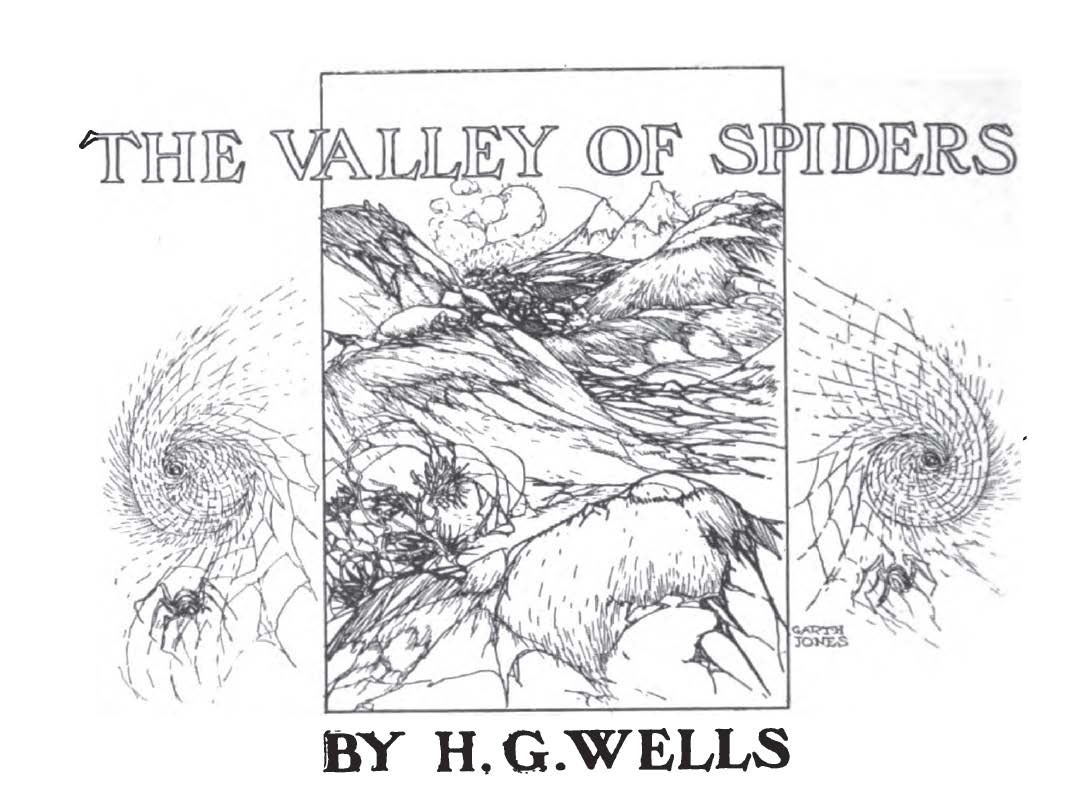
So my public service of the day? To provide pdfs of the two illustrated stories! The Valley of Spiders is quite a bizarre and fascinating tale, while The Empire of the Ants reminds me somewhat of John Wyndham’s much later novel, Web.
Enjoy!
Update: Being obsessed with being thorough, here’s one more Wells story about a bug, though of a significantly different nature! It apparently first appeared in the late 1800s, but I found an illustrated version of it in a 1905 volume of Pearson’s.







 Skulls in the Stars
