Weird science facts: “Why am I still doing this?” edition

I’ve definitely decided to stop doing a Twitter #weirdscifacts a week, but it’s hard to slow down!  I’ll be travelling for the rest of the week, however, so I’ll be forced to stop at last — here’s a few facts to keep you entertained.  I’ll be posting intermittently over the next few days.

739. Mar 21: Deep-sea nature is gross: behold the “bone-eating snot flowers“! 

740. Mar 22: Researchers have introduced a new form of robotic underwater motion: the robo-jelly!  (Via @Verbal_SeduXion)

741. Mar 23: 1939: grad student George Dantzig solved 2 famous unsolved math problems when he mistook them for homework problems. 

742. Mar 24: Whale falls: the whale carcasses that support entire deep-sea ecosystems.

743. Mar 25: The science of cats falling from high-rises.  There have been (statistical) studies done of the remarkable survival rate of cats falling from tall buildings.  It becomes almost obvious when you realize how much of a cat’s time is spent in the trees, and how often accidental falls must occur.

744. Mar 26: 18th century bone telescopes found in old toilets in Amsterdam.  It’s odd enough to imagine telescopes made out of cow legs, but it’s even weirder to think that someone threw such expensive items into a toilet!  (Via @BoneGirlPhD)

745. Mar 27: How the urea in the Greenland shark inspired an Inuit legend!  I get quite amused at thinking about how this legend got started.  Inuit #1 eating a Greenland shark: “Ack!  This thing tastes like pee!”  Inuit #2: “How do you know what pee tastes like?”

Posted in Weirdscifacts | 2 Comments

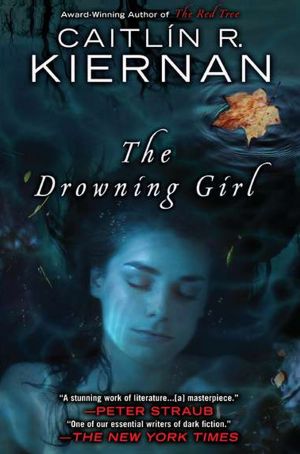
Caitlin R. Kiernan’s The Drowning Girl

Good ghost stories are hard to find these days.  Though there is much wonderful horror out there to read (and watch), in my opinion there are few authors that capture the ghostly sense of dread as well the early 20th century masters such as M.R. James and E.F. Benson.     I’ve often wondered about this: has the world simply become too modern, too crowded, and even too connected to make ghost stories as effective as they once were?

Such stories don’t even have to be about a literal ghost; it’s hard to say exactly what characterizes a ghost story, by these stories always have a sense of the eerie, of the unnatural — and of death.

This month, Caitlin R. Kiernan’s newest novel, The Drowning Girl, was published, and it meets all the criteria of a ghost story, even if it may not be one:

The Drowning Girl is a memoir written by an insane young woman, and it is about her encounters with a mermaid, a werewolf, a siren, and a ghost — or perhaps none of these, or perhaps all of these at once.  It is a compelling and haunting story which kept me reading from pretty much the very first page.

Continue reading

Posted in Horror | 1 Comment

Weird science facts — the final (regular) edition!

With the fact of March 14th, I have posted a weird science fact on Twitter every day for two years straight.  That’s one more year of #weirdscifacts than I expected to do, and I think this makes a good time to slow down the regular editions.

For one thing, it’s getting hard to find unique, obscure facts every single day!  There’s a lot of weird science out there, and in fact there is more being announced pretty much every week — the universe is a weird, weird place — but I don’t want to turn my “weird facts” into a straight reiteration of things widely announced through other social media channels.  Another thing: scouring the internet for weird science is time consuming, and is eating up time that I could otherwise be spending working on more detailed blog posts.

So I think I’ll be stopping the daily facts!  This doesn’t mean that I won’t be posting & compiling #weirdscifacts as I come across them, but I’ll probably do so with less frequency.  I hope that others will take up the torch a bit and post their own #weirdscifacts on Twitter as time goes on — I think it would be a great tag to organize the sciencey weirdness that people come across!

I’m still trying to decide what to do with my facts now, and would love to get opinions from folks in the comments!  Long run, I might like to convert a collection of them into a nice fun book, though that will take some time.  In the short run, I’ve been thinking about relaunching the facts in a Tumblr, where I can post less frequently but in more detail about some of the weirdness that’s intrigued me.  Let me know what you think!

In the meantime, here is one more week of weird science, complete with some bonus facts!

732. Mar 14: Via @encephalartos:  Sea cucumbers can liquefy their body to get through a small gap. 

732a. Via @gkygirlengineer & @NowOverAndOut: Hiding in plain sight: New Frog Species Is Discovered in NYC!

732b. ‘Red Deer Cave people‘ may be new species of human!  (h/t @tdelene)

733. Mar 15: Possible communication via neutrinos?  (h/t @shiplives)

734. Mar 16: Honeybees deal with large Japanese hornets by forming “hot bee balls“!  (h/t @bug_girl)

735. Mar 17: The doctor who was into electricity, dismemberment, and murder! (Part 1 and part 2)    (by @rvitelli)

736. Mar 18: L’inconnue de la Seine: anonymous drowning victim of 1880s who became CPR Rescue Annie.  (h/t @auntbeast)

737. Mar 19: Oldest rock carving found in Americas? 12k year old “little horny man“. (h/t @mocost)

738. Mar 20: Via @blakestacey: the system of numbers known as the “surreal numbers“. 

P.S. Thank you to all those folks who, over the course of the past two years, have suggested or contributed weird science to the list!  You’re too numerous to mention individually, but you know who you are!

Posted in Weirdscifacts | 3 Comments

The Giant’s Shoulders #45

Welcome to the 45th edition of The Giant’s Shoulders, the monthly history of science blog carnival!  We’ve got a lot of interesting entries to cover, so let’s get going!

Captain of the men of death.  Over at White Coat Underground, PalMD reposts a classic article describing the early history of the fight against pneumonia.

There was no such thing as the Longitude Prize.  Over at The Board of Longitude, Rebekah Higgit clears up a common misconception about the search for an accurate measure of longitude.

The Shocking Dr. Webster (part 1 and part 2).  A doctor who electrocuted corpses, a mysterious disappearance, and remains found in a furnace combine into a fascinating 19th-century science-related murder mystery, told skillfully by Romeo at Providentia.

Digital “Computers” 1450-1750: Memory and Calculating on the Fingers and Hands.  People were doing “digital” computing long before the advent of computers, as this fun post by Ptak at Ptak Science Books demonstrates with wonderful old illustrations!

1901 — the year the nuclear atom was “invented”!  Who really discovered, or more accurately, first conceived of, the concept of a planetary atom?  Right here at Skulls in the Stars, I explain how the answer is more complicated than typically imagined.

The iceberg’s accomplice: Did the moon sink the Titanic?  Over at PhysOrg, Jayme Blaschke reports on a very unusual new theory about the sinking of the Titanic: did a rare lunar event hide the iceberg from the ship lookouts?

Grave Matters: The Body-Snatchers Unearthed. In the late 18th century and early 19th, “body-snatching” was a common occurrence, as medical students needed bodies to study.  The Chirurgeon’s Apprentice takes a look at the practices of the snatchers, and the precautions taken against them.

Eye treatments – 17th-century style.  At his eponymous blog, Alun Whithey describes what it was like to be treated for eye problems in the 17th-century.  Spoiler alert: not fun!

The tragic tale of Taiata and the artist’s journal.  At Nat Waddell’s Blog, we learn the sad story of Taiata, a Tahitian boy who did not survive a trip back to England on Captain Cook’s voyage.

Me, Ludwig Boltzmann, Ludwig Boltzmann and I.  At Galileo’s Pendulum, Matthew Francis  explains why it is personally difficult for him to write about the famous physicist Ludwig Boltzmann.

A lyrical interlude.  We’ve seen a lot of history so far — time for an intermission! Caroline Rance at The Quack Doctor presents a song from an 1886 book of tunes by medical club members.

Nash’s beautiful mind pre-empted million-dollar puzzle.  Turns out that the mathematician John Nash was even smarter than we realized! Recently declassified letters between the NSA and Nash suggest he was years ahead of anyone else in thinking about cryptography; New Scientist explains.

Society in the sky: a seventeenth century attempt to redraw the constellations.  The constellations are ancient, but not everyone has agreed that they should be permanent!  At Thinking Through My Fingers, Michael Kay describes 17th century attempts to modify them.

The first-ever English language retraction (1756)?  Papers get retracted from scientific journals these days with some regularity for a variety of reasons, such as discovered errors in methodology and even fraud.  At Retraction Watch, Ivan Oransky notes that retractions go back quite a long time, and notes what may be the first English-language paper retraction!

Beatrix Potter: bestselling author, artist – and expert on our native mushrooms.  Wow!  In years past, science societies would not allow women to present their results.  One injustice will be rectified in April, when the works of Beatrix Potter — rejected in 1897 — will be presented to the Linnean Society.

Turing at 100.  Nature recounts the tragic mistreatment of Alan Turing, computer pioneer and codebreaker, and reminds us of why he deserves our attention.

History of Lines–a Note on the First Appearance of the Addition (“+”) Sign. In other fascinating post at Ptak Science Books, Ptak takes a look at the ancient origins of the “+” sign.

Newton’s apple tree.  We all know the story — an apple falling on Newton’s head inspired him to develop the theory of gravity.  Well, the story is likely apocryphal, but there was an apple tree at Newton’s birthplace.  At the Royal Society’s History of Science Centre’s Blog, Keith Moore discusses the tree and its descendants.

Augustin-Jean Fresnel’s early years.  In another post right here as Skulls in the Stars, I give an example of genius that manifested itself in an unusual way: the optical scientist Fresnel could hardly read at an advanced age, but demonstrated a rather hilarious mechanical knack!

Darwin: Geologist First and Last.  You may be tempted to think of Darwin as a biologist, but Dana Hunter at En Tequila Es Verdad argues that Darwin was as much a geologist, and that background was crucial to his Origin of Species!

A Fondness for Fronds.  At The Victorian Peeper, Kristan Tetens discusses Victorians’ fanatical fondness for fern fronds!

Laura Bassi, a woman who succeeded in a man’s world: physics. There are so many women whose early achievements in science have been neglected and forgotten! Mike Rendell at Georgian Gentleman introduces us to an especially fascinating woman physicist, Laura Bassi (1711-1778).

It’s not the Mercator projection; it’s the Mercator-Wright projection!  Finally, over at Renaissance Mathematicus, ThonyC explains the origins of what has come to be known as the “Mercator projection”.

That’s it for this month’s carnival!  The 46th edition will be hosted by Romeo Vitelli at Providentia on the 16th of April.

Posted in General science, History of science | 9 Comments

Weird science facts, March 7 — March 13

This is it — today marks the 2-year anniversary of Twitter #weirdscifacts, meaning I’ve been posting facts on Twitter every day for 2 years straight! Not sure what I’ll do with the facts next — trying to decide by next week how to proceed…

725. Mar 07: Electrician gets a Licthenberg tattoo from a lightning strike!  (via @swansontea) Lichtenberg figures are branching, fractal-like figures that can be burnt into  materials via electrical discharges.  Apparently people struck by lightning get similar figures relatively often.  (Image via Wikipedia):

726. Mar 08: Mount Roraima, a genuine lost world that inspired “The Lost World”.  Pictures of the remarkable mountain can be seen here.  An image from Wikipedia is shown below.

727. Mar 09: Sperm discovered doing basic calculus! Well, perhaps that’s a bit of an exaggeration, but sperm have been discovered to direct themselves based on changes in concentration of calcium, which is essentially the calculus action of taking a derivative!  (h/t @sciencegoddess)

728. Mar 10: Horses masturbate around 18 times per day, on average.  Post by @scicurious!

728a.  Got PMS? Time to Spot the Snake!  Bonus weirdness via @scicurious!

729. Mar 11: Einstein, 1934: “There is not the slightest indication that [nuclear energy] will ever be obtainable.”  Many prominent scientists, engineers and visionaries have made strong predictions that turn out to be rather absurdly wrong.

730. Mar 12: The 1967 earthquake in Konya, India: likely caused by the filling of a new dam reservoir.  With all the discussion of the likely connection between “fracking” and earthquakes, more attention has been focused on earlier quakes induced by human action.

731. Mar 13: Who killed Pluto? Well, in the late 1980s, Isaac Asimov tried to!  (h/t @blakestacey)

Posted in Weirdscifacts | 3 Comments

Richard Marsh’s The Complete Adventures of Judith Lee

It’s no secret that I’m a huge fan of the work of Richard Marsh (1857-1915), who was an incredibly successful author of mystery, horror, and generally weird fiction in the late Victorian and Edwardian eras.  Marsh was famous in his own time — his breakout novel, The Beetle (1897), even outsold Bram Stoker’s Dracula (1897) the year of its release — but faded to relative obscurity after his death.

Fortunately, in the last few years a number of publishers have been reprinting a sample of Marsh’s vast oeuvre.  I’ve discussed many of these books on my blog. Last month, my attention was directed towards a compendium of short stories recently released by Black Coat Press, The Complete Adventures of Judith Lee:

The Complete Adventures of Judith Lee

Judith Lee is Marsh’s version of a Sherlock Holmes-style investigator, with a unique skill: as a teacher of the deaf, she has mastered the ability to perform lip-reading at a distance in multiple languages!  This talent is both a curse and a blessing, as it inadvertently thrusts her into dangerous situations just as often as it helps her escape.

The stories are charming, and the Black Coat Press edition is excellent, including a nice introduction by editor Jean-Daniel Brèque.  For those intrigued, I share some more thoughts on the character of Judith Lee, and her adventures, below.

Continue reading

Posted in Mystery/thriller | 5 Comments

Weird science facts, February 29 — March 6

A little over one week before I’ve done two continuous years of daily Twitter #weirdscifacts!!! In the meantime, here’s the last week’s weirdness:

718. Feb 29: Moon’s shadow, like a ship, creates waves in Earth’s atmosphere.

719. Mar 01: The Poor Woman Who Will Forever Be Known As Typhoid Mary.  (h/t @JenLucPiquant)

720, Mar 02: In 19th C. to make leeches attach, you soaked them in wine, which irritated them into biting. (via @seelix)

721. Mar 03: Exploding whale carcasses, from both man-made and natural causes.  (h/t @encephalartos)

722. Mar 04: The Battle of Kadesh (1273 B.C.E., where recorded documents from both sides declare victory!  This is one of my favorite stories from archaeology — both the Hittites and the Egyptians claimed victory in a battle which was most likely a draw.  The Egyptian pharaoh, in particular, took the opportunity to describe how he essentially fought the entire Hittite army by himself!

723. Mar 05: How the sawfish wields its saw – like a swordsman!  It not only swings its saw around to spear fish, but the saw is also a sensory organ that can be used to track and detect prey. (by @edyong209)

723a. Terrifying photos reveal first ever evidence of bears using tools.  Sure, it’s not a really sophisticated tool, and it’s hardly more elaborate behavior than the typical bear-scratching-his-back-on-a-tree, but… yeah, we’re screwed. (h/t @lukedones)

724. Mar 06: The case of the upside-down glasses: George Stratton and perceptual adaptation.  I can’t recall who shared this tale with me recently!  In short, Stratton wore a pair of glasses for weeks that showed him the world upside-down.  After sufficient time, “upside down” became “right-side up” according to his brain.  When he took the glasses off, he had to wait for his vision to readjust to the “normal” orientation.

Posted in Weirdscifacts | Leave a comment

1901 — the year the nuclear atom was “invented”!

So what does an atom look like?  If you were to pull someone at random off the street and ask them to draw a picture of an atom, they would more likely than not draw something like this:

Almost everybody knows this picture: negatively charged electrons “orbit” around a positively charged and tiny nucleus under the influence of the force of electricity, very much analogous to the way planets orbit the Sun in our solar system under the influence of gravity.

This image is ingrained in the public’s consciousness — even though it is quite inaccurate!  Electrons are not point particles that travel in well-defined orbits around the nucleus; more accurately, electrons act as smeared-out “clouds” that encircle the the nucleus in well-defined distributions dictated by the laws of quantum mechanics.

Still, this planetary model is an important one historically, and was accurate enough in its time (and still today) to forgive its faults.  It arose naturally in the early 1900s, in a period of great confusion and uncertainty about atomic structure.  With tantalizing and rather bewildering experimental hints, scientists speculated wildly about the nature of the atom.  The strongest contender was the “plum pudding” model of J.J. Thomson, in which atoms were visualized to be a “pudding” of positively-charged fluid within which were embedded negatively-charged electron “plums”.  In Thomson’s original paper, these plums were arranged equidistantly around a circle within the pudding and orbiting within it:

The “plum pudding” model became widely accepted not so much because it answered any nagging questions about atoms, but rather because it conflicted the least with the known physics of the time!  In 1909, however, Ernest Rutherford set two of his assistants, Hans Geiger and Ernest Marsden, to probing atomic structure using radiation, in what is now known as the “gold foil experiment“.  High velocity alpha radiation was used to bombard a thin film of gold, and the direction of scattered alpha rays was measured.  In the plum pudding model, it was expected that all of the alpha rays would be slightly deflected, but that none of them would be strongly deflected, simply because the electric charge is either too spread out (pudding) or too light in mass (the plums) to obstruct their motion.  Geiger and Marsden, however, found that some of the alpha particles were actually reflected back towards the source!  As Rutherford later commented,

It was almost as incredible as if you fired a fifteen-inch shell at a piece of tissue paper and it came back and hit you.

Ernest Rutherford

In a 1911 paper, Rutherford introduced the planetary model of the atom as described above, in which electrons orbit a very small, heavy and dense positively-charged nucleus.  The rare alpha particles that bounced backwards were interpreted as having a direct collision with a much heavier nucleus of a gold atom.  In 1913, Neils Bohr managed to explain the emission spectra of atoms by assuming that electrons can only circle the nucleus in orbits of quantized (discrete) angular momentum.  The Bohr model completely opened the door to the theory of quantum mechanics, which is still used today to describe the behavior of atomic and subatomic particles.

In this standard telling of the story, Ernest Rutherford is given credit as the scientist who “invented” the planetary model of the atom.  However, as is true in many stories of discovery, the truth is a bit more complicated!  The first mention of a planetary atom in fact goes back to a lecture given in February of 1901 by the French physicist Jean Baptiste Perrin.*  Perrin’s lecture** not only illustrates a truly forgotten milestone in the history of physics, but also describes in a clear and non-technical manner the scientific understanding of atoms and molecules at the turn of the century.

Continue reading

Posted in History of science, Physics | 7 Comments

Weird science facts, February 22 — February 28

Getting close to a complete & continuous two years of Twitter #weirdscifacts! I don’t think I have the ambition to go for three, so enjoy them while they last!  Now that I’m getting close, however, I’m happy to throw in bonus facts for your entertainment.

711. Feb 22: Behold, the bizarre physics of the “Gobbling Drop“.  Because of the strong viscoelasticity of the polymers in the water, its cohesive force can overpower the forces that would normally cause it to thin out.  Thus, a gobbling drop results! (via @io9)

711a. Primitive and Eyeless, World’s Deepest Land Animal Discovered!  This particular animal, coincidentally, is the springtail we talked about in last week’s facts!  (via @bug_girl)

712. Feb 23: After a meal, mosquitoes are essentially panting from their anuses to cool down.  Words fail me.  (via @settostun!)

713. Feb 24: 300-million-year-old fossilized forest preserved in volcanic ash.  (h/t @bonegirlPhD)

714. Feb 25: Via @mareserinitatis: Charles Steinmetz – the first consultant! This charming and odd story involves the time that Steinmetz was called in to fix a problem for Henry Ford.

715. Feb 26: The “Charlie Brown effect“: Why astronauts crave Tabasco sauce.  In space, bodily fluids that would normally be drawn downwards instead spread out more uniformly through the body, producing rounder heads and other odd effects. (h/t @stevesilberman)

715a. Whoa.  Biological warfare in year 1346: using black death against enemies.  The Mongols were laying siege to the city of Caffa when they began to succumb to the black death.  In the ultimate act of spite, the Mongols catapulted diseased corpses into the city, infecting the inhabitants and precipitating the spread of the plague to Europe. (by @ptak, h/t @JenLucPiquant)

716. Feb 27: How Eratosthenes measured the Earth’s circumference in 300 B.C.E.! (video)

716a. Whale farts! Speechless, again. (via @MiriamGoldste)

717. Feb 28: New Blood Type Discovered!  (via @BoraZ)

Posted in Weirdscifacts | 2 Comments

One of my papers is top-ten cited in JOSA A!!??

Just a short note: on Twitter, Professor Andrew Dawes (thanks Andrew!) drew my attention to a recent email that the Optical Society of America sent out, listing the top ten most cited articles in the Journal of the Optical Society of America A over the past five years.  One of my 2008 papers, co-written with my UNCC colleague Bob Tyson, “Vortex beam propagation through atmospheric turbulence and topological charge conservation”, is on the list!  I knew the paper was doing reasonably well in citations, but it is a pleasant surprise to see just how well it is doing.

The paper can be read for free up until April 27th of this year, for those who are interested.  It investigates whether laser beams carrying an “optical vortex” will maintain this vortex after propagating some distance through the turbulent atmosphere.

Posted in Personal | 6 Comments