
Been a while since I’ve compiled my twitter threads on old school D&D, so time to catch up a bit!
Reunion (1998), by Jackie Cassada and Nicky Rea. Here we look at a rather unusual specimen from the Al-Qadim line of “Arabian Adventures.”

Been a while since I’ve compiled my twitter threads on old school D&D, so time to catch up a bit!
Reunion (1998), by Jackie Cassada and Nicky Rea. Here we look at a rather unusual specimen from the Al-Qadim line of “Arabian Adventures.”
My apologies for the long delay in writing — the chaos in the world and the busy nature of life has left me rather drained! But I have managed to start reading some fiction again, and I thought I would share thoughts on one of my recent reads, Disappearance at Devil’s Rock (2016), by Paul Tremblay.

One night Elizabeth Sanderson awakens to the call that every parent fears: her son, 13 year old Tommy, has disappeared into the wilds of a Borderland State Park while hanging out with his friends, Josh and Luis. A search is immediately launched near the landmark nicknamed Devil’s Rock, a place where local folklore says the devil was trapped ages ago. As the days pass and the search area expands, fruitlessly, Elizabeth and her daughter Kate struggle with feelings of helplessness and terror. But, unexpectedly, they begin to find pages of Tommy’s journal lying on the floor of the house in the morning, with no idea how they got there.
The journal pages begin to shed light on the circumstances of Tommy’s disappearance, even as the family struggles to understand where they are coming from. But none of them are prepared for the final revelation of what happened that night at Devil’s Rock, and why.
Okay, so I did a video presentation at the NC Museum of Natural Sciences tonight on “Falling Felines and Fundamental Physics!” Due to COVID restrictions, it’s the closest thing to a book event I’ll be doing for a while, so I’m grateful to have had the opportunity.
Watch the video for a fun walk through the basic history of the falling feline problem in science, as well as a couple of brief demonstrations by me on a spinner, showing how angular momentum works! Along with, of course, a discussion of Marey’s classic 1894 sequence of images of the falling cat:

Side view of a falling cat, by Marey. Images chronological from right to left, top to bottom.
Hi all! For those who might be interested in watching, I’ll be doing a live presentation about the history of falling cats and science, based on my Falling Felines and Fundamental Physics book, as a Science Cafe for the North Carolina Museum of Natural Sciences! You can read about the event, and find the YouTube link to it, at this link.
I assume that there will be a recording, and I will also post the link to it when it becomes available!
Time for another round of Fake Book Titles that I’ve done, compiled from twitter! You can see compilation 1, compilation 2 and compilation 3 at the links. Been struggling a bit more with inspiration the past few months, but let’s see how I did…
As always with these, content warning for language, innuendo, and politics!

Original title: The Eyes of Sarsis.
I haven’t been blogging much lately, because *gestures hands at everything* but I wanted to give a shoutout and a boost to a friend’s work today!
If you’ve been following for a while, you may remember that not too long ago I met Darlene, a very talented artist who was one of the early fantasy artists for TSR; one of her most famous works was the fantasy comic Jasmine which ran in Dragon Magazine for 12 issues starting in issue 37. (I have a physical copy of that issue now, which features Darlene’s artwork of Jasmine on the cover.)
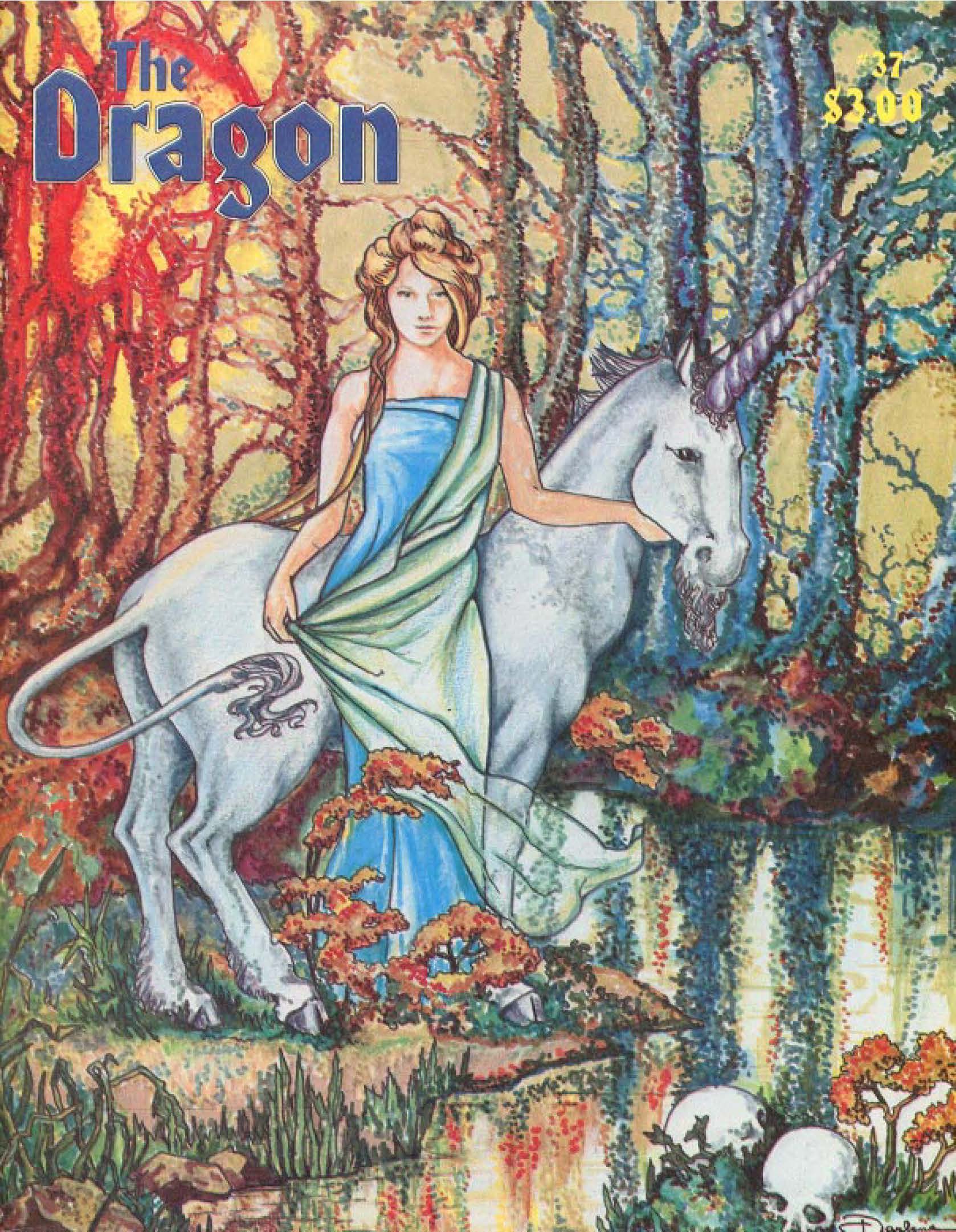
After the comic ended, Darlene created a really fun and clever card game, Jasmine: Battle for the Mid-Realm Collector Card Game, which I had the good fortune to learn how to play from her in person (she lives not too far from me).
Since then, we’ve been keeping in touch, and I wanted to spread the word that Darlene has been creating new Jasmine content! The story of Jasmine, ended too soon in Dragon, is being continued on Patreon, and recently Darlene released a Jasmine coloring book, Jasmine: Journey Into Power, which is available in pdf form through DriveThruRPG and in print form here!

The coloring book is a fun and thoughtful exercise, which encourages readers to use coloring as a means to reflect upon your own life and struggles, coloring with intent and using the choices you make in your art to think about your own life choices. I find it a fascinating and compelling idea, and one which I don’t believe I’ve seen before!
I encourage folks to check out Darlene’s coloring book, Patreon and website! And as a reminder, you can still get original 1982 copies of the Collector’s Card Game directly from Darlene.
Okay, more blogging to come asap…
Time for another roundup of my twitter threads on old school Dungeons & Dragons products! Let’s jump right in:
The Complete Fighter’s Handbook (1989), by Aaron Allston. I haven’t yet touched any of the “handbook” supplements that were made for 2nd edition AD&D!

As promised, here’s the link to part 2 of my two-part series of posts at Cambridge University Press on the 60th anniversary of the laser! This post features a discussion of the basic ideas of how a laser works, like stimulated emission that can create an “avalanche” of photons:
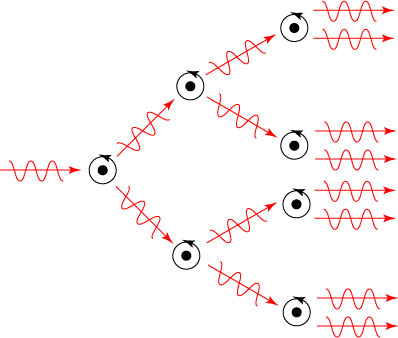
Please give it a read! You can read part 1 here.
On May 16, 1960, Theodore Maiman of Hughes Research Laboratories was the first person to create the now ubiquitous and important source of light that we know as the LASER – Light Amplification by Stimulated Emission of Radiation. This year marks the 60 year anniversary of this achievement, and for this occasion I wrote a blog post for Cambridge University Press on the history of the laser!
Please check it out over at the CUP blog! This is part 1 of 2, and part 2, which describes a bit about how a laser works, will appear at the CUP blog later this week. I will of course post a link to that article, as well.
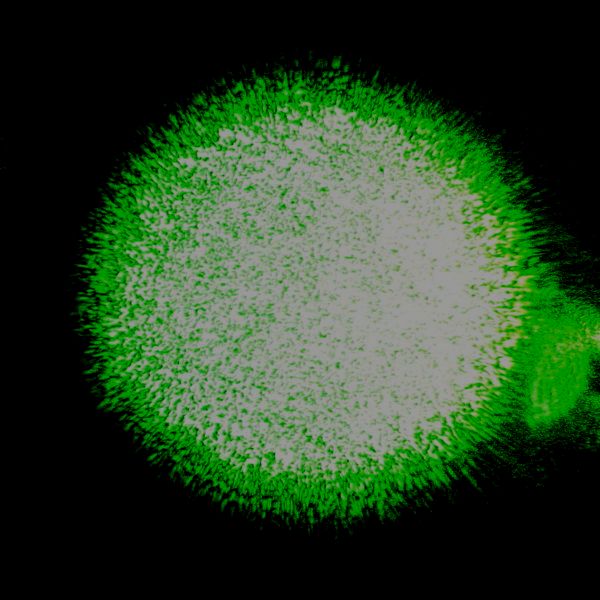
A photograph of laser speckle, just to give the post a little visual!
So this year is the 60 year anniversary of the invention of the laser, which was finally accomplished by Theodore Maiman on May 16, 1960 (mark your calendar!). I recently wrote a blog post about the physics and history of the laser to commemorate the occasion; I will share a link to it when it appears.
But one thing I came across while working on the post? The first newspaper article announcing the discovery! The article, written by Ralph Dighton for the Associated Press, was syndicated and appeared across the country around October 16, 1960. Of course, coming from such an important source of news, I’m sure it was a very subdued and unsensational take on the disc… oh, no.

I thought I should write a short post sharing some of the most lurid highlights from the article, which really made me chuckle.
 The author of Skulls in the Stars is a professor of physics, specializing in optical science, at UNC Charlotte. The blog covers topics in physics and optics, the history of science, classic pulp fantasy and horror fiction, and the surprising intersections between these areas.
 Skulls in the Stars