The Giant’s Shoulders #40 is out!

I’m a day late to the announcement, but I should mention that the 40th edition of The Giant’s Shoulders, history of science blog carnival, is posted at Stranger in an Even Stranger Land!  As always, it is a fascinating collection of historical writings, and many thanks to Gurdur for hosting!

The next edition will be hosted as Early Experimental Modern Philosophy on the 16th of November, with submissions due on the 15th of November.  Submissions can be sent to the host blog or submitted through blogcarnival.com.

We’re looking for hosts for the next few months after November, as well! Let either me or Thony C. of Renaissance Mathematicus know if you’d be willing to host the carnival in the near future.

Posted in General science, Science news | Leave a comment

Review of “Mathematical Methods” at Science After Sunclipse!

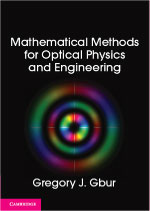
Just a quick bit of news: Blake Stacey has reviewed my textbook, Mathematical Methods for Optical Physics and Engineering, over at his blog Science After Sunclipse!

Although he rightly busts my chops over a number of typos in the text (it is incredibly hard to eliminate them in the first edition of a math-based book, FWIW), he gives it a very positive review.  It is especially nice to see him acknowledge the historical notes in the book as well as point out that the book, though tailored for optics students, would work well for students of physics in general!

This reminds me that I still need to do a review of Blake’s novel, Until Earthset!

Posted in Mathematics, Personal | 2 Comments

Weird science facts, October 5 — October 11

Right on schedule, here is the latest week’s crop of Twitter #weirdscifacts!

571. Oct 05: The most used & successful medicine of BAYERCorp. is not Aspirin – it’s Heroin. (h/t @rmathematicus)

572. Oct 06: The peacock spider — the male has great skills to impress the ladies!  The name “peacock spider” is quite accurate! I find these little fellas cute.  (video)

573. Oct 07: Sarcophagus sat in museum for yrs before owners realised it was ancient & valuable.  It was noted by a visiting archaeologist to be 1000 years older than previously thought and therefore far more valuable. The re-use of many items, including coffins, by the ancient Egyptians can muddy the identification of an object.  (via @Bennu)

574. Oct 08: The 47 sins of Isaac Newton, as recorded by himself.  It is easy to forget that, though Isaac Newton was one of the greatest physicists of all time and a founder of all modern physics, he was also a very pious man.  (post by @ptak)

575. Oct 09: Returning from the Moon, Apollo 11 astronauts had to fill out customs forms!  The forms themselves were mostly a joke, but there were serious concerns about the Moon trip that mirror the usual concerns of customs officials.  In particular, there were concerns that dangerous bacterial/viral life might exist on the Moon that could be brought back by the astronauts and contaminate the Earth.  (Think John Carpenter’s “The Thing”!) (h/t @kashfarooq)

576. Oct 10: Snails ship out on scrambled eggs.  Not only does the snail Janthina janthina float around on a raft of bubbles, but those bubbles evolved from the “nets” of goo the snail uses to secure its eggs.  (Via @miriamgoldste)

577. Oct 11: Actual 1965 patent: using centrifugal force to aid in childbirth.  If I were to start including crazy scientific patents in these “facts” posts, I would no doubt have an endless supply of bizarre contraptions to choose from!  This one stands out as a particularly odd technique for aiding childbirth that applies elementary physics.  The proposed device essentially spins the woman, “exit” first, to use centrifugal force to help swing the baby out.  Two immediate problems come to mind with this contraption.  First, you would have to spin the woman pretty darn fast to give a significant birthing force.  Second, that force would act on all of the woman; I would expect that the potential “bunching up” of internal organs might hinder the birth as much as help it.  (h/t @jenlucpiquant and @io9)

Update: diagram of device added below the fold!  It should be noted that the woman in the figure would have no problems reaching things on really tall shelves.

Continue reading

Posted in Weirdscifacts | 2 Comments

Faster than a speeding photon? Precursors test whether light can be faster than light

ResearchBlogging.orgOver the past two weeks, the biggest physics news has been the apparent observation of neutrinos (nearly undetectable subatomic particles) moving faster than the vacuum speed of light.  At first glance, this would seem to violate Einstein’s special theory of relativity, which fixes the vacuum speed of light at c = 3\times 10^8 meters per second, and as a consequence makes it in principle impossible to travel faster than that speed.  The theoretical implications are in fact a bit more subtle, but before we worry too much about those implications the experimental results will need to be checked carefully and independently verified.

While we wait, it is worth noting that in June 0f 2011 a group of researchers performed an experiment to see if light itself could move faster than light!  In particular, the scientists used a little known optical phenomenon known as an optical precursor to see if individual photons might travel faster than c while propagating in a material.  In the end, the experiment suggests that these single photons did not in fact violate Einstein’s speed limit, though the results still got a significant amount of press.

The response of many physicists to the news was a collective, “Well, duh!”  The prevailing attitude seems to have been: “What’s so interesting about proving something we already knew?”  In this post I’d like to explore that question a little bit, and explain how some uncertainty remains about the behavior of light in materials.  Along the way, we’ll introduce the fascinating phenomenon of precursors, and see how they can be used both to probe the nature of matter as well as the nature of light.

Continue reading

Posted in Optics, Physics, Relativity | 15 Comments

9 days until the deadline for The Giant’s Shoulders #40!

We had a bit of a delay in the posting of TGS #39, but don’t forget that this means that the deadline for the 40th edition of The Giant’s Shoulders, the history of science blog carnival, is coming up quickly!  You have 9 days to submit your clever insights into the history of science.  This month’s edition will be hosted by Gurdur at Stranger in an Even Stranger Land; submissions can be submitted to the blog carnival website or directly to the host blog, as usual.

Posted in General science, Science news | Leave a comment

The Nobel Prize in Chemistry is for quasicrystals!

I just learned that the Nobel Prize in Chemistry for 2011 was awarded to Dan Shechtman “for the discovery of quasicrystals”!

The Nobel site has a good explanation of the background.  I should also point out that I did a lovely blog post on the subject a couple of years ago.

Posted in Science news | Leave a comment

Weird science facts, September 28 — October 4

Somewhere along the way, I failed to notice that I passed the 1 1/2 year mark of #weirdscifacts on Twitter! Enjoy them while you can — I’ll be definitely stopping at 2 years!

564. Sep 28: The psychedelic frogfish moves by acting a bit like a bouncing ball in the wind! 

565. Sep 29: Glacial earthquakes: the Antarctic Willans Ice Stream releases 2 magnitude 7 seismic events/day.  These are remarkably intense earthquakes, being caused twice a day by the glacier! The kicker is that it is still unclear exactly what causes them.

566. Sep 30: Chastity belts: alive and well in the animal kingdom.  It is very easy to think that certain human social conventions couldn’t possibly have an analogue in the animal kingdom; much of the time that assumption turns out to be wrong.  (Post by @DrBondar)

567. Oct 01: In 1904, the discovery of radium prompted a hit Broadway song, “The Radium Dance“.  Science can permeate popular culture in very surprising ways!  (Post by @ptak)

568. Oct 02: Williamina Fleming, (1857-1911). went from Pickering’s housekeeper to astronomer.  Many great scientists have started from humble origins; I’ve noted previously how Michael Faraday started as a valet for Humphry Davy.  Williamina Fleming had even more working against her, but worked her way up to a respected astronomer.  (Post by @womanastronomer)

569. Oct 03: By the time Josephson won the Physics Nobel Prize in 1973, he had become a researcher in the paranormal.  A surprising number of scientists eventually adopt… ahem… unconventional views as they get older.  What is particularly unusual about Josephson is that he had already become a rather goofy believer in the paranormal years before he won his Nobel.  (h/t @DrMRFrancis) (More can be read here and here.)

570. Oct 04: Tiny projections inside nose slowly stop beating hours after death, giving time of death!  (ht @scimomof2)

Posted in Weirdscifacts | Leave a comment

Science careers: rough today, rough in 1886

Science has changed a lot over the past hundred years or so, but the lives and problems of scientists have, in many ways, remained surprisingly constant.  In a previous post, I described how, in 1804, a mathematician was already lamenting the decline of mathematics education — a problem that still concerns us today.

Another perennial problem is the difficulty of finding jobs in science, much less building a career.  This was illustrated by a pair of letters I stumbled across this evening in 1886 issues of Science!

Continue reading

Posted in ... the Hell?, History of science | 3 Comments

Weird science facts, September 21 — September 27

This week’s Twitter #weirdscifacts are here!

557. Sep 21: At 22 km tall, the Martian volcano Olympus Mons is the tallest mountain in the solar system. (Everest is 9 km.) Technically, it is the “tallest known”, but it is hard to imagine another planet having the right conditions to beat it.

558. Sep 22: Galen’s 200 AD anatomy text was based on animal dissections, but was mistakenly thought to be based on human for 1000 yrs. (Galen was clear that his dissections were based on monkeys, but this info was later overlooked.)

559. Sep 23: Mosaics tell 100,000-year-old fish tale (via @w_archaeology)

560. Sep 24: The dinosaur “Oviraptor” was named because it was found presumably preying on eggs. They turned out to be its own eggs.

561. Sep 25: Benjamin Franklin: scientist, statesman — and inventor of a musical instrument.  

562. Sep 26: Did a turtle a few days ago, but can’t resist this one: the “bum breathing turtle“! 

563. Sep 27: Via @stevesilberman: Coroner rules Irish pensioner “spontaneously combusted.” Spontaneous combustion (SHC — spontaneous human combustion) has been observed for literally hundreds of years, with some 200 cases cited over the past 300 years.  Nobody seems to know the origin of SHC, or even if it is a single phenomenon responsible for the reported cases.

Posted in Weirdscifacts | Leave a comment

T.C. McCarthy’s “Germline”

I’m not particularly well-versed in science fiction — at least current science fiction — but occasionally I see something that really intrigues me.  I’ve always found novels about future warfare particularly compelling, such as Robert Heinlein’s famous/infamous Starship Troopers (1959), John Steakley’s Armor (1984), and Joe Haldeman’s Forever War (1974).  Such stories never get tiring — any single war is far too big and complex for a single novel to capture its immensity and complexity.

Perhaps that is why T.C. McCarthy is actually writing a trilogy of novels about the same fictional future war!  I finished the first of these novels, Germline, a couple of weeks ago:

I first learned of the novel through my network of Twitter friends, and started following the author there (@tcmccarthy_).  From there, I became intrigued by the novel’s description, and decided to give it a read.

I was hardly prepared for the intensity of the storyline.  Germline is a hard-hitting and dark novel that explores the devastating effects of warfare on humanity.

Continue reading

Posted in Science fiction | Leave a comment