Book 1 for my 2026 goal of 36 books for the year! As is now default for me, my link to the book is through my bookshop dot org affiliate account.
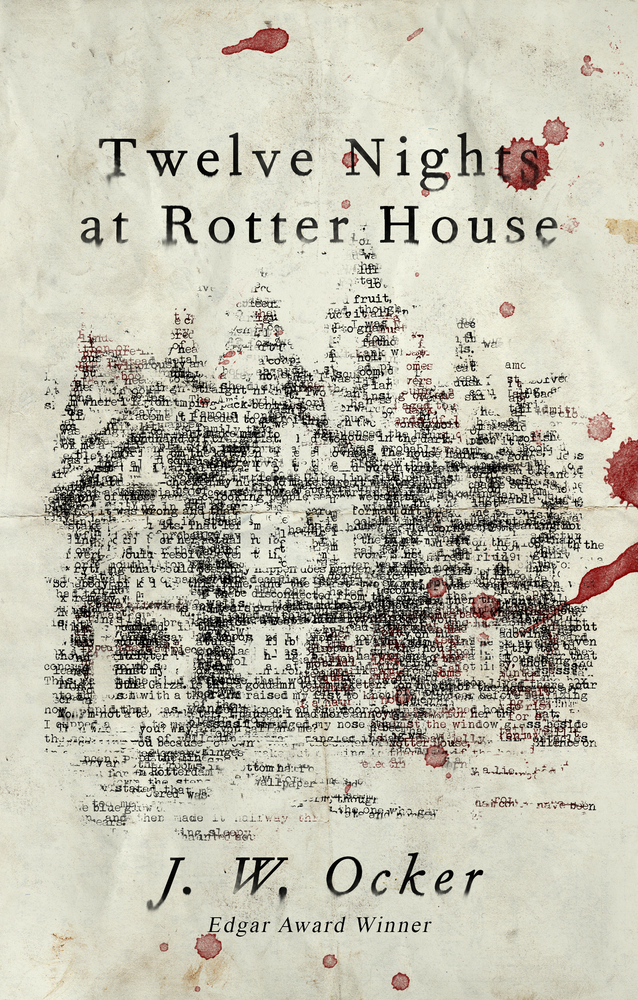
I seem to be on a bit of a haunted house kick lately, as the last book I blogged for 2025, A Haunting on the Hill, and the book I’ll blog about today, Twelve Nights at Rotter House (2019) by J.W. Ocker, are both very classic setup haunted house books! In fact, I bought them both on the same bookstore trip.
Twelve Nights at Rotter House, however, is distinct in the sense that the narrator of the book has deliberately opted to make his stay in a haunted house as much like a classic haunted house book!
Book 31 for my 2025 goal of 30 books for the year — I managed to squeeze one more in before the new year! My goal for 2026 will be 36 books, so off I go on a new quest starting tomorrow. As is now default for me, my link to the book is through my bookshop dot org affiliate account.
One of my favorite horror movies of all time is Robert Wise’s 1963 The Haunting, a brilliant adaptation of one of my favorite horror novels of all time, Shirley Jackson’s 1959 The Haunting of Hill House. When I happened to come across Elizabeth Hand’s 2023 novel A Haunting on the Hill, there was really no doubt about picking it up to read.
For those who might be unfamiliar, The Haunting of Hill House is the story of a team of four investigators who arrive at the infamous Hill House with the goal of uncovering proof of the supernatural. But Hill House is an entity in and of itself, and a malevolent one, and it subtly and then not-so-subtly manipulates the temporary residents until it finds one that it can break and destroy. The novel is a classic haunted house tale, but also a magnificently horrific tale of psychological manipulation and abuse. In every haunted house story, the house itself is the main character, but that has perhaps never felt more true than in Shirley Jackson’s novel.
Working on the second edition of my Singular Optics textbook and thought I would blog about some of the fun developments in the field that I’ve come across while doing the book research!
Light has wave properties, and as a wave it can do wavy things like other types of waves — including swirling around a central point like a vortex. When a beam of light manifests one or more of these swirling regions, it is typically referred to as a “vortex beam” and the individual swirling structures are known as “optical vortices” (naturally). Beams possessing optical vortices turn out to be really useful in a lot of applications, and the field of study of such beams, and related “singular” beams, has become known as “singular optics.”
A vortex is a localized, conserved, and discrete structure in a wavefield and when we think of vortex beams, we usually think of beams possessing a finite number of vortices. An infinite number of anything is a concept alien to physics in general, as “infinity” is generally considered an unattainable idealized limit.
I’ve been obsessed with infinity in the context of optical vortices, however, and have published some really neat results on this subject (I will elaborate momentarily). Thus when I came across a 2021 paper by Kovalev and Kotlyar1 titled “Optical vortex beams with the infinite topological charge,” I was immediately intrigued! In this blog post I will give an overview of what optical vortices are, how they behave, and why it is fascinating that one can apparently cram an infinite number of vortices in a beam of light!
Book 30 for my 2025 goal of 30 books for the year — I MADE MY GOAL! Now I’ll probably read a couple of additional books by the end of the year to get ahead and prep for my 36 book goal for 2026.
Back in October, a friend tipped me off at the last minute to the 2025 Charlotte Bookpalooza, a fun party and opportunity for local authors to share and sell their books. I immediately dashed out the door (literally last minute) to the event, and opted to pick up a few titles.
Most of the books were in genres that I don’t usually read, but that’s okay! This was an opportunity for me to support local authors and also step outside of my usual reading conventions, though I still went for books that feature something strange or unusual. The first one I opted to read is By the Hands of Fools (2025), by Grace Mathis.
By the Hands of Fools is a young adult fantasy romance — like I said, not exactly my usual thing, but the premise intrigued me enough to give it a read, and I enjoyed it immensely. It is also a “caper” story, featuring a gang of rogues attempting to pull off a seemingly impossible job.
It’s been a while since I really indulged in this, largely due to a struggle in finding good book covers. Also, my inspiration comes and goes, but I’ve been in the mood to mess around again, so here we go…
One of those political jokes that was most amusing in the moment, but this one has lasted so long I’m guessing that people still get the reference!
Original title: Illustrierte Geschichte der Mobel Sofas
Sharing another classic history of science post from the archives! This one is about the rather heated history of the illusion known as Pepper’s Ghost.
Thought I’d start reblogging some of my old physics posts that I enjoy, so here’s one from 2022 on why you always think your headlights are off when it’s raining at night!
One of the topics of the history of science that has continued to fascinate me is the discovery of the principle of conservation of energy. As I discussed in my three-part series “Booms, Blood, and Beer” (part 1, part 2, part 3), some of the key discoveries were made by the most unlikely of investigators: a cannon-borer Count Rumford (booms), a physician Julius Robert Mayer (blood) and a brewer (beer).
The story of Mayer in particular has always fascinated me. He was a German physician who decided, after earning his license to practice medicine, to work as a ship’s doctor on a Dutch merchant ship sailing to Indonesia in 1840. While on the trip, he spend a lot of time observing and pondering nature, and some of his observations got him thinking about a law of conserved “force” that would be a philosophical complement of sorts to the law of conservation of matter. One key observation for him was seeing that, during a standard bloodletting of the sailors when they arrived in Jakarta, the venous blood was much redder than he was used to seeing in Europe. In discussions with other doctors, he learned that this is because less oxygen is consumed to heat the body in the hot climate of Indonesia than in the chilly northern parts of Europe.
Julius Robert Mayer, from a 1905 German biography by Dr. S. Friedlaender.
This mechanism was already known by science at the time, but it triggered a train of thought in Mayer that became his obsession. At the time, there was much discussion about the nature of heat: what is it that makes some things warmer than others? The prevailing theory was that heat is its own physical fluid, called caloric, that could be released from a substance by friction or combustion. Also known but less popular was the (correct) theory that heat is simply the collective random motion of atoms and molecules. Heat spreads because some of those “hot” molecules collide with neighboring “cold” molecules and transfer their energy to them. Mayer’s thoughts about the generation of heat by the human body led him not only to consider heat a form of motion, but to postulate that there is a conserved “something,” that he called “force,” that could be used to unify thinking about physical phenomena throughout nature, from simple collisions of inanimate objects to the workings of living creatures.
Mayer was complete correct on the general principle, but he was no physicist. His early attempts to create a theory of what would eventually be called conservation of energy were crude and inaccurate — but contained the kernel of a truth that had never before been successfully elucidated. After submitting his first paper for publication (which would fail), he wrote to his scientist friend Carl Baur to explain his ideas and get feedback, where he first wrote what I call “The most beautiful wrong equation in history.”
In this post, we go through Mayer’s first (translated) letter to Baur and see how even incorrectly formulated ideas can be amazing — and beautiful. I used Google Translate along with some very crude understanding of German to handle the translations. The translations come from an 1890 book of Mayer’s collected papers.
The author of Skulls in the Stars is a professor of physics, specializing in optical science, at UNC Charlotte. The blog covers topics in physics and optics, the history of science, classic pulp fantasy and horror fiction, and the surprising intersections between these areas.






 Skulls in the Stars