
Getting soooo close to having done a full year of Twitter weirdscifacts! Read below to learn the amazing ability that this seemingly ordinary European robin possesses.

Getting soooo close to having done a full year of Twitter weirdscifacts! Read below to learn the amazing ability that this seemingly ordinary European robin possesses.
The first indication that something is seriously wrong in the city is the arrival of the baboons. They appear without warning at the garbage dump by the hundreds, rapidly fanning out through the rest of the city and wreaking havoc wherever they go.
Where did they come from? Nobody knows. Why are they here? Nobody knows. What can be done about them? Very little, apparently: after attempts to kill or capture them fails, the government institutes a policy of “adopting” a baboon and caring for it.
Such is the mixture of surreality and absurdity that characterizes The Doomed City, the brilliant 1972 novel by Arkady and Boris Strugatsky, only published in English for the first time this year. It is an intricate, elegant, and haunting combination of allegory, science fiction, and horror that will stay with you long after finishing.
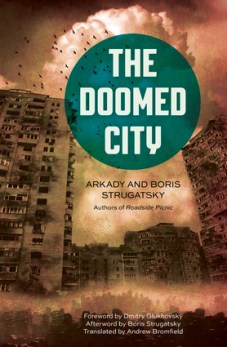
It is no surprise that The Doomed City is a magnificent novel, considering its authors also wrote the incredible science fiction story Roadside Picnic, of which I’ve blogged before. The Doomed City, however, is really their masterwork: a dense and meticulous commentary on society through the lens of a supernatural city.
Time for another round of #weirdscifacts from Twitter! I’m closing in quickly on a full year of facts, and I don’t think I’ll continue this past a year, so enjoy them while you can!
Read below to find out what the deal is with this image.

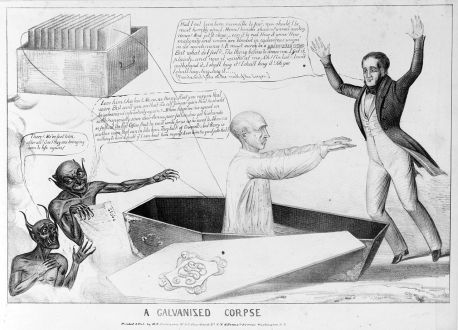
Science and science fiction go hand in hand, so to speak… but science and horror fiction? There are, in fact, more connections than one might think. A lot of modern science can be quite scary at first glance, and knowledgeable authors have used it to push horror fiction in new and important directions. The foremost example of this is, of course, Mary Shelley’s Frankenstein (1818), which is often regarded as the birth of modern science fiction as well as a milestone in horror fiction. Shelley’s work was inspired by the discovery of galvanism, the electrical origins of biological function. Early researchers would shock corpses to make them jump, and many people genuinely believed that electricity could raise the dead.
There is perhaps no other author who was more invested in the connection between horror and science than H.P. Lovecraft. As I have blogged in the past, Lovecraft was an amateur astronomer and wrote a column on astronomy for his local paper, even getting into print wars with astrologers! He also attended popular science lectures on Einstein’s relativity theory, and that relativity theory would play a major role in Lovecraft’s cosmic horror. In The Call of Cthulhu, for example, Lovecraft writes of the sunken city of R’lyeh, where “He had said that the geometry of the dream-place he saw was abnormal, non-Euclidean, and loathsomely redolent of spheres and dimensions apart from ours.”
Recently, I came across another influence of Lovecraft’s fiction. During his astronomy years, before he turned to fiction writing, he was intrigued by the possibility of undiscovered planets in our Solar System; such phantom planets would later feature prominently in his writing. As an astronomy author, Lovecraft even wrote an article about a planet that does not exist!
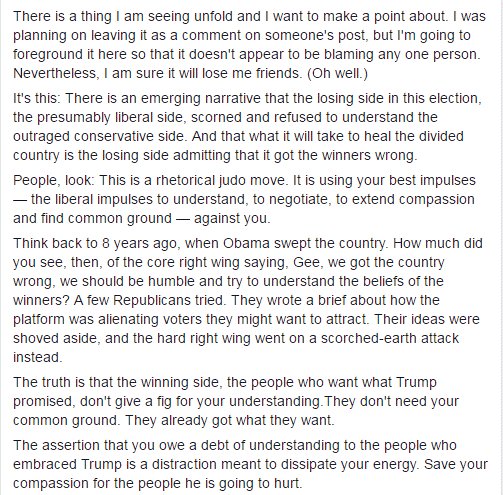
Four days ago, a good friend of mine posted what I felt was an insightful comment on Facebook about the aftermath of the election that I thought was worth sharing. They gave me permission to share it on twitter, under the condition of anonymity, which I did. As of this writing, that tweet has been retweeted 17,000 times and liked 23,000 times more. Clearly my friend really struck a chord with many people.
The original FB post is as follows:
Now, that 17,000 RTs doesn’t actually tally comments that people made to me. Hundreds and hundreds of them. Unsurprisingly, after so many comments, a number of common notions and misconceptions arose. I also feel like I have a bit more, personally, to elaborate on the ideas given above. So I thought I would write a brief FAQ (frequently asked questions) to answer some of the things that I’ve had said to me, again and again and again.
Valancourt Books has done a really amazing job of late in resurrecting the classic haunted house story, publishing a remarkable number of classic books that have been out of print for years. For instance, they have reprinted Michael McDowell’s The Elementals (1981), Jack Cady’s The Well (1980), Robert Marasco’s Burnt Offerings (1973) and Ernest Henham’s The Feast of Bacchus (1907). Recently, the reprinted another exceptional novel in this genre, Archie Roy’s Devil in the Darkness (1973).
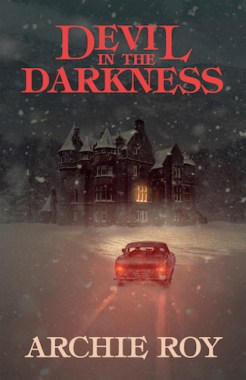
This novel features an introduction by me, and one that I was particular excited to write, as Archie Roy is, as I will note below, perhaps the perfect person to write a haunted house story!
So Donald Trump is the new president of the United States. Though he in fact lost the popular vote, getting fewer votes than Clinton, he won the electoral college. It was a game well-played, and that’s how the news media — and much of the voting public — treated it: as a game, which should be viewed as entertainment and not an event that has life-and-death real world consequences. After the game, everybody shakes hands and remains friends, because it’s only a game.
But every election has consequences, some of them dire. And this election, even more than most, wasn’t a game, and the election of Trump is going to hurt many, many people I care about deeply. Because Trump based his campaign on hurting them.
My women friends will be horribly hurt by the Trump presidency. Trump himself has said that women should be punished for having an abortion. His running mate, Pence, has signed legislation in Indiana that required women to have a funeral for a deceased fetus, whether by abortion or miscarriage. As there are likely going to be multiple Supreme Court vacancies opening during Trump’s term — including the one that the GOP unlawfully held open for his arrival — it is very likely that women’s right to choose will disappear entirely. Trump himself, an admitted sexual predator, will surely do nothing to protect women from assault. In his own statements, he has made clear that women are simply objects for him to act out his sexual urges upon. In Trump and Pence’s world, women are objects for sexual gratification and reproduction.
My Muslim friends have their very lives at risk due to a Trump presidency. Trump has stoked anger against Muslims in the United States, basically accusing them all of being fanatical terrorists, and this has already resulted in violence against them. I fear it is only the beginning, as literal white supremacists and nazis have been emboldened by Trump and support him. Trump made this a big part of his policy with his “total ban on Muslims” entering the U.S., which is not only morally reprehensible but also against the very spirit and letter of our Constitution.
My black friends will have further rights stripped away in a Trump presidency. Trump has constantly stated that he is a “law and order” candidate, which is a coded phrase that was used by Nixon to indicate cracking down on minority protesters. Peaceful Black Lives Matter protesters have already been subjected to horrible unwarranted police violence, and Trump has given the green light for this to continue. 2016 was the first election after the Voting Rights Act was gutted, and every southern state immediately took action to restrict voting rights for black people, especially in my state of North Carolina, where the state GOP actually boasted of how much they suppressed the black vote. A Trump Justice Department will turn a blind eye to further attacks on democracy, all in the name of preventing non-existent “voter fraud.”
My Hispanic and Latinx friends have been vilified by Trump. He opened his campaign with a blanket denunciation of Mexican immigrants as “rapists,” and has stoked fears of immigrant violence, even though immigration is actually flowing away from the United States across the border right now. His stated plans of deporting millions of people as fast as possible is simply cruel, and will tear apart families and likely destroy countless innocent lives.
My LGBT friends will perhaps suffer the most, as Trump has vowed to roll back protections for them at the Federal level. And such people are viewed as illegitimate by Pence, who endorses unscientific anti-gay conversion therapy, which is literally an attempt to torture people until they agree to stop being gay. With the Supreme Court likely to swing conservative, it is possible that marriage rights could be stripped from the LGBT community entirely. Trump and Pence have made it very clear that they view LGBT people as second-class citizens.
Jewish friends are also afraid thanks to Trump catering to white supremacists. Trump’s very last campaign ad was viewed as a barely-disguised anti-Semitic dogwhistle by everyone who has any experience in this domain. The nazis have flooded social media with harassment and outright threats of Jews.
There are other groups that I haven’t mentioned that will also suffer, directly or indirectly, at the hands of Trump’s bigotry: Native Americans, Indians, Asians, and others. My thoughts are with you and others who will be hurt by the narcissism of a madman.
I have mentioned the Supreme Court. If you feel that corporations have too much power to influence elections through campaign contributions, you’re out of luck, as there is literally no chance that a conservative court under Trump will work to overturn Citizens United, the case that allowed (thanks to a 5-4 conservative ruling) unlimited corporate donations. Considering that now the House, Senate, Presidency, and soon Court will be GOP controlled, there is nothing to stop the GOP from destroying democracy entirely.
I mention all this because I want it to be clear to all that this election is very, very personal for me. I have good friends in all the categories above, and they are all rightly terrified of a Trump presidency. For those of you who voted for Trump, you have voted to hurt people I care about deeply. I don’t know why you did so, and at this point I don’t care.
Over the course of this election, I have unfriended a number of people online who, against all reason and morality, were vehemently pro-Trump. I imagine that more of this will happen in the near future. I suppose, as the next few weeks go on, I will calm down and be friendlier to some of you. And, if you want to really have a serious, calm discussion about the horrible things that Trump has done (he is also on trial for racketeering in a month, and was going to court for raping a 13-year-old until she dropped the charges because of threats), I am happy to do so.
But, you should know, I no longer consider anyone who voted for Trump to be a true friend of mine. As I said: I will probably be polite to you, but we are not friends in any strong sense of the word. It is simply not possible for me to be friends with people who support white supremacists without betraying my own principles and everyone else I care about.
You may have gotten your President Trump, but it is at the cost of my being your friend, your brother, or your son.
Time to summarize more weirdscifacts as posted on Twitter! Read on to learn about the amazing origins of the rather innocent looking palm pictured below.

Judean Date Palm, photo via Wikipedia.
I’ve been getting very nostalgic recently for the video fantasy role-playing games of my youth, most notably the Ultima series of games. I played Ultima I – V when I was young, and even watched a complete walkthrough of Ultima V about a month ago.
Fortunately, I have an even better outlet for this nostalgia: Richard Garriott aka “Lord British,” the auteur of the original Ultima games, has been working with a team on a new Ultima-ish style game, Shroud of the Avatar. I’ll say more about the game in a bit, but looking into it led me to the first tie-in novel for the game, The Sword of Midras, written by Richard Garriott and the prolific and talented fantasy author Tracy Hickman.

The Sword of Midras is, basically, a prequel novel to the Shroud of the Avatar game. It is set in the land of New Britannia (a callback to the Ultima series’ continent of Britannia) and begins a tale of what appears to be the rediscovery of the history of the Avatars.
Those who have followed this blog for a while know that I have a fascination with the physics and history of “cat-turning,” the ability of a cat to turn over and land on its feet even when it falls with no initial rotation. This is today known as the “cat-righting reflex,” and it has fascinated folks for over a century.
It recently captured the interest of Karen Bruillard, who writes the Animalia blog for the Washington Post, and she and colleagues did an excellent post and video on the history and physics of the process! It so happens that they interviewed me to understand the details, so if you want to read me going on about cat physics even more, go check it out!
 The author of Skulls in the Stars is a professor of physics, specializing in optical science, at UNC Charlotte. The blog covers topics in physics and optics, the history of science, classic pulp fantasy and horror fiction, and the surprising intersections between these areas.


